Emergency Recall Training: Teach a Bulletproof Come Command
Learn how to train a reliable emergency recall to keep your dog safe from traffic, wildlife, and hazards. Actionable steps and expert tips inside.
Why an Emergency Recall is a Lifesaving Skill
Every responsible dog owner teaches their puppy a basic recall command. However, in a true emergency—such as your dog slipping their collar near a busy intersection, encountering a venomous snake on a hiking trail, or breaking their stay to chase a deer into the woods—a standard everyday recall often fails. An emergency recall is a specialized, heavily conditioned cue designed to override a dog's natural prey drive, curiosity, and survival instincts. It is the ultimate safety net for any off-leash or unexpected off-leash situation.
Unlike an everyday recall, which might be rewarded with a piece of dry kibble or a quick pat on the head, an emergency recall is treated like a winning lottery ticket. The dog must believe that responding to this specific cue will result in the greatest, most overwhelming reward they have ever experienced. According to the American Kennel Club, building a bulletproof recall requires immense consistency, exceptionally high-value rewards, and a strict commitment to avoiding the accidental 'poisoning' of the cue.
Choosing Your Emergency Recall Cue
The most critical rule of emergency recall training is that your cue must be entirely unique. If you use the word 'Come' for everyday situations, it is already diluted. You need a word or sound that your dog only hears during emergency recall practice or a genuine life-or-death emergency.
Excellent options include unique words like 'Bingo', 'Touch', 'Here', or 'Jackpot'. Alternatively, many professional trainers and hunters use a specific dog training whistle, such as the Acme 211.5 Gundog Whistle (approximately $15). A whistle is highly effective because it carries over long distances, cuts through environmental noise like wind or traffic, and lacks the emotional panic that a human voice might convey during a scary situation.
Essential Gear for Recall Training
To train safely and effectively, you need the right equipment. Do not rely on standard nylon leashes or low-value treats for this specific protocol.
- 15-to-30-Foot Biothane Long Line: Brands like High Tail Trails or Mendota Products offer waterproof, durable biothane long lines ($25-$45). Biothane is essential because it doesn't snag on brush, get heavy when wet, or cause rope burn if your dog bolts.
- Quick-Release Treat Pouch: The Ruffwear Treat Trader ($25) or a similar magnetic-closure pouch. You need to deliver a 'jackpot' reward within 1.5 seconds of the dog reaching you. Fumbling with zippers ruins the conditioning.
- Jackpot Rewards: Standard training treats will not override a squirrel. Use high-value, aromatic options like Stella & Chewy's freeze-dried raw beef liver ($12 for 8oz), boiled chicken breast, or string cheese. Keep these exclusively for emergency recall training.
Standard Recall vs. Emergency Recall
Understanding the distinction between your everyday cue and your emergency cue is vital for maintaining reliability.
| Feature | Everyday Recall ('Come') | Emergency Recall ('Bingo' / Whistle) |
|---|---|---|
| Cue Type | Common verbal word | Unique word, sound, or whistle |
| Reward Value | Standard treats, praise, play | Jackpot (entire pouch of high-value meat) |
| Usage Frequency | Multiple times daily | Rarely (only in true emergencies or practice) |
| Reliability Goal | 80% - 90% | 99.9% |
| Consequence of Failure | Mild frustration | Severe injury or death |
Step-by-Step Emergency Recall Training Protocol
Phase 1: Classical Conditioning (Weeks 1-3)
The goal of Phase 1 is to create a deep, Pavlovian association between the unique cue and a massive reward. You are not testing your dog's obedience here; you are programming their brain. Spend 5 minutes a day in a boring, low-distraction environment like your living room.
- Say your emergency cue (e.g., 'Bingo!') in a bright, happy tone.
- Immediately (within half a second) feed your dog 5 to 7 pieces of high-value freeze-dried liver, one after another, directly from your hand.
- Repeat this 10 times per session. Do not ask your dog to move or come to you yet. Just say the word and deliver the jackpot.
Phase 2: Adding Distance and the Long Line (Weeks 4-6)
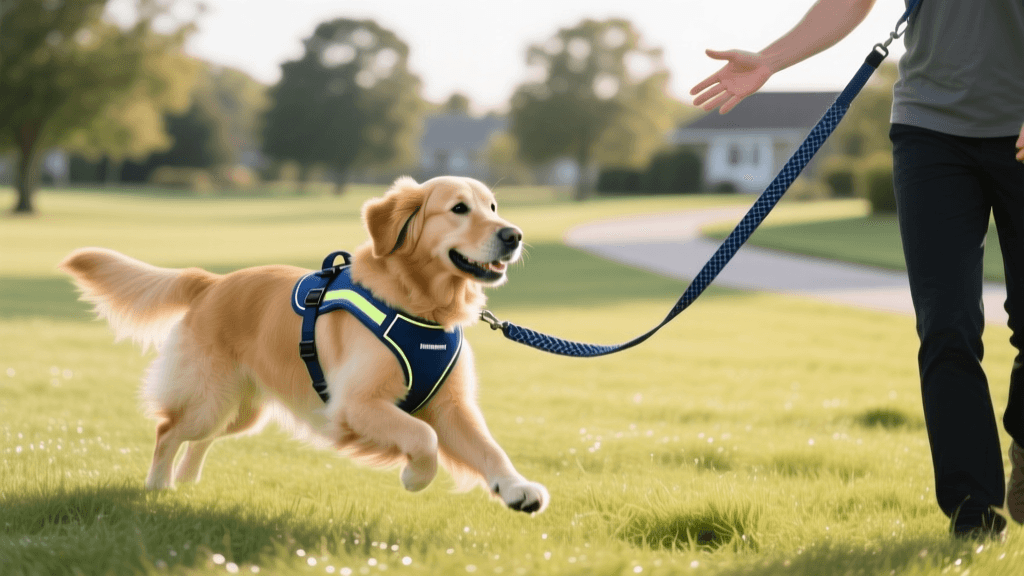
Once your dog visibly perks up and drools the moment they hear the cue, it is time to add movement. Attach your 15-foot biothane long line to a well-fitted Ruffwear Front Range Harness.
- Take your dog to a quiet outdoor area. Let them wander to the end of the long line and begin sniffing.
- Say your emergency cue once, clearly and loudly.
- If they turn toward you, encourage them with a high-pitched voice and open arms. If they don't turn, gently reel them in using the long line without repeating the cue.
- The moment they reach you, deliver the 'jackpot' reward. Feed them continuously for 5 to 7 seconds. This prolonged feeding time creates a 'party' atmosphere that cements the behavior.
Phase 3: Proofing the Behavior in Real-World Scenarios (Weeks 7+)
The Humane Society of the United States emphasizes that dogs must learn to generalize commands across different environments. A recall that works in your kitchen may fail at a busy park. Gradually introduce controlled distractions. Practice near a tennis court, then at a quiet park, and eventually on a busier trail. Always keep the long line attached until you have achieved 100% reliability in high-distraction environments over several months.
Common Mistakes That Ruin Recall Reliability
Even with the best intentions, owners frequently sabotage their dog's recall. Avoid these critical errors:
- Poisoning the Cue: Never use your emergency recall to call your dog for something they dislike, such as a bath, a nail trim, or leaving the dog park. The cue must always predict a positive outcome.
- Repeating the Cue: If you yell 'Bingo! Bingo! BINGO!' while your dog ignores you, you are teaching them that the cue is optional background noise. Say it once. If they don't respond, use your long line to gently guide them back, then reassess your training environment.
- Insufficient Rewards: If your dog leaves a fascinating scent to come back to you, a single piece of dry kibble is an insult. The reward must outweigh the environmental distraction.
Expert Safety Tip: If your dog ever gets loose in a dangerous area and ignores your recall, do not chase them. Chasing triggers their prey drive and turns the situation into a game. Instead, drop to your knees, make frantic, high-pitched noises, and run away from your dog. This triggers their natural instinct to chase you, allowing you to safely secure them.
Real-World Emergency Scenarios and Action Plans
Scenario A: Dog Slips Collar Near Traffic
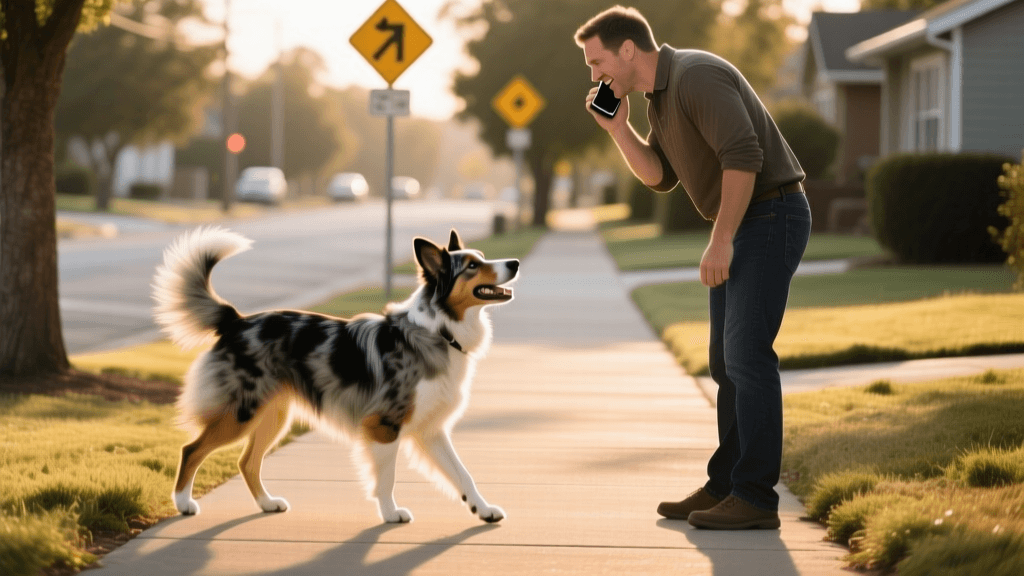
If your dog slips their collar and heads toward a road, immediately deploy your emergency recall cue. Drop into a crouch to make yourself less intimidating and more inviting. Have your high-value treats ready. The moment they return, secure them by the collar or harness and deliver the jackpot. Never scold them for escaping; praise them heavily for returning.
Scenario B: Encountering Dangerous Wildlife
On a hike, your dog spots a porcupine or skunk and begins to stalk. Use the emergency whistle or cue to break their visual lock. Because you have classically conditioned the cue to mean 'massive food party,' the sound will interrupt their prey drive sequence. Reward them immediately and leash them up.
Conclusion
An emergency recall is not a trick; it is a vital piece of safety equipment, just as important as a sturdy leash or a well-fitted harness. By investing 10 to 15 minutes a day into classical conditioning, utilizing high-value rewards, and respecting the integrity of your unique cue, you can build a bulletproof recall. For further reading on canine behavior and safety, consult resources from the Fear Free Happy Homes initiative, which provides excellent insights into reducing canine anxiety and improving training outcomes. Protect your dog, protect your peace of mind, and train for the unexpected.
jonas-cole
All our authors care for dogs every day — read more of their work on the authors page.