The 8 to 12 Week Puppy Survival Guide: Milestones & Care
Navigate the crucial 8 to 12 week puppy stage. Discover feeding schedules, potty training tips, socialization milestones, and essential gear for your new pup.
Welcome to the 8-12 Week Stage: The Foundational Months
Bringing home a puppy between eight and twelve weeks of age is an exhilarating experience, but it also marks one of the most critical developmental windows in a dog's life. During this life stage, your puppy is essentially a blank slate, absorbing information about their environment, learning bite inhibition, and forming lifelong bonds. According to the American Kennel Club (AKC), this period is characterized by rapid brain development and the first major fear period, making your approach to care, training, and socialization absolutely vital. This comprehensive life stage care guide will walk you through the exact feeding schedules, potty training blueprints, and socialization strategies you need to set your young dog up for success.
Developmental Milestones: What to Expect
At eight weeks, your puppy is fully weaned and capable of eating solid food, but their digestive system remains delicate. You will notice boundless energy followed by sudden, deep sleep cycles. Puppies at this age require up to 18 to 20 hours of sleep per day to support their rapid physical and neurological growth.
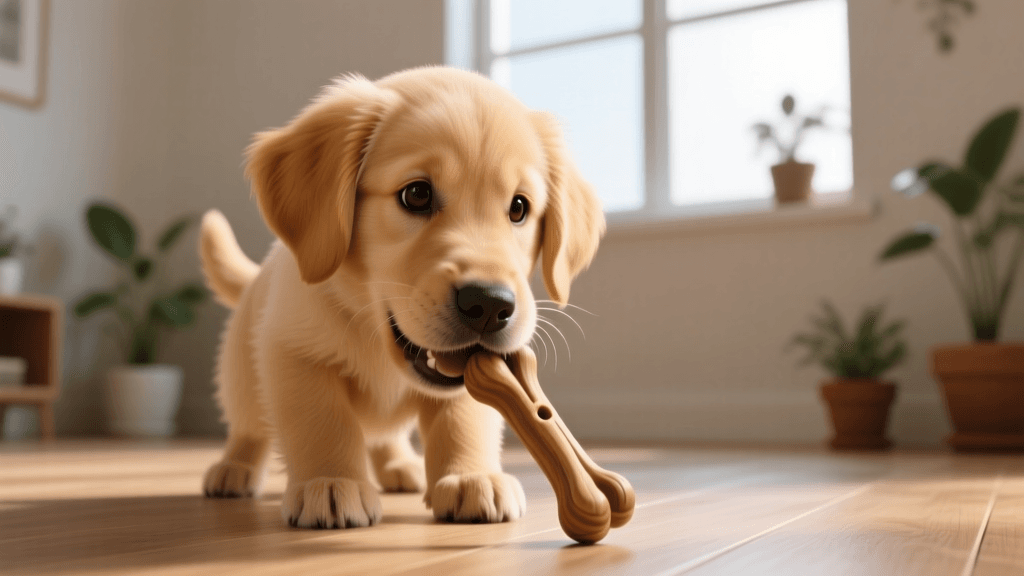
Teething is also on the horizon. While their sharp deciduous teeth are already in place, the gums may become sensitive as they prepare for the adult teeth transition later in the puppy stage. Providing appropriate chew toys, such as the KONG Puppy Teething Stick, is essential to redirect biting away from your hands and furniture.
Furthermore, this stage encompasses a well-documented fear period. Loud noises, unfamiliar surfaces, or harsh corrections can leave lasting negative impressions. Positive reinforcement and gentle exposure are your best tools during these weeks.
Bite Inhibition and Managing Land Shark Behavior
At eight weeks, puppies explore the world using their mouths. Their sharp deciduous teeth, often referred to as needle teeth, can make playtime incredibly painful. It is a common misconception that puppies will simply outgrow biting without intervention. In reality, the 8 to 12-week window is the prime time to teach bite inhibition, which is the ability to control the force of a mouthing bite. When your puppy's teeth make contact with your skin, emit a high-pitched yelp, and immediately withdraw your attention by standing up and turning away for 10 to 15 seconds. This mimics the behavior of littermates, who will stop playing if a sibling bites too hard. Always redirect their chewing energy toward appropriate toys or a frozen carrot. Never use physical punishment, as this can induce fear and exacerbate aggressive tendencies later in life.
Feeding Schedule and Nutrition
Proper nutrition fuels your puppy's explosive growth. At eight to twelve weeks, puppies should be fed a high-quality, AAFCO-approved puppy formula. Brands like Purina Pro Plan Puppy or Royal Canin Puppy offer balanced macronutrients tailored for developing joints and brains.
Because their stomachs are small and their metabolisms are incredibly fast, free-feeding is highly discouraged. Instead, implement a strict meal schedule to aid in digestion and potty training predictability.
Daily Feeding and Potty Schedule Chart
| Time | Activity | Details and Measurements |
|---|---|---|
| 7:00 AM | Wake Up and Potty | Take outside immediately. Reward with a small training treat. |
| 7:30 AM | Breakfast | Serve 1/2 to 1 cup of kibble (breed-dependent). Remove bowl after 15 mins. |
| 8:00 AM | Potty and Play | Supervised playtime followed by a potty break. |
| 9:00 AM | Morning Nap | Crate time. Puppies need 2-3 hours of rest. |
| 12:00 PM | Potty and Lunch | Potty break, followed by the second meal of the day. |
| 1:00 PM | Training and Nap | 5 minutes of basic conditioning, then crate nap. |
| 5:00 PM | Potty and Dinner | Final meal of the day. Remove bowl after 15 mins. |
| 8:00 PM | Water Fasting | Pick up water bowl to prevent overnight accidents. |
| 10:00 PM | Final Potty and Bed | Quiet potty break, then into the crate for the night. |
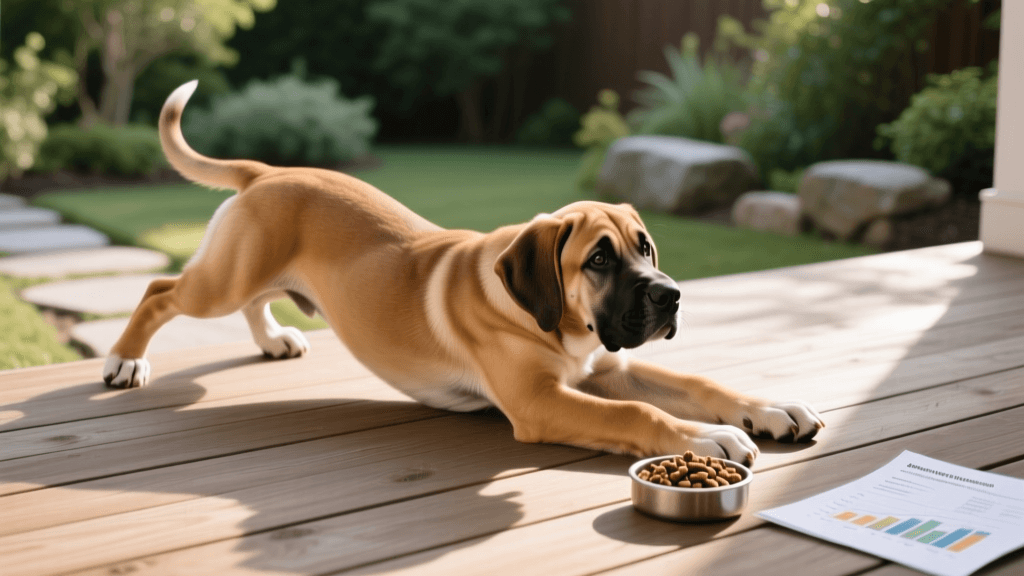
Always consult your veterinarian for exact caloric requirements, as a Great Dane puppy will need vastly different portions than a Chihuahua puppy.
Potty Training Blueprint
Housebreaking an eight-week-old puppy requires immense patience and a strict adherence to routine. The ASPCA emphasizes that consistency and positive reinforcement are the cornerstones of successful house training.
The Core Rules of Crate Training
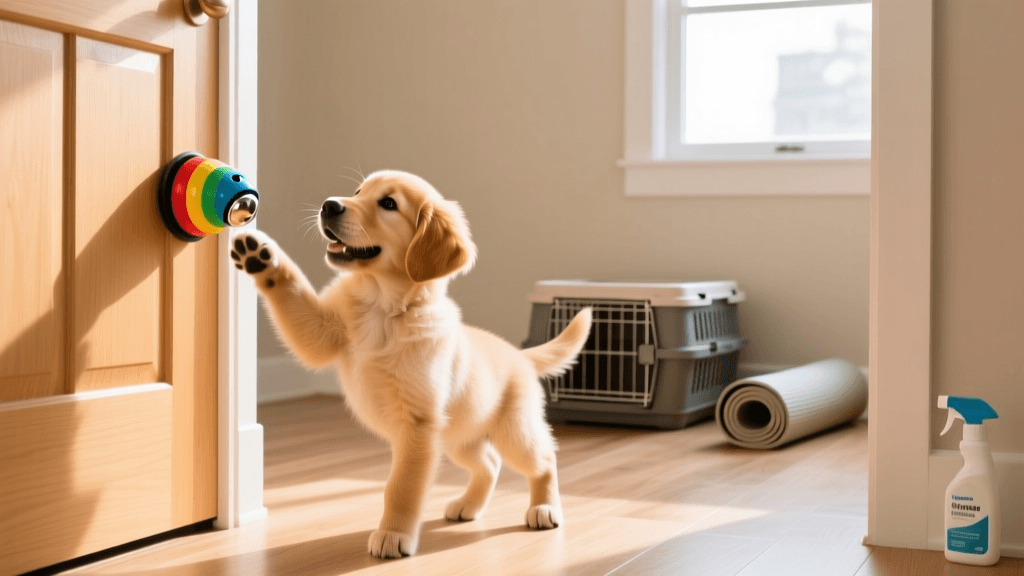
- Size Matters: Use a wire crate with an adjustable divider. The space should only be large enough for the puppy to stand, turn around, and lie down. If the crate is too large, the puppy will eliminate in one corner and sleep in the other.
- The 15-Minute Rule: A puppy will typically need to eliminate 15 to 30 minutes after eating, drinking, or engaging in vigorous play.
- Enzymatic Cleaners: Accidents will happen. Never use ammonia-based cleaners, as they mimic the scent of urine. Invest in an enzymatic cleaner like Nature's Miracle Advanced Stain and Odor Eliminator to completely break down the uric acid crystals and prevent repeat offenses.
Early Socialization and the Fear Period
Socialization is not merely about letting your puppy play with other dogs; it is about systematically exposing them to the sights, sounds, and surfaces of the human world in a positive, controlled manner. The American Veterinary Medical Association (AVMA) notes that the primary window for socialization closes around 12 to 14 weeks of age, making these early weeks irreplaceable.
Safe Socialization Checklist
- Surfaces: Walk your puppy on grass, gravel, metal grates, and slippery tile floors.
- Sounds: Play recordings of thunderstorms, fireworks, and vacuum cleaners at a low volume while feeding high-value treats like boiled chicken breast.
- Handling: Gently touch their paws, ears, and mouth daily to prepare them for future grooming and veterinary exams.
Remember, because your puppy is not fully vaccinated, avoid high-traffic dog areas like public dog parks. Instead, carry your puppy in a sling or stroller through busy shopping centers to observe the world safely.
Essential Gear and Estimated Costs
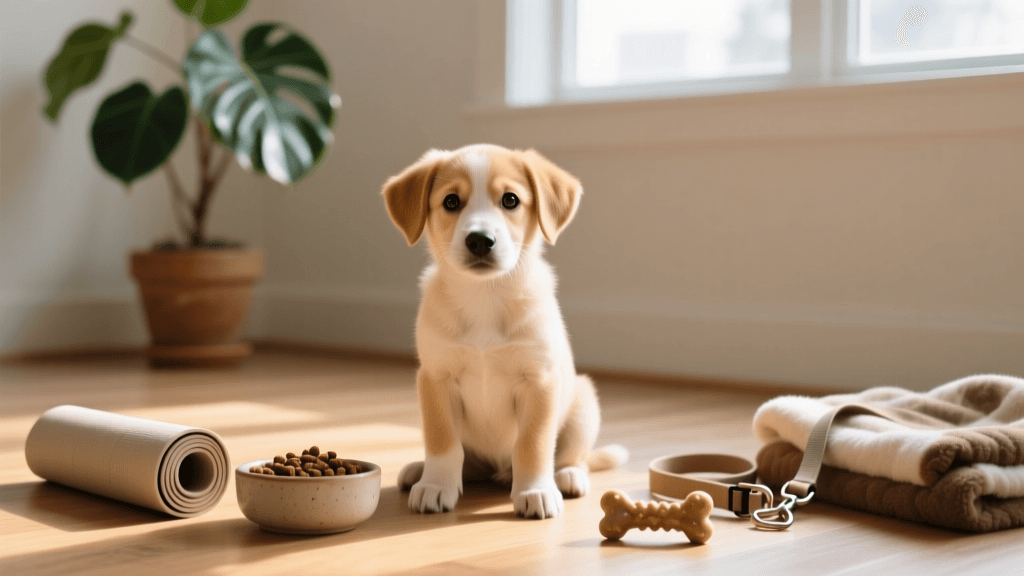
Preparing your home for an 8-to-12-week-old puppy requires specific investments. Here is a structured breakdown of essential life-stage gear and estimated costs to help you budget effectively.
- Adjustable Wire Crate (e.g., MidWest Homes for Pets): $50 - $80. Crucial for potty training and providing a safe den.
- Enzymatic Stain Remover (e.g., Nature's Miracle): $15 - $20. Non-negotiable for accident cleanup.
- Puppy-Specific Chew Toys (e.g., KONG Puppy, Nylabone Puppy): $20 - $35. Saves your baseboards and shoes during the teething prep phase.
- Front-Clip No-Pull Harness (e.g., Rabbitgoo No-Pull Dog Harness): $25 - $40. Protects the delicate trachea of a young puppy during leash training.
- Long Training Line (15-30 feet): $15 - $25. Essential for safe outdoor recall practice before reliable obedience is established.
- High-Value Training Treats (e.g., Zuke's Mini Naturals): $10 - $15. Small, soft treats that won't upset a sensitive puppy stomach.
Veterinary Care and Vaccinations
Your puppy's immune system is highly vulnerable during the 8 to 12-week stage. Maternal antibodies received from colostrum are beginning to wane, leaving them susceptible to deadly pathogens like Parvovirus and Distemper.
Typically, your puppy will receive their first round of core vaccines (DHPP) and a Bordetella vaccine at the breeder or rescue around six to eight weeks. Between ten and twelve weeks, they will require their second round of boosters. Deworming protocols are also standard during this window, as intestinal parasites like roundworms and hookworms are incredibly common in young litters. Furthermore, the AVMA and AAHA recommend starting heartworm prevention medication as early as 8 weeks of age, depending on the specific product and regional risk factors.
Schedule your initial veterinary wellness exam within 48 hours of bringing your puppy home. This establishes a baseline for their weight, checks for congenital defects like heart murmurs or umbilical hernias, and sets up a microchipping appointment if not already completed.
Final Thoughts on the 8-12 Week Stage
The 8 to 12-week stage is undeniably exhausting. Sleep deprivation, constant supervision, and the emotional toll of potty training accidents can test any new owner's patience. However, the foundation you build during these four short weeks will dictate your dog's behavior, confidence, and health for the next decade or more. By adhering to a strict feeding schedule, prioritizing safe socialization, and utilizing positive reinforcement, you are actively shaping a well-adjusted, resilient companion. Embrace the chaos, keep your treats handy, and enjoy the fleeting puppyhood milestones.
tom-renshaw
All our authors care for dogs every day — read more of their work on the authors page.