8 To 12 Week Puppy Care Guide: Your First Month Home
Discover essential tips for your 8 to 12 week old puppy. Learn about potty training, early socialization, feeding schedules, and teething prep.
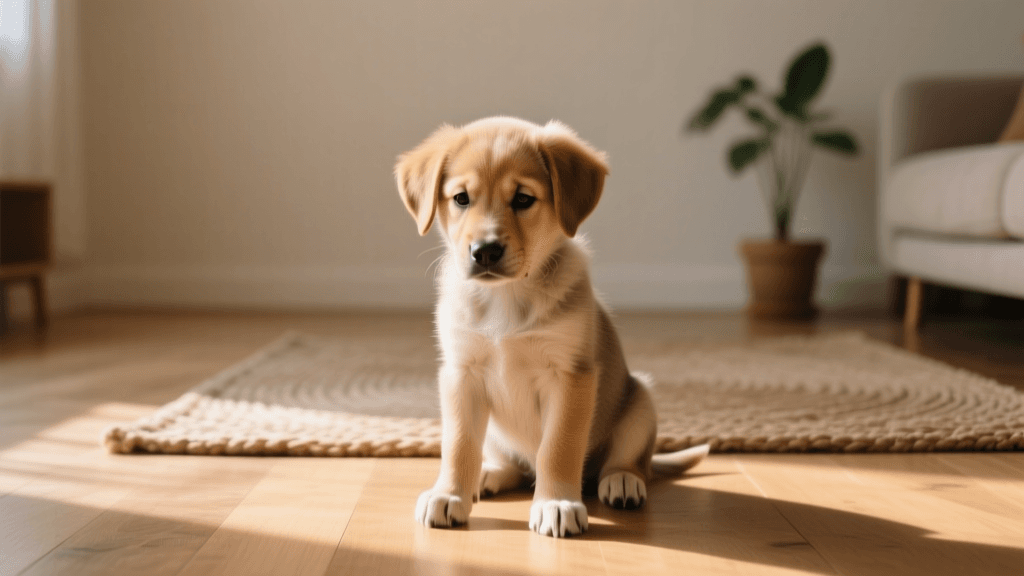
Welcome to the 8-12 Week Puppy Stage
Bringing home a puppy between 8 and 12 weeks of age is one of the most exciting milestones in dog ownership. However, this specific life stage—often compared to the human toddler phase—requires immense patience, structured routines, and proactive care. During these four critical weeks, your puppy is undergoing rapid neurological development, learning bite inhibition, and forming lifelong associations with their environment. This comprehensive life stage care guide will walk you through the exact feeding schedules, potty training protocols, and socialization strategies you need to set your young dog up for success in their first month home.
Nutrition and Feeding Schedules
At eight weeks, a puppy’s digestive system is still incredibly sensitive. Most reputable breeders and rescues will send your puppy home with a small bag of their current food. If you plan to switch to a different brand, such as Purina Pro Plan Puppy or Hill's Science Diet Puppy, you must do so gradually over 7 to 10 days to avoid gastrointestinal upset. Mix 25% of the new food with 75% of the old food for the first three days, gradually increasing the ratio.
Puppies in this age bracket require three to four meals a day to maintain stable blood sugar levels. According to the U.S. Food and Drug Administration (FDA), growing puppies need diets specifically formulated with higher protein, fat, and essential minerals like calcium and phosphorus to support rapid bone and muscle development. For a medium-sized breed (expected adult weight of 30-50 lbs), this typically translates to 1/2 to 3/4 cup of high-quality kibble per meal. Always provide fresh water, but monitor intake; a general rule of thumb is one ounce of water per pound of body weight daily. To prevent nighttime potty accidents, pick up the water bowl two hours before bedtime.
Mastering Potty Training Basics
Housebreaking an 8 to 12-week-old puppy is a test of consistency and supervision. According to the ASPCA, puppies have very limited bladder control at this age. A good baseline is that a puppy can hold their bladder for one hour per month of age, meaning your 8-week-old pup needs a bathroom break every two hours maximum, plus immediately after waking up, playing, or eating.
The Enzymatic Cleaner Rule
Invest in a high-quality enzymatic cleaner like Nature's Miracle Advanced Stain and Odor Eliminator (approx. $15). Standard household cleaners often leave behind uric acid traces that are undetectable to humans but encourage repeat offenses from dogs. When taking your puppy outside, use a specific verbal cue like "Go potty," and reward them immediately with a high-value treat, such as Zuke's Mini Naturals, the second they finish. Never punish a puppy for indoor accidents; simply interrupt them with a gentle "oops," carry them outside, and clean the indoor spot thoroughly.
The Critical Socialization Window
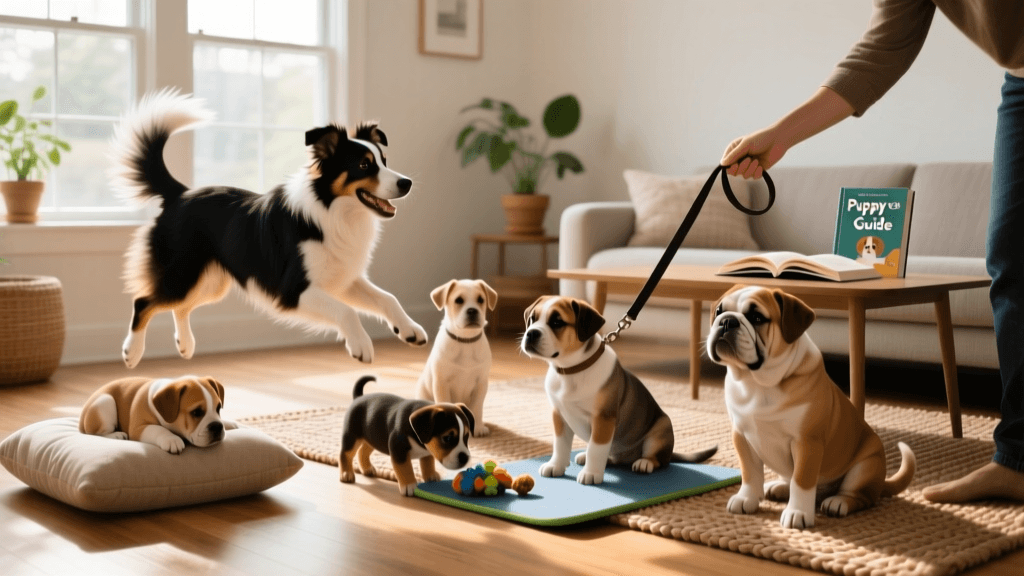
The 8 to 12-week window is the most critical period for socialization. The American Kennel Club (AKC) emphasizes that a puppy's primary socialization window begins to close around 12 to 14 weeks of age. While your puppy will not complete their core vaccination series (DA2PP) until 16 weeks, waiting until they are fully vaccinated to introduce them to the world can result in missed developmental milestones and future behavioral issues like fear-based reactivity.
Practice safe, early socialization by carrying your puppy in a sling or backpack to pet-friendly stores, sitting on a bench outside a grocery store to watch foot traffic, and inviting fully vaccinated, friendly adult dogs to your home. Focus on exposing your puppy to various surfaces (grass, gravel, metal grates), sounds (vacuum cleaners, traffic, thunderstorms played at low volume), and handling exercises (touching their paws, ears, and mouth) to prepare them for future grooming and veterinary visits.
Sleep, Crate Training, and Teething Prep
Puppies at this stage require 18 to 20 hours of sleep per day. Overtired puppies often exhibit "zoomies" or excessive nipping, which is frequently misinterpreted as hyperactivity. Enforce mandatory nap times in a properly sized crate. A crate should be large enough for the puppy to stand, turn around, and lie down, but not so large that they can eliminate in one corner and sleep in the other. A MidWest Homes for Pets wire crate with an adjustable divider panel (approx. $50-$70) is an excellent investment that grows with your dog.
Around 12 weeks, your puppy will begin to lose their baby teeth. Prepare for this by stocking up on teething aids. Freeze a damp, twisted washcloth or fill a classic rubber KONG toy with plain, xylitol-free peanut butter and freeze it solid. The cold temperature numbs sore gums and satisfies their natural urge to chew, saving your furniture from destruction.
Bite Inhibition and Play
Puppies explore the world with their mouths, and needle-like puppy teeth can be painful. Teach bite inhibition by mimicking littermates. When teeth touch human skin, let out a high-pitched "Ouch!" and immediately withdraw attention for 10-15 seconds. This teaches the puppy that biting ends playtime. Redirect their chewing to appropriate toys like the Nylabone Puppy Chew (approx. $8) and praise them heavily when they engage with the toy instead of your hands.
8 to 12 Week Puppy Daily Schedule
Establishing a predictable routine reduces anxiety and accelerates potty training. Below is a structured daily schedule tailored for a working-from-home owner or someone taking puppy leave.
| Time | Activity | Details & Actionable Tips |
|---|---|---|
| 7:00 AM | Wake Up & Potty | Carry puppy immediately outside to their designated spot. Reward success. |
| 7:15 AM | Breakfast | Serve 1/2 to 3/4 cup of puppy kibble. Remove bowl after 15 minutes. |
| 7:45 AM | Potty & Play | Short 10-minute play session followed by another potty break. |
| 8:30 AM | Morning Nap | Crate time. Puppies need 2-3 hour naps after morning activity. |
| 11:00 AM | Potty & Training | 5-minute training session (sit, name recognition) using soft treats. |
| 11:30 AM | Lunch | Second meal of the day. Followed by a potty break at 12:00 PM. |
| 12:15 PM | Midday Nap | Enforced crate rest in a quiet, dimly lit room. |
| 3:00 PM | Potty & Socialization | Carry puppy outside to hear neighborhood sounds or meet a calm dog. |
| 4:00 PM | Dinner | Third meal. Pick up water bowl by 6:00 PM to limit overnight waking. |
| 4:30 PM | Potty & Chew Time | Provide a frozen KONG to soothe gums and encourage independent play. |
| 5:30 PM | Evening Nap | Short nap before the evening "witching hour" energy burst. |
| 7:00 PM | Potty & Calm Play | Gentle tug-of-war or sniffing games on a snuffle mat. |
| 8:30 PM | Final Potty & Bed | Last bathroom break. Settle into the crate for the night. |
Essential Gear and Estimated First-Month Costs
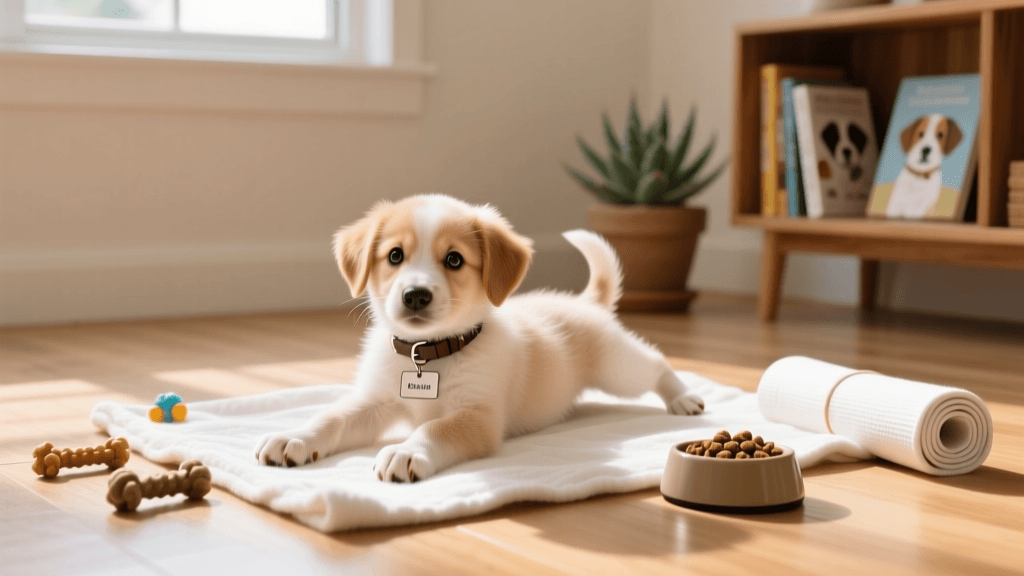
Preparing your home before the puppy arrives is crucial. Here is a checklist of essential items and their estimated costs for the 8-12 week stage:
- Adjustable Wire Crate: $50 - $80 (Provides a safe den and aids in potty training).
- High-Quality Puppy Food: $50 - $80 (Ensure it meets AAFCO standards for growth).
- Enzymatic Stain Remover: $15 - $20 (Crucial for breaking down urine proteins).
- Training Treats: $10 - $15 (Soft, pea-sized treats like Zuke's Mini Naturals).
- Rubber Chew Toys (e.g., KONG): $12 - $18 (Stuffable and freezable for teething relief).
- Front-Clip Puppy Harness & Leash: $25 - $40 (Prevents tracheal damage from pulling).
- Puppy Playpen: $40 - $60 (Creates a safe, enclosed area for unsupervised moments).
Conclusion
The 8 to 12-week stage is demanding, but the foundation you build now will dictate your dog's behavior and confidence for the rest of their life. By adhering to strict feeding routines, prioritizing safe socialization, and utilizing positive reinforcement for potty and bite inhibition training, you are setting your puppy up for a seamless transition into adolescence. Remember to schedule your puppy's first veterinary wellness exam within the first week of bringing them home to establish a preventative healthcare plan tailored to their specific breed and lifestyle.
beth-carrasco
All our authors care for dogs every day — read more of their work on the authors page.