The Large vs Small Breed Puppy: First-Year Care Guide
Discover the key differences in raising large vs small breed puppies. Compare feeding schedules, growth milestones, and joint care for the first year.
Understanding the First Year: Size Matters in Puppy Care
Bringing a new puppy home is an exhilarating milestone, but the first year of a dog's life is packed with rapid physical and behavioral changes. While all puppies require love, patience, and consistent training, the care protocols for a 5-pound Chihuahua mix differ vastly from those of an 80-pound Golden Retriever. From metabolic rates and caloric needs to joint development and bladder capacity, a puppy's projected adult size dictates how you should approach their first twelve months. In this comprehensive guide, we break down the critical differences in raising large versus small breed puppies, providing actionable timelines, nutritional advice, and training strategies to ensure your new companion thrives.
Growth Rates and Developmental Milestones
One of the most fundamental differences between small and large breed puppies is their growth trajectory. Small breed dogs (typically those weighing under 20 pounds at maturity) experience a rapid growth spurt in their first few months and often reach their full adult size by 10 to 12 months of age. In contrast, large and giant breed dogs (weighing over 50 pounds) have a much slower, prolonged growth curve. A Great Dane or Mastiff may not reach their full skeletal maturity until they are 18 to 24 months old.
This extended growth period in large breeds means their growth plates—the areas of developing cartilage tissue at the ends of long bones—remain open and vulnerable to injury for a much longer time. According to the American College of Veterinary Surgeons, damage to these growth plates before they close can result in severe orthopedic deformities, making it crucial to manage a large breed puppy's physical activity carefully throughout their entire first year and beyond.
Feeding Schedules and Nutritional Needs
Nutrition is the cornerstone of puppy development, but the dietary requirements for small and large breeds are practically opposites. Small breed puppies have incredibly fast metabolisms and smaller stomachs. They burn through calories rapidly, putting them at risk for hypoglycemia (dangerously low blood sugar) if they go too long without eating. Consequently, small breeds require calorie-dense kibble formulated specifically for small mouths and high metabolic rates, fed in smaller, more frequent meals.
Large breed puppies, on the other hand, face the risk of growing too quickly. Overfeeding a large breed puppy or providing a diet too high in calcium and phosphorus can lead to Developmental Orthopedic Disease (DOD), including conditions like hip dysplasia and osteochondrosis. The U.S. Food and Drug Administration (FDA) emphasizes the importance of feeding large breed puppies specialized diets that strictly control calcium and phosphorus ratios to promote slow, steady bone growth.
First-Year Feeding Comparison Chart
| Puppy Age | Small Breed Meals/Day | Large Breed Meals/Day | Primary Nutritional Focus |
|---|---|---|---|
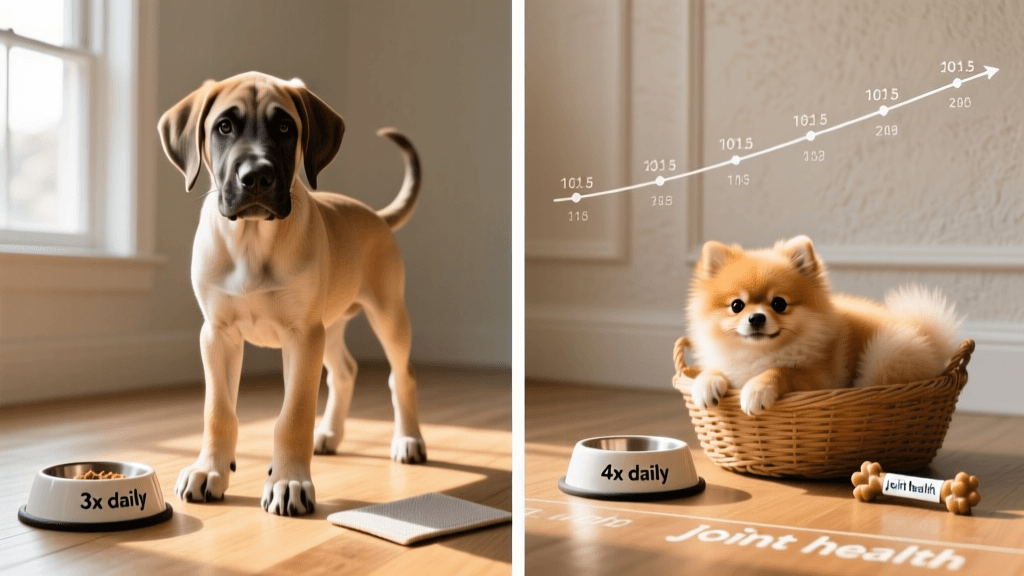
| 8–12 Weeks | 4 meals | 3 meals | High calorie (Small) / Controlled Calcium (Large) |
| 3–6 Months | 3 meals | 3 meals | Sustained energy / Joint support (Glucosamine) |
| 6–12 Months | 2 meals (Transition to Adult) | 2 meals (Puppy Formula) | Weight management (Small) / Slow growth (Large) |
Potty Training and Bladder Capacity
Potty training requires immense patience, but your expectations must be scaled to your puppy's physical capabilities. A general rule of thumb is that a puppy can hold their bladder for one hour per month of age, up to a maximum. However, small breed puppies have remarkably tiny bladders and higher metabolic rates, meaning they process water and food much faster. A 10-week-old Yorkshire Terrier may need a potty break every 45 to 60 minutes during the day. Using indoor potty pads or a designated indoor turf patch (like Fresh Patch) is often a practical necessity for small breeds living in apartments or high-rises.
Large breed puppies have greater bladder capacity but produce a significantly higher volume of waste. While a 10-week-old Labrador might hold it for 90 minutes, the mess they leave behind requires prompt enzymatic cleaning (using products like Nature's Miracle) to prevent repeat offenses. Crate training is highly effective for large breeds, but you must use a crate divider. A crate should only be large enough for the puppy to stand, turn around, and lie down. If a large breed puppy is given a massive 48-inch crate too early, they will designate one corner for sleeping and the opposite corner as a bathroom, completely undermining the crate training process.
Exercise and Joint Care Protocols
Exercise is vital for burning off puppy energy and promoting mental well-being, but the type and duration of exercise must be tailored to the breed's size. For small breeds, short 10-minute leash walks and indoor fetch sessions are usually sufficient to tire them out. Their joints are small, but they reach skeletal maturity quickly, allowing for normal adult exercise routines by the time they are a year old.
For large breeds, forced exercise—such as running alongside a bicycle, jogging on hard pavement, or repetitive jumping for frisbees—must be strictly avoided until their growth plates close. The widely accepted veterinary guideline is the '5-minute rule': provide 5 minutes of structured, low-impact exercise per month of age, twice a day. Therefore, a 4-month-old large breed puppy should only have 20 minutes of leash walking per session. Free play on soft, yielding surfaces like grass or dirt is the safest way for large breed puppies to build muscle without placing undue stress on their developing joints.
Teething and Chew Toy Selection
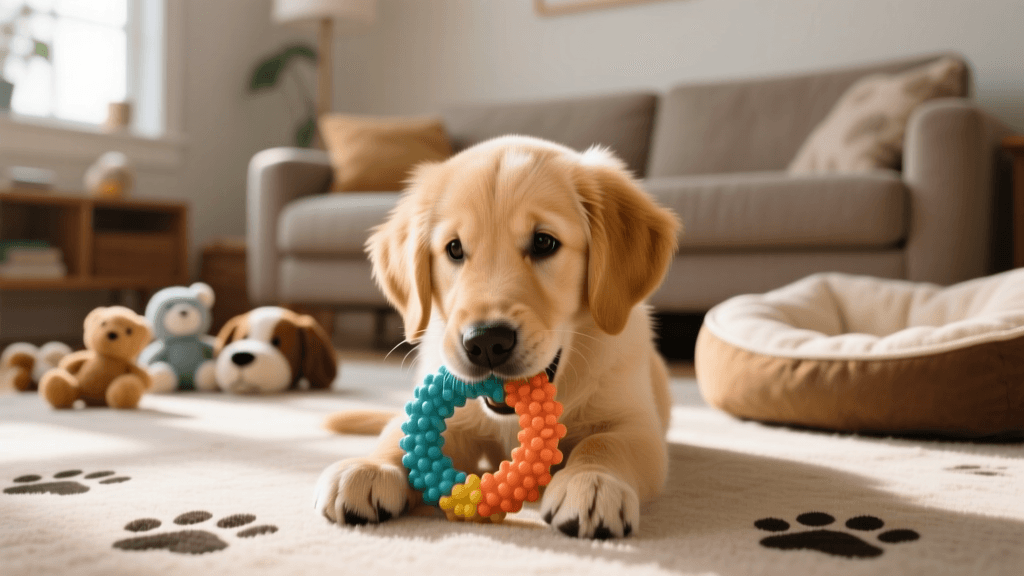
All puppies go through a teething phase, typically starting around 12 weeks and concluding by 6 months of age. However, the bite force and jaw size of the puppy dictate the toys you should provide. Small breed puppies need soft, pliable toys that won't damage their delicate teeth or cause jaw fatigue. The 'Kong Puppy' toy in the extra-small size, filled with a small amount of xylitol-free peanut butter and frozen, provides excellent soothing relief.
Large breed puppies possess immense jaw strength even at 12 weeks old. They can easily shred standard plush toys, creating a severe choking or intestinal blockage hazard. For large breeds, invest in heavy-duty, size-appropriate chew toys like the 'Nylabone Puppy Power Chew' or the classic red 'Kong Classic' sized up to Large or XL. Always supervise chew sessions, and discard any toy that begins to splinter or break apart into swallowable chunks.
Financial Considerations: Budgeting for the First Year
Prospective owners must also weigh the financial realities of puppy care, which scale dramatically with the dog's size. According to the ASPCA, the annual cost of caring for a dog varies significantly based on size. During the first year, large breed puppies require substantially more resources. A 50-pound bag of high-quality large breed puppy food (such as Purina Pro Plan Large Breed Puppy) may cost $80 and last a month, whereas a 15-pound bag of small breed food (like Royal Canin Small Puppy) costs around $45 and lasts much longer. Furthermore, preventative medications for fleas, ticks, and heartworm are weight-based; treating an 80-pound adolescent dog costs nearly double the monthly price of treating a 10-pound dog. Large breeds also require larger, more expensive gear, from heavy-duty crates and orthopedic beds to wider collars and longer leashes.
Conclusion
Whether you are raising a pint-sized companion or a gentle giant, the first year is a critical window for establishing lifelong health and behavioral foundations. By respecting the unique physiological timelines, nutritional boundaries, and physical limitations associated with your puppy's projected adult size, you can navigate the challenges of puppyhood with confidence. Tailor your approach, consult with your veterinarian regularly, and enjoy the incredible journey of watching your puppy grow into a healthy, happy adult dog.
tom-renshaw
All our authors care for dogs every day — read more of their work on the authors page.