8 to 12 Week Puppy Care Guide: Feeding, Sleep, and Training
Discover essential care tips for your 8 to 12 week old puppy. Learn about feeding schedules, sleep routines, potty training, and early socialization.
Welcome to the 8 to 12 Week Puppy Stage
Bringing home a new puppy is an exhilarating experience, but the 8 to 12 week stage is widely considered the most demanding period of early dog ownership. During this critical developmental window, your puppy is transitioning from the comfort of their littermates to a brand new environment. This life stage is characterized by rapid brain development, the establishment of lifelong habits, and the infamous 'fear imprint' period. As a new puppy parent, your primary goals are to build trust, establish a predictable routine, and lay the groundwork for basic obedience. This comprehensive life stage care guide will walk you through the exact feeding schedules, sleep routines, potty training methods, and socialization milestones you need to navigate these first crucial weeks successfully.
Feeding Schedule and Nutrition
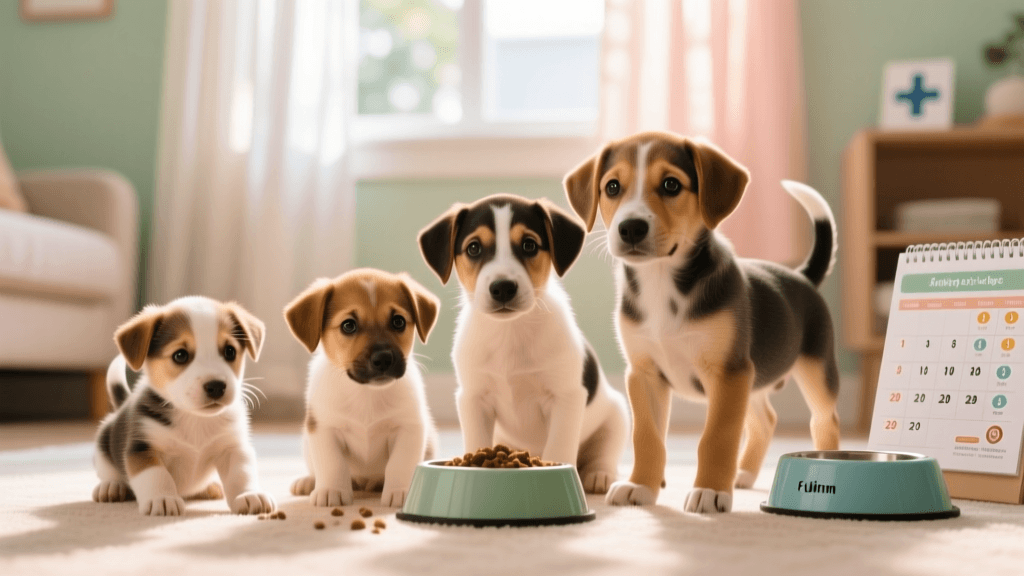
At 8 to 12 weeks of age, your puppy's digestive system is still maturing, and their tiny stomach cannot hold large amounts of food at once. According to the ASPCA's Puppy Care guidelines, puppies in this life stage require three to four small, evenly spaced meals per day to maintain stable blood sugar levels and support rapid growth.
Portion Sizes and Food Transitioning
Always ask your breeder or rescue organization for a sample of the food your puppy has been eating. If you plan to switch to a different brand, such as Purina Pro Plan Puppy or Royal Canin Puppy, do so gradually over 7 to 10 days to avoid gastrointestinal upset. Mix 25 percent of the new food with 75 percent of the old food for the first three days, then move to a 50/50 split, and finally transition to 100 percent new food.
- Small Breeds (Under 20 lbs adult weight): Feed approximately 1/2 cup of high-quality dry kibble per meal, three to four times daily.
- Medium Breeds (20 to 50 lbs adult weight): Feed approximately 3/4 to 1 cup per meal, three times daily.
- Large Breeds (Over 50 lbs adult weight): Feed 1 to 1.5 cups of large-breed-specific puppy kibble per meal, three times daily to prevent rapid bone growth issues.
Ensure fresh water is always available, but monitor intake. A general rule of thumb is 1/2 cup of water every two hours during active periods. Expect to spend around $40 to $60 per month on premium puppy food during this stage.
Sleep Routines and Crate Training
Puppies at 8 to 12 weeks old require an astonishing 18 to 20 hours of sleep per day. Their growing brains and bodies process new experiences while they rest. However, they rarely self-soothe to sleep and will often fight nap times, leading to overtired 'zoomies' and excessive biting.
Setting Up the Crate
Crate training is essential for potty training and providing a safe den. Invest in an adjustable wire crate, such as the MidWest Homes for Pets iCrate ($50 to $80). Use the included divider panel to restrict the space so the puppy only has enough room to stand, turn around, and lie down. If the crate is too large, they may soil one corner and sleep in the other.
To ease nighttime whining, place a Snuggle Puppy (approximately $40) in the crate. This toy features a simulated heartbeat and heat pack that mimics the presence of littermates, significantly reducing separation anxiety. Cover the crate with a breathable blanket to block visual stimuli and create a den-like atmosphere.
Potty Training Fundamentals
Consistency is the golden rule of potty training. An 8-week-old puppy can typically hold their bladder for about one hour per month of age, meaning you must take them outside every one to two hours, as well as immediately after waking up, eating, drinking, or engaging in vigorous play.
The Bell Training Method
Hang a set of potty bells on the door handle you use for bathroom breaks. Every time you carry or walk your puppy outside, gently guide their paw or nose to ring the bells. Within two to three weeks, most puppies will associate the sound of the bells with going outside.
Accidents are inevitable. Never punish a puppy for a mess, as this only teaches them to hide when they need to eliminate. Instead, interrupt them with a neutral 'oops' and immediately carry them outside to finish. Clean indoor accidents thoroughly with an enzymatic cleaner like Nature's Miracle ($15) to completely break down the uric acid crystals and prevent repeat offenses.
Early Socialization and the Fear Imprint Period
The window between 8 and 11 weeks is known as the 'fear imprint' period. Experiences during this time can leave a lasting impact on your puppy's temperament. The American Kennel Club (AKC) emphasizes that safe, positive socialization is the single most important thing you can do for your puppy's behavioral health.
Safe Socialization Before Full Vaccination
A common misconception is that puppies must be kept entirely isolated until they complete their DHPP vaccine series at 16 weeks. However, the American Veterinary Medical Association (AVMA) notes that the behavioral risks of under-socialization far outweigh the disease risks if proper precautions are taken. Avoid high-risk areas like dog parks or pet store floors. Instead, carry your puppy in a K9 Sport Sack ($60) or use a pet stroller to expose them to the sights and sounds of busy streets, construction noise, and diverse groups of people. Invite fully vaccinated, friendly adult dogs to your home for controlled playdates to teach your puppy appropriate canine communication.
Bite Inhibition and Handling Desensitization
Puppies explore the world with their mouths, and at 8 to 12 weeks, their needle-sharp teeth can be painful. Bite inhibition is the process of teaching your puppy to control the force of their bite. When your puppy bites your skin, let out a high-pitched 'ouch' and immediately withdraw your attention for 10 seconds. Redirect their chewing energy to appropriate toys like the KONG Classic ($15) or a soft Nylabone puppy chew.
Simultaneously, practice daily handling exercises. Spend five minutes a day gently touching your puppy's paws, looking inside their ears, and lifting their lips. Pair these actions with high-value treats like boiled chicken or freeze-dried liver. This desensitization will make future grooming, nail trims, and veterinary exams significantly less stressful.
8 to 12 Week Puppy Daily Schedule
Puppies thrive on predictability. Below is a sample daily schedule tailored for an 8 to 12 week old puppy to help you structure your day:
| Time | Activity | Details |
|---|---|---|
| 7:00 AM | Wake Up & Potty | Immediately carry outside to the designated potty spot. |
| 7:30 AM | Breakfast | Meal 1 of 3. Followed by a potty break 15 minutes later. |
| 8:00 AM | Active Play & Training | 15 minutes of gentle play and basic name recognition. |
| 8:30 AM | Morning Nap | Crate time for 2 to 3 hours. |
| 11:30 AM | Potty & Lunch | Potty break followed by Meal 2. |
| 12:15 PM | Socialization Walk | Carry or stroll through a new environment for 20 minutes. |
| 1:00 PM | Afternoon Nap | Crate time for 2 to 3 hours. |
| 4:00 PM | Potty & Dinner | Potty break followed by Meal 3. |
| 4:30 PM | Chew Time & Handling | KONG toy with puppy-safe peanut butter and paw handling. |
| 5:30 PM | Evening Nap | Crate or pen time while the family eats dinner. |
| 7:30 PM | Wind Down & Potty | Calm cuddles and final evening potty breaks. |
| 9:30 PM | Bedtime | Water removed by 8:00 PM. Final potty and into the crate. |
Essential Shopping List and Estimated Costs
To set your puppy up for success, you will need a few specific supplies. Here is a breakdown of essential items and their estimated costs for the 8 to 12 week stage:
| Item | Estimated Cost | Purpose |
|---|---|---|
| Adjustable Wire Crate | $50 - $80 | Safe sleeping space and potty training aid. |
| Snuggle Puppy Toy | $40 | Eases nighttime anxiety with heartbeat simulation. |
| Enzymatic Cleaner | $15 | Eliminates urine odors to prevent repeat accidents. |
| KONG Classic (Small) | $15 | Durable chew toy for bite inhibition and teething prep. |
| Puppy Harness & Leash | $25 | Safe walking gear that avoids tracheal pressure. |
| Potty Bells | $10 | Communication tool for signaling the need to go outside. |
Conclusion
The 8 to 12 week puppy stage is a whirlwind of sleepless nights, potty breaks, and endless chewing, but it is also the foundation of your lifelong bond. By adhering to a strict feeding and sleep schedule, prioritizing safe socialization, and utilizing positive reinforcement for potty and bite training, you will guide your puppy through this critical developmental phase with confidence. Remember that patience and consistency are your greatest tools. The effort you invest during these first few weeks will yield a well-adjusted, confident, and happy adult dog.
jonas-cole
All our authors care for dogs every day — read more of their work on the authors page.