2026 Doorbell Reactivity Protocol: Smart Chimes & Adaptil
Master the 2026 doorbell reactivity protocol for anxious dogs using smart chimes, Adaptil pheromones, and step-by-step desensitization techniques.
Understanding Doorbell Reactivity in 2026
Living with a reactive or anxious dog often means living in a state of hyper-vigilance. For many pet parents, the most explosive trigger in the home is the doorbell. A single chime can send an otherwise calm dog into a frenzy of barking, lunging, and severe stress. In 2026, managing this specific trigger has evolved significantly thanks to advancements in smart home technology and a deeper understanding of canine neurobiology. By combining modern smart chimes with proven chemical communication tools like Adaptil, we can create a comprehensive desensitization protocol that actually works.
Doorbell reactivity is rarely just about the sound itself. It is a complex emotional response rooted in territorial arousal, fear, or noise sensitivity. When a dog reacts explosively, they are experiencing an "amygdala hijack," where the emotional center of the brain overrides the prefrontal cortex, making learning impossible. Therefore, traditional obedience training or punitive measures are not only ineffective but can actively worsen the anxiety. According to the American Veterinary Society of Animal Behavior (AVSAB), using punishment to address fear-based reactivity can increase stress and lead to defensive aggression. Instead, modern behavior modification relies on Desensitization and Counterconditioning (DS/CC), aided by environmental management.
The 2026 Smart Home Advantage
In the past, desensitizing a dog to a doorbell required a partner to repeatedly ring the physical bell outside, which was impractical and often triggered neighborhood complaints. Today, the widespread adoption of the Matter smart home protocol means that auditory triggers can be entirely digitized and controlled with surgical precision. Smart speakers and WiFi-enabled chimes allow you to manipulate the volume, pitch, and frequency of the doorbell sound, keeping your dog strictly under their reactivity threshold while training.
Essential Gear for the Protocol
To execute this protocol effectively, you need to gather a few specific tools. The goal is to control the environment and the dog’s chemical state before introducing the trigger.
- Smart Chime or Speaker: A device capable of playing custom sounds at very low volumes (e.g., a smart speaker or a dedicated WiFi doorbell chime).
- Adaptil Calm Diffuser or Collar: Synthetic dog-appeasing pheromones (DAP) that lower baseline anxiety and promote neuroplasticity.
- High-Value Treats: Single-ingredient freeze-dried liver, boiled chicken, or lickable treats in a squeeze tube. Kibble will not cut it for counterconditioning.
- Raised Cot or Mat: For teaching the "Place" command, providing a safe zone away from the front door.
Auditory Management Tools Comparison
| Feature | Traditional Wired Bell | Smart WiFi Chime (2026 Models) | Smart Speaker Routine |
|---|---|---|---|
| Volume Control | None (Fixed) | Digital Slider (1-10) | Digital Slider (1-100%) |
| Sound Customization | No | Yes (MP3 upload) | Yes (Custom audio files) |
| Remote Triggering | No | Yes (via App) | Yes (via App/Voice) |
| Avg Cost in 2026 | $15 - $25 | $35 - $55 | $50 (if not owned) |
Step-by-Step Doorbell Desensitization Protocol
This protocol requires patience. Do not rush through the phases. If your dog shows signs of stress (panting, lip licking, pacing, or barking), you have moved too fast and must return to the previous step.
Phase 1: Environmental Setup and Baseline Calming
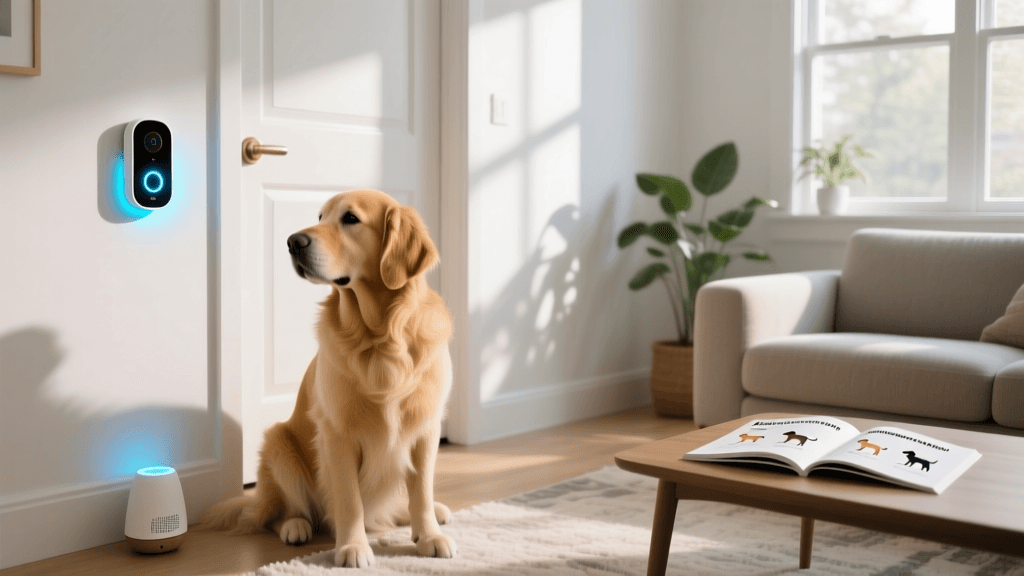
Begin by plugging in an Adaptil Calm Diffuser in the room where your dog spends the most time, ideally 48 hours before starting the training. The synthetic pheromones mimic the nursing pheromones produced by a mother dog, signaling safety to the canine brain. This lowers the dog’s overall cortisol levels, making them more receptive to the counterconditioning process. Set up your smart speaker or WiFi chime in a room far away from the actual front door to begin the training.
Phase 2: Sub-Threshold Sound Pairing
Record your actual doorbell sound on your smartphone, or download the exact MP3 file from your smart doorbell manufacturer. Set your smart speaker volume to the absolute lowest setting—so quiet that you can barely hear it.
Play the sound. The exact millisecond the sound plays, present a high-value treat to your dog. The sequence is critical: Sound → Treat. The sound must predict the treat, not the other way around. If the dog barks at the lowest volume, move the speaker further away or lower the volume further. Repeat this 10 to 15 times per session, twice a day. You are rewiring the brain to associate the chime with a positive outcome rather than a territorial threat.
Phase 3: Adding the "Place" Command
Once your dog visibly perks up and looks for a treat when hearing the low-volume chime, it is time to add an incompatible behavior. A dog cannot be calmly settled on a mat and simultaneously charging the front door. Teach your dog to go to a raised cot or mat on cue.
When the low-volume chime plays, cue your dog to go to their "Place." Reward them heavily for settling on the mat. Gradually increase the volume of the chime by 5% increments over several weeks, always ensuring the dog remains under their reactivity threshold. As detailed in the International Association of Animal Behavior Consultants (IAABC) Journal, giving a reactive dog an alternative, heavily reinforced job reduces the cognitive load and emotional panic associated with the trigger.
Phase 4: Real-World Simulations
Once your dog can handle the chime at 75% volume while remaining on their mat, move the smart speaker closer to the actual front door. Begin incorporating physical movements: play the chime, cue the mat, reward, and then walk toward the door. Touch the doorknob, return to the dog, and reward. This breaks the predictive chain that "doorbell means someone is entering my space right now."
Integrating Adaptil for High-Stress Days
Even with rigorous training, unexpected triggers like delivery drivers arriving early or guests dropping by unannounced can cause setbacks. For these real-world scenarios, equip your dog with an Adaptil Calm Collar. Unlike the diffuser, which is localized to one room, the collar utilizes the dog’s body heat to release the pheromones continuously, providing a mobile bubble of calming chemical communication. In 2026, veterinary behaviorists frequently recommend pairing these pheromone tools with DS/CC protocols to prevent the dog from practicing the reactive behavior while the owner is away or caught off guard.
Automating the Protocol with Smart Routines
One of the greatest advantages of modern smart home ecosystems is automation. If you are working from home and want to maintain your dog’s desensitization without interrupting your workflow, you can program a smart home routine. Set your smart speaker to play the doorbell chime at a low, sub-threshold volume at randomized intervals throughout the day, paired with an automated treat dispenser (like the latest Furbo or Treatbell models) that tosses a snack to the dog’s mat. This maintains the positive association without requiring your constant manual intervention.
When to Consult a Professional
If your dog’s reactivity includes redirected aggression (biting the owner when the doorbell rings), severe noise phobia that results in destructive escape attempts, or if the dog refuses to eat high-value treats even when the trigger is absent, you need professional intervention. Seek out a professional who utilizes force-free, science-based methods. You can find highly qualified experts through directories like Fear Free Certified Professionals or veterinary behaviorists who can discuss adjunctive anti-anxiety medications if the dog’s neurochemistry requires pharmacological support to allow learning to take place.
Conclusion
Managing a reactive dog in a shared living space is undoubtedly challenging, but the 2026 doorbell reactivity protocol offers a clear, humane, and highly effective roadmap to a quieter home. By leveraging smart home technology to control the auditory environment, utilizing synthetic pheromones to lower baseline anxiety, and applying rigorous counterconditioning techniques, you can help your dog feel safe when the doorbell rings. Remember that consistency is your greatest asset; celebrate the small victories, respect your dog’s threshold, and enjoy the journey toward a more peaceful life together.
jonas-cole
All our authors care for dogs every day — read more of their work on the authors page.