Top 3 Cooling Vests for Service Dogs in 2026 Reviewed
Discover the top 3 cooling vests for service dogs in 2026. Compare Ruffwear, Hurtta, and Non Stop to keep your working dog safe from heat exhaustion.
The Unique Challenges of Heat for Working and Service Dogs
As global temperatures continue to rise and urban heat islands intensify in 2026, managing the core body temperature of a working or service dog has never been more critical. Unlike pet dogs, who can simply retreat to an air-conditioned room or refuse to walk on hot pavement, service dogs carry a profound responsibility. Whether they are guiding a visually impaired handler through a busy city, providing mobility support, or alerting to a drop in blood glucose levels, their cognitive and physical endurance is paramount. Heat stress does not just cause physical fatigue; it severely degrades a dog's executive function, scent detection accuracy, and overall reliability in public access environments.
Canine thermoregulation is inherently inefficient compared to humans. Dogs primarily dissipate heat through panting and vasodilation in their paw pads, which is often insufficient during high-humidity summer months. For handlers relying on these dogs for daily independence, investing in specialized, harness-compatible cooling gear is not a luxury—it is a vital piece of safety equipment. In this comprehensive 2026 guide, we evaluate the best cooling vests engineered specifically to meet the rigorous demands of working and service dogs.
Why Standard Cooling Vests Fail Service Dogs
Many commercially available cooling vests are designed for recreational pets and fail under the scrutiny of service work. A standard vest might interfere with the rigid handle of a guide dog harness, block access to a medical alert pouch, or restrict the range of motion required for a mobility dog to brace or retrieve. Furthermore, many recreational vests rely on bulky ice-pack inserts that add unnecessary weight and shift unpredictably when the dog is performing physical tasks.
For a cooling vest to be considered 'service-dog approved,' it must meet three strict criteria:
- Low-Profile Girth Integration: It must layer seamlessly under or integrate with standard service harnesses (such as leather guide harnesses or nylon mobility harnesses) without causing chafing.
- Unrestricted Tasking Access: The design must leave the dorsal (top) and lateral (side) attachment points clear for handles, badges, and medical pouches.
- Sustained Evaporative Efficiency: It must utilize advanced multi-layer evaporative fabrics or phase-change materials that provide hours of cooling without requiring constant re-wetting.
Top 3 Cooling Vests for Service Dogs in 2026
1. Ruffwear Swamp Cooler Evo
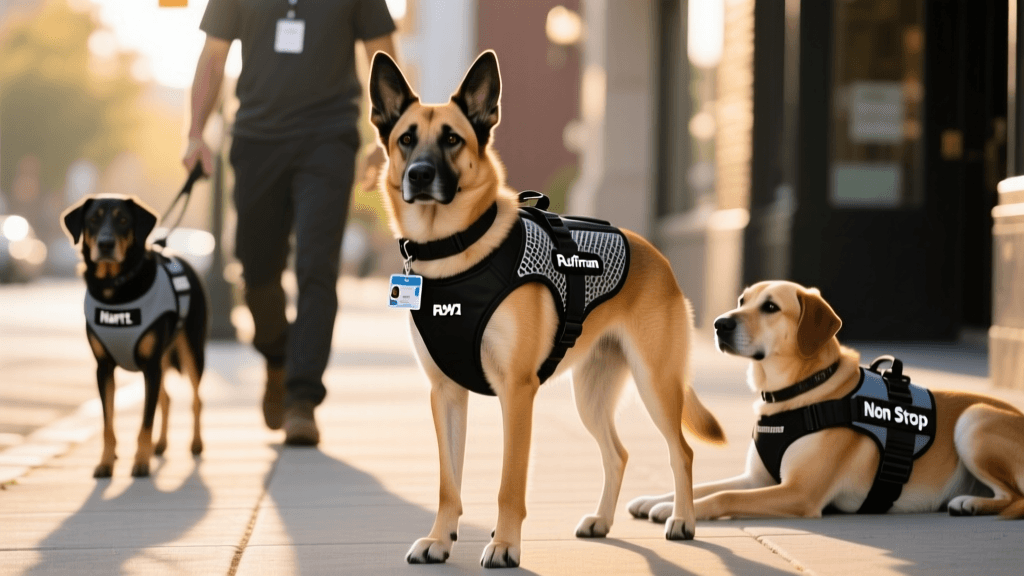
The Ruffwear Swamp Cooler Evo remains the gold standard for guide dogs and mobility dogs in 2026. Ruffwear has refined the Evo's three-layer construction, featuring an outer mesh that reflects UV rays, a middle absorbent layer that stores water for evaporative cooling, and an inner wicking layer that transfers heat away from the dog's core. The updated 2026 girth strap system is exceptionally low-profile, allowing it to slide effortlessly under most rigid guide dog handles without creating pressure points. Additionally, the UPF 50+ rating provides essential protection for short-coated breeds like Boxers or Vizslas frequently used in detection and alert work.
2. Hurtta Cooling Vest
Originating from Finland, the Hurtta Cooling Vest is uniquely designed to cover the dog's neck, chest, and heart area. This is particularly beneficial for psychiatric service dogs (PSDs) and cardiac alert dogs, as cooling the blood near the heart and major arteries rapidly lowers overall core temperature. The vest's ultra-thin, stretchy neoprene-like material acts like a second skin, making it virtually undetectable under a service dog vest or cape. Because it lacks bulky straps and relies on a simple, secure belly wrap, it is a favorite among handlers who need to quickly gear up or strip down their dogs in crowded public access venues like airports or hospitals.
3. Non Stop Dogwear Cooling Coat
For search and rescue (SAR) dogs, wilderness mobility dogs, and those working in extreme outdoor environments, the Non Stop Dogwear Cooling Coat offers unparalleled durability. Utilizing a highly advanced evaporative fabric that retains moisture up to 40% longer than standard cotton-blend alternatives, this coat is built for endurance. The 2026 model features reinforced Kevlar stitching along the ventral seams, protecting the vest from abrasion when the dog is navigating rough terrain or performing heavy mobility bracing. While it is the most expensive option on our list, its lifespan and performance in high-stress environments justify the investment for professional working lines.
2026 Cooling Vest Comparison Chart
| Brand / Model | Best Use Case | Harness Compatibility | Cooling Method | Est. 2026 Price |
|---|---|---|---|---|
| Ruffwear Swamp Cooler Evo | Guide & Mobility Dogs | Excellent (Under-handle) | Evaporative / UPF | $78.00 |
| Hurtta Cooling Vest | PSD & Cardiac Alert | Excellent (Base layer) | Evaporative (Core) | $65.00 |
| Non Stop Dogwear Cooling Coat | SAR & Outdoor Mobility | Good (Over/Under) | Extended Evaporative | $95.00 |
How to Layer a Cooling Vest Under a Service Harness
Proper layering is essential to prevent friction burns and ensure the service harness functions as intended. Follow these steps for a safe fit:
- Soak and Wring: Fully submerge the cooling vest in cool (not ice-cold) water for 5 minutes. Wring it out thoroughly so it is damp, not dripping. Excess water can degrade leather harness components over time.
- Dress the Dog: Put the cooling vest on the dog, ensuring the chest plate sits flat against the sternum. Secure the belly straps snugly but allow enough room for deep diaphragmatic breathing.
- Apply the Service Harness: Carefully slide the service harness over the cooling vest. Check the dorsal D-ring and handle to ensure the vest's fabric has not bunched up underneath, which could cause uneven pressure on the dog's spine.
- Monitor and Re-wet: Evaporative cooling only works while the vest is damp. In low-humidity environments, you may need to apply a spray bottle of water directly to the vest's outer layer every 90 minutes to reactivate the cooling process.
Comprehensive Heat Protocols for Handlers
A cooling vest is just one component of a comprehensive heat management strategy. Working dogs are highly driven and will often mask signs of heat exhaustion to continue their tasks. Handlers must be proactive. Always test asphalt and concrete surfaces with the back of your hand; if it is too hot to hold for seven seconds, it will burn your dog's paw pads and rapidly increase their core temperature. Utilize collapsible silicone bowls and offer water mixed with canine-safe electrolytes every 30 minutes during outdoor work.
Recognizing the early signs of heatstroke is critical. According to the American Kennel Club's veterinary guidelines, symptoms include excessive panting that does not resolve with rest, brick-red or pale gums, thick saliva, and stumbling or disorientation. If your service dog exhibits any of these signs, immediately cease all work, move to a shaded or air-conditioned area, apply cool (never freezing) water to their paw pads and belly, and seek emergency veterinary care.
Legal and Public Access Considerations
Handlers occasionally face questions from business owners regarding the use of cooling vests. It is important to understand your rights. According to the U.S. Department of Justice ADA guidelines, service animals are permitted to wear any gear, including cooling vests, harnesses, or capes, as long as the animal is under the handler's control and the gear does not fundamentally alter the nature of the business's services. A cooling vest is considered essential medical and safety equipment for the working dog. If a business questions the vest, politely inform them that it is necessary health-and-safety gear for a trained service animal performing its duties.
Conclusion
Protecting your service dog from heat stress ensures they can continue to provide the life-changing assistance you rely on. By selecting a harness-compatible, high-efficiency cooling vest like the Ruffwear Swamp Cooler Evo or the Hurtta Cooling Vest, you are safeguarding your partner's health and cognitive sharpness. As we navigate the increasingly hot summers of 2026, proactive heat management remains a cornerstone of responsible and ethical service dog handling.
priya-sutaria
All our authors care for dogs every day — read more of their work on the authors page.