Mastering Dog Training Tips for Reactive Dogs: A Comprehensive Guide
Discover effective dog training tips for reactive dogs. Learn step-by-step techniques to manage leash reactivity, reduce stress, and build confidence.
Walking a reactive dog can often feel like navigating an emotional minefield. You scan the horizon for other dogs, cross the street to avoid strangers, and dread the sudden appearance of a delivery truck. If your dog barks, lunges, or pulls frantically on the leash when faced with certain triggers, you are not alone. Reactivity is one of the most common behavioral challenges faced by dog owners today. However, with patience, the right methodology, and a deep understanding of canine psychology, you can transform your walks from stressful ordeals into enjoyable bonding experiences.
This comprehensive guide explores proven dog training tips for reactive dogs, offering step-by-step strategies to help your furry companion build confidence and find calm. For a broader foundation in positive methods, check out our guide on positive reinforcement basics.
Understanding the Root of Canine Reactivity
Before diving into training techniques, it is crucial to understand what reactivity actually is. Reactivity is an overreaction to specific stimuli in the environment. These triggers can include other dogs, strangers, bicycles, skateboards, or even loud noises. It is vital to recognize that reactivity is rarely born out of malice or a desire to dominate. Instead, it is almost always rooted in fear, frustration, or a lack of proper socialization during critical developmental periods.
When a reactive dog sees a trigger, their brain enters a fight & flight state. The amygdala hijacks their nervous system, flooding their body with cortisol and adrenaline. In this state, your dog is physically incapable of learning or processing complex commands. This is why asking a highly reactive dog to sit or stay while they are barking at a passing dog is usually futile.
Furthermore, reactive dogs often suffer from trigger stacking. This phenomenon occurs when multiple minor stressors accumulate over a short period, eventually causing the dog to explode over something seemingly insignificant. For example, a dog might handle a loud garbage truck in the morning, tolerate a stranger walking too close at noon, but then completely lose control when they see a squirrel in the afternoon. Understanding trigger stacking helps you manage your dog's overall stress levels, a concept we also touch upon in our puppy socialization guide to prevent these issues from developing early on.
Certain breeds with strong guarding or herding instincts may be more genetically predisposed to reactivity if their physical and mental needs are not met. For instance, owners of high-drive breeds like the Belgian Malinois or the German Shepherd must be particularly proactive about socialization and structured training to channel their intense focus appropriately.
Essential Equipment for Reactive Dog Training
Having the right tools is half the battle when managing a reactive dog. The wrong equipment can inadvertently increase your dog's anxiety or cause physical harm during a lunging episode.
- Front-Clip Harness: A well-fitted harness with a front leash attachment is invaluable. When the dog pulls or lunges, the front clip gently redirects their momentum back toward you, preventing them from gaining the leverage they need to pull forward. This is a much safer and more effective alternative to traditional collars, which can cause tracheal damage during sudden outbursts. For more on stopping pulling, read our leash pulling solutions.
- Long Line (15-30 feet):strong> A long line gives your dog the freedom to sniff and explore while maintaining your control. It is essential for practicing recall and desensitization exercises in open spaces where triggers might appear at a distance.
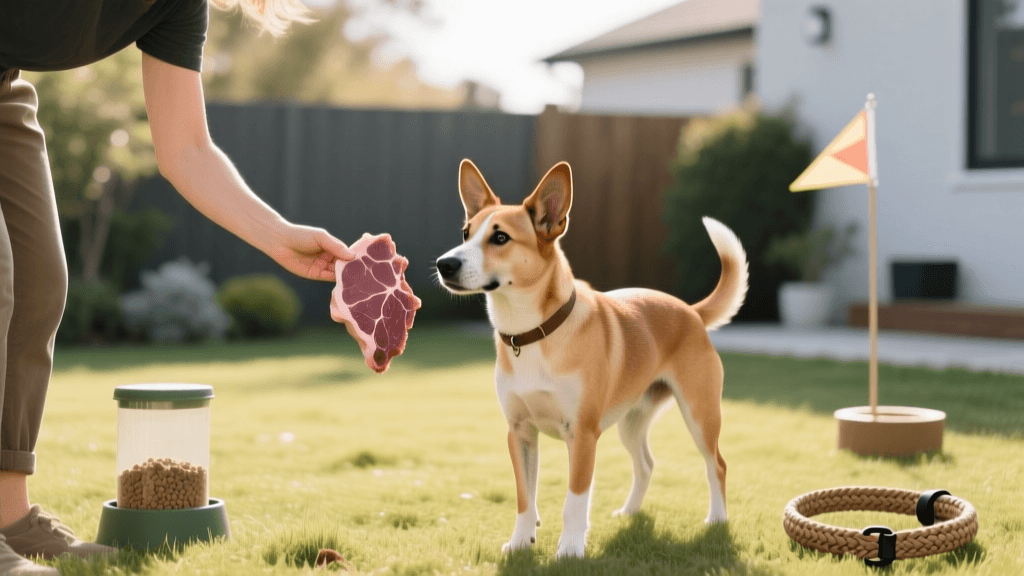
- High-Value Treat Pouch: Dry kibble will not cut it when your dog's brain is flooded with adrenaline. You need high-value rewards like boiled chicken, freeze-dried liver, or string cheese to compete with environmental triggers. A treat pouch worn on your waist keeps your hands free and rewards easily accessible.
- Avoid Retractable Leashes: Retractable leashes teach dogs that pulling yields more leash, which is the exact opposite of what you want. They also offer poor control in emergencies and can cause severe friction burns if the cord slips through your hands.
Step-by-Step Training Techniques for Reactivity
Training a reactive dog requires shifting their emotional response to triggers from fear or frustration to calmness or even positivity. Here are the core methodologies used by professional behaviorists.
Desensitization & Counterconditioning (DSCC)
Desensitization involves exposing your dog to their trigger at a distance where they notice it but do not react (this is known as staying 'under threshold'). Counterconditioning pairs that trigger with something your dog loves, changing their emotional response.
- Find your dog's threshold distance. This might be 50 feet away from another dog, or it might be 200 feet.
- When the trigger appears at this safe distance, immediately start feeding high-value treats.
- When the trigger disappears, the treats stop. This teaches the dog that the presence of the trigger predicts amazing things.
- Over weeks or months, gradually decrease the distance to the trigger, provided your dog remains relaxed and under threshold.
The Engage-Disengage Game
This game, popularized by modern behaviorists, is a staple in reactive dog training. It teaches your dog to voluntarily look away from a trigger and check in with you.
- Phase 1 (Engage-Disengage): Stand at a sub-threshold distance from a trigger. The moment your dog looks at the trigger, mark the behavior with a clicker or a verbal marker like 'Yes!', then feed a treat. The dog will learn to look at the trigger and then immediately turn to you for the reward.
- Phase 2 (Voluntary Disengage): Once your dog is consistently turning to you after the marker, wait a beat. Let your dog look at the trigger, and wait to see if they voluntarily turn to look at you without you marking first. When they do, mark and reward heavily. This builds a habit of checking in with you when they feel uncertain.
The Emergency U-Turn
Sometimes, a trigger appears unexpectedly, or a loose dog runs toward you. You need an escape route. Teach the Emergency U-Turn in a low-distraction environment first.
- Walk forward with your dog on a loose leash.
- Say a cheerful cue word like 'Let's Go!' or 'Turn!'
- Immediately pivot 180 degrees, pat your leg, and run a few steps in the opposite direction.
- When your dog catches up, reward them generously.
- Practice this daily until it becomes a fun, automatic game. When a real emergency happens on a walk, your dog will happily follow your pivot away from danger.
Managing the Environment & Daily Walks
While training is essential, management is what keeps your dog under threshold on a daily basis. If your dog is constantly rehearsing reactive behaviors, the neural pathways associated with fear and frustration become stronger.
Time Your Walks: Walk your dog during off-peak hours. Early mornings or late evenings usually mean fewer pedestrians, joggers, and other dogs. Avoid the chaotic after-work rush hour.
Advocate for Your Dog: Do not be afraid to be rude if necessary. If a stranger asks, 'Can my dog say hi?' and your dog is reactive, a firm 'No, my dog is in training and needs space' is perfectly acceptable. You are your dog's primary advocate and protector.
Decompression Walks (Sniffaris): Reactive dogs carry a heavy mental load. They need time to decompress in environments where triggers are absent. Take your dog to a quiet field or wooded area on a long line and let them sniff. Sniffing lowers a dog's heart rate and releases dopamine, acting as a natural stress reliever. Breeds with high scent drives, like the Beagle or Bloodhound, particularly benefit from this mental enrichment.
Pro Tips & Common Mistakes to Avoid
The journey to rehabilitating a reactive dog is a marathon, not a sprint. Here are some vital tips and pitfalls to watch out for.
Pro Tips for Success
- Celebrate Small Wins: Did your dog look at a distant dog and only give a low grumble instead of a full bark? That is a win! Progress is rarely linear.
- Manage Your Own Energy: Dogs are incredibly adept at reading our body language and sensing our heart rate. If you tense up and hold your breath when you see a trigger, your dog will assume there is a genuine reason to panic. Practice deep breathing and keep your posture relaxed.
- Keep a Training Journal: Track your walks, note the triggers, the distance, and your dog's reactions. This helps you identify patterns and trigger stacking that you might otherwise miss.
Common Mistakes to Avoid
- Using Punishment or Aversives: Yelling, jerking the leash, or using shock and prong collars might suppress the barking temporarily, but it does not change the underlying emotion. In fact, it often makes reactivity worse by pairing the trigger (another dog) with pain or fear, leading to fallout and potential aggression.
- Flooding: Forcing your dog to sit next to another dog to 'get used to it' is called flooding. This is highly traumatic and will almost certainly worsen the reactivity and damage your dog's trust in you.
- Pushing Past Threshold: If your dog is already barking and lunging, they are over threshold. No learning can happen. Do not try to train in this state; simply increase the distance and help your dog calm down.
Frequently Asked Questions
Will my reactive dog ever be completely normal?
It is important to redefine what 'normal' means. Your dog may never become a highly social, off-leash dog park enthusiast, and that is perfectly okay. The goal of training is not to change your dog's fundamental personality, but to give them the coping skills to navigate the world without fear or stress. Many reactive dogs go on to live incredibly fulfilling, happy lives with their owners, enjoying quiet hikes and peaceful neighborhood walks.
Is reactivity the same thing as aggression?
No, reactivity and aggression are not the same, though they can look similar to an untrained eye. Reactivity is an emotional overreaction, often driven by fear, anxiety, or leash frustration. The dog is essentially saying, 'I am uncomfortable, make that thing go away!' Aggression, on the other hand, involves the intent to do harm. Many reactive dogs are actually incredibly sweet and soft-natured once they are in a safe, trigger-free environment.
How long does it take to see results with a reactive dog?
Behavior modification takes time. You are literally rewiring your dog's brain and changing deep-seated emotional associations. While you might see small improvements in a few weeks, true rehabilitation often takes months or even years of consistent management and training. Patience & consistency are your greatest assets.
Should I take my reactive dog to the dog park to socialize?
Absolutely not. Dog parks are chaotic, uncontrolled environments where dogs are frequently overwhelmed and bullied. Taking a reactive dog to a dog park is a recipe for disaster and can result in severe trauma or a dog fight. Socialization for a reactive dog should be done in controlled, structured settings with known, calm dogs, or through parallel walking exercises at a safe distance.
Can I use a prong collar or e-collar to stop the reactivity?
Modern veterinary behaviorists strongly advise against the use of aversive tools like prong collars, choke chains, or electronic shock collars for reactivity. While these tools may suppress the outward symptoms (the barking and lunging) through fear of pain, they do nothing to address the internal anxiety. Over time, this suppressed anxiety often boils over, resulting in a dog that bites without warning because they have learned that giving warning signals (barking) results in punishment.
Conclusion
Living with and training a reactive dog requires immense dedication, empathy, and resilience. There will be frustrating days where it feels like you are taking steps backward, but there will also be profound moments of connection when your dog looks to you for guidance instead of reacting to the world. By utilizing desensitization, counterconditioning, and proactive environmental management, you can help your dog feel safe and secure. Remember to celebrate the small victories, advocate fiercely for your dog's boundaries, and embrace the unique journey you share. With time and the right dog training tips for reactive dogs, you will build an unbreakable bond rooted in trust and mutual understanding.
Paws&Tales
All our authors care for dogs every day — read more of their work on the authors page.