Dog Training Tips for Older Dogs: A Comprehensive Guide
Discover effective dog training tips for older dogs. Learn how to teach new tricks, manage behavioral changes, and bond with your senior canine companion.
The old adage that "you can't teach an old dog new tricks" is one of the most pervasive and damaging myths in the canine world. In reality, older dogs are not only capable of learning new behaviors, but they often possess a level of focus and patience that makes them exceptional students. Whether you have adopted a senior rescue, or your once-boundless puppy is now entering their golden years, training remains a vital component of their health and happiness. While puppy training basics focus heavily on socialization and foundational manners, training an older dog requires a nuanced approach that respects their physical limitations while stimulating their aging minds.
Engaging in regular training sessions with your senior dog provides immense cognitive benefits, staves off canine cognitive dysfunction, and deepens the bond you share. However, the methods you use must evolve alongside your dog. This comprehensive guide will walk you through everything you need to know about senior dog training, from adapting commands for arthritic joints to managing age-related behavioral shifts.
Understanding the Aging Canine Mind & Body
Before introducing new commands or addressing behavioral quirks, it is crucial to understand the physiological and psychological changes your dog is experiencing. Aging affects every system in your dog's body, and what might look like stubbornness or disobedience is often a symptom of an underlying physical or cognitive issue.
Physical Limitations and Sensory Decline
As dogs age, they naturally experience a decline in their sensory acuity. Cataracts and nuclear sclerosis can cloud their vision, making it difficult to see hand signals from a distance. Similarly, presbycusis (age-related hearing loss) is incredibly common in senior dogs. Furthermore, musculoskeletal issues such as osteoarthritis, hip dysplasia, and spinal degeneration can make certain movements painful. For example, large breeds prone to joint issues, like the German Shepherd or the Labrador Retriever, may find the simple act of sitting on a hard floor to be an agonizing experience. Recognizing these physical barriers is the first step in creating a compassionate and effective training plan.
Cognitive Changes and Canine Cognitive Dysfunction
Just like humans, dogs can experience cognitive decline as they age. Canine Cognitive Dysfunction (CCD) is a condition similar to Alzheimer's disease in humans. Symptoms include disorientation, changes in sleep-wake cycles, decreased interaction with family members, and house soiling. While training cannot cure CCD, mental stimulation through gentle training exercises can help build cognitive reserve, slow the progression of symptoms, and improve your dog's overall quality of life.
Step-by-Step Guide to Training Your Senior Dog
Training an older dog requires patience, empathy, and a willingness to adapt your environment. Follow these steps to set your senior dog up for success.
Step 1: Secure Veterinary Clearance
Before starting any new training regimen, schedule a comprehensive senior wellness exam with your veterinarian. Discuss your training goals and ask for a thorough assessment of your dog's joints, vision, hearing, and dental health. Understanding your dog's specific medical baseline will help you avoid asking them to perform movements that could cause pain or injury.
Step 2: Optimize Your Training Environment
Senior dogs are highly susceptible to slipping and falling, which can lead to catastrophic injuries like torn cruciate ligaments or fractured hips. Always conduct your training sessions on non-slip surfaces. Use interlocking foam mats, yoga mats, or area rugs with grippy backing to provide your dog with stable traction. Additionally, ensure the room is well-lit to accommodate failing eyesight, and minimize background noise to help dogs with partial hearing loss focus on your cues.
Step 3: Adjust Your Communication Style
If your dog is losing their hearing, transition from verbal cues to visual hand signals. A flat palm can mean "stay," while a sweeping downward motion can indicate "down." Conversely, if your dog is losing their vision, rely on verbal cues and scent markers. You can even use gentle tactile cues, such as a soft tap on the shoulder to get their attention before giving a command. For a deeper dive into reward-based communication, check out our positive reinforcement guide.
Step 4: Keep Sessions Short & Sweet
Older dogs tire much more quickly than their younger counterparts. Instead of one long thirty-minute session, break your training into three to five-minute micro-sessions scattered throughout the day. This prevents physical fatigue and keeps the training feeling like a fun game rather than a chore.
Adapting Commands for Physical Limitations
One of the most important dog training tips for older dogs is learning when to modify or retire certain commands. Forcing a senior dog with severe arthritis to perform a traditional "sit" or "down" can cause unnecessary pain and create a negative association with training.
Alternatives to the Traditional "Sit"
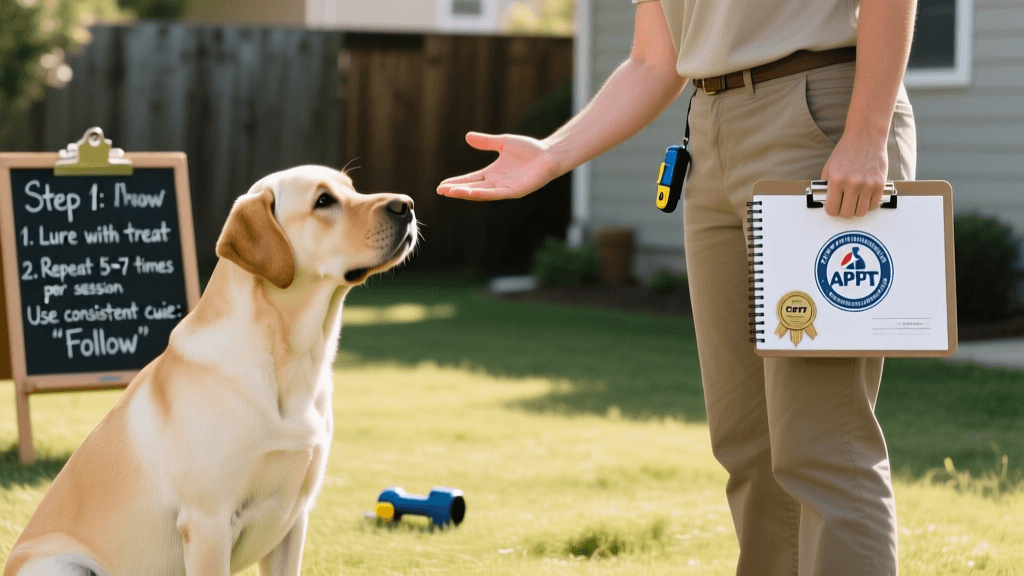
If your dog struggles with the biomechanics of sitting, teach a "stand-stay" instead. This is an incredibly useful command for grooming, veterinary exams, and putting on harnesses. Simply lure your dog into a standing position, mark the behavior with a gentle "yes" or a clicker, and reward. Over time, they will learn to hold a standing position on cue without stressing their hips and knees.
Ramps and Targeting
Jumping into the car or onto the couch is no longer safe for most senior dogs. Instead of repeatedly lifting your heavy senior dog (which risks injury to both of you), train them to use a ramp. You can use the "touch" command—where the dog targets their nose to your hand or a specific object—to guide them up and down ramps safely. This builds confidence and preserves their independence.
Modifying Leash Walking
Long, brisk marches may no longer be feasible, but sniffing and gentle walking are still vital. Review our leash training tips to learn how to encourage a loose-leash sniffari. Allow your dog to dictate the pace, giving them ample time to process the scents in their environment, which provides immense mental fatigue without the physical strain of a long hike.
Mental Enrichment & Cognitive Support
Physical exercise may decrease as your dog ages, but their need for mental stimulation remains high. In fact, mental exercise can tire a dog out just as effectively as a physical walk, making it a cornerstone of senior dog care.
Scent Work and Nose Games
A dog's sense of smell remains remarkably intact even as their vision and hearing fade. Scent work is an outstanding, low-impact activity for older dogs. Start by hiding high-value treats under cups or inside a snuffle mat and encouraging your dog to "find it." You can gradually increase the difficulty by hiding treats in different rooms or teaching them to identify specific essential oils. This taps into their natural foraging instincts and provides a massive confidence boost.
Interactive Puzzle Toys
Food-dispensing puzzle toys are excellent for keeping an aging brain sharp. Look for puzzles that require your dog to slide, lift, or spin compartments to reveal treats. Ensure the puzzles are appropriate for their physical strength; if a dog has to paw aggressively or use excessive jaw force, it may be too difficult or painful. Lick mats spread with dog-safe peanut butter or plain yogurt and frozen are another fantastic option that provides soothing, repetitive licking behavior which naturally reduces anxiety.
Managing Age-Related Behavioral Changes
It is not uncommon for perfectly well-mannered dogs to develop new behavioral issues in their senior years. Addressing these issues requires compassion and a shift in management strategies.
House Soiling and Incontinence
If your previously house-trained dog begins having accidents indoors, the first step is always a veterinary visit to rule out urinary tract infections, kidney disease, or diabetes. If medical issues are cleared, the accidents may be due to cognitive decline or a weakened sphincter. Revisit the foundational steps in our housebreaking guide, taking your dog out much more frequently. Never punish a senior dog for an accident; they are likely just as confused and distressed by their loss of bladder control as you are.
Nighttime Pacing and Anxiety
Dogs with CCD often experience "sundowning," where they become restless, pace, and vocalize late at night. Maintaining a strict daily routine can help anchor their internal clock. Provide a highly supportive orthopedic bed in a quiet, temperature-controlled room. If your dog has always been crate trained, revisiting our crate training guide might help them feel secure at night, provided the crate is large enough and padded with thick blankets. However, if the crate causes panic, a gated-off, safe room is a better alternative.
Pro Tips & Common Mistakes to Avoid
When working with senior dogs, the margin for error is smaller. Here are some essential tips and common pitfalls to keep in mind.
Pro Tips for Success
- Use High-Value, Soft Treats: Older dogs often have dental disease or missing teeth. Use soft, smelly treats like freeze-dried liver, cheese, or commercial training pastes that are easy to chew and swallow.
- Incorporate Massage: End every training session with a gentle canine massage. This helps soothe tired muscles, improves circulation, and reinforces the bond between you and your dog.
- Celebrate Small Victories: A senior dog might not be able to learn a complex trick chain, but successfully holding eye contact for ten seconds is a massive win. Celebrate every step forward.
Common Mistakes to Avoid
- Pushing Through Pain: If your dog whines, licks their lips, yawns excessively, or tries to walk away, they are showing signs of stress or physical discomfort. Stop the session immediately.
- Comparing Them to Their Younger Selves: It is heartbreaking to watch your vibrant puppy slow down, but projecting your grief onto the training process will only frustrate your dog. Accept who they are today.
- Ignoring Dental Health: A dog in dental pain will not want to take treats or hold a toy, making training incredibly difficult. Keep up with veterinary dental cleanings.
Frequently Asked Questions
Is it ever too late to start training an older dog?
No, it is never too late. While older dogs may take slightly longer to learn new concepts due to ingrained habits or sensory decline, their brains remain capable of forming new neural pathways. In fact, many senior dogs are easier to train than puppies because they have longer attention spans and are less easily distracted by their environment.
How long should training sessions be for senior dogs?
Training sessions for older dogs should be kept very short, typically between three to five minutes. You can conduct multiple micro-sessions throughout the day. The goal is to end the session while the dog is still engaged and happy, before physical fatigue or joint stiffness sets in.
What if my older dog has canine cognitive dysfunction?
If your dog is diagnosed with CCD, training should focus on maintaining existing skills and providing gentle sensory enrichment rather than learning complex new tricks. Scent work, familiar routines, and simple obedience cues can help ground them. Always consult your veterinarian, as there are medications and specialized diets that can help manage the symptoms of cognitive decline.
Can I still use clicker training with a deaf senior dog?
Traditional auditory clickers will not work for a deaf dog, but the underlying mechanics of marker training are still highly effective. You can substitute the clicker with a visual marker, such as a quick flash of a small penlight, a specific hand signal like a thumbs-up, or a gentle tactile vibration collar (used strictly as a marker, not a correction). Pair the visual or tactile marker with a high-value treat just as you would with an auditory clicker.
How do I know if my dog is too tired to train?
Watch for canine calming signals and signs of fatigue. If your dog starts panting heavily (when it isn't hot), repeatedly scratching, sniffing the ground aimlessly, turning their head away from you, or lying down and refusing to get up, they have reached their limit. Respect these boundaries and allow them to rest.
Conclusion
Training an older dog is a deeply rewarding journey that honors the life you have built together. By adapting your methods to accommodate their changing bodies and minds, you provide them with the mental stimulation and gentle structure they need to thrive in their senior years. Remember that the ultimate goal of training a senior dog is not perfect obedience, but rather enhancing their comfort, confidence, and joy. With patience, empathy, and the right techniques, your older dog will continue to learn, grow, and surprise you every single day.
Paws&Tales
All our authors care for dogs every day — read more of their work on the authors page.