A Step-by-Step Guide to Brushing Your Dog's Teeth
Learn how to brush your dog's teeth with our step-by-step training guide. Prevent dental disease, choose the right toothpaste, and keep their smile healthy.
Why Canine Dental Health Matters
When it comes to your dog's overall health and wellbeing, dental care is often the most overlooked aspect of their daily routine. By the time a dog reaches three years of age, an estimated 80% will show signs of periodontal disease. This painful condition not only causes tooth loss and chronic oral pain but can also lead to severe systemic issues, including heart, liver, and kidney disease, as bacteria from the mouth enter the bloodstream.
According to the Cornell University College of Veterinary Medicine, periodontal disease is the most common clinical condition occurring in adult dogs, yet it is almost entirely preventable with consistent home care. Training your dog to accept daily tooth brushing is one of the most impactful investments you can make in their longevity and quality of life. While the idea of brushing a dog's teeth may seem daunting, a structured, step-by-step training approach utilizing positive reinforcement can turn this chore into a bonding experience.
The Hidden Danger of Human Toothpaste
Before beginning your training journey, it is critical to understand that you must never use human toothpaste on your dog. Human toothpastes often contain fluoride, which can cause severe gastrointestinal distress in canines. More alarmingly, many human toothpastes contain xylitol, an artificial sweetener that is highly toxic to dogs. Even in small amounts, xylitol triggers a rapid release of insulin in dogs, leading to life-threatening hypoglycemia (low blood sugar) and potential liver failure. Always select a veterinary-formulated enzymatic toothpaste.
Essential Supplies for Success
Gathering the right tools is the first step toward a successful teeth-brushing routine. Here is what you will need:
- Enzymatic Dog Toothpaste ($10 - $15): Brands like Virbac C.E.T. or Sentry are excellent choices. They contain enzymes that actively break down plaque even after brushing and come in dog-friendly flavors like poultry, beef, or malt.
- Dual-Headed Dog Toothbrush ($8 - $12): These brushes are designed to clean the inside and outside of the teeth simultaneously. For small breeds, a finger brush or a pediatric extra-soft toothbrush may be more appropriate.
- High-Value Training Treats ($5 - $10): Soft, easily consumable treats like freeze-dried liver, boiled chicken breast, or low-sodium chicken broth in a Kong toy. You need treats that your dog loves more than anything else.
- Pet-Safe Dental Wipes ($8 - $15): Useful as a transitional tool or for quick wipe-downs on days when brushing is a struggle.
Step-by-Step Training Guide to Brushing
Do not rush this process. If you force the toothbrush into your dog's mouth on day one, you will create fear and resistance. The goal is desensitization and counter-conditioning. Dedicate 5 to 10 minutes a day to the following phases.
Phase 1: Introduce the Toothpaste (Days 1 to 3)
Start by letting your dog taste the enzymatic toothpaste. Squeeze a pea-sized amount onto your finger and offer it to them as if it were a treat. Allow them to lick it off. Do not attempt to touch their teeth or gums during this phase. The sole objective is to build a positive association with the flavor of the toothpaste. Praise them enthusiastically and follow up with a high-value treat.
Phase 2: Get Your Dog Comfortable with Touch (Days 4 to 7)
Once your dog eagerly anticipates the toothpaste, it is time to introduce touch. Put a small amount of toothpaste on your index finger. Gently lift your dog's upper lip and rub your finger along their outer gums and canine teeth. Start with just one or two seconds of contact, then pull your hand away and reward them with a treat and verbal praise. Gradually increase the duration of the gum massage over several days, working your way from the front canines to the back molars. If your dog pulls away, you have moved too fast; revert to a shorter duration.
Phase 3: Introduce the Toothbrush (Days 8 to 10)
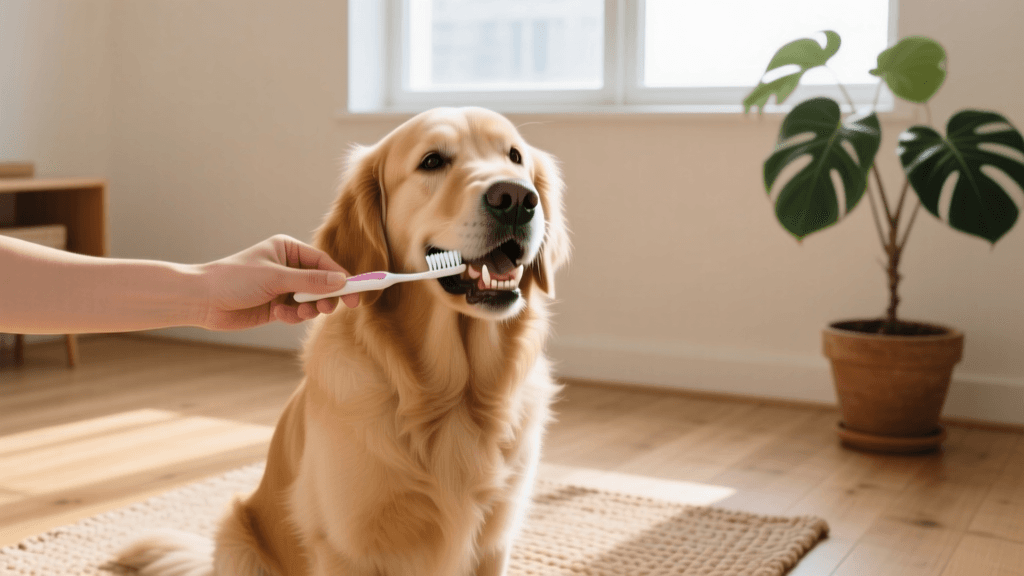
Now, introduce the physical tool. Let your dog sniff the dual-headed toothbrush. Apply a generous stripe of toothpaste to the bristles and let them lick it directly off the brush. Next, gently slide the brush under their lip to touch the front teeth without making any brushing motions. Reward heavily. The American Kennel Club (AKC) emphasizes that introducing the brush slowly and pairing it with high-value rewards is the key to overcoming a dog's natural aversion to having objects placed in their mouth.
Phase 4: The Brushing Technique (Day 11 and Beyond)
When your dog is entirely comfortable with the brush resting against their teeth, you can begin the actual brushing motion.
- Positioning: Sit beside or behind your dog, rather than standing over them, which can feel intimidating. Gently cradle their muzzle from above.
- Angle: Hold the brush at a 45-degree angle to the tooth surface so the bristles reach the gum line, where plaque accumulates most heavily.
- Motion: Use small, gentle, circular motions. Focus primarily on the outer surfaces of the teeth, as a dog's tongue naturally helps keep the inner surfaces relatively clean.
- Timing: Aim for a total brushing time of 60 to 90 seconds, spending about 2 to 3 seconds per tooth.
Always end the session on a positive note with a favorite game, a walk, or a special treat, ensuring your dog views tooth brushing as a precursor to something wonderful.
Comparison Chart: Dental Care Methods
While daily brushing is the gold standard, understanding how it compares to other dental care methods can help you build a comprehensive preventative care plan.
| Method | Effectiveness | Estimated Cost | Frequency | Pros & Cons |
|---|---|---|---|---|
| Daily Brushing | High (Gold Standard) | $20 - $30 (Initial setup) | Daily | Pro: Mechanically removes plaque. Con: Requires time and training. |
| Dental Chews | Moderate | $25 - $40 / month | Daily | Pro: Dogs love them; scrapes tartar. Con: High calorie; choking hazard for aggressive chewers. |
| Water Additives | Low to Moderate | $15 - $20 / bottle | Daily | Pro: Effortless to administer. Con: Does not remove existing plaque; alters water taste. |
| Professional Cleaning | Very High (Restorative) | $400 - $1,000+ | Every 1-3 Years | Pro: Cleans below the gumline. Con: Expensive; requires general anesthesia. |
Troubleshooting Common Training Hurdles
My dog snaps or bites when I touch their mouth: This indicates severe fear or underlying oral pain. Stop immediately. A dog with advanced periodontal disease will experience sharp pain when their inflamed gums are touched. Schedule a veterinary exam to rule out broken teeth, oral tumors, or severe gingivitis before attempting home brushing.
My dog swallows the toothpaste too fast: This is normal. Enzymatic dog toothpastes are formulated to be safe for ingestion. If they lick it all off before you can brush, apply a second, smaller pea-sized amount directly to the bristles and begin brushing immediately.
Supplementing Your Routine: The VOHC Seal
To maximize your dog's dental health, consider supplementing your brushing routine with approved dental diets and chews. The Veterinary Oral Health Council (VOHC) is an independent entity that evaluates pet dental products based on strict scientific protocols. Products bearing the VOHC Accepted seal have been proven to slow the accumulation of plaque and tartar. Look for this seal on prescription dental diets like Hill's Prescription Diet t/d or Purina Pro Plan Veterinary Supplements Dental Chewz.
Signs of Dental Disease to Watch For
Even with a diligent brushing routine, it is vital to monitor your dog's mouth for warning signs of dental disease. Contact your veterinarian if you notice:
- Persistent bad breath (halitosis) that does not improve with brushing.
- Red, swollen, or bleeding gums, especially along the gum line.
- Yellow or brown crust (tartar) accumulating near the gums.
- Drooling, dropping food, or chewing predominantly on one side of the mouth.
- Pawing at the face or reluctance to play with hard toys.
Conclusion
Training your dog to accept daily tooth brushing is a journey that requires patience, consistency, and an abundance of positive reinforcement. By breaking the process down into manageable, step-by-step phases, you can transform a potentially stressful chore into a daily bonding ritual. Remember that home care is a partnership with your veterinarian; annual dental check-ups and professional cleanings under anesthesia remain essential for evaluating the health of your dog's teeth below the gum line. Invest the time today to brush your dog's teeth, and you will reward them with a lifetime of comfort, health, and pain-free smiles.
beth-carrasco
All our authors care for dogs every day — read more of their work on the authors page.