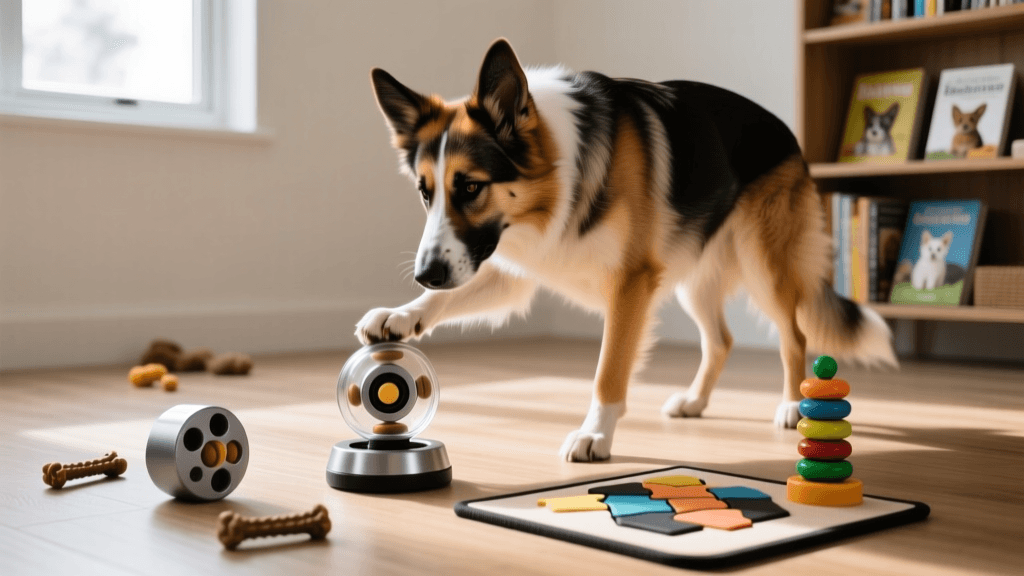
Are Dog Talking Buttons Real? The Viral Trend Explained
Discover the science behind the viral dog talking buttons trend. Learn how AAC works, if dogs truly understand, and how to train your pup today.
The TikTok Phenomenon: Dogs “Talking”
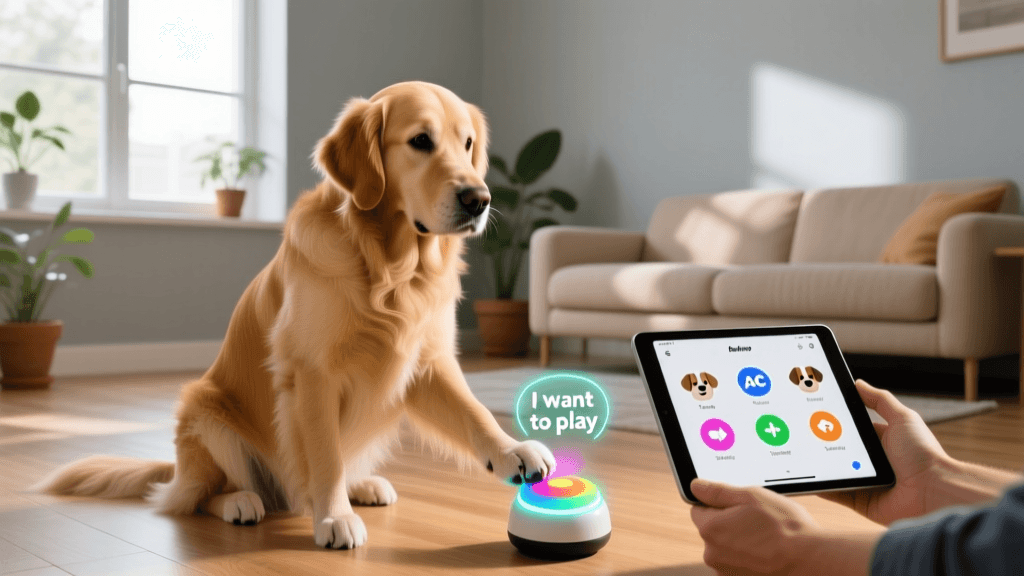
If you have spent any time on TikTok or Instagram over the past few years, you have likely seen viral videos of dogs like Bunny, Stella, and Billi pressing soundboards to “speak” to their owners. These videos, which often feature dogs stringing together words like “outside,” “play,” and even abstract concepts like “love” or “mad,” have accumulated hundreds of millions of views. But beyond the viral entertainment value, a fascinating question emerges for dog owners and behavioral psychologists alike: Do dogs actually understand the words they are pressing, or is this just an elaborate trick?
At Paws-Tales, we dive deep into canine psychology to separate internet fiction from behavioral fact. The use of soundboards for dogs is rooted in a legitimate therapeutic practice known as Augmentative and Alternative Communication (AAC), traditionally used for humans with speech or language impairments. When applied to canines, it opens a groundbreaking window into the minds of our pets, challenging everything we thought we knew about breed instincts, canine cognition, and interspecies communication.
What is Canine AAC?
Augmentative and Alternative Communication (AAC) involves using tools, gestures, or devices to express thoughts and needs. For dogs, this translates to recordable buttons that play a pre-recorded word when stepped on. Because dogs lack the vocal anatomy to produce human speech, their primary modes of communication are body language, vocalizations (barks, whines, growls), and scent marking. AAC bridges the gap by giving them a physical mechanism to initiate specific human actions.
According to research tracked by the TheyCanTalk research initiative at UC San Diego, thousands of pet owners are actively participating in citizen science projects to document how non-human animals acquire and use human language concepts. The study focuses on whether dogs are merely performing operant conditioning (pressing a button to get a treat) or if they are demonstrating true semantic understanding (combining words to express novel thoughts or emotional states).
The Science: Cognition vs. Operant Conditioning
To understand the viral button trend, we must look at canine psychology through the lens of behavioral science. At its core, button training relies on operant conditioning. A dog presses a button that says “Outside,” and the owner opens the door. The dog learns that the action (pressing) leads to a desired outcome (going outside).
However, cognition experts argue that many dogs progress far beyond simple stimulus-response conditioning. The American Kennel Club (AKC) notes that dogs possess the cognitive ability to learn hundreds of words and gestures, comparable to a two-year-old human toddler. When a dog presses “Stranger” and “Paw” after a guest touches their foot, they are not just asking for a treat; they are reporting a specific, past event. This suggests a level of episodic memory and abstract categorization that was once thought to be exclusively human.
Breed Psychology: Who Excels at Button Training?
While any dog can learn to use soundboards, breed instincts play a massive role in how quickly and creatively they engage with the buttons.
- Herding Breeds (Border Collies, Australian Shepherds): Bred to work closely with human handlers and respond to complex whistle and voice commands, herding breeds often excel at AAC. Their high drive for human interaction and problem-solving makes them rapid learners.
- Retrievers and Spaniels (Golden Retrievers, Labs): These breeds are highly food and play-motivated, making the initial operant conditioning phase very easy. They are eager to please and quick to associate buttons with rewards.
- Scent Hounds (Beagles, Bloodhounds): Hounds are genetically wired to follow their noses rather than take direction from humans. While they can learn buttons, they may require higher-value rewards and more patience, as their environmental drive often overrides their focus on the soundboard.
- Guardian Breeds (Mastiffs, Livestock Guardians): Independent thinkers by nature, these dogs may view the buttons as unnecessary if they can already communicate their needs through subtle body language or physical nudging.
Step-by-Step Guide to Teaching Button Communication
If you want to tap into this viral trend and unlock a new level of communication with your dog, patience and consistency are key. Here is a practical, actionable guide to getting started.
Step 1: Choose Your Equipment and Location
Invest in a high-quality button system. Cheap, generic recordable buttons from office supply stores often have poor sound quality and slippery surfaces that frustrate dogs. The industry leader, FluentPet, uses hexagonal tiles that interlock, allowing dogs to navigate the board using spatial memory rather than just visual cues. Place the board in a high-traffic area where your dog naturally communicates, such as near the back door or by their food bowl.
Step 2: Start with High-Value, Functional Words
Do not start with abstract concepts like “love” or “mad.” Begin with 2 to 3 highly motivating, functional words. The best starter words are:
- Outside: For bathroom breaks or yard time.
- Play: To initiate a game of tug or fetch.
- Food / Treat: For meal times or high-value snacks.
Step 3: The “Modeling” Technique
Modeling is the most critical step in AAC training. You must show the dog how the tool works before expecting them to use it. Every time you take your dog outside, say the word “Outside,” press the button, and immediately open the door. Do this consistently for 2 to 4 weeks. Do not force your dog’s paw onto the button; this creates aversion and anxiety. Let them observe the cause-and-effect relationship.
Step 4: Capture the Behavior
Once your dog begins to investigate or accidentally press the button, immediately reward them with the corresponding action. If they press “Play,” drop everything and play with them for 60 seconds. Timing is everything; the reward must occur within 1 to 2 seconds of the button press to forge the neural pathway.
Comparison Chart: Top Button Starter Kits
Choosing the right gear can save you weeks of frustration. Below is a comparison of the most popular options on the market, including costs and features.
| Brand / Type | Average Cost | Design & Build | Best For |
|---|---|---|---|
| FluentPet Starter Kit | $30 - $50 (6 buttons + tiles) | Hexagonal interlocking tiles, high-fidelity speakers, non-slip base. | Serious trainers, spatial memory mapping, long-term expansion. |
| Learning Resources Recordable Buttons | $15 - $20 (3 buttons) | Round, standalone plastic buttons, requires peeling adhesive tape. | Budget-conscious owners, casual testing, basic tricks. |
| Generic Amazon Sound Pads | $25 - $35 (10-15 buttons) | Flat, square pads, often battery-heavy, lower audio clarity. | Large breed dogs with heavy paws, multi-pet households. |
Behavioral Pitfalls and the “Extinction Burst”
As you introduce AAC to your home, you must be prepared for the psychological phenomenon known as an extinction burst. In behavioral psychology, an extinction burst occurs when a previously reinforced behavior suddenly stops yielding a reward, causing the subject to perform the behavior with increased intensity and frequency.
For example, if your dog learns that pressing the “Food” button results in a piece of cheese, they will press it constantly. When you decide to stop giving them cheese for every single press to prevent obesity, your dog will likely press the button repeatedly, paw at it aggressively, bark at the board, or even try to destroy it. This is not a sign that the dog is “broken” or “stupid.” It is a predictable psychological response to a broken contingency. To survive the extinction burst, owners must remain entirely consistent, only rewarding the button press on a variable intermittent schedule or pairing it with a verbal “All done” command.
Final Thoughts on Canine Cognition
The viral dog talking button trend is much more than a fleeting internet fad; it is a cultural shift in how we view our canine companions. By giving dogs the tools to communicate, we are rapidly realizing that their inner lives are far richer, more complex, and more emotionally nuanced than traditional training methods ever allowed us to see. Whether your dog uses the buttons to ask for a walk, complain about the mail carrier, or simply tell you they want to be near you, AAC offers a profound opportunity to deepen the bond between human and hound. Start small, be patient, and prepare to be amazed by what your dog has to say.
beth-carrasco
All our authors care for dogs every day — read more of their work on the authors page.