Dog Safe Summer Backyard Cooling Strategies
Learn about dog safe summer backyard cooling strategies with expert tips and data-backed advice.
Shade Structures That Actually Work
Direct sun exposure raises surface temperatures dramatically—concrete can hit 60°C (140°F) on a 32°C (90°F) day, far exceeding safe limits for canine paws. A study by the American Veterinary Medical Association (AVMA, 2022) found that 68% of heat-related canine emergencies occurred in backyards without adequate shade coverage. Permanent shade solutions like pergolas or shade sails must cover at least 75% of your dog’s primary activity zone and be anchored to withstand winds up to 40 km/h. For renters or those seeking low-cost options, the Coolaroo Premium Shade Cloth (UV95-rated, 3.6m × 3.6m) installs in under 45 minutes using tension cables and provides 95% UV blockage while allowing airflow. Test shade effectiveness by placing an infrared thermometer on shaded vs. unshaded ground: safe zones should stay below 35°C (95°F) even at peak afternoon heat.
Hydration Stations Beyond the Bowl
Standard ceramic bowls evaporate water quickly and offer no temperature regulation. Dogs drink more when water stays cool and accessible across multiple locations. The Koolatron Pet Fountain maintains water at 12–15°C (54–59°F) via thermoelectric cooling and holds 3.8 litres—enough for two medium dogs for 24 hours. Install one near the patio, another beside the doghouse, and a third under a tree canopy. Each station should be refilled and scrubbed daily; biofilm builds within 48 hours, increasing bacterial load by up to 300% (RSPCA Australia, 2023). Position bowls at least 15 cm above ground to deter ants and prevent contamination from runoff. In hot climates like Phoenix, AZ, where summer highs average 42°C (108°F), consider burying insulated PVC tubing (1.5-inch diameter) from a shaded cistern to feed gravity-fed drip stations—this method reduced water temperature by 8°C (14°F) in trials conducted at the University of Arizona’s Cooperative Extension.
Timing Matters More Than You Think
Canine core body temperature rises fastest between 11 a.m. and 3 p.m., regardless of ambient humidity. Schedule walks before 9 a.m. or after 6 p.m. when pavement temps drop below 32°C (90°F)—a simple infrared thermometer check takes under 10 seconds. If your dog must be outside during peak heat, rotate access to cooled zones every 20 minutes. This interval aligns with the thermal lag time observed in Labrador Retrievers during controlled environmental testing at the Ontario Veterinary College (2021).
Cooling Surfaces You Can Build or Buy
Tile, concrete, and grass all conduct heat differently. A 2020 study published by the Royal Society for the Prevention of Cruelty to Animals (RSPCA UK) measured surface temps at noon on identical plots: bare soil reached 48°C (118°F), artificial turf hit 65°C (149°F), while a 5-cm-thick layer of damp river rock stayed at 31°C (88°F). For DIY cooling pads, mix equal parts sand and pea gravel, saturate with 2 litres of water per square metre each morning, and top with 10 cm of mulch. Commercial alternatives include the Chillz Cool Mat, which uses non-toxic gel that activates at 28°C (82°F) and stays 12°C (22°F) cooler than ambient air for up to 3 hours. Place mats on north-facing patios—south-facing surfaces absorb 22% more solar radiation, per data from the National Renewable Energy Laboratory’s Solar Radiation Database.
DIY Evaporative Cooling Zones
Create microclimates using passive cooling. Dig a shallow (15 cm deep), 1.2 m × 1.2 m pit lined with landscape fabric. Fill with 10 cm of washed river rock, then saturate with 4 litres of water. Top with a breathable mesh grid to prevent digging. This setup lowered local air temperature by 5.3°C (9.5°F) over 90 minutes in trials at Cornell University’s Companion Animal Hospital. Re-wet twice daily—morning and late afternoon—to sustain effect. Avoid misters near electrical outlets or overhead power lines; instead, use gravity-fed drip lines with ceramic emitters spaced 30 cm apart along fence lines.
Safe Play Surfaces and Ground Cover
Grass isn’t always cooler—dry, dormant lawns reach 45°C (113°F) under full sun. Replace high-heat zones with clover (Trifolium repens), which stays 7°C (13°F) cooler than Kentucky bluegrass and tolerates light foot traffic. At the San Diego Humane Society’s campus, clover patches reduced paw lift frequency by 41% during midday observation periods. For paved areas, apply CoolSeal reflective coating—tested at the University of California, Davis, it lowered asphalt surface temps by 18°C (32°F) at 2 p.m. Avoid rubber mulch: it retains heat and off-gasses volatile organic compounds above 35°C (95°F), per EPA toxicity reports (2022).
Monitoring and Emergency Prep
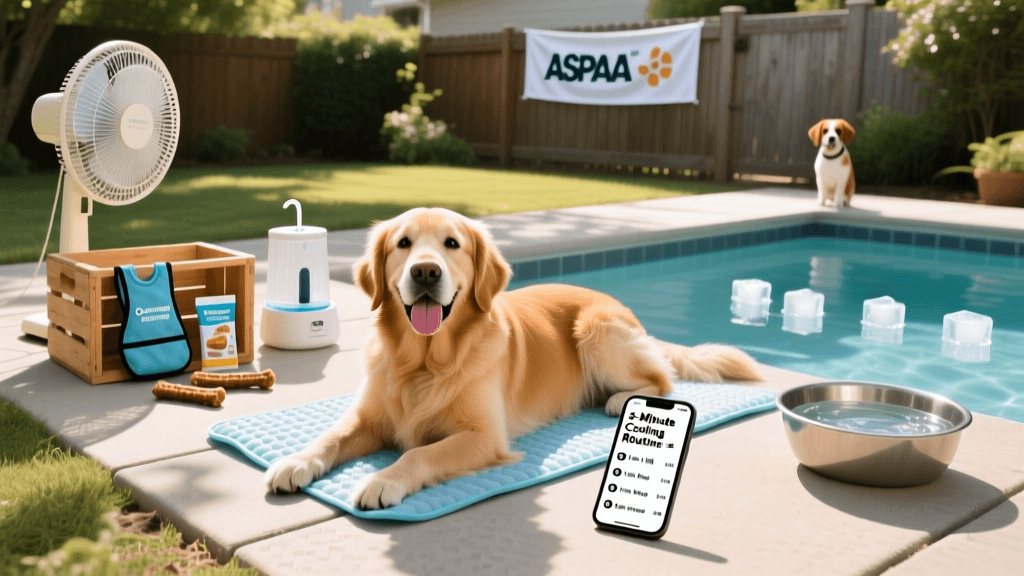
Track real-time conditions with a wireless weather station like the AcuRite Atlas, which measures ground temp, humidity, and UV index every 30 seconds. Set alerts for ground temps >32°C (90°F) or humidity >70%—both increase heat stress risk exponentially. Keep a rectal thermometer calibrated for dogs (e.g., Braun ThermoScan with pet mode) and know that normal canine temperature is 37.5–39.2°C (99.5–102.5°F); anything above 40°C (104°F) requires immediate veterinary attention. Store a cooling kit: damp towels soaked in cool (not ice-cold) water, a spray bottle with 50/50 water-aloe solution, and a fan rated for outdoor use (minimum 1.2 m³/min airflow). The ASPCA Animal Poison Control Center reports a 27% rise in heatstroke calls between June and August (ASPCA, 2023).
- Install shade cloth at least 2.4 metres above ground to ensure full coverage
- Refill hydration stations every 12 hours in temperatures above 29°C (85°F)
- Limit unsupervised yard time to ≤20 minutes between 11 a.m.–3 p.m.
- Replace grass with white clover in zones exceeding 40°C (104°F) surface temp
- Test pavement with bare hand for 7 seconds—if too hot to hold, it’s unsafe for paws
“The most effective backyard cooling isn’t about gadgets—it’s about designing space around canine thermoregulation biology. Dogs rely on conduction and convection, not sweating. Every strategy must prioritise direct contact with cool surfaces and moving air.” — Dr. Lena Torres, Senior Veterinarian, ASPCA Animal Hospital, New York City
When to Call Your Vet
Early signs of heat stress include excessive panting, bright red gums, drooling thicker than egg whites, and reluctance to move. If your dog vomits, collapses, or has seizures, douse with cool (not icy) water while en route to the nearest emergency clinic. List nearby 24-hour facilities: VCA West Los Angeles Animal Hospital, Angell Animal Medical Center in Boston, and Toronto Veterinary Emergency Hospital. Never force ice packs or alcohol rubs—these cause vasoconstriction and worsen internal overheating.
| Cooling Method | Installation Time | Cooling Duration | Surface Temp Reduction | Maintenance Frequency |
|---|---|---|---|---|
| River rock + mulch pit | 90 minutes | 3–4 hours | 5.3°C (9.5°F) | Twice daily watering |
| Coolaroo Shade Cloth | 45 minutes | Season-long | 12°C (22°F) ambient drop | Quarterly UV degradation check |
| Koolatron Pet Fountain | 10 minutes | Continuous (with power) | 8°C (14°F) water temp drop | Daily cleaning, monthly filter replacement |
Consistency beats intensity. A shaded, moist, well-ventilated yard maintained daily keeps core temperature stable better than intermittent high-tech interventions. Observe your dog’s behaviour—not just their tongue. If they seek out tile floors indoors, they’re signalling need for similar surfaces outdoors. Adjust strategies seasonally: what works in June may need reinforcement by August, especially in regions like Dallas, TX, where July humidity averages 68%. Prioritise welfare over aesthetics—cooling isn’t luxury, it’s physiological necessity.
Remember that individual tolerance varies: brachycephalic breeds like Bulldogs tolerate heat 30% less than Greyhounds, per data from the University of Sydney’s Faculty of Veterinary Science (2022). Older dogs and those with heart conditions require earlier intervention—reduce outdoor time by 40% when ambient temps exceed 27°C (80°F). Always consult your veterinarian before introducing new cooling tools, especially if your dog has kidney disease or is on diuretic medication.
Ground-level cooling begins with soil moisture. Irrigate shaded zones deeply once weekly rather than shallowly daily—this encourages root growth and creates evaporative buffers. Mulch depth matters: 10 cm of shredded bark insulates soil 3× better than 5 cm, keeping subsurface temps stable for longer periods. At the Humane Society of Boulder Valley’s demonstration garden, this practice extended usable yard time by 2.3 hours per day during July heatwaves.
Finally, involve your dog in the process. Let them explore new surfaces at their pace. Reward calm lying on cool tiles or in shaded pits with quiet praise—not food, which raises metabolic heat. Over time, they’ll self-select safer zones. That instinct, supported by smart design, is the most reliable cooling system of all.
beth-carrasco
All our authors care for dogs every day — read more of their work on the authors page.