Traveling With Dogs: Google's Most-Asked Road Trip Questions
Planning a road trip with your dog? We answer Google's most-asked questions about packing, car safety, rest stops, and finding pet-friendly hotels.
Hitting the Open Road: The Ultimate Canine Road Trip FAQ
Embarking on a cross-country adventure or a weekend getaway with your dog is one of life's greatest joys. However, a quick search engine query reveals that thousands of pet owners are frantically typing questions about canine car travel every single day. From motion sickness to crash safety, the logistics of sharing a vehicle with a dog require careful planning. In this comprehensive guide, we are answering Google's most-asked questions about dog road trips, providing you with actionable advice, expert-backed safety data, and practical checklists to ensure your journey is as smooth as it is memorable.
1. How Often Should I Stop for My Dog on a Road Trip?
The most common question among anxious pet parents is about rest stop frequency. The general rule of thumb recommended by veterinarians is to stop every two to four hours. However, this timeline is not one-size-fits-all. Puppies, senior dogs, and dogs with specific medical conditions like kidney disease or diabetes may need to relieve themselves every one to two hours.
Actionable Advice: Plan your route around pet-friendly rest areas or state parks rather than busy gas stations. When you stop, engage in a structured routine: offer a small amount of water (about half a cup to prevent bloating and car sickness), allow your dog to sniff and eliminate on a secure 6-foot leash, and do a quick paw check for burrs or hot asphalt burns. Never let your dog roam off-leash at a rest stop, as the noise and traffic can easily trigger a flight response.
2. What Is the Safest Way to Secure a Dog in a Car?
Letting your dog ride with their head out the window or roaming freely in the backseat is a charming movie trope, but a dangerous reality. In a collision at just 30 miles per hour, an unrestrained 50-pound dog becomes a 2,000-pound projectile, posing a lethal threat to both the pet and the human passengers. The Center for Pet Safety, a registered 501(c)(3) nonprofit organization dedicated to companion animal safety, conducts rigorous crash testing on pet travel products. Their data reveals that many commercially available seatbelt tethers snap under the dynamic forces of a crash.
Car Restraint Methods Comparison
| Restraint Type | Safety Rating | Best Suited For | Average Cost |
|---|---|---|---|
| CPS-Certified Crash-Tested Harness | Excellent | Medium to Large Dogs (18-90 lbs) | $70 - $120 |
| CPS-Certified Crash-Tested Crate | Excellent | All Sizes (requires proper vehicle anchoring) | $300 - $800 |
| Standard Seatbelt Tether/Zipline | Poor (High Risk) | None (Prevents roaming, but fails in crashes) | $10 - $25 |
| Console/Booster Seat | Fair | Small Dogs (Under 15 lbs) | $40 - $90 |
The Verdict: Invest in a harness or crate that has explicitly passed the Center for Pet Safety's crash test protocols. Look for the 'CPS Certified' logo when shopping. Secure crates using vehicle-rated tie-down straps, not just bungee cords.
3. How Do I Stop My Dog From Getting Car Sick?
Canine motion sickness is incredibly common, particularly in puppies whose inner ear structures (which control balance) are not fully developed. According to the American Veterinary Medical Association (AVMA), motion sickness can also be compounded by travel anxiety. Symptoms include excessive drooling, lip smacking, whining, and ultimately, vomiting.
Practical Solutions:
- Fasting: Withhold food for 4 to 6 hours before the trip. An empty stomach significantly reduces the likelihood of vomiting, though you should still provide small sips of water.
- Visual Anchoring: Use a dog-specific car seat or booster that allows your small dog to look out the window. Seeing the horizon helps align their visual cues with their vestibular (inner ear) system.
- Climate Control: Keep the car cool and direct the air conditioning vents toward your dog. Fresh air circulation is a powerful anti-nausea tool.
- Medication: If natural remedies like ginger chews fail, consult your veterinarian about prescription anti-nausea medications like Cerenia (maropitant citrate), which is FDA-approved for preventing acute vomiting and motion sickness in dogs.
4. How Can I Prepare a Dog That Hates the Car?
If your dog trembles the moment you jingle the car keys, you are dealing with travel anxiety, not just motion sickness. Overcoming this requires a desensitization protocol that may take several weeks before your actual trip.
The 4-Step Desensitization Protocol:
- Stage 1 (Parked & Off): Sit in the parked car with your dog. Offer high-value treats like boiled chicken or freeze-dried liver. Do not start the engine. After 5 minutes, go back inside the house.
- Stage 2 (Parked & On): Repeat Stage 1, but start the engine. Let the car idle while you feed treats and offer praise. Turn the engine off and go inside.
- Stage 3 (The Block): Drive around the block and return home immediately. The goal is to teach your dog that the car does not exclusively mean a trip to the veterinarian.
- Stage 4 (Fun Destinations): Take short 10-minute drives to highly rewarding locations, such as a favorite hiking trail or a pet-friendly park.
5. What Exactly Should I Pack for a Dog Road Trip?
Forgetting your dog's favorite toy is an inconvenience; forgetting their medical records or a secure leash can be a disaster. Use this master packing checklist to ensure you have all the essentials.
- Documentation: A physical and digital copy of your dog's rabies certificate and vaccination records (required by most hotels and state lines).
- Hydration & Nutrition: A collapsible silicone bowl, a sealed container of their regular food (to prevent GI upset from sudden diet changes), and 1 gallon of familiar tap water per dog, per day to avoid stomach issues from local water mineral differences.
- Safety Gear: A sturdy 6-foot nylon or leather leash (avoid retractable leashes near roads), a well-fitted harness with an updated ID tag, and a pet-specific first aid kit containing styptic powder, gauze, and tweezers.
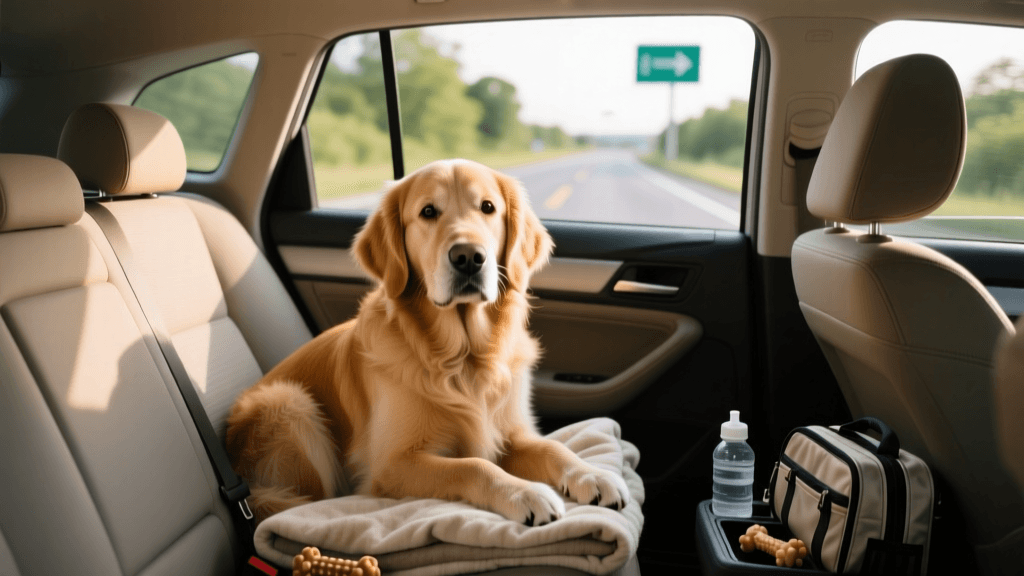
- Comfort Items: A familiar, unwashed blanket that smells like home to reduce hotel anxiety, and a long-lasting chew like a yak cheese horn to keep them occupied during long highway stretches.
- Cleanup Supplies: Biodegradable waste bags, enzymatic cleaner (for unexpected hotel accidents), and dog-safe paw wipes.
6. How Do I Find Truly Pet-Friendly Hotels?
The term 'pet-friendly' is heavily used in the hospitality industry, but it often comes with hidden caveats. A hotel might allow dogs, but restrict them by weight (e.g., under 25 lbs), ban specific breeds, or limit pets to certain floors and rooms.
To avoid arriving at midnight with an exhausted dog only to be turned away, utilize dedicated pet travel platforms like BringFido to filter accommodations by exact pet policies. Always call the front desk directly after booking online to verify the current pet fee structure. Some hotels charge a non-refundable flat cleaning fee (typically $50 to $100), while others require a fully refundable deposit ($100 to $250) that is returned if the room is undamaged. Additionally, ask about the property's outdoor relief areas; a hotel with a dedicated, fenced-in pet relief area with waste stations is vastly superior to one that requires you to walk your dog along a busy highway shoulder in the dark.
Pro Tip: Never leave your dog unattended in a hotel room. Even the most well-behaved dog may experience separation anxiety in a novel environment, leading to destructive chewing or continuous barking that will result in noise complaints. If you must dine at a non-pet-friendly restaurant, utilize a local pet-sitting service or book a hotel that offers on-site pet sitting.
7. Is It Ever Safe to Leave My Dog in a Parked Car?
The short and definitive answer is no. Every year, thousands of dogs suffer from fatal heatstroke after being left in parked vehicles, even on seemingly mild days. According to veterinary researchers, the temperature inside a parked car can rise by 20 degrees Fahrenheit in just 10 minutes, and 40 degrees within an hour. Cracking the windows has been scientifically proven to have almost no effect on slowing this temperature spike. On a 70°F (21°C) day, the interior of your car can reach a lethal 115°F (46°C) in less than an hour. Dogs cool themselves primarily by panting, which is entirely ineffective in a stagnant, superheated environment. If you are traveling solo and need to use a restroom or grab food, utilize drive-thrus, pack a lunch to eat in the car with the AC running, or take turns with a travel companion staying outside with the dog. Never risk your dog's life for the sake of convenience.
Final Thoughts on Canine Road Trips
Traveling with your dog is an investment in your shared bond. By addressing these most-asked questions and prioritizing safety, comfort, and meticulous planning, you transform a potentially stressful logistical challenge into the adventure of a lifetime. Buckle up, pack the treats, and enjoy the scenic route!
robin-maitland
All our authors care for dogs every day — read more of their work on the authors page.