Dog-Proofing Your Home for Potty and Crate Training Success
Learn how to dog-proof your home to support potty and crate training. Discover room-by-room safety tips, safe zones, and management strategies.

The Intersection of Dog-Proofing and Behavioral Training
Bringing a new puppy or rescue dog into your home is an exhilarating experience, but it also marks the beginning of a critical period for behavioral conditioning. Many new pet owners make the mistake of viewing dog-proofing merely as a safety measure to protect their belongings or prevent the dog from getting hurt. However, from a professional training perspective, environment management is the foundational pillar of successful obedience, potty, and crate training.
In the dog training world, there is a common saying: 'Management prevents rehearsal.' If a dog practices an unwanted behavior—such as chewing on baseboards, having accidents on the living room rug, or stealing food from the counter—that behavior becomes reinforced. By properly dog-proofing your home and setting up strategic safe zones, you eliminate the opportunity for your dog to make the wrong choices, thereby accelerating the training process and reducing frustration for both you and your pet.
Room-by-Room Dog-Proofing Checklist
To effectively manage your dog's environment, you must look at your home through their eyes. Get down on your hands and knees to identify hazards at their eye level. Here is a detailed breakdown of how to secure the most critical areas of your home.
The Living Room and Common Areas
Living rooms are filled with temptations and hazards. Electrical cords are particularly dangerous for teething puppies. Invest in split-loom wire tubing or heavy-duty cord concealers (typically costing between $15 and $30) to hide wires behind entertainment centers. Remove small decorative items, children's toys, and loose change from low coffee tables. If you have a sectional sofa with a gap underneath where a dog could crawl and get stuck, use wooden boards or specialized furniture blockers to seal the perimeter.
The Kitchen and Dining Area
The kitchen is arguably the most dangerous room for a foraging dog. Trash cans must be secured. Opt for heavy, step-on trash cans with locking lids, such as those made by simplehuman, which cost upwards of $100 but are virtually indestructible to canine snooping. Alternatively, keep the trash can inside a latched pantry or lower cabinet equipped with childproof safety locks ($10 to $15 for a multi-pack). Ensure all toxic cleaning supplies are moved to high shelves or secured behind childproof latches, as dogs can easily paw open standard cabinet doors.
Bathrooms contain a myriad of toxic substances, from liquid toilet bowl cleaners to human medications. Always keep the toilet lid closed, especially if you use automatic drop-in cleaning tablets, as the water is highly toxic if ingested. In bedrooms, keep shoes in closed closets and ensure that laundry hampers have secure lids. Dogs are notoriously attracted to the scent of their owners on dirty socks and undergarments, which can lead to life-threatening intestinal blockages if swallowed.
Setting Up the Ultimate Safe Zone for Crate Training
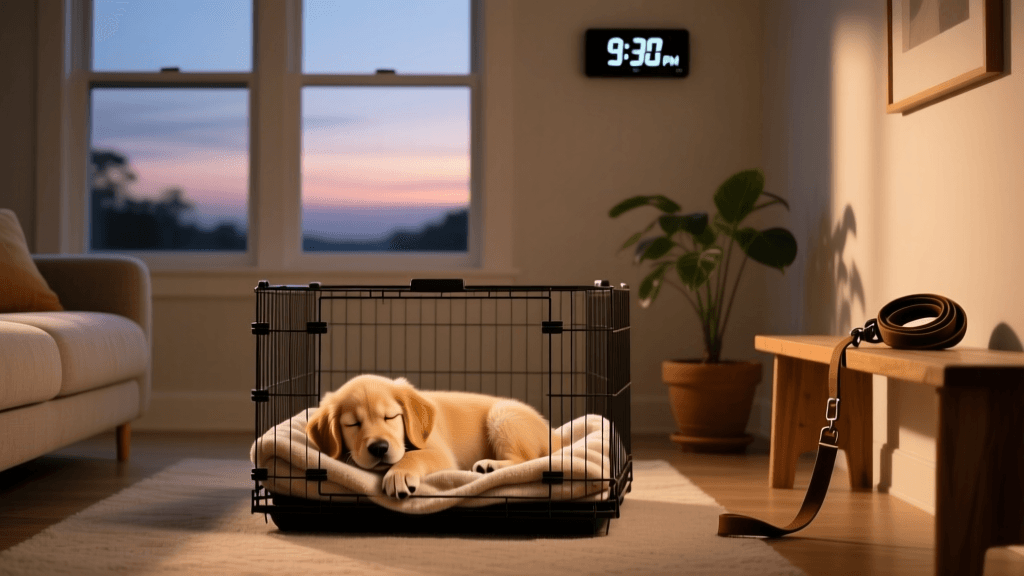
Crate training is one of the most effective methods for potty training and preventing separation anxiety. However, the crate must be introduced as a positive sanctuary, not a jail cell. According to The Humane Society of the United States, a crate taps into a dog's natural denning instinct, providing them with a secure place to retreat when they feel overwhelmed.
Sizing and Placement
The size of the crate is critical for potty training. If the crate is too large, a puppy will designate one corner for sleeping and another for eliminating, defeating the purpose of the training. The ideal crate size allows the dog to stand up without crouching, turn around comfortably, and lie down stretched out. To measure, take the length from the tip of the nose to the base of the tail and add 2 to 4 inches. For height, measure from the floor to the top of the head (or ears, if they are erect) and add 2 to 4 inches. If you have a growing puppy, purchase a wire crate with an adjustable divider panel.
Place the crate in a quiet but socially integrated area of the home, such as a corner of the living room or the master bedroom. Avoid placing it in direct sunlight, near drafty windows, or directly next to loud appliances like washing machines.
Potty Training: Managing Access and Using Baby Gates
Potty training relies heavily on a strict schedule and constant supervision. When you cannot actively watch your dog, they must be confined to their crate or a designated 'safe zone' using baby gates. Allowing a puppy unrestricted access to the entire house is the leading cause of prolonged potty training struggles.
The Umbilical Cord Method
When the puppy is out of the crate, use the 'umbilical cord' training method. Attach a 4-to-6-foot lightweight leash to your belt loop and clip the other end to the puppy's flat collar or harness. This ensures the puppy is always within your line of sight, allowing you to interrupt sniffing or circling behaviors instantly and carry them outside to their designated potty spot.
Choosing the Right Baby Gates
Baby gates are essential for creating dog-proofed playpens or blocking off high-risk areas like staircases and carpeted rooms. Below is a comparison chart to help you select the right gate for your training needs.
| Gate Type | Best Use Case | Average Cost | Pros and Cons |
|---|---|---|---|
| Pressure-Mounted | Doorways, hallways, blocking off carpeted rooms | $30 - $50 | Pros: No drilling required, easy to move. Cons: Can be pushed over by large dogs, leaves a trip-bar at the bottom. |
| Hardware-Mounted | Top of stairs, outdoor patios, high-traffic areas | $40 - $80 | Pros: Extremely secure, no trip-bar options available. Cons: Requires drilling into walls or banisters. |
| Freestand/Pen | Creating a temporary safe zone or playpen in open rooms | $60 - $120 | Pros: Highly versatile, shapes can be adjusted. Cons: Takes up significant floor space, can be tipped by aggressive climbers. |
| Retractable Mesh | Low-traffic interior doorways, temporary blocking | $40 - $70 | Pros: Disappears when not in use, no trip hazard. Cons: Mesh can be chewed through, mechanism may break under heavy pressure. |
Hidden Hazards: Toxins and Choking Risks
A crucial part of dog-proofing is removing biological and chemical hazards that could result in an emergency vet visit. Puppies explore the world with their mouths, and even a small nibble on the wrong item can be fatal.
Toxic Houseplants
Many popular houseplants are highly toxic to dogs. Lilies, sago palms, philodendrons, and pothos can cause symptoms ranging from severe gastrointestinal upset to acute liver failure. Before bringing any plant into your home, cross-reference it with the ASPCA's comprehensive list of toxic and non-toxic plants. If you have a dog that likes to dig in soil, consider hanging plants out of reach or switching to pet-safe alternatives like spider plants, calatheas, or Boston ferns.
Dangerous Human Foods
Counter-surfing is not just an annoying behavioral issue; it is a life-threatening hazard. Foods that are perfectly safe for humans can be deadly to dogs. Grapes and raisins can cause acute kidney failure, while macadamia nuts lead to severe neurological symptoms. Furthermore, the U.S. Food and Drug Administration (FDA) strongly warns pet owners about Xylitol (often listed as birch sugar), an artificial sweetener found in sugar-free gum, peanut butter, and baked goods, which triggers a rapid, fatal drop in a dog's blood sugar and liver failure. Always store human food in sealed containers inside closed pantries, and never leave grocery bags unattended on the kitchen island.
Conclusion: Setting the Stage for Lifelong Obedience
Dog-proofing your home is not a one-time chore; it is an ongoing management strategy that evolves as your dog grows and learns. By meticulously securing hazards, utilizing baby gates to manage potty training access, and creating a positive, appropriately sized crate environment, you set your dog up for success. Remember, a well-managed environment reduces your dog's stress, prevents the rehearsal of bad habits, and allows you to focus your energy on rewarding the good behaviors you want to see flourish. With patience, consistency, and a properly proofed home, your dog will quickly learn the rules of the house and become a well-adjusted, obedient companion.
aaron-whyte
All our authors care for dogs every day — read more of their work on the authors page.