The Best Dog Cameras To Understand Separation Anxiety
Discover how smart dog cameras help decode separation anxiety versus boredom. Compare top pet monitors with bark detection and behavior tracking.
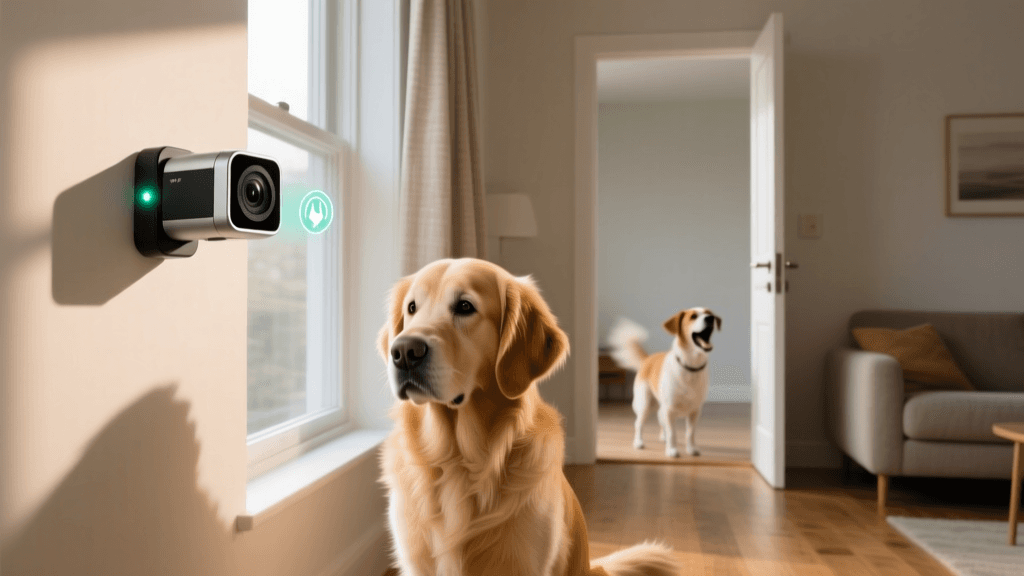
Coming home to a destroyed living room or receiving noise complaints from neighbors is a stressful experience for any dog owner. However, before you scold your pup, it is crucial to understand that dogs do not act out of spite. Destructive behavior, excessive vocalization, and house soiling when left alone are primary symptoms of underlying psychological distress. To truly help your dog, you must first diagnose the root cause of their behavior. This is where smart pet cameras transition from simple security devices to essential diagnostic tools for canine psychology.
The Psychology: Separation Anxiety vs. Boredom vs. Isolation Distress
Understanding what your dog does when you are not around is the first step in addressing behavioral issues. According to the ASPCA, separation anxiety is triggered when a dog becomes upset because of separation from their guardians. But not all alone-time misbehavior is separation anxiety.
Separation Anxiety
This is a severe panic response. Dogs with true separation anxiety exhibit intense distress immediately upon departure or even during pre-departure cues (like picking up your keys). Symptoms include relentless pacing, drooling, panting, escape attempts that result in broken teeth or nails, and vocalization that sounds like panicked howling or crying.
Boredom and Under-Stimulation
A bored dog is not necessarily a panicked dog. If your dog sleeps for the first three hours you are gone, wakes up, chews the baseboards, and then goes back to sleep, they are likely suffering from a lack of mental and physical enrichment rather than clinical anxiety.
Isolation Distress
Some dogs simply dislike being alone but do not experience full-blown panic. They will follow anyone from room to room and prefer the company of humans or other pets, but will settle down if left with a stimulating toy or another animal.
Without a camera, you only see the aftermath. A chewed doorframe could mean your dog panicked trying to escape (anxiety) or simply found the wood satisfying to chew (boredom). A smart camera provides the chronological context needed to accurately read your dog's body language and emotional state.
Key Camera Features for Behavioral Diagnostics
When shopping for a camera to understand your dog's psychology, standard home security features are not enough. You need tools designed specifically for animal behavior monitoring:
- AI Sound and Behavior Alerts: Notifications for barking, crying, or vomiting help you pinpoint the exact moment distress begins.
- Two-Way Audio with Tone Training: The ability to speak to your dog or play a pre-recorded calming tone can help interrupt a behavioral spiral.
- Treat Tossing: Crucial for remote counter-conditioning and positive reinforcement training while you are away.
- 360-Degree Panning: Dogs with anxiety often pace in circles or hide in corners. A static lens might miss these critical body language cues.
Top 3 Smart Dog Cameras for Behavior Monitoring
1. Furbo 360° Dog Camera: The Ultimate Anxiety Diagnostic Tool
Price: ~$210 | Subscription: Furbo Dog Nanny (~$6.99/mo)
The Furbo 360° is widely considered the gold standard for monitoring canine separation anxiety. Its rotating lens follows your dog's movement, ensuring you never lose sight of their body language. The premium AI alerts are a game-changer for behaviorists; the camera can notify you if your dog is barking, crying, or even vomiting—a common physical symptom of severe stress. The treat-tossing feature allows you to remotely reward calm behavior, actively participating in your dog's desensitization training from the office.
2. Petcube Bites 2 Lite: Best for Boredom and Enrichment
Price: ~$100 | Subscription: Petcube Care (~$4.99/mo)
If your camera footage reveals that your dog is simply bored rather than anxious, the Petcube Bites 2 Lite is an excellent intervention tool. Alongside treat tossing, it features a built-in laser pointer. While laser pointers should be used carefully to avoid obsessive-compulsive behaviors in dogs, short, guided play sessions can provide a much-needed mental break for an under-stimulated dog midway through your workday. The sound detection accurately logs bark frequency, helping you track if environmental triggers (like the mail carrier) are causing territorial frustration.
3. Wyze Cam v3: The Budget-Friendly Baseline Tracker
Price: ~$50 | Subscription: Wyze Cam Plus (~$2.99/mo)
For owners who need to establish a behavioral baseline without a massive investment, the Wyze Cam v3 is unparalleled. While it lacks treat tossing, its sound detection (which can be tuned to recognize barking and glass breaking) and exceptional Starlight Night Vision are invaluable. Many anxious dogs seek out dark, den-like spaces (like under a bed or in a closet) to cope with stress. The Wyze’s night vision allows you to monitor these hiding spots clearly, providing vital data on your dog's coping mechanisms.
Product Comparison Chart
| Feature | Furbo 360° | Petcube Bites 2 Lite | Wyze Cam v3 |
|---|---|---|---|
| Primary Behavioral Use | Severe Anxiety & Pacing | Boredom & Enrichment | Hiding & Baseline Tracking |
| Price (Approx.) | $210 | $100 | $50 |
| 360° Panning | Yes (Auto-tracking) | No (Static wide-angle) | No (Static) |
| Treat Tossing | Yes | Yes | No |
| Advanced AI Alerts | Bark, Cry, Vomit, Lick | Bark, Person, Pet | Smoke, CO, Bark (via sub) |
| Night Vision Quality | Standard Infrared | Standard Infrared | Color Starlight Sensor |
Actionable Advice: Setting Up a Behavioral Baseline
Buying the camera is only step one. To truly understand your dog, you must gather objective data. The American Kennel Club recommends a structured approach to identifying triggers. Follow this protocol for your first week of camera use:
- Day 1-2 (The Departure Test): Leave the house for varying increments (5 minutes, 30 minutes, 2 hours). Do not intervene via two-way audio. Review the footage to note the exact minute your dog's heart rate seems to elevate (panting, pacing, whining).
- Day 3-4 (Trigger Identification): Note environmental factors. Does the barking only start when the neighbor's dog goes outside? Does the pacing stop once the sun goes down? This helps differentiate between territorial reactivity and isolation distress.
- Day 5-7 (Counter-Conditioning): Use the treat-tossing feature to change the emotional response. Toss a high-value treat 10 minutes before the usual onset of anxiety. Over time, the dog learns that your absence predicts good things, fundamentally altering their psychological association with being alone.
When to Consult a Veterinary Behaviorist
While cameras and home training protocols are excellent for mild boredom and isolation distress, true separation anxiety is a clinical condition that often requires medical intervention. If your camera footage reveals self-mutilation, relentless escape attempts, or involuntary elimination within the first 15 minutes of your departure, home remedies will not suffice.
According to the Humane Society of the United States, severe cases of separation anxiety often require a combination of behavior modification and anti-anxiety medications prescribed by a veterinarian. Use your camera footage as a diagnostic portfolio. Showing a certified veterinary behaviorist exact timestamps and video evidence of your dog's panic responses will expedite an accurate diagnosis and a tailored, compassionate treatment plan.
Ultimately, investing in a smart dog camera is an investment in empathy. It allows you to look past the frustrating symptoms of destroyed furniture and see the emotional reality of your best friend, paving the way for a happier, more secure relationship.
jonas-cole
All our authors care for dogs every day — read more of their work on the authors page.