Budget Dog Enrichment: Understanding Canine Mental Stimulation
Discover how to fulfill your dog's psychological need for mental stimulation on a budget with DIY enrichment games and free cognitive exercises.
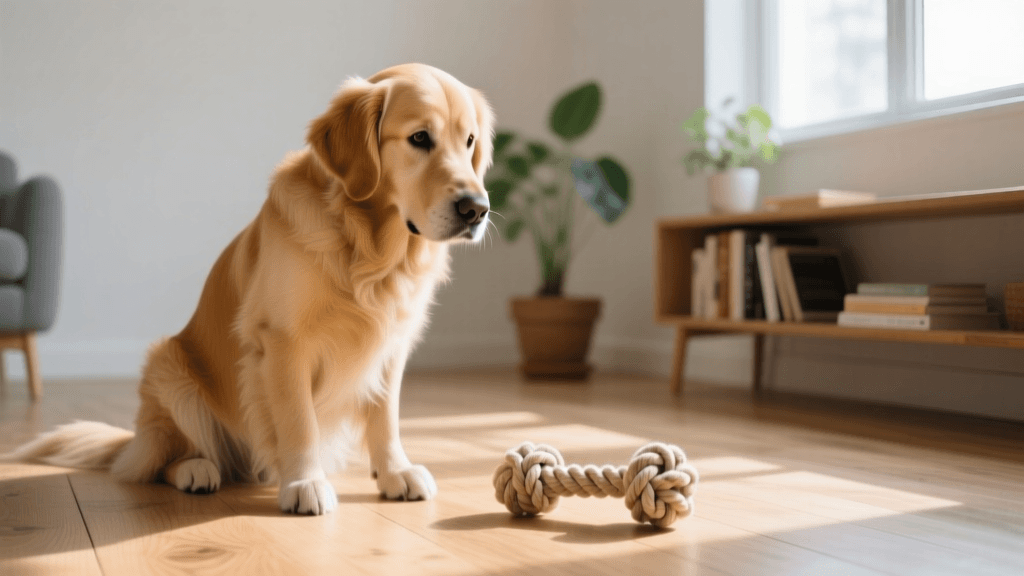
As dog owners, we quickly learn that a physically tired dog is a good dog, but a mentally tired dog is a truly fulfilled one. However, a quick browse through any pet store's enrichment aisle reveals a harsh reality: commercial puzzle toys, snuffle mats, and interactive feeders can easily cost between $25 and $60 each. When you are managing a tight household budget, providing high-quality cognitive stimulation for your canine companion can feel like an unaffordable luxury. The monthly costs of replacing destroyed commercial puzzles can quickly derail your pet care budget.
Fortunately, understanding the core psychology behind why your dog needs mental stimulation allows you to replicate these expensive commercial experiences using free or low-cost household items. By tapping into your dog's natural breed instincts and neurological drives, you can provide world-class behavioral enrichment on a shoestring budget.
The Neuroscience of Play: Why Dogs Need Mental Work
To truly master budget-friendly dog care, we must first understand the canine brain. Mental stimulation is not just a fun bonus for your dog; it is a biological necessity. Renowned neuroscientist Jaak Panksepp identified seven primary emotional systems in the mammalian brain, one of the most powerful being the SEEKING system. This system drives your dog to explore, investigate, and make sense of their environment.
When your dog sniffs a bush, tracks a scent, or figures out how to open a puzzle toy, their brain releases a massive flood of dopamine. Crucially, this dopamine is released during the search and the struggle, not just upon receiving the reward. If you simply hand your dog a treat or feed them from a standard bowl, you are bypassing the SEEKING system entirely. Understanding this neurological mechanism is the key to budget enrichment: you do not need expensive plastic gadgets to trigger dopamine; you simply need to create an environment that requires your dog to use their nose and brain to "hunt" for their resources.
This concept is closely tied to a behavioral phenomenon known as contrafreeloading. In animal psychology, contrafreeloading refers to the tendency of animals to prefer working for their food rather than eating it for free, even when the free food is readily available. Dogs are hardwired to forage. When we force them to eat out of a bowl in two minutes flat, we rob them of this natural instinct, which often manifests as destructive behavior, excessive barking, or anxiety. According to the American Kennel Club, incorporating brain games and mental work into your dog's daily routine can tire them out just as effectively as a long physical run, making it an essential tool for busy or budget-conscious owners.
The True Cost of Commercial Enrichment vs. DIY Alternatives
Before we dive into the DIY methods, let us look at the financial impact of relying on commercial enrichment products versus utilizing household items. By understanding your dog's behavioral needs, you can swap out expensive single-purpose toys for versatile, nearly free alternatives.
| Enrichment Type | Commercial Product Example | Avg. Cost | Budget DIY Alternative | DIY Cost |
|---|---|---|---|---|
| Snuffle Mat | Fleece Foraging Mat | $35 - $50 | Bath Towel Scatter / Burrito | $0 |
| Puzzle Feeder | Multi-Level Plastic Puzzle | $40 - $65 | Muffin Tin & Tennis Balls | $5 |
| Destructible Forage Box | Commercial Shredder Box | $25 - $40 | Recycled Cardboard & Paper | $0 |
| Lick Mat | Textured Silicone Mat | $15 - $25 | Clean Textured Silicone Trivet | $3 |
As the table illustrates, a basic understanding of canine foraging instincts can save you over $100 per year in enrichment supplies, money that can be better spent on high-quality nutrition or veterinary care.
Zero-Dollar DIY Enrichment Games Based on Instincts
The RSPCA emphasizes that environmental enrichment is critical for preventing behavioral issues and promoting positive welfare. Here are three highly effective, budget-friendly enrichment games that cater to specific canine instincts.
1. The Towel Burrito (Foraging and Sniffing)
The Instinct: Scent tracking and foraging.
The Setup: Take an old, clean bath towel and lay it flat on the floor. Evenly scatter your dog's daily kibble or some high-value treats across the center. Roll the towel up tightly into a long cylinder (like a burrito). For an advanced challenge, tie the rolled towel into a loose knot.
The Psychology: The dog must use their nose to locate the food through the fabric layers, and then use their paws and snout to unroll or untie the towel. This mimics the slow, methodical process of foraging for scraps in dense underbrush. It is completely free, machine washable, and highly engaging.
2. The Muffin Tin Shell Game (Problem Solving)
The Instinct: Spatial reasoning and obstacle manipulation.
The Setup: Take a standard 12-cup metal or silicone muffin tin. Place a smelly treat in four of the cups. Cover all twelve cups with tennis balls, rolled-up socks, or balled-up paper.
The Psychology: Your dog must figure out that the food is hidden beneath the objects, and they must selectively remove the obstacles to find the rewards. This encourages paw-targeting and snout-nudging, providing excellent cognitive fatigue. As your dog masters the game, you can increase the difficulty by using heavier objects or treating fewer cups.
3. Cardboard Dissection (The Predatory Sequence)
The Instinct: The predatory sequence (specifically the "dissect" phase).
The Setup: Save your delivery boxes, toilet paper rolls, and egg cartons. Place treats inside the smaller boxes, fold the flaps shut, and place them inside the larger box. Fill the empty spaces with crumpled, dog-safe packing paper.
The Psychology: In the wild, after a predator catches its prey, it must dissect it to consume it. Many dogs (especially terriers and retrievers) have a strong "shredding" instinct. Allowing them to safely tear apart cardboard and paper fulfills this deep-seated biological urge, relieving stress and providing intense mental focus. Note: Always supervise this activity to ensure your dog is spitting out the cardboard and only eating the treats.
Tailoring Enrichment to Your Dog's Breed Profile
Understanding your dog's breed history is a massive advantage in budget enrichment. Not all dogs enjoy the same type of mental work. Tailoring your free DIY games to your dog's genetic predispositions ensures they remain engaged without you having to buy specialized equipment.
- Scent Hounds (Beagles, Bloodhounds, Basset Hounds): These dogs are driven by their noses. Skip the complex physical puzzles and focus entirely on scent-based games. Hide treats around the house or yard and encourage them to "find it." A simple game of hiding kibble in the grass during a walk costs nothing and will exhaust a hound faster than a three-mile run.
- Terriers (Jack Russells, Rat Terriers): Bred to hunt and kill vermin, terriers need to dig, chase, and dissect. The cardboard dissection box mentioned above is perfect for them. You can also create a DIY "dig box" by filling a cheap plastic children's pool with shredded paper or safe soil and burying their toys inside.
- Herding Breeds (Border Collies, Australian Shepherds): These dogs need to control movement and solve complex problems. They excel at "shaping" games. Give them a random household object (like a plastic bucket or a wooden spoon) and reward them every time they interact with it in a new way (sniffing, pawing, picking it up). This free-form training builds immense cognitive stamina.
The "Sniffari": Free Environmental Enrichment
One of the most powerful, entirely free forms of mental stimulation is the decompression walk, often referred to as a "Sniffari." Many owners treat walks as a physical exercise meant to get the dog from point A to point B as quickly as possible. However, veterinary behaviorists and organizations like Fear Free Happy Homes recommend allowing dogs to dictate the pace and route of the walk based on scent markers.
When your dog stops to sniff a fire hydrant or a patch of weeds, they are essentially "reading the news" of their neighborhood. They are processing complex chemical signals, determining who was there, what they ate, and their reproductive status. This intense olfactory processing requires massive amounts of brain power. A 20-minute walk where the dog is allowed to sniff freely is often more mentally tiring than a 60-minute brisk march on a leash. Simply giving your dog the time and permission to use their nose costs absolutely zero dollars but yields profound behavioral benefits.
Crucial Safety Rules for Budget Enrichment
While budget-friendly DIY enrichment is fantastic for your wallet and your dog's brain, safety must always remain the top priority. When utilizing household items, keep the following rules in mind:
- Supervise Shredding: While tearing cardboard is natural, ingesting it can cause life-threatening gastrointestinal blockages. Always supervise cardboard dissection and remove large pieces of paper or plastic tape before your dog can swallow them.
- Avoid Toxic Foods: When using food for scatter feeding or puzzle stuffing, ensure you are only using dog-safe ingredients. Never use items containing xylitol (an artificial sweetener highly toxic to dogs), grapes, raisins, onions, or macadamia nuts.
- Check for Choking Hazards: If using items like socks or tennis balls to cover a muffin tin, ensure the objects are too large to be swallowed whole and are made of durable materials that will not easily break apart into sharp pieces.
- Know When to Step In: Enrichment should be challenging, not frustrating. If your dog gives up, whines, or begins aggressively destroying the DIY puzzle out of frustration, the task is too hard. Simplify the game to ensure they end the session feeling successful and confident.
Conclusion
Providing exceptional care for your dog does not require an endless supply of expensive gadgets or a massive monthly budget. By taking the time to truly understand your dog's psychology, breed instincts, and neurological needs, you can transform ordinary household items into powerful tools for cognitive development. Whether it is rolling up a bath towel for a foraging game, saving delivery boxes for safe destruction, or simply allowing your dog to sniff the roses on a decompression walk, these budget-friendly strategies will result in a happier, calmer, and more fulfilled canine companion.
tom-renshaw
All our authors care for dogs every day — read more of their work on the authors page.