The Psychology of Pulling: Why No-Pull Harnesses Work in 2026
Discover the canine psychology behind leash pulling and how front-clip no-pull harnesses counteract the opposition reflex for better walks in 2026.
The Canine Opposition Reflex: Why Dogs Pull Against Pressure
For many dog owners, the daily walk is less of a leisurely stroll and more of an exhausting game of tug-of-war. If you find yourself being dragged down the sidewalk, it is crucial to understand that your dog is not necessarily being stubborn or deliberately disobedient. Instead, they are falling victim to a deeply ingrained biological phenomenon known as the opposition reflex, or thigmotaxis. In the study of canine behavior, the opposition reflex describes an animal's instinctual response to push against physical pressure. When pressure is applied to a dog's chest, neck, or shoulders, their hardwired neurological response is to lean into that pressure and push forward.
This reflex is the exact same mechanism that allows sled dogs to pull heavy loads across the snow. When a traditional back-clip harness or a flat collar applies tension to the dog's body as they reach the end of the leash, the opposition reflex kicks in. The dog feels the pressure and instinctively pushes against it, effectively turning your walk into a sledding exercise. Understanding this biological imperative is the first step in addressing leash pulling. As we navigate dog ownership and behavioral training in 2026, veterinary behaviorists increasingly emphasize that we cannot simply 'correct' a reflex through punishment; we must change the biomechanical feedback loop using specialized equipment like the front-clip no-pull harness.
The Dopamine Reward Loop of Leash Pulling
To truly grasp why pulling becomes a chronic habit, we must look at canine psychology through the lens of operant conditioning and neurochemistry. Dogs are primarily driven by their olfactory senses; the world is a tapestry of scents that provides immense mental stimulation. When a dog spots an interesting smell—such as a fire hydrant, a patch of grass, or a neighboring dog's scent mark—they naturally want to investigate. If the dog pulls on the leash and successfully reaches that scent, their brain releases a surge of dopamine, the neurotransmitter associated with reward and pleasure.
This creates a powerful psychological feedback loop: pulling equals access to the reward. Over time, the dog learns that applying forward tension to the leash is the most effective way to navigate their environment. A no-pull harness interrupts this dopamine loop by changing the physical outcome of the behavior. When the dog pulls and the front-clip harness gently redirects their momentum, they fail to reach the reward. The brain registers that pulling no longer yields the desired result, prompting the dog to seek an alternative behavior, such as looking back at the handler for guidance.
Leash Reactivity and Barrier Frustration
Pulling is often intertwined with leash reactivity and barrier frustration. When a dog wears restrictive equipment that causes discomfort or limits their natural gait, their baseline stress levels elevate. A dog that feels physically trapped or choked by a tight collar is more likely to exhibit a 'fight' response when confronted with a trigger, such as an approaching dog or a loud noise. The physical restriction creates a psychological state of panic and hyper-arousal.
Modern behavioral science highlights the importance of emotional regulation during walks. A high-quality no-pull harness alleviates pressure from the dog's delicate trachea and allows for unrestricted shoulder movement. By removing the sensation of being choked or trapped, the dog's cortisol levels remain lower, making them more receptive to training cues and less likely to react explosively to environmental stimuli. According to the ASPCA's guidelines on safe dog walking, utilizing equipment that prevents choking and distributes pressure evenly is vital for both the physical health and the emotional well-being of the dog.
The Psychology of the Front-Clip No-Pull Harness
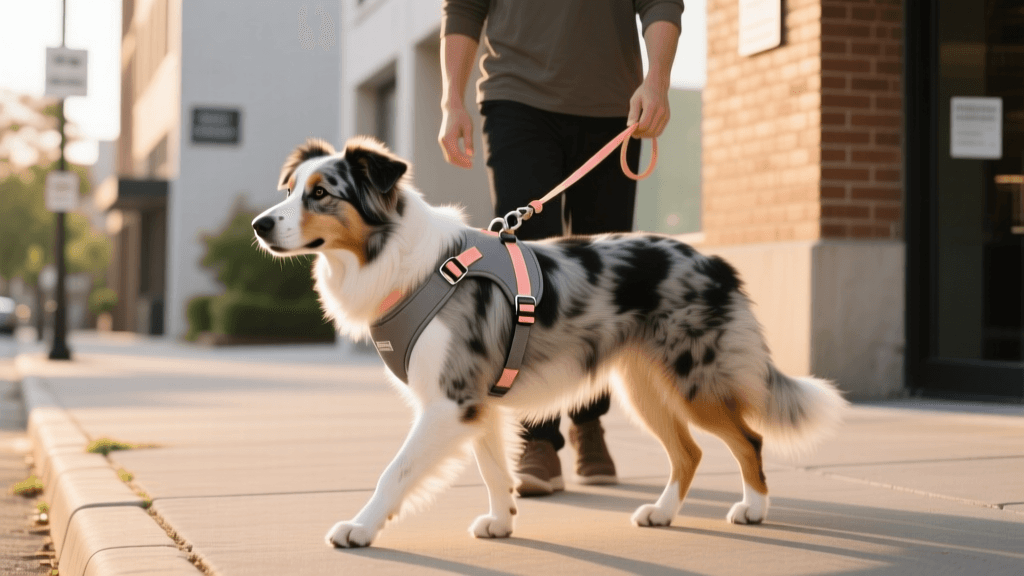
The genius of the front-clip no-pull harness lies in its ability to manipulate the dog's center of gravity without causing pain or fear. Unlike a back-clip harness, which sits over the dog's center of mass and encourages forward driving power, a front-clip harness features a leash attachment point located on the dog's sternum. When the dog pulls forward and the leash becomes taut, the lateral tension gently turns the dog's chest and shoulders toward the handler.
Psychologically, this achieves two critical things. First, it completely neutralizes the opposition reflex. Because the pressure is applied from the side and front rather than from behind, the dog cannot lean into it; instead, they are physically rotated away from their target. Second, it forces a behavioral 'check-in.' When the dog is turned toward the handler, eye contact becomes natural and effortless. This creates a prime opportunity for the handler to mark and reward the dog for disengaging from the distraction and re-engaging with the human. The American Kennel Club (AKC) frequently recommends front-clip harnesses as a foundational tool for teaching loose-leash walking because it naturally positions the dog for success and communication.
2026 Standards: Behavioral Features to Look For
Not all harnesses are created equal, and the market has evolved significantly. When selecting a no-pull harness to support your dog's behavioral journey in 2026, look for these specific, psychology-friendly features:
- Y-Shaped Chest Plate: Avoid harnesses with a horizontal strap across the shoulders. A Y-shape allows for full extension of the front legs, preserving natural biomechanics and preventing the physical frustration that leads to behavioral outbursts.
- Dual-Clip Functionality: The best harnesses feature both a front and a back clip. This allows you to use a double-ended leash, giving you steering control from the front while maintaining gentle guidance from the back, which is highly effective for high-arousal dogs.
- Breathable, Lightweight Mesh: Overheating increases irritability and reactivity. Modern 2026 designs utilize advanced cooling meshes that keep the dog comfortable, thereby maintaining a lower emotional threshold.
- Customizable Fit Points: A harness that shifts or rubs causes chronic low-grade stress. Look for models with four or more adjustment points to ensure a snug, secure fit that feels like a gentle hug rather than a restrictive cage.
Equipment Impact on Canine Psychology and Biomechanics
Understanding how different tools affect your dog's mind and body is essential for making informed welfare choices. The table below compares common walking equipment through a behavioral lens.
| Equipment Type | Biomechanical Impact | Psychological State | Pulling Tendency |
|---|---|---|---|
| Flat Collar | High pressure on trachea and cervical spine. | High stress, potential barrier frustration, gagging. | High (Opposition reflex triggered). |
| Back-Clip Harness | Distributes pressure across chest and back. | Secure, but encourages forward-leaning drive. | Very High (Mimics sled-pulling mechanics). |
| Front-Clip No-Pull Harness | Redirects center of gravity laterally. | Attentive, balanced, encourages handler focus. | Low (Neutralizes opposition reflex). |
| Head Halter | Controls the muzzle and neck alignment. | Can cause suppression or pawing if not desensitized. | Low (High control, but requires acclimation). |
Beyond the Gear: Rewiring the Brain for Loose-Leash Walking
While a front-clip no-pull harness is an exceptional management tool, it is not a magical cure for pulling. Behavioral modification requires a combination of management (the harness) and education (training). The harness prevents the dog from practicing the unwanted behavior and self-rewarding with environmental scents, but the handler must actively teach the dog what to do instead.
In 2026, force-free, reward-based training remains the gold standard for canine behavioral health. Use the harness to manage the environment, and carry high-value treats to reward the dog whenever the leash goes slack. Every time the dog chooses to walk by your side voluntarily, or every time they look up at you instead of pulling toward a distraction, mark that moment with a 'yes' or a click, and deliver a reward. Over time, you will rewire the dog's dopamine pathways. They will learn that the greatest rewards do not come from pulling to the end of the leash, but from walking in harmony with you. By combining an understanding of the opposition reflex with the biomechanical advantages of a modern no-pull harness, you can transform your daily walks from a battle of wills into a bonding experience rooted in mutual trust and clear communication.
hannah-wickes
All our authors care for dogs every day — read more of their work on the authors page.