2026 Guide: Training Your Dog for a New Baby's Arrival
Learn how to train your dog for a new baby in 2026. Discover nursery boundary techniques and baby sound desensitization for a smooth family transition.
The 2026 Approach to Dog and Baby Transitions
Welcoming a new baby is one of the most profound life transitions a family can experience, and for your dog, it represents a massive shift in their environment, routine, and social structure. In 2026, certified veterinary behaviorists and canine trainers emphasize a proactive, phased approach to preparation. Rather than waiting until the infant arrives to establish new rules, modern training protocols dictate that desensitization and boundary setting should begin during the first or second trimester. This ensures your dog has ample time to adjust without associating the sudden loss of attention or freedom directly with the newborn.
According to the ASPCA, adjusting your dog's routine months before the baby arrives prevents them from developing anxiety or resentment toward the infant. This comprehensive guide will walk you through the exact nursery boundary training, sound desensitization, and routine adjustment techniques required to foster a safe, harmonious household.
Phase 1: Nursery Boundary and Threshold Training
The nursery is a high-value, high-distraction zone. Before the crib is even assembled, you must establish clear physical and psychological boundaries. The goal is to teach your dog that the nursery is a place of calm observation, not an open playground.
Installing Physical Barriers
Invest in a reliable, hardware-mounted gate such as the Regalo Easy Step Walk Thru Gate. Avoid pressure-mounted gates for nursery thresholds, as large dogs can easily dislodge them. Once the gate is installed, begin threshold training. Stand at the entrance with your dog on a leash. The moment they look at the room without pulling forward, mark the behavior with a clicker or a verbal "yes" and reward them with a high-value treat like freeze-dried Stella & Chewy's chicken. Gradually increase the duration they must sit calmly at the threshold before receiving a reward.
The "Place" Command
The American Kennel Club (AKC) highly recommends teaching a solid "place" or "go to bed" command. Place a comfortable, elevated bed like the K&H Pet Products Original Elevated Pet Cot in the corner of the nursery or just outside the gate. Train your dog to go to their mat and settle on a "down-stay" while you perform tasks in the room, such as folding laundry or rocking an empty chair. This gives the dog a specific, rewarded job rather than leaving them to wander and investigate potentially dangerous baby gear.
Phase 2: Systematic Baby Sound Desensitization
Dogs possess incredibly sensitive hearing, and the sudden, high-pitched wail of a newborn can trigger a dog's prey drive, curiosity, or severe anxiety. Systematic desensitization and counter-conditioning (DSCC) is critical.
Creating a Sound Protocol
Download a reputable baby sound app or use YouTube playlists featuring infant crying, cooing, and mechanical swing noises. Begin playing these sounds at a barely perceptible volume (around 20 decibels) while your dog is engaged in a highly rewarding activity, such as licking a frozen Kong filled with peanut butter.
- Week 1-2: Play sounds at 20-30 dB during meal times. The dog learns that baby noises predict delicious food.
- Week 3-4: Increase volume to 40-50 dB. Introduce the sounds while practicing obedience commands like "sit" and "down."
- Week 5-6: Raise the volume to 70-80 dB (the average volume of a real baby cry). If your dog shows signs of stress (panting, pacing, lip licking), immediately lower the volume. You moved too fast.
By the third trimester, the sound of a crying baby should trigger your dog to look at you expectantly for a treat, rather than reacting with alarm.
Phase 3: Stroller Desensitization and Scent Introduction
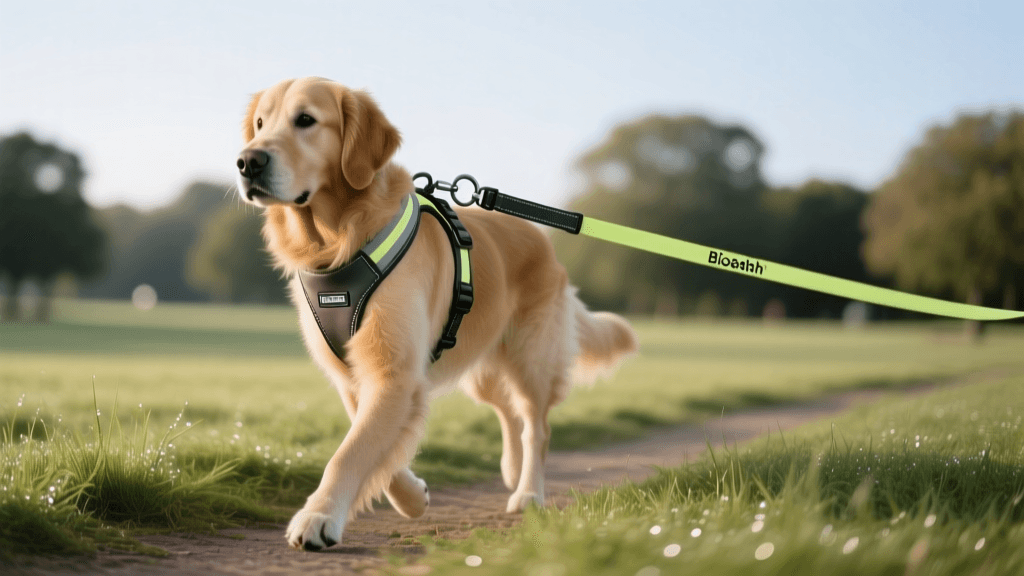
Walking your dog while pushing a stroller requires a completely different leash-handling skill set and canine spatial awareness. Introduce your stroller (such as the BOB Gear Revolution Flex 3.0) into the living space weeks before the baby arrives. Let your dog sniff it while it is stationary. Next, begin pushing the empty stroller around the house, rewarding your dog for walking politely on a loose leash beside it, rather than darting in front of the wheels.
The Hospital Blanket Scent
When the birthing parent is at the hospital, have a partner bring home a blanket or swaddle that carries the baby's scent. Allow your dog to sniff the blanket from a distance, rewarding calm behavior. Do not let them grab or chew it. This olfactory introduction ensures the baby's smell is already familiar when they finally cross the threshold of your home.
Managing the Post-Partum Environment
Once the baby is home, the environment becomes chaotic. Visitors, altered sleep schedules, and new equipment can overwhelm your dog. Utilize modern technology to maintain training consistency. A 2026 AI-enabled pet camera, like the Furbo 360 Dog Camera, allows you to monitor your dog's stress levels from the nursery. If your dog begins to pace or whine while you are feeding the baby, you can use the camera's two-way audio to issue a "place" command and toss a treat to reinforce quiet behavior without leaving the room.
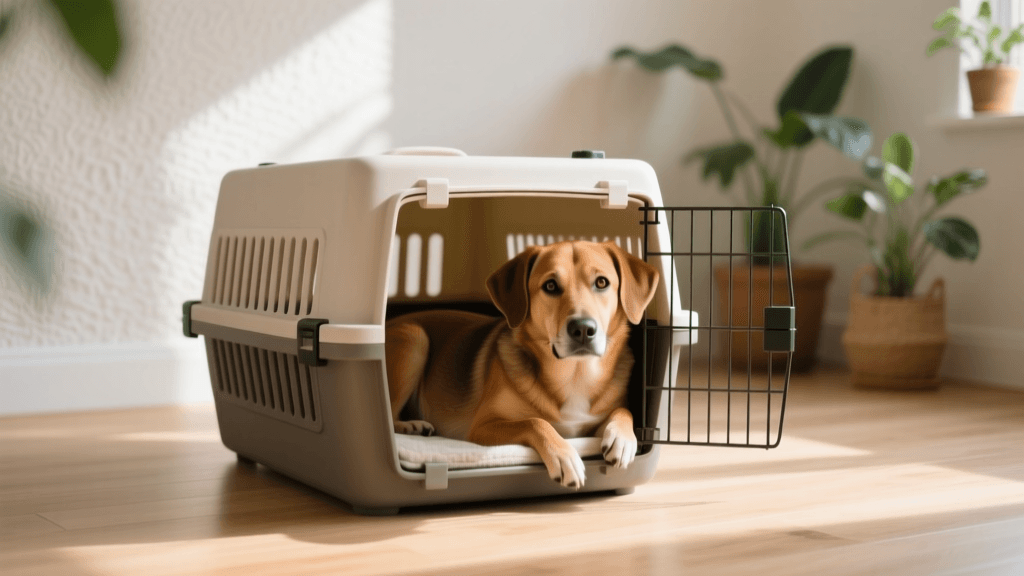
Furthermore, establish a "quiet zone" for your dog. When guests arrive to meet the baby, the excitement can be too much. Send your dog to their crate or a designated back bedroom with a long-lasting chew to prevent jumping on guests or reacting to the high-pitched excitement of visitors.
Routine Transition Comparison Chart
To visualize the shift in your dog's life, review the structured transition plan below. Consistency in these phases is the key to preventing behavioral regression.
| Phase | Timeline | Primary Training Focus | Daily Exercise & Attention |
|---|---|---|---|
| Preparation | Trimester 1 & 2 | Nursery boundaries, loose-leash stroller walking, sound desensitization. | Standard routine (e.g., 2x 45-min walks, 20 min active training). |
| Adjustment | Trimester 3 | Mat training, independence building, reducing separation anxiety triggers. | Begin shifting to shorter, more frequent walks; introduce puzzle feeders. |
| Arrival | Weeks 1-2 Post-Partum | Threshold manners, calm observation, scent and visual introduction. | Low-impact mental enrichment (snuffle mats, frozen Kongs) to conserve parent energy. |
| Integration | Months 1-3 Post-Partum | Supervised proximity, reinforcing "leave it" around baby toys/diapers. | Gradual return to physical exercise; incorporating baby into walking routine safely. |
Expert Safety Protocols and Final Thoughts
No matter how well-trained your dog is, safety must remain the absolute priority. Organizations like Family Paws Parent Education advocate for the "Dogs and Storks" approach, which heavily emphasizes that dogs and babies should never be left unsupervised together, even for a single second. If you need to step away to answer the door or use the restroom, the dog must be physically separated from the baby via a crate, a gated room, or tethered securely to you.
Additionally, be hyper-aware of resource guarding. Diapers, baby wipes, and teething toys are highly attractive to dogs but pose severe intestinal blockage risks. Teach a robust "leave it" and "drop it" command using high-value trade-ups during the preparation phase.
Preparing your dog for a new baby is a marathon, not a sprint. By implementing these boundary, desensitization, and routine management strategies throughout 2026, you are setting the foundation for a lifelong, safe, and beautiful bond between your child and your canine companion. Patience, proactive management, and positive reinforcement will guide your pack through this incredible life transition.
hannah-wickes
All our authors care for dogs every day — read more of their work on the authors page.