2026 Dog Training Guide: Preparing Your Pet for a New Baby
Prepare your dog for a new baby in 2026 with expert nursery boundary training, scent desensitization, and impulse control techniques for a smooth transition.
Bringing a new baby into your home is one of the most profound and joyful life transitions a family can experience. However, for your dog, this monumental shift can be a source of immense confusion and stress. Dogs thrive on predictability, and the sudden introduction of strange noises, new scents, altered routines, and a tiny human demanding all your attention can trigger anxiety, regression in obedience, and even territorial behaviors. As of 2026, veterinary behaviorists emphasize that proactive, structured training is the single most effective way to ensure a harmonious household. Waiting until the baby arrives to set boundaries is a recipe for disaster; instead, you must guide your dog through this life transition methodically.
The Psychology of Life Transitions for Dogs
To successfully train your dog for a new baby, you must first understand how they perceive life transitions. Dogs do not understand the concept of a 'baby' in the human sense. They understand changes in their environment, shifts in their owner's emotional state, and alterations to their daily schedule. According to the VCA Animal Hospitals network, a dog's stress levels can spike significantly when their established territory and routine are disrupted without proper desensitization.
The goal of transition training is not merely to teach your dog new tricks, but to build a new baseline of normalcy. By gradually introducing baby-related stimuli and pairing them with positive reinforcement, you rewire your dog's emotional response from apprehension to relaxation. In 2026, modern canine behavioral science heavily favors 'force-free' desensitization protocols that prioritize the dog's emotional well-being over strict compliance, ensuring the dog feels safe rather than suppressed.
Phase 1: Scent and Audio Desensitization (Months 1-3 of Prep)
Long before the nursery is fully assembled, you should begin altering your dog's sensory environment. Babies bring a host of new smells and sounds that can be highly stimulating or alarming to a dog. The American Kennel Club recommends starting scent and audio desensitization at least four to six months before the baby's due date.
Audio Conditioning
Start by playing audio tracks of baby sounds—crying, cooing, and the mechanical whir of a baby swing—at a very low volume while your dog is engaged in a relaxing activity, like chewing a long-lasting treat or resting on their mat. Over several weeks, gradually increase the volume. If your dog shows signs of stress (panting, pacing, whining), lower the volume immediately and proceed more slowly. The objective is to make the sound of a crying baby as mundane as the sound of a passing car.
Scent Association
Introduce baby lotions, powders, and diaper creams into your daily routine. Apply a small amount to your hands before petting your dog or giving them treats. This classical conditioning technique pairs the novel scent of the baby with positive outcomes, creating a favorable emotional association before the baby even arrives.
Phase 2: Establishing Nursery Boundaries (Months 3-5 of Prep)
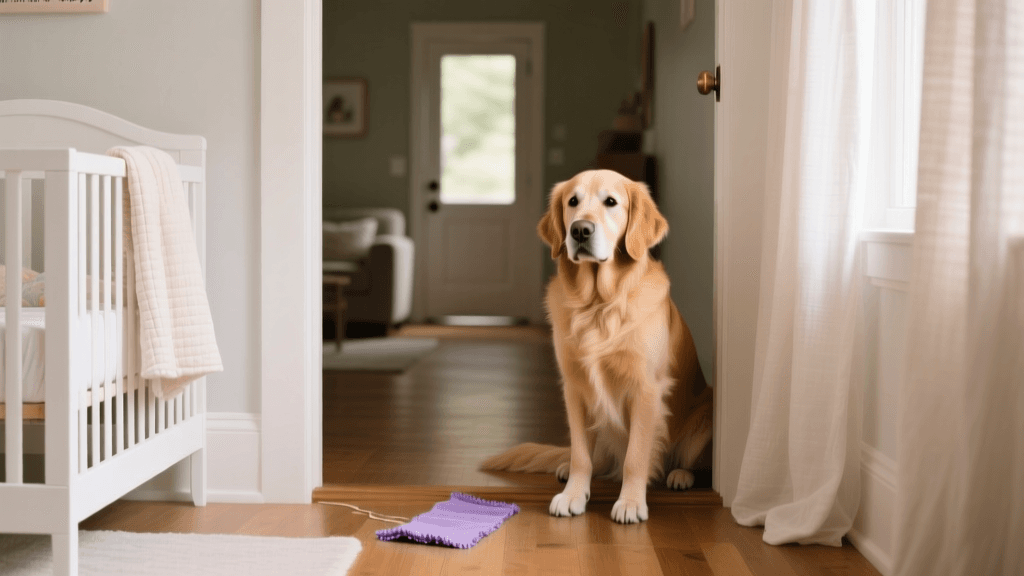
One of the most critical aspects of 2026 dog training for new parents is establishing physical boundaries. The nursery should become a zone that your dog respects, whether the door is open or closed. This is not about banishing your dog, but about teaching them impulse control and spatial awareness.
The 'Invisible Threshold' Method
Instead of relying solely on physical barriers, train an 'invisible threshold' at the nursery doorway. This ensures that even if a smart pet gate is left open or a physical gate is removed, your dog will not enter without an explicit invitation.
- Step 1: Stand outside the nursery with your dog on a leash. Toss a high-value treat into the room, but do not let the dog cross the threshold to get it. Instead, reward them heavily for staying in the hallway.
- Step 2: Introduce a 'Place' or 'Mat' command just outside the nursery door. Use a raised cot, such as a Kuranda or Coolaroo bed, which provides a clear physical boundary for the dog to rest on while you tend to the baby inside.
- Step 3: Practice walking into the nursery while your dog remains on their mat. If they break the stay, calmly guide them back without scolding. Over time, increase the duration and distance.
- Step 4: Incorporate modern 2026 smart pet gates or auto-retracting mesh barriers as a secondary backup, but never as a substitute for the behavioral training of the threshold.
Phase 3: Stroller Leash Manners and Impulse Control (Months 5-7)
Walking your dog while pushing a stroller requires a completely different leash dynamic than a standard walk. A dog that pulls on the leash becomes a significant safety hazard when you are simultaneously managing an infant. Begin stroller training with an empty stroller, treating it exactly as you would a new piece of mobility equipment.
Practice the 'stop and sit' method. The moment your dog pulls and creates tension on the leash, stop walking immediately. Do not jerk the leash; simply become a tree. Wait for your dog to release the tension and offer a sit or make eye contact, then mark the behavior with a 'yes' and resume walking. This teaches the dog that pulling results in a cessation of movement, while loose-leash walking results in forward progress. By the time the baby arrives, navigating sidewalks and doorways with a stroller will be second nature to your dog.
Managing Visitor Excitement and Doorbell Reactivity
When you bring a baby home, friends and family will inevitably visit, often bringing high energy, loud voices, and excitement. For a dog already stressed by the life transition, a bustling house can trigger doorbell reactivity, jumping, and excessive barking. You must train a 'Visitor Protocol' well in advance.
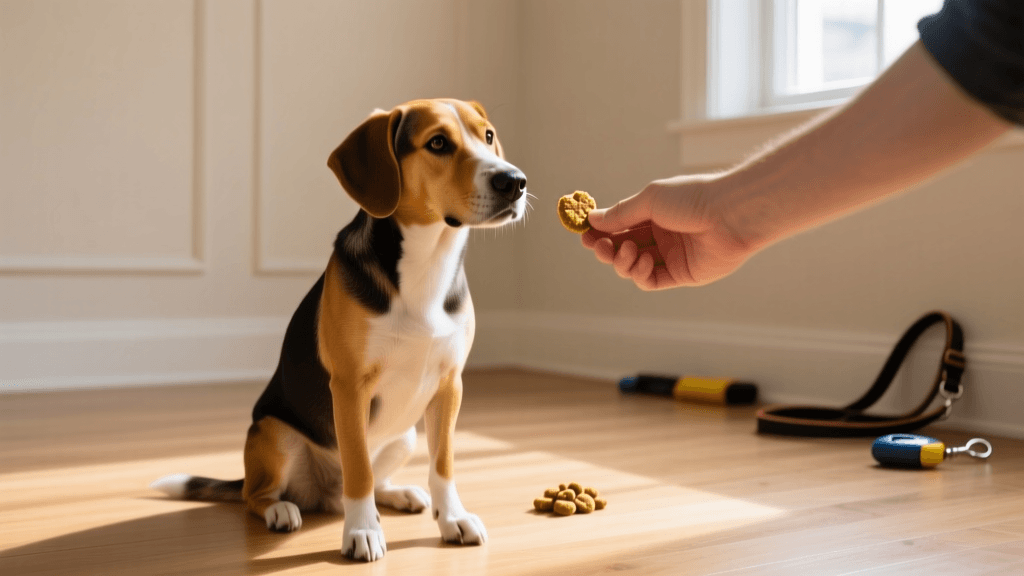
Condition your dog to go to their designated 'Place' mat in the living room whenever the doorbell rings or someone knocks. Use a long training leash to guide them to the mat, reward them for settling, and practice having 'fake' visitors enter the home while the dog remains in a down-stay. The ASPCA strongly advises against allowing dogs to greet excited guests at the door during the first few months of a baby's life, as the chaotic energy can easily spill over into unpredictable behavior.
2026 Baby Prep Training Timeline & Gear
To keep your training on track, refer to this structured timeline and gear guide, updated for current 2026 methodologies and products.
| Training Phase | Timeframe Before Arrival | Primary Objective | Recommended 2026 Gear |
|---|---|---|---|
| Sensory Desensitization | 4-6 Months | Neutralize fear of baby sounds and smells | Baby sound white-noise apps, unscented baby lotion |
| Nursery Boundaries | 3-5 Months | Teach threshold respect and 'Place' command | Raised orthopedic cot, pressure-mounted smart gate |
| Stroller Manners | 2-4 Months | Loose-leash walking with mobility aids | Front-clip no-pull harness, hands-free waist leash |
| Visitor Protocol | 1-2 Months | Doorbell desensitization and settling | Long 15ft training lead, high-value treat pouch |
| Impulse Control | Ongoing | 'Leave it' and 'Drop it' for baby toys | Interactive puzzle toys to redirect chewing urges |
Note: In 2026, professional transition-training packages typically range from $250 to $400 for a comprehensive four-session in-home course with a certified behaviorist, which is highly recommended for dogs with a history of resource guarding or severe anxiety.
The First Introduction: Setting the Stage
The day you bring your baby home is a moment you will never forget, but it must be managed carefully. Before the baby comes home, have your partner or a family member bring a blanket or piece of clothing that smells like the newborn to the house. Allow your dog to sniff it thoroughly while rewarding them with calm praise and treats. This bridges the gap between the scent desensitization phase and the physical reality of the baby.
When you finally walk through the door with the baby, ensure the environment is calm. Do not force an interaction. Keep your dog on a leash, allow them to observe from a distance, and reward them for calm, grounded behavior. If your dog is overly excited, simply guide them to their 'Place' mat. The goal of the first introduction is not to have your dog 'kiss' the baby, but to teach your dog that the presence of the baby means good things happen when they remain calm and respectful.
Conclusion: Patience and Grace
Navigating a life transition with your dog requires patience, empathy, and consistency. There will be days when your dog regresses, and that is entirely normal. By utilizing the boundary training, desensitization, and impulse control techniques outlined in this 2026 guide, you are setting the foundation for a lifelong bond between your child and your dog. Remember that your dog is looking to you for guidance during this massive shift in their world. With proactive preparation, you can ensure that your dog feels just as loved, secure, and valued as the newest member of your family.
anouk-beaumont
All our authors care for dogs every day — read more of their work on the authors page.