Managing Dog Motion Sickness and Travel Anxiety on Road Trips
Discover expert tips to manage dog motion sickness and travel anxiety. Learn about safe medications, natural remedies, and crate training for road trips.
Understanding Canine Motion Sickness and Travel Anxiety
Embarking on a road trip with your canine companion should be an exciting adventure, but for many dogs, the car ride itself is a source of immense stress and physical discomfort. According to the American Kennel Club, motion sickness is incredibly common in puppies and adult dogs alike. To effectively treat the issue, owners must first distinguish between physiological motion sickness and psychological travel anxiety, as the two often overlap but require slightly different management strategies.
Physiological motion sickness is rooted in the vestibular system, which is located in the inner ear and controls balance. When a dog is in a moving vehicle, their eyes may see the stationary interior of the car, but their inner ear senses the forward momentum. This sensory mismatch causes the brain to register confusion, leading to nausea. Puppies are especially prone to this because their inner ear structures are not fully developed. Fortunately, many dogs outgrow this physical nausea by the time they reach one year of age.
Travel anxiety, on the other hand, is a psychological response. If a dog has only ever ridden in a car to visit the veterinarian or the groomer, they will quickly associate the vehicle with fear, needles, and stressful handling. This conditioned anxiety can trigger physical symptoms that mimic motion sickness, creating a vicious cycle of stress and nausea.
Recognizing the Signs of Distress
Before you can treat the problem, you must be able to identify the warning signs. Dogs cannot tell us they feel nauseous, so they rely on body language and physical symptoms. Watch for the following indicators:
- Excessive drooling or lip smacking
- Heavy, rapid panting despite cool temperatures
- Whining, pacing, or trembling
- Yawning repeatedly (a common canine stress signal)
- Vomiting or dry heaving
- Inactivity or lethargy (often seen in dogs who shut down when terrified)
Pre-Trip Preparation: Conditioning Your Dog for the Car
Prevention is always the best medicine. If you know a long road trip is on the horizon, start preparing your dog weeks in advance. The ASPCA strongly recommends acclimating your pet to their travel crate and the vehicle environment long before the actual day of departure.
Strategic Fasting Before Travel
One of the most effective, zero-cost ways to prevent car sickness is to manage your dog's feeding schedule. Traveling on a full stomach drastically increases the likelihood of vomiting. Withhold solid food for three to four hours prior to your departure. However, do not restrict water; dehydration will only exacerbate your dog's stress and physical discomfort. If you are embarking on a multi-day road trip, plan your driving schedule around your dog's meal times, feeding them only after you have reached your destination for the day and they have settled in.
Step-by-Step Desensitization Training
If your dog suffers from psychological travel anxiety, you must rewire their association with the car. Follow this progressive desensitization protocol over the course of two to three weeks:
- Stage 1 (Stationary & Positive): Leave the car doors open in the driveway. Toss high-value treats (like boiled chicken or freeze-dried liver) into the backseat or the travel crate. Let the dog enter, eat the treats, and exit freely. Do not close the doors or start the engine.
- Stage 2 (Confined & Calm): Once the dog enters willingly, close the doors but do not start the car. Sit in the driver's seat and feed treats through the window or offer a long-lasting chew, like a stuffed Kong, for five minutes.
- Stage 3 (Engine On): Start the engine but keep the car in park. Allow the dog to get used to the vibration and sound of the motor while offering praise and treats.
- Stage 4 (Short Drives): Take a two-minute drive around the block, ending at a highly rewarding location like a local park or a pet-friendly store. Gradually increase the duration of the drives over several weeks.
Natural Remedies and Calming Supplements
For mild cases of motion sickness and anxiety, natural remedies and over-the-counter supplements can provide significant relief without the need for heavy sedation.
- Ginger Root: Ginger is a well-known natural antiemetic (anti-nausea) remedy for both humans and dogs. You can purchase ginger root powder or canine-specific ginger capsules. The general dosage is 1/4 teaspoon for dogs under 10 lbs, 1/2 teaspoon for dogs between 10 and 35 lbs, and 3/4 teaspoon for dogs over 35 lbs. Administer this mixed into a small amount of wet food or peanut butter 30 to 45 minutes before travel.
- L-Theanine and Hemp Extracts: Supplements containing L-Theanine (an amino acid found in green tea that promotes relaxation without drowsiness) and broad-spectrum hemp extract can lower baseline anxiety. Products like Zesty Paws Calming Bites or Solliquin are popular choices. Start administering these supplements three to five days before your trip to build up their efficacy in your dog's system.
- Adaptil Transport Spray: This synthetic dog-appeasing pheromone mimics the comforting scent a mother dog produces while nursing. Spray it directly onto your dog's travel blanket or the interior of their crate 15 minutes before they enter the vehicle. A standard 20ml bottle costs around $18 and is highly effective for reducing acute environmental stress.
Veterinary Medications for Severe Cases
When natural remedies and training are not enough, veterinary intervention is necessary. Never administer human motion sickness medications like Dramamine without explicit veterinary guidance, as dosages and formulations can be toxic to dogs.
Cerenia (Maropitant Citrate): According to VCA Animal Hospitals, Cerenia is the only FDA-approved medication specifically designed to treat and prevent vomiting and motion sickness in dogs. It works by blocking substance P, a neurotransmitter in the brain that triggers the vomiting center. Cerenia is highly effective, non-drowsy, and typically costs between $30 and $50 for a small prescription pack. It must be administered at least two hours before travel and lasts for up to 24 hours.
Trazodone or Gabapentin: If your dog's issue is purely severe panic and anxiety rather than physical nausea, your veterinarian may prescribe a mild sedative or anti-anxiety medication like Trazodone or Gabapentin. These medications take the edge off, allowing the dog to sleep or remain calm during the journey. Always do a 'trial run' of these medications at home a week before your trip to ensure your dog does not have an adverse or paradoxical reaction (where the medication causes hyperactivity instead of calmness).
Essential Travel Gear: Restraint Comparison
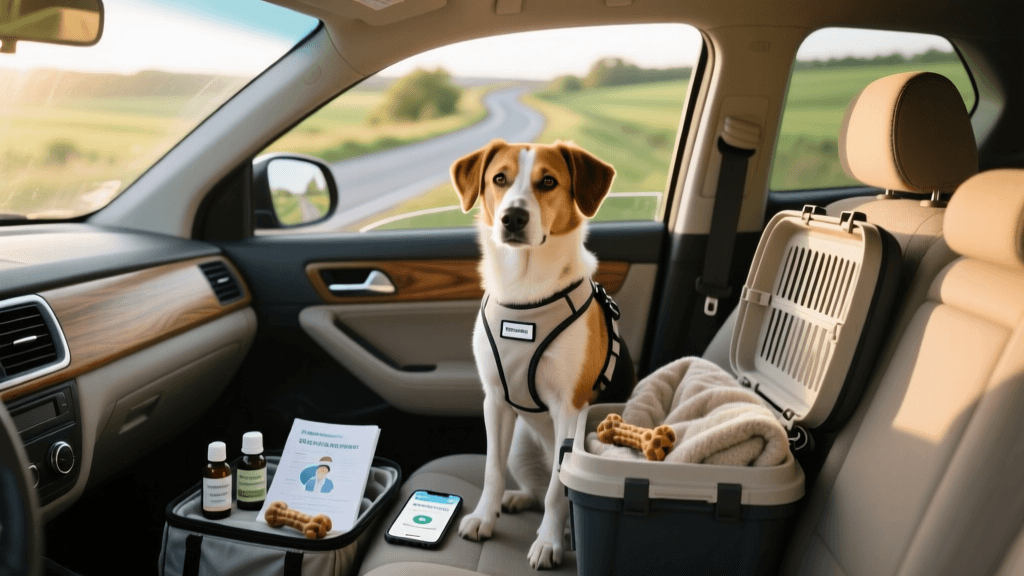
Proper restraint is not just a legal and safety requirement; it directly impacts your dog's comfort and motion sickness levels. A dog that is sliding around the backseat will experience heightened vestibular confusion. Below is a comparison of common travel restraints:
| Restraint Type | Safety Rating | Motion Sickness Impact | Estimated Cost |
|---|---|---|---|
| Crash-Tested Crate (e.g., Gunner G1) | 5/5 Stars | High (Secure, enclosed den feeling limits visual overstimulation) | $500 - $700 |
| Crash-Tested Harness (e.g., Kurgo Tru-Fit) | 4/5 Stars | Medium (Allows window viewing, which can trigger visual nausea) | $30 - $50 |
| Soft-Sided Carrier (Seatbelt secured) | 2/5 Stars | Low (Poor ventilation, restricted movement increases anxiety) | $40 - $80 |
| Backseat Hammock with Mesh Window | 1/5 Stars | Low (Provides zero crash protection, high risk of injury) | $30 - $60 |
Note: For dogs prone to severe motion sickness, a hard-sided, crash-tested crate covered partially with a light blanket is the best option. It prevents the dog from watching the rapidly moving scenery outside the window, which is a primary trigger for visual-vestibular mismatch.
On-the-Road Best Practices
Once you are on the highway, your driving habits and cabin environment play a massive role in your dog's wellbeing. Maintain a cool cabin temperature, ideally between 68°F and 72°F. Dogs do not sweat like humans; they rely on panting to cool down, and a hot, stuffy car will rapidly induce nausea and panic.
Keep the windows rolled up enough to prevent your dog from sticking their head out. While dogs love the breeze, high-speed wind can cause severe eye irritation, dry eye, and debris injuries. Furthermore, the overwhelming rush of scents can overstimulate an already anxious dog. Instead, use your car's air conditioning and crack one rear window just an inch to allow for gentle air circulation and pressure equalization, which helps soothe the inner ear.
Plan your route around dog-friendly rest stops. A good rule of thumb is to stop every two to three hours. Allow your dog to exit the vehicle on a secure leash, walk on the grass to reset their vestibular system, and offer small amounts of water from a spill-proof silicone travel bowl. Avoid giving them large meals during these pit stops; stick to a few pieces of kibble or a small training treat to keep their blood sugar stable without overfilling their stomach.
Conclusion
Managing canine motion sickness and travel anxiety requires a multifaceted approach that blends behavioral conditioning, strategic preparation, and, when necessary, veterinary science. By understanding the root cause of your dog's discomfort and utilizing the right combination of fasting, natural supplements, and safe travel gear, you can transform the car from a chamber of terror into a gateway for incredible adventures. Patience and consistency are your greatest tools—start your preparation early, and you will be rewarded with a happy, relaxed travel companion for years to come.
robin-maitland
All our authors care for dogs every day — read more of their work on the authors page.