From Lunging to Loose-Leash: A Reactivity Transformation
Discover how a severe leash-reactive dog transformed into a calm walker. Explore the exact before-and-after training timeline, tools, and costs.

The Reality of Leash Reactivity: The 'Before' Snapshot
Walking a leash-reactive dog is an exercise in hyper-vigilance. Before our transformation journey began, a simple 20-minute walk felt like navigating a minefield. The 'before' state was characterized by severe leash frustration and fear-based reactivity. At the mere sight of another dog at a distance of 50 feet, our subject—a 60-pound mixed breed rescue named Buster—would undergo a dramatic physiological and behavioral shift. His heart rate would spike, his hackles would raise, and he would erupt into a frenzy of lunging, barking, and pulling, entirely unresponsive to verbal commands or treat lures.
This is a common scenario that leads many owners to abandon walks altogether, resulting in an under-exercised, under-stimulated dog and an increasingly stressed owner. According to the ASPCA's resources on dog behavior, reactivity on the leash is frequently rooted in fear, anxiety, or frustration rather than true, predatory aggression. Understanding this distinction is the critical first step in any behavioral transformation. Punishing the fear only suppresses the warning signs while amplifying the underlying anxiety, setting the stage for a future bite incident. True transformation requires a complete paradigm shift from suppression to emotional rehabilitation.
The Transformation Toolkit: Essential Gear and Costs
Before stepping outside, we had to overhaul our equipment. Aversive tools like prong collars, choke chains, and shock collars were immediately discarded. The American Veterinary Society of Animal Behavior (AVSAB) strongly advises against the use of aversive training methods, noting that they can increase fear and aggression while damaging the human-animal bond. Instead, we invested in a force-free toolkit designed for safety, comfort, and effective communication.
- Harness ($40): The Ruffwear Front Range Harness. The crucial feature here is the front chest leash attachment ring. When the dog pulls or lunges, the front clip gently redirects their momentum back toward the handler, preventing them from using their full body weight to drag you down the street.
- Leash ($25): A 15-foot Biothane long line. Retractable leashes are strictly forbidden in reactivity training because they teach the dog that pulling creates forward movement, and the thin cords can cause severe friction burns or snap under the sudden force of a 60-pound dog lunging. The long line allows for safe decompression and distance management.
- Treat Pouch ($30): The Ruffwear Treat Trader. Speed of delivery is everything in counter-conditioning. Fumbling in a pocket costs you the critical window of opportunity. A magnetic-closure pouch worn on the hip ensures treats are delivered within one second of the desired behavior.
- High-Value Reinforcers ($15): Freeze-dried beef liver and boiled chicken breast. Standard kibble does not possess the neurochemical weight required to override a dog's adrenaline response.
- Clicker ($3): A standard box clicker to mark the exact millisecond the dog makes a positive choice.
The Science of Change: Counter-Conditioning and Desensitization
The core methodology of our transformation was Classical Counter-Conditioning and Desensitization (CC&D). The goal was not simply to teach Buster to 'sit' when he saw a trigger, but to fundamentally change his emotional response to the trigger. We needed to rewire his brain from associating 'strange dog' with 'threat' to associating 'strange dog' with 'predictor of high-value food'.
This is achieved by working strictly 'sub-threshold.' The threshold is the exact distance at which the dog notices the trigger but remains capable of learning and eating. If the dog refuses a high-value treat, you have crossed the threshold, and the dog is in a state of sympathetic nervous system arousal (fight or flight). At that point, no learning can occur. The transformation relied entirely on managing the environment to ensure Buster was never pushed over this threshold during the early phases of training.
The 8-Week Transformation Timeline
Weeks 1-2: Decompression and Indoor Foundation
The first two weeks involved zero exposure to unpredictable triggers. Walks were replaced with 'decompression' activities in a fenced, private yard using the 15-foot long line to allow for natural sniffing behaviors, which naturally lower a dog's cortisol levels. Indoors, we built a rock-solid 'Engage-Disengage' foundation. We practiced the 'Look at That' (LAT) game using a stuffed dog placed across the room. Buster was clicked and treated simply for looking at the stuffed dog calmly, and then for turning his head back to me. Total cost for this phase: $0 (using existing household items and frozen yard space).
Weeks 3-4: Finding the Outdoor Threshold
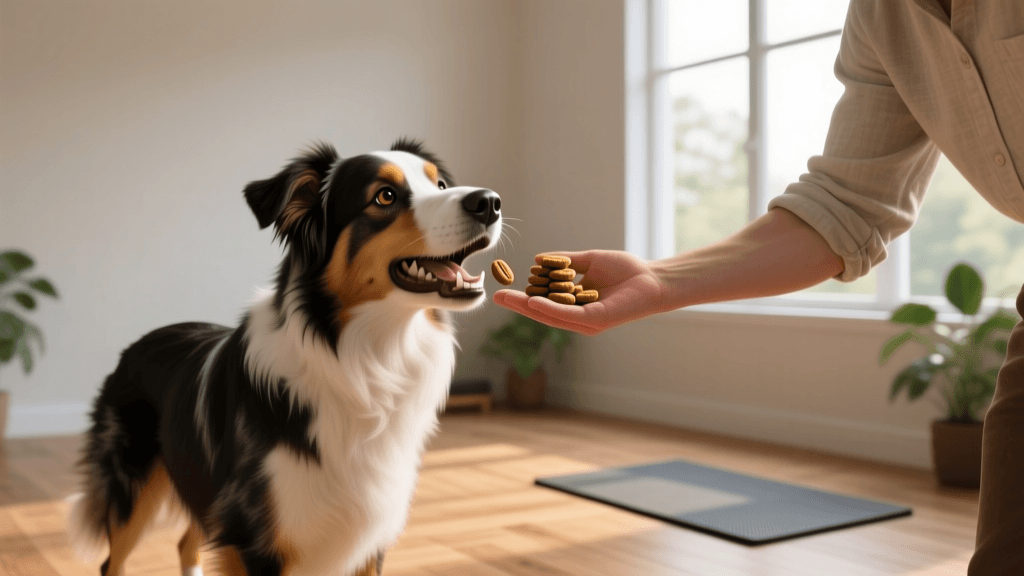
We transitioned to an empty, predictable environment: a large, open park at 6:00 AM. We recruited a trusted friend with a calm, neutral 'helper dog.' The helper dog was stationed 100 feet away. The moment Buster noticed the helper dog, we clicked and fed high-value liver. We repeated this until Buster began voluntarily looking at the helper dog and then immediately snapping his head back to me in anticipation of the treat. The emotional shift was palpable; the tension in his body began to melt away.
Weeks 5-6: Closing the Gap and Emergency Protocols
As Buster's comfort grew, we decreased the distance by 10 feet every three days, provided he remained sub-threshold. Simultaneously, we trained the 'Emergency U-Turn.' This is a vital management tool for when an off-leash dog suddenly approaches. We practiced running backward joyfully, calling 'Let's Go!', and rewarding heavily when Buster chased us. This turned a potentially terrifying encounter into a highly reinforced game of chase.
Weeks 7-8: Real-World Application and Variable Reinforcement
We moved to slightly busier environments during off-peak hours. We began to introduce variable reinforcement schedules, moving from continuous treat delivery to intermittent rewards, while maintaining high praise. Buster was now actively offering 'check-ins' (eye contact) whenever he spotted a distant dog, effectively self-regulating his own arousal levels.
Data Table: Before vs. After Behavioral Metrics
The following table illustrates the quantifiable changes observed in Buster's behavioral and physiological responses to canine triggers over the 8-week transformation period.
| Metric | Before Transformation (Day 1) | After Transformation (Week 12) |
|---|---|---|
| Trigger Threshold Distance | 50 feet (Immediate lunging/barking) | 15 feet (Calm observation and check-in) |
| Leash Tension | Severe (Constant pulling, choking) | Minimal (Loose 'J' curve maintained) |
| Recovery Time Post-Trigger | 15-20 minutes of panting and pacing | 10-15 seconds (Immediate return to baseline) |
| Treat Acceptance | Refuses all food when trigger is in sight | Readily accepts high and medium-value treats |
| Handler Stress Level | High (Anxiety, embarrassment, physical strain) | Low (Confident, observant, relaxed) |
The 'After' State: Maintenance and Real-World Success
What does the 'after' state actually look like? It is vital to manage expectations. A transformed reactive dog is rarely a 'perfect' dog who wants to greet every canine they see. The 'after' state is defined by manageability and emotional regulation. Today, when Buster sees another dog on a walk, he may pause, observe, and his ears might prick forward. But instead of exploding into a frenzy, he voluntarily turns his head to look at his handler, waiting for his cue and his reward.
Maintenance is a lifelong commitment. We still carry our treat pouch on every walk. We still advocate for our dog by asking strangers to give us space, and we still utilize the Emergency U-Turn when the environment becomes too chaotic. The transformation was not just about changing the dog's behavior; it was about changing the handler's behavior. By learning to read canine body language, respecting thresholds, and utilizing force-free, science-based conditioning, the walk transformed from a daily chore of dread into a shared, bonding experience. The investment of $113 in gear and eight weeks of dedicated, structured time yielded a lifetime of peaceful, loose-leash walks.
'Reactivity is not a character flaw in your dog; it is a cry for help and a plea for better communication. When we change our approach from punishment to partnership, the transformation is nothing short of miraculous.'
beth-carrasco
All our authors care for dogs every day — read more of their work on the authors page.