Science of Dog Joint Supplements: Omega-3 vs Glucosamine
Discover the science behind dog joint supplements. Compare Omega-3 fatty acids and glucosamine for canine osteoarthritis with dosages and costs.
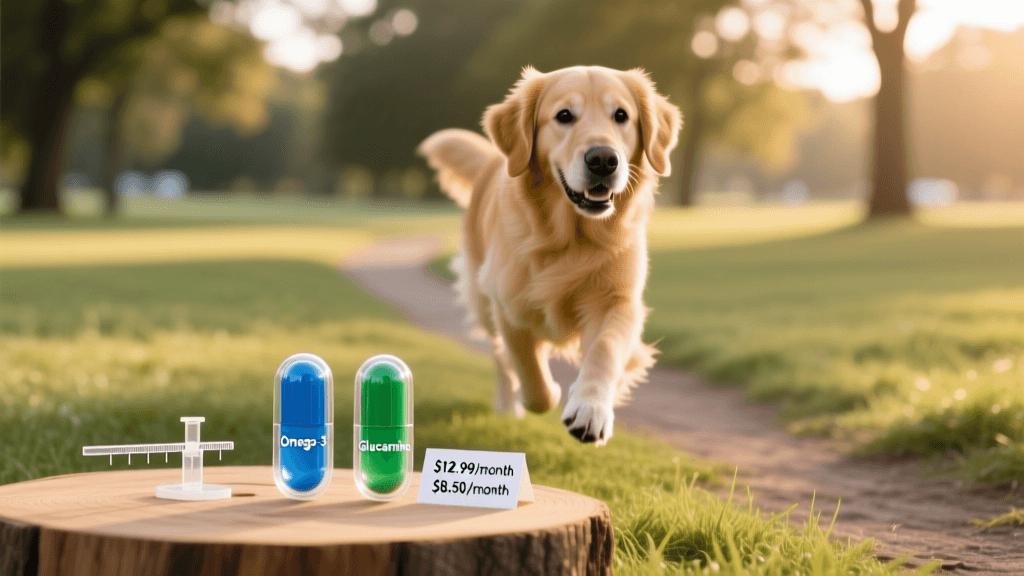
The Rising Prevalence of Canine Osteoarthritis
Osteoarthritis (OA) is a degenerative joint disease that affects an estimated 20% to 25% of adult dogs, with the prevalence jumping to over 80% in senior canines. Characterized by the progressive breakdown of articular cartilage, chronic inflammation, and subsequent joint pain, OA severely diminishes a dog’s quality of life. While non-steroidal anti-inflammatory drugs (NSAIDs) remain the frontline pharmaceutical treatment, long-term use carries risks of gastrointestinal, hepatic, and renal complications. As the U.S. Food and Drug Administration strictly warns against using human pain medications for pets due to severe toxicity risks, veterinary science has increasingly turned to targeted, science-backed nutraceuticals to manage canine OA safely.
Among the myriad of joint supplements on the market, two categories dominate the veterinary conversation: Glucosamine/Chondroitin complexes and Omega-3 Fatty Acids (specifically EPA and DHA). But what does the peer-reviewed science actually say about their efficacy, mechanisms of action, and optimal dosing? This article breaks down the biochemical realities of these supplements to help you make informed, evidence-based decisions for your dog’s joint health.
The Science of Glucosamine and Chondroitin
Glucosamine hydrochloride (HCL) and chondroitin sulfate are naturally occurring structural components of canine cartilage. The theoretical premise behind supplementing these compounds is simple: provide the body with the raw building blocks necessary to repair and maintain the extracellular matrix of the joint cartilage, thereby slowing degeneration.
Mechanism of Action
Glucosamine acts as a precursor for glycosaminoglycans (GAGs), which are critical for cartilage resilience and shock absorption. Chondroitin sulfate, meanwhile, is believed to inhibit the enzymes that break down cartilage (such as metalloproteinases) while drawing water into the joint space to improve lubrication. Popular veterinary formulations like Dasuquin Advanced and Cosequin combine these with additional ingredients like ASU (avocado/soybean unsaponifiables) to enhance bioavailability and joint protection.
The Scientific Consensus
Despite their massive commercial popularity, the clinical evidence supporting glucosamine and chondroitin for canine OA is surprisingly mixed. While some dogs exhibit noticeable improvements in mobility and comfort, rigorous, double-blind, placebo-controlled studies have struggled to definitively prove that oral glucosamine alters the structural progression of osteoarthritis. The American Veterinary Medical Association notes that while these supplements are exceptionally safe and may provide symptomatic relief for mild to moderate OA, they are generally less effective at managing acute, severe inflammation compared to other modalities.
The Power of Omega-3 Fatty Acids (EPA and DHA)
Unlike glucosamine, which attempts to rebuild cartilage, Omega-3 fatty acids—specifically Eicosapentaenoic Acid (EPA) and Docosahexaenoic Acid (DHA) derived from marine sources—target the underlying inflammatory pathways of osteoarthritis. The scientific backing for Omega-3s in managing canine OA is robust and widely supported by veterinary nutritionists.
Biochemical Pathways of Inflammation
In a dog suffering from OA, the body’s inflammatory response is often in overdrive. Omega-6 fatty acids (abundant in many commercial dog foods and poultry fats) are converted into arachidonic acid, which spawns pro-inflammatory prostaglandins and leukotrienes via the COX and LOX enzyme pathways.
When high doses of marine-derived EPA and DHA are introduced, they compete with Omega-6s for these exact same enzymes. The result? The body produces significantly fewer pro-inflammatory mediators and more anti-inflammatory resolvins. This biochemical shift directly reduces joint swelling, pain, and the enzymatic degradation of cartilage.
Head-to-Head Comparison: Omega-3s vs. Glucosamine
To understand how these supplements fit into a comprehensive wellness plan, review the structured comparison below based on current veterinary nutritional science.
| Criteria | Glucosamine & Chondroitin | Marine Omega-3s (EPA/DHA) |
|---|---|---|
| Primary Mechanism | Cartilage building blocks; mild enzyme inhibition | Systemic anti-inflammatory; alters cellular membrane composition |
| Scientific Evidence | Mixed; strong for safety, moderate for symptomatic relief | Strong; extensively proven to reduce NSAID requirements and improve weight-bearing |
| Target Dose | Standardized (e.g., 500-1500mg/day based on weight) | Metabolic calculation: ~310mg x (Body Weight in kg)^0.75 |
| Onset of Action | 4 to 8 weeks | 6 to 12 weeks (requires cellular membrane saturation) |
| Average Monthly Cost | $30 - $60 | $25 - $50 |
| Notable Side Effects | Rare; occasional mild gastrointestinal upset | Fishy breath, loose stools if introduced too rapidly |
Actionable Dosing and Product Guidelines
One of the most common mistakes pet owners make is under-dosing Omega-3 fatty acids. A standard ‘fish oil capsule’ meant for humans or a generic squirt of pet-grade oil often falls drastically short of the therapeutic dose required for osteoarthritis management. Furthermore, adherence to global standards is vital; the World Small Animal Veterinary Association (WSAVA) emphasizes that therapeutic diets and supplements must be dosed based on metabolic body weight, not just total scale weight.
Calculating the Therapeutic Omega-3 Dose
Veterinary dermatologists and orthopedists utilize a specific formula to calculate the therapeutic dose of combined EPA and DHA for canine OA:
Therapeutic Dose Formula: 310 mg of combined EPA/DHA × (Body Weight in kg)0.75
Practical Example: Let’s take a 30 kg (66 lb) Labrador Retriever.
1. Calculate metabolic weight: 300.75 = 12.82
2. Multiply by the therapeutic factor: 12.82 × 310 mg = 3,974 mg (approx. 4 grams) of combined EPA/DHA daily.
This is a massive dose compared to standard maintenance supplements. You must read the product label specifically for the combined EPA and DHA content, not just the ‘total fish oil’ volume.
Recommended Product Profiles
- Omega-3s (Liquid): Nordic Naturals Omega-3 Pet or Welactin 3X Canine Softgels/Liquid. Liquid pumps are often more cost-effective for large breeds requiring 4+ grams daily. Expect to spend around $35 to $45 per month for a large-breed therapeutic dose. Always store liquid fish oil in the refrigerator to prevent lipid oxidation (rancidity).
- Cartilage Support: Dasuquin Advanced with ESM. If you choose to use a glucosamine-based product, opt for one that includes ASU or ESM (eggshell membrane), as these have shown better clinical outcomes in preserving joint matrix integrity than glucosamine alone. Cost is approximately $55 to $70 for a 60-day supply for a medium/large dog.
Synergistic Approaches and Holistic Management
Science dictates that no single supplement operates in a vacuum. The most successful canine osteoarthritis protocols utilize a multimodal approach. Combining the anti-inflammatory power of Omega-3s with the structural support of a high-quality glucosamine/ASU complex can provide synergistic benefits.
However, supplements must be paired with strict weight management. Adipose tissue (body fat) is not merely inactive storage; it is an active endocrine organ that secretes adipokines, which drive systemic inflammation and worsen joint pain. Keeping your dog at a lean body condition score (BCS of 4 or 5 out of 9) is statistically proven to delay the onset of OA and reduce the required dosage of both NSAIDs and supplements.
Additionally, incorporate low-impact, controlled exercise such as hydrotherapy or structured leash walks on soft surfaces. Avoid high-impact activities like fetch or agility jumping, which cause micro-trauma to already compromised articular cartilage.
Conclusion
When navigating the crowded market of canine joint supplements, it is crucial to look past marketing claims and focus on biochemical realities. Glucosamine and chondroitin offer a safe, foundational approach to cartilage support, but their clinical efficacy varies from dog to dog. Conversely, marine-derived Omega-3 fatty acids (EPA and DHA) offer a profoundly effective, science-backed method for altering the inflammatory environment of the osteoarthritic joint, provided they are dosed correctly using metabolic weight calculations. By combining targeted nutraceuticals with strict weight management and veterinary oversight, you can significantly enhance your dog’s mobility, comfort, and overall quality of life well into their senior years.
aaron-whyte
All our authors care for dogs every day — read more of their work on the authors page.