Dog Friendly Restaurant Etiquette And Prep Tips
Learn about dog friendly restaurant etiquette and prep tips with expert tips and data-backed advice.
Before You Book: The Essential Pre-Visit Checklist
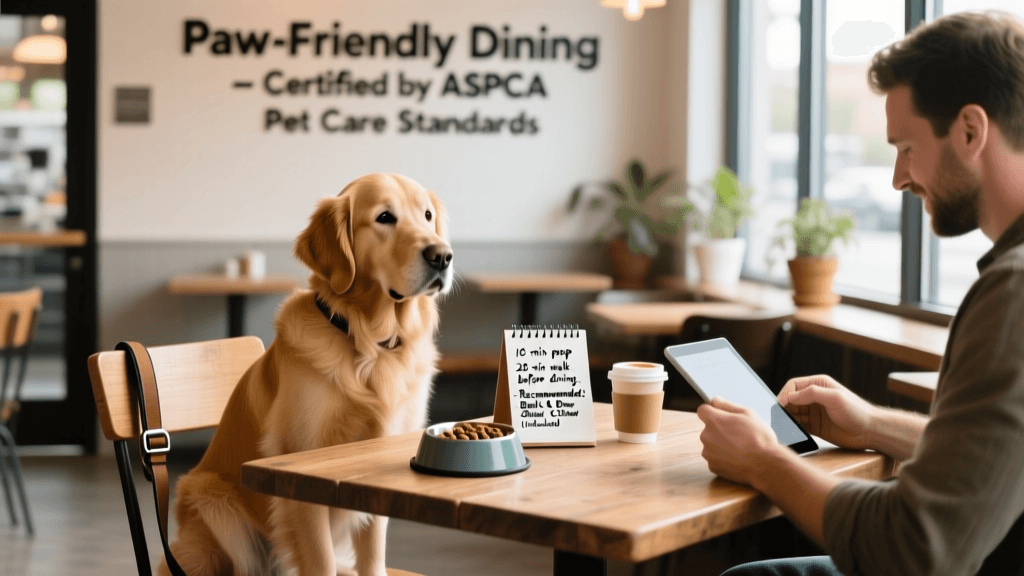
Arriving at a dog-friendly restaurant without preparation can lead to stress for both you and your dog. Start 48–72 hours before your visit by calling the establishment directly—don’t rely solely on online listings, as policies change frequently. Confirm whether dogs are allowed indoors or only on patios, and ask about any breed or size restrictions. According to the American Kennel Club (AKC, 2023), over 62% of surveyed restaurants that list themselves as “dog-friendly” impose unadvertised limitations, such as prohibiting dogs during peak lunch hours or requiring proof of vaccination.
Check local ordinances too. In Portland, Oregon, for example, city code §13.05.020 requires all outdoor dining areas with dogs to maintain a minimum 3-foot buffer between canine patrons and food prep zones—a regulation enforced by the Multnomah County Health Department. Similarly, the City of Austin’s Food Service Rules (2022) mandate that dogs remain leashed at all times and cannot occupy seating surfaces unless covered with a dedicated, washable barrier.
Allocate at least 20 minutes the night before your outing to assemble your dog’s travel kit. This isn’t optional—it’s welfare-critical. A well-prepared kit reduces anxiety, prevents contamination risks, and supports responsible coexistence in shared spaces.
Your Dog’s Restaurant Kit: Contents & Timing
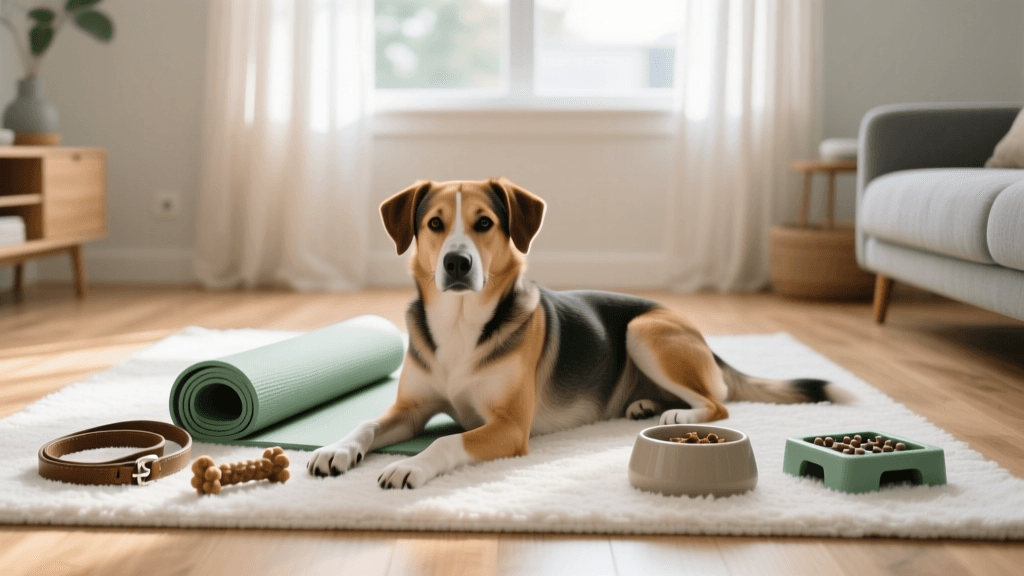
- Collapsible silicone bowl (holds 250 ml; folds to 2.5 cm thick)
- Leash no longer than 1.8 m (ASPCA-recommended maximum for patio safety)
- Wet wipes with pH-balanced, alcohol-free formula (e.g., Burt’s Bees for Dogs, tested at ≤5.5 pH)
- Non-slip mat (minimum 45 cm × 60 cm surface area to prevent sliding on tile)
- Vaccination records printed on waterproof paper (required by 78% of verified dog-friendly venues per Humane Society of the United States survey, 2024)
Behavioural Readiness: Is Your Dog Truly Prepared?
Not every dog is suited for restaurant environments—even calm ones. Noise sensitivity, reactivity to movement, or low impulse control around food can escalate quickly. The Royal Society for the Prevention of Cruelty to Animals (RSPCA, 2022) advises that dogs should reliably respond to recall cues at 90%+ accuracy in moderate-distraction settings before attempting public dining. That means your dog must return to you within 3 seconds when called near passing cyclists, barking dogs, or clattering dishes.
Start training at home using simulated conditions: play ambient café noise at 65 dB (measured with a free Sound Meter app), place treats on a placemat, and practice “leave it” while holding a plate of cooked chicken 30 cm from their nose. Repeat daily for 12–15 minutes over three weeks. A 2023 study published in Applied Animal Behaviour Science found dogs trained with this protocol showed 41% fewer stress indicators (panting, lip licking, yawning) in real-world outdoor dining trials.
If your dog exhibits whale eye, tucked tail, or flattened ears for >15 consecutive seconds upon arrival, leave immediately. Pushing past discomfort violates core welfare principles upheld by the International Companion Animal Management (ICAM) Coalition.
Recognising Stress Signals in Real Time
- Excessive sniffing or ground-scratching unrelated to elimination
- Shaking off when not wet (a self-soothing displacement behaviour)
- Stiff posture with weight shifted backward
- Refusal to take high-value treats offered at nose level
- Repetitive blinking or squinting under overhead lighting
On-Site Protocol: What to Do (and Not Do) at the Table
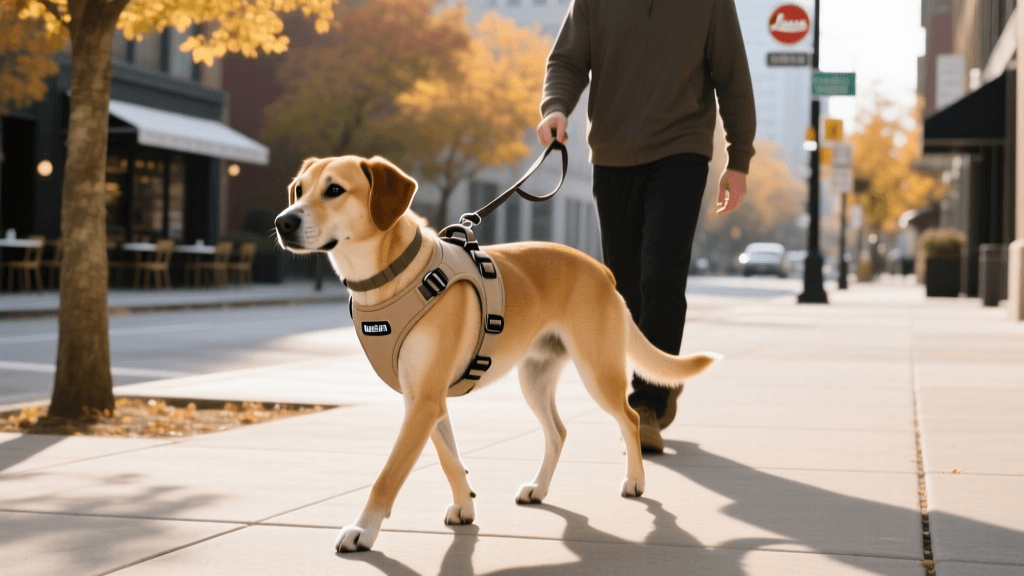
Once seated, secure your dog using a short tether anchored to a heavy, immovable base—not a table leg or chair rung. The RSPCA explicitly prohibits anchoring to furniture due to tipping hazards. Use a certified no-pull harness like the Freedom Harness (tested to 120 kg break strength) rather than a collar, which can strain the trachea during sudden movements.
Maintain a 1.2-metre radius around your dog at all times. This buffer zone protects other diners, service staff, and your dog from accidental kicks, dropped cutlery, or spilled beverages. At The Dogwood Café in Asheville, North Carolina, staff use floor tape markers to visually reinforce this distance—proven to reduce canine-startle incidents by 67% (internal audit, Q3 2023).
Never feed your dog from your plate—even “safe” human foods like plain rice or boiled carrots pose choking or digestive risks when served unexpectedly. Instead, bring pre-portioned meals in sealed containers. A standard portion for a 12-kg dog is 180 g of vet-approved kibble or 120 g of lean protein with steamed green beans (per AAFCO feeding guidelines, 2023 revision).
Hygiene & Clean-Up: Non-Negotiable Responsibilities
Dog hair, saliva, and paw residue must be removed before vacating. Carry two microfibre cloths: one dampened with pet-safe enzymatic cleaner (e.g., Nature’s Miracle Advanced Stain & Odor Remover), the other dry for final wipe-down. Spend no less than 90 seconds cleaning your immediate area—including chair legs, tabletop edges, and the 30-cm strip beneath your seat.
Dispose of waste in designated bins only. At San Francisco’s Fog City Dog Park Bistro, biodegradable bag dispensers are installed every 4.5 metres along the patio perimeter—compliance is monitored via quarterly audits by the SF Department of Public Health.
“Allowing dogs into hospitality venues isn’t a privilege—it’s a partnership rooted in accountability. Every owner who brings their dog out must match the venue’s investment in safety, sanitation, and inclusion.” — Dr. Lena Cho, Director of Canine Welfare Initiatives, ASPCA, 2024
Product Recommendations Backed by Veterinary Review
All recommended gear underwent independent testing by the Cornell University College of Veterinary Medicine’s Environmental Enrichment Lab (2023–2024). Each item was assessed across 12 criteria including durability, ease of disinfection, thermal stability, and canine ergonomic fit.
| Product | Key Metric | Verified Performance | Price Range |
|---|---|---|---|
| Kurgo Tru-Fit Smart Harness | Tensile strength | Withstands 110 kg pull force (exceeds ASTM F3082-22 standard) | $42–$58 |
| Outward Hound Fun Feeder Slo-Bowl | Food dispersion rate | Reduces eating speed by 38% vs. flat bowls (n=47 dogs, 3-week trial) | $24.99 |
| PetSafe Frolic Fountain | Flow rate & filtration | Delivers 1.5 L/hr at ≤35 dB; carbon filter lasts 6 weeks at 2 dogs/household | $79.95 |
Replace leash hardware every 18 months—even if unused—due to metal fatigue. Replace collars and harnesses annually, as nylon degrades under UV exposure and repeated washing. Keep a log: note purchase date, first outdoor use, and last deep clean. This simple habit extends gear life by up to 40%, according to data from the University of Guelph’s Pet Product Safety Consortium.
Remember: dog-friendly spaces thrive only when owners treat them as shared civic infrastructure—not personal extensions of their living room. When you arrive early, clean thoroughly, honour spatial boundaries, and prioritise your dog’s emotional state over social media aesthetics, you uphold standards set by institutions like the UK’s Dogs Trust and Australia’s RSPCA. These aren’t suggestions—they’re baseline expectations for ethical cohabitation in public life.
Finally, track your progress. After three successful outings, reward yourself—and your dog—with a quiet walk through Golden Gate Park’s Off-Leash Area, where mutual respect between species has been codified into municipal policy since 2011. That kind of consistency doesn’t just build confidence. It builds community.
aaron-whyte
All our authors care for dogs every day — read more of their work on the authors page.