Dog Disaster Go-Bag: The Ultimate Evacuation Safety Guide
Learn how to build a comprehensive dog disaster go-bag. Get a checklist of food, meds, and gear to keep your pet safe during emergency evacuations.
Why Disaster Preparedness is Non-Negotiable for Dog Owners
Natural disasters—ranging from sudden wildfires and flash floods to hurricanes and winter storms—rarely offer enough warning time for leisurely packing. When the evacuation sirens sound, your primary focus will be on getting your family to safety. However, as a dog owner, your furry family member relies entirely on your foresight. Following the devastating loss of pets during Hurricane Katrina, the U.S. government passed the Pets Evacuation and Transportation Standards (PETS) Act of 2006, ensuring that local emergency plans account for household pets. Yet, the responsibility of packing the necessary survival gear falls squarely on your shoulders.
According to the ASPCA, millions of pets are displaced or lost during natural disasters every year. Many of these tragedies are preventable with a well-stocked, easily accessible dog disaster go-bag. This guide will walk you through the exact measurements, products, and protocols needed to build a comprehensive emergency kit and evacuation plan for your dog, ensuring you are ready to move at a moment's notice.
Hydration and Nutrition: The Foundation of Your Go-Bag
In an emergency scenario, access to clean water and reliable food sources will be severely limited. Your dog's go-bag must contain a minimum three-to-seven-day supply of both.
Water Requirements and Storage
A general veterinary rule of thumb is that a dog needs approximately one ounce of water per pound of body weight each day. For a 50-pound Labrador, that equates to roughly 50 ounces (about 1.5 liters) of water daily. For a three-day evacuation, you need to pack at least 1.5 gallons of water dedicated solely to your dog. Store this in durable, BPA-free collapsible water jugs to save space when empty. Additionally, pack two collapsible silicone travel bowls—one for water and one for food—which cost around $10 to $15 and fold flat into any backpack.
Strategic Food Selection
Avoid packing large bags of dry kibble, which require separate airtight containers and can spoil if exposed to floodwaters or humidity. Instead, opt for canned wet food with pop-top lids, or high-quality freeze-dried raw meals that only require the addition of water. Wet food also provides supplemental hydration. Pack enough for 5 to 7 days, rotating the stock every six months to ensure freshness and nutritional integrity.
Medical Records, Medications, and First Aid
If you end up at an emergency pet shelter or need to board your dog temporarily, facility managers will require proof of vaccination. Keep physical copies of your dog's rabies certificate, distemper/parvo records, and a recent color photograph of you with your dog (to prove ownership if separated) inside a waterproof document pouch.
Prescription and Preventative Medications
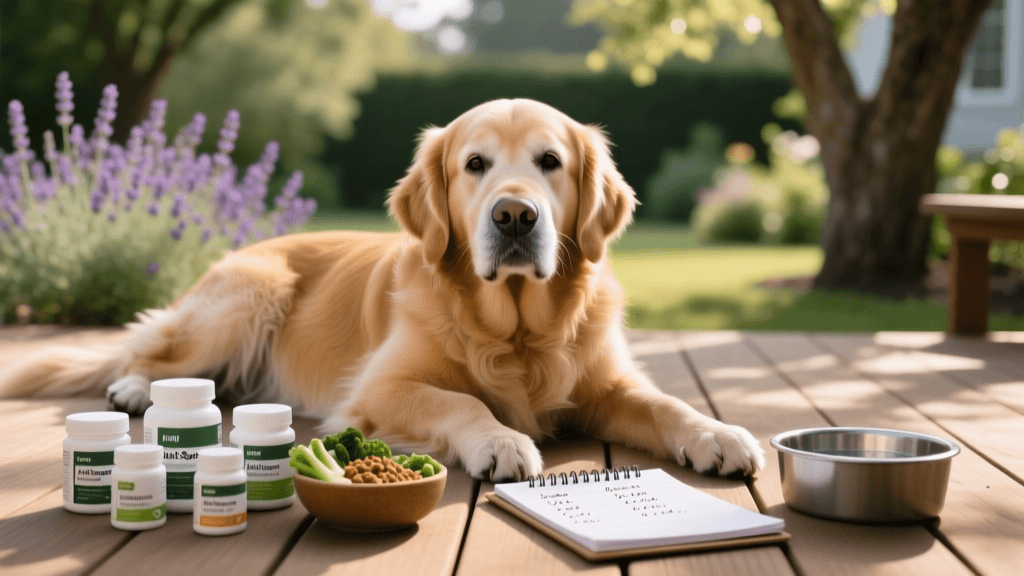
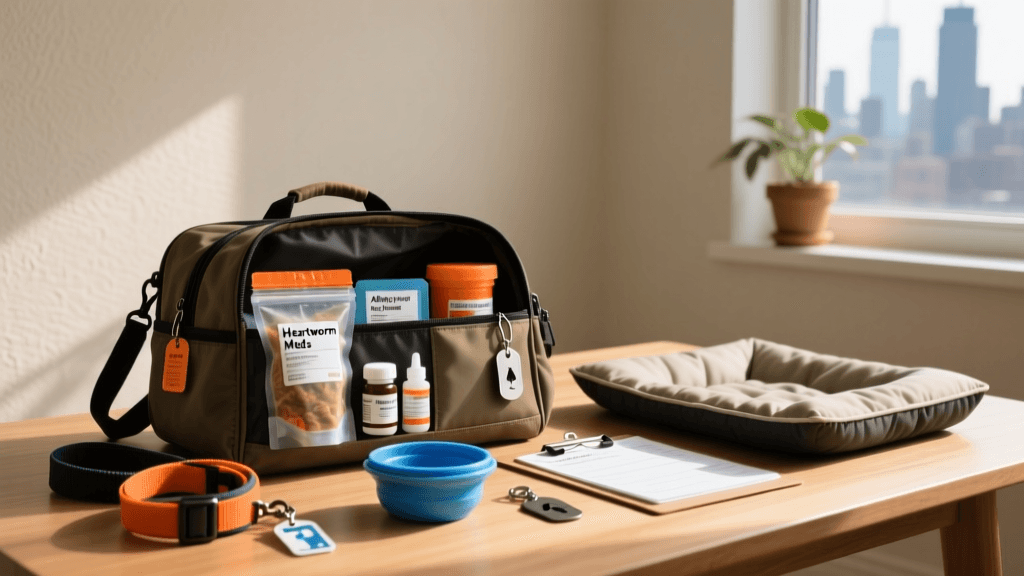
Always maintain a rolling two-week supply of essential medications in your go-bag. This includes daily prescriptions (like thyroid medication or joint supplements), heartworm preventatives, and flea/tick treatments. Pharmacies and veterinary clinics are often closed or inaccessible during regional disasters, making this stockpile a literal lifesaver.
Canine First Aid Essentials
While the American Veterinary Medical Association (AVMA) advises seeking professional veterinary care for serious injuries, a basic first aid kit can stabilize your dog during transit. Include the following:
- Self-adhering bandage wrap (Vetwrap): For securing dressings without sticking to fur.
- Styptic powder: To quickly stop bleeding from torn nails.
- Saline eye wash: For flushing out debris, smoke, or chemical irritants.
- Diphenhydramine (Benadryl): For severe allergic reactions or bug bites (consult your vet beforehand for the exact mg-per-pound dosage for your specific dog).
- Muzzle: Even the sweetest dog may bite when in extreme pain or shock.
Sanitation, Comfort, and Stress Management
Evacuation shelters and cramped hotel rooms are not equipped for pet sanitation. Pack a dedicated sanitation kit containing a heavy-duty roll of biodegradable waste bags, paper towels, and a small bottle of enzymatic cleaner to neutralize accidents on unfamiliar flooring. Bring a familiar, unwashed t-shirt with your scent on it, along with your dog's favorite chew toy. Familiar scents and long-lasting chews (like yak milk chews or bully sticks) can significantly lower canine cortisol levels in chaotic, high-stress environments.
Go-Bag Inventory and Cost Breakdown
Below is a structured checklist to help you assemble your kit. Costs are estimates based on average retail prices and can vary by brand and region.
| Category | Item Description | Quantity | Est. Cost | Replace Frequency |
|---|---|---|---|---|
| Nutrition | Canned pop-top wet food | 14 cans | $45.00 | Every 6 months |
| Hydration | Bottled spring water | 2 Gallons | $8.00 | Every 6 months |
| Hardware | Collapsible silicone bowls | 2 bowls | $12.00 | As needed |
| Medical | Heartworm/Flea prevention | 2 doses | $40.00 | Monthly |
| Medical | Custom First Aid Kit1 kit | $35.00 | Annually | |
| Comfort | Calming chews & long-lasting treats | 10-pack | $25.00 | Every 3 months |
| Safety | LED collar light & extra batteries | 1 unit | $15.00 | Annually |
| Documents | Waterproof document pouch | 1 pouch | $10.00 | As needed |
Vehicle Safety and Evacuation Logistics
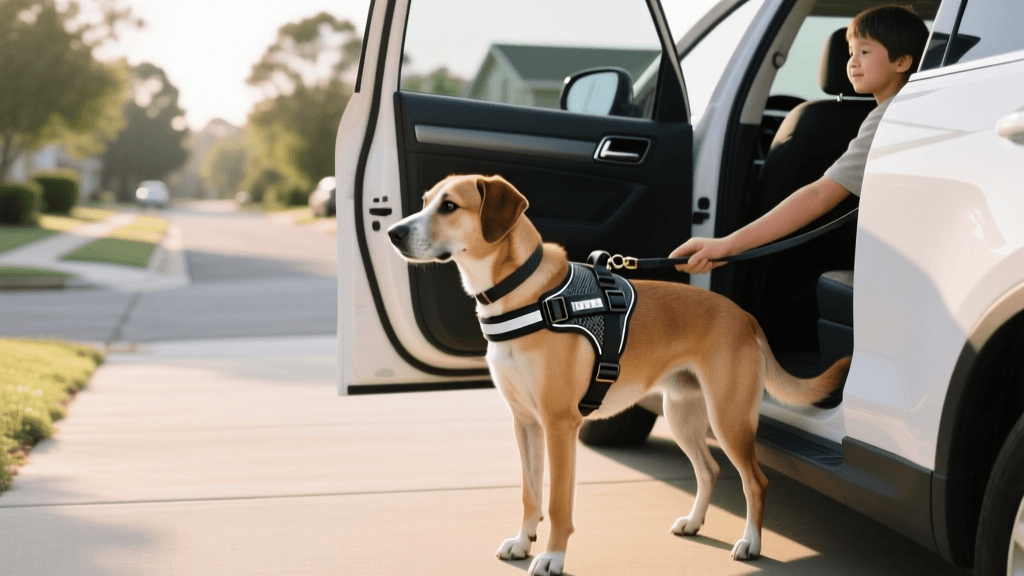
When loading your vehicle to evacuate, allowing your dog to roam freely in the car is a severe safety hazard. In a collision at just 30 mph, a 50-pound dog becomes a 1,500-pound projectile. Furthermore, panicked dogs can escape through open car doors at chaotic evacuation checkpoints.
Crash-Tested Restraints
Invest in a crash-tested harness or a reinforced travel crate. Look for products certified by the Center for Pet Safety (CPS). Brands like the Sleepypod Clickit Sport Harness or the Gunner Kennels G1 are engineered to withstand high-impact forces and keep your dog securely anchored to the vehicle's seat or cargo anchors. While these premium safety devices can cost between $100 and $800, they are an indispensable investment for emergency highway driving.
Building Your Pet Emergency Action Plan
Packing the go-bag is only half the battle; knowing where to go is the other. The Federal Emergency Management Agency (FEMA) emphasizes that many public emergency shelters do not accept pets due to health and safety regulations. You must establish a proactive evacuation plan.
- Identify Pet-Friendly Hotels: Map out three pet-friendly hotels or motels located at least 50 to 100 miles outside your immediate disaster zone. Keep a printed list of their pet policies, weight restrictions, and nightly pet fees in your go-bag.
- Establish a Buddy System: Exchange keys and evacuation plans with a trusted neighbor or friend who lives outside your immediate risk zone. If a disaster strikes while you are at work, your buddy can retrieve your dog and the go-bag.
- Verify Microchip Data: Ensure your dog's microchip is registered with your current cell phone number and an out-of-state emergency contact. Collars can slip off during a panic, but a microchip provides a permanent, scannable link back to you.
Final Thoughts on Canine Emergency Prep
Building a dog disaster go-bag requires a small investment of time and money, but the peace of mind it provides is immeasurable. Store your packed go-bag in a designated, easily accessible location near your front door or in the trunk of your primary vehicle. Review and refresh the perishable items every six months—perhaps aligning this task with the bi-annual time changes. By preparing today, you ensure that when the unexpected happens, you and your loyal companion can face the storm together, safely and securely.
priya-sutaria
All our authors care for dogs every day — read more of their work on the authors page.