Step-by-Step Cooperative Care Training for Vet Visits
Master step-by-step cooperative care training to eliminate your dog's fear of vet visits, nail trims, and grooming. Includes timelines, tools, and expert tips.
The Hidden Stress of Routine Veterinary Care
When we think about our dog's health and wellbeing, we often focus on nutrition, daily exercise, and preventive medications. However, the psychological impact of routine veterinary care and grooming is frequently overlooked. A dog that is terrified of the vet clinic experiences massive spikes in cortisol and adrenaline. According to the Fear Free Pets initiative, this acute stress not only causes emotional trauma but can also mask underlying medical conditions, elevate blood pressure, and make accurate diagnostics nearly impossible.
Enter cooperative care: a revolutionary, force-free training methodology that gives dogs a voice in their own healthcare. Instead of pinning a dog down for a nail trim or a blood draw, cooperative care teaches the dog to willingly participate in the procedure. This step-by-step guide will walk you through the process of transforming your dog's healthcare experience from a traumatic struggle into a calm, collaborative partnership.
What is Cooperative Care?
Cooperative care is a training philosophy rooted in consent and desensitization. It involves teaching your dog specific stationing behaviors—like a chin rest or a side-lying down position—and allowing them to "opt out" if they feel overwhelmed. If the dog breaks the position, the handling immediately stops. This builds immense trust. Over time, dogs learn that they have control over their environment, which paradoxically makes them far more willing to tolerate and even enjoy medical handling.
"When animals are given the choice to participate in their own care, their stress levels plummet, and the safety of both the pet and the veterinary team increases exponentially." — Core Philosophy of Fear Free Veterinary Practices.
Essential Gear and Budget for Cooperative Care
Before beginning your training journey, you need the right tools. High-value reinforcement and specialized grooming tools are critical. Here is a breakdown of the essential gear, estimated costs, and recommended brands to get you started.
| Item | Recommended Brand / Type | Estimated Cost | Purpose |
|---|---|---|---|
| Licking Mat | LickiMat Soother or Buddy | $10 - $15 | Distraction and calming endorphin release during handling. |
| High-Value Treats | Freeze-Dried Beef Liver or Ziwi Peak | $15 - $25 | Maximum motivation for difficult desensitization steps. |
| Training Clicker | Karen Pryor i-Click or Box Clicker | $5 - $10 | Precise marking of desired cooperative behaviors. |
| Nail Grinder | Dremel PawControl 7760-PGK | $35 - $45 | Quieter, smoother alternative to guillotine clippers. |
| Non-Slip Mat | Gorilla Grip Bath Mat or Yoga Mat | $15 - $20 | Provides secure footing for stationing behaviors. |
Step 1: Building the Foundation with a "Chin Rest"
The chin rest is the cornerstone of cooperative care. It gives your dog a clear, physical job to focus on while you handle their body. Here is how to shape this behavior step-by-step:
- Targeting the Hand: Hold your hand out flat, palm up. The moment your dog sniffs or touches your palm, click your clicker and give a treat. Repeat this 10 to 15 times until the dog is eagerly bumping your hand.
- Adding Duration: Once the dog is consistently touching your hand, delay the click by one second. Then two seconds. Then five. You are teaching the dog to rest their chin on your palm, not just tap it.
- Transferring to a Prop: Transition from your hand to a stable surface, like a folded towel or a specialized chin rest target (a small yoga block works wonderfully). Lure the dog's chin onto the block, click, and reward.
- The "Opt-Out" Rule: If your dog lifts their head, do not force it back down. Simply lower your treat hand, wait for them to re-engage, and ask for the behavior again. This honors their consent.
Step 2: Systematic Desensitization to Handling
Once your dog can hold a chin rest for 10 to 15 seconds, you can begin introducing touch. The ASPCA's guide on desensitization and counterconditioning emphasizes the importance of working below the dog's threshold of fear. If your dog shows signs of stress (lip licking, yawning, whale eye, or freezing), you have moved too fast and must take a step back.
The Handling Progression
- Phase A (Safe Zones): While the dog is in a chin rest, gently touch their shoulder or back. Click and treat. Repeat until the dog remains relaxed.
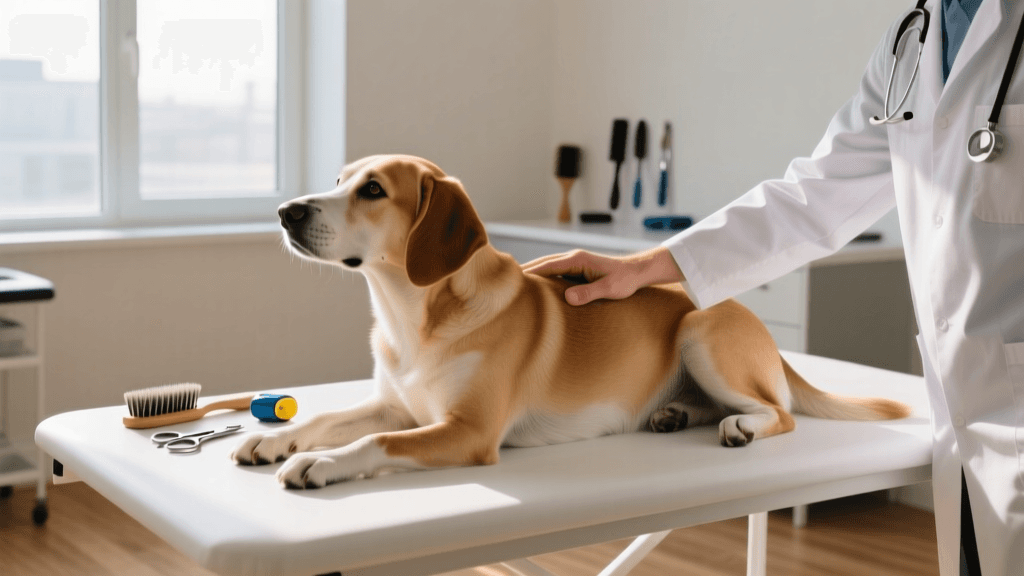
- Phase B (Moderate Zones): Progress to touching the ears, the base of the tail, and the sides of the ribcage. Simulate a stethoscope by pressing the flat palm of your hand gently against their ribs.
- Phase C (Sensitive Zones): Move to the paws, the muzzle, and the inside of the ears. Touch a single toe, click, and treat. Gradually work up to holding the paw, then applying gentle pressure to a single nail.
Step 3: Introducing Medical Tools
Tools like nail clippers, thermometers, and muzzles often trigger fear because they are only brought out right before something uncomfortable happens. You must decouple the tool from the procedure.
Start by simply placing the nail grinder (turned off) near the dog's chin rest target. Click and treat for any calm interaction. Next, touch the back of the grinder to the dog's shoulder, then their leg, then their paw. Finally, turn the grinder on in the same room, but keep it three feet away. Feed high-value treats while the motor is running to build a positive emotional response to the sound. Over several weeks, slowly decrease the distance until the running grinder can gently rest against the dog's nails without causing a reaction.
Cooperative Care Training Schedule and Milestones
Consistency is far more important than duration. Keep your training sessions short, positive, and frequent. Below is a structured 6-week timeline to guide your progress.
| Week | Primary Focus | Daily Time Commitment | Milestone Goal |
|---|---|---|---|
| Week 1 | Hand Targeting & Chin Rest Intro | 3 sessions of 3 minutes | Dog rests chin on hand for 3 seconds. |
| Week 2 | Prop Transfer & Duration | 3 sessions of 5 minutes | Dog holds chin on a block for 10 seconds. |
| Week 3 | Safe Zone Handling (Shoulders/Back) | 2 sessions of 5 minutes | Dog maintains chin rest while back is stroked. |
| Week 4 | Sensitive Zone Handling (Paws/Ears) | 2 sessions of 5 minutes | Dog allows individual toe touches without lifting head. |
| Week 5 | Tool Desensitization (Sound & Sight) | 3 sessions of 4 minutes | Dog remains relaxed with grinder running nearby. |
| Week 6 | Simulated Procedures & Opt-Outs | 2 sessions of 5 minutes | Dog allows nail filing and respects the opt-out break. |
Step 4: Generalizing to the Veterinary Clinic
The ultimate test of cooperative care is the veterinary clinic. The American Veterinary Medical Association (AVMA) strongly advocates for routine, positive exposure to veterinary environments to prevent phobias. Schedule "Happy Visits" with your vet. These are appointments where no medical procedures are performed.
Walk into the clinic, let your dog sniff the lobby, and feed them high-value treats. Ask the veterinary technicians to toss treats to your dog without making direct eye contact or reaching over their head. If the clinic allows, take your dog into an exam room, place your non-slip mat on the steel table, and practice the chin rest. By turning the clinic into a place where the dog gets to play training games and earn premium food, you completely rewire their emotional response to the environment.
Troubleshooting Common Setbacks
Progress in cooperative care is rarely linear. You will encounter setbacks, and knowing how to handle them is crucial for your dog's mental wellbeing.
- The Dog Breaks the Station: If your dog lifts their head or walks away, do not punish them. They are communicating that they have reached their threshold. End the session on a positive note with a simple trick they know well, like a "sit" or "spin," and try again tomorrow with a lower intensity.
- Refusal of Treats: If your dog will not eat freeze-dried liver or cheese, they are over threshold. Stress shuts down the digestive system. Increase the distance from the trigger (the tool or the clinic) until the dog is willing to eat again.
- Rushing the Process: Skipping from touching the paw to clipping the nail in a single session will destroy the trust you have built. When in doubt, spend an extra week on the current step.
Conclusion: A Lifetime of Healthier Vet Visits
Cooperative care is not a quick fix; it is a lifelong commitment to your dog's mental and physical health. By investing 10 to 15 minutes a day into these step-by-step training protocols, you are giving your dog the gift of autonomy. You are ensuring that when illness or injury inevitably strikes, your dog will not have to endure the compounded trauma of fear and physical restraint. Through patience, high-value reinforcement, and a deep respect for your dog's boundaries, you can transform healthcare from a battleground into a bond-building exercise.
tom-renshaw
All our authors care for dogs every day — read more of their work on the authors page.