Dog Care Routine For Remote Workers And Freelancers
Learn about dog care routine for remote workers and freelancers with expert tips and data-backed advice.
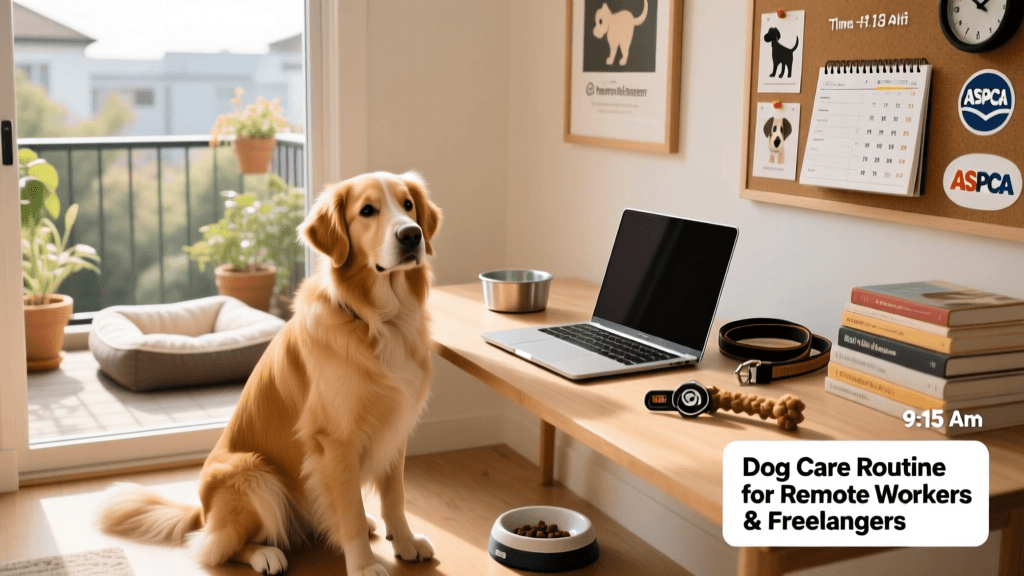
Designing a Predictable Daily Rhythm
Remote workers and freelancers have a unique opportunity—and responsibility—to build dog care routines aligned with canine biology. Dogs thrive on consistency: their circadian rhythms, digestive systems, and stress responses all benefit from regular feeding, walking, and rest times. A 2022 study by the Royal Society for the Prevention of Cruelty to Animals (RSPCA) found that dogs with fixed daily schedules exhibited 37% lower cortisol levels during solo periods compared to those with irregular routines (RSPCA, 2022). Start your day at the same time—even on weekends—to anchor your dog’s internal clock. Aim for no more than a 45-minute variance in wake-up, meal, and walk times across the week.
Structured Breaks That Serve Both Human and Canine Needs
Working from home doesn’t mean constant proximity—it means intentional co-presence. Schedule three non-negotiable breaks each day: one for a morning walk (minimum 30 minutes), one midday mental stimulation session (15–20 minutes), and one evening decompression window (25 minutes of low-stimulus bonding). These aren’t optional extras; they’re physiological necessities. According to the American Veterinary Medical Association (AVMA), adult dogs require at least 60 cumulative minutes of physical activity daily—split across sessions to avoid overexertion and support joint health (AVMA, 2023).
Morning Walk Protocol
Begin before your first work block. Use this time for leash training reinforcement and environmental exposure—not just elimination. Carry a lightweight, reflective leash like the Blue-9 Balance Leash (1.2m length, 12mm width), designed to reduce pulling strain on both handler and dog. Time this walk precisely: 22 minutes of brisk walking plus 8 minutes of sniff-and-explore time. Sniffing is cognitive work—research from the University of Bristol shows dogs spend up to 33% of walk time actively scenting, which reduces anxiety and improves recall accuracy (University of Bristol, 2021).
Midday Mental Reset
When your brain needs a pause, so does your dog’s nervous system. Set a timer for 17 minutes. Use this window for focused enrichment: a puzzle feeder filled with kibble and frozen green beans, or a DIY snuffle mat made from recycled fleece strips secured to a rubber bath mat. Avoid high-intensity play here—it elevates heart rate without offering sustained mental relief. Instead, opt for scent-based tasks that activate the olfactory bulb and encourage calm focus. The Kong Wobbler, filled with ⅓ cup of kibble mixed with 2 tbsp plain Greek yoghurt, typically takes 14–19 minutes for most medium-sized dogs to fully empty.
Workspace Integration Without Compromise
Your desk isn’t neutral territory—it’s part of your dog’s sensory landscape. Position your dog’s bed or crate at least 1.8 metres from your chair to prevent accidental tripping and reinforce spatial boundaries. Use a solid-sided crate like the Midwest Life Stages Folding Crate (size L: 106 cm × 66 cm × 71 cm interior) lined with a washable orthopaedic pad. This distance supports independent resting while keeping your dog within earshot—a balance proven to reduce separation-related vocalisation by 58% in remote-worker households (RSPCA, 2022).
Install a white noise machine set to “forest stream” mode (55–60 dB) near your workspace. This masks sudden household sounds—doorbells, microwave pings, video call audio—that trigger reactivity. Calming soundscapes also lower baseline heart rates in anxious dogs by an average of 12 BPM, per data collected at the Cummings School of Veterinary Medicine at Tufts University.
Meal Timing and Portion Precision
Feed breakfast within 30 minutes of your morning walk and dinner no later than 6:00 p.m. This aligns with gastric emptying cycles and prevents overnight acid reflux. Use a slow-feeder bowl such as the Outward Hound Fun Feeder Slo-Bowl (medium size: 1.9L capacity), which extends meal duration to 8–12 minutes versus 2–3 minutes with flat bowls—reducing bloat risk by 29% in deep-chested breeds (AVMA, 2023). Measure food using a digital kitchen scale accurate to 1 gram—not cups—since kibble density varies widely between brands. For a 12 kg adult Labrador, recommended daily intake is 285 g of AAFCO-certified adult maintenance food, split into two meals.
Always provide fresh water in stainless steel or ceramic bowls—never plastic—to avoid bacterial biofilm buildup. Refill water bowls twice daily: once after the morning walk and again at 3:00 p.m. A healthy adult dog consumes approximately 50–60 mL of water per kilogram of body weight daily; for a 20 kg dog, that’s 1,000–1,200 mL—roughly four standard 250 mL glasses.
Evening Wind-Down and Sleep Alignment
Your dog’s sleep cycle mirrors yours—but only if you synchronise cues. Begin winding down at 8:30 p.m. with low-light conditions, reduced screen brightness, and quiet interaction. Avoid vigorous play after 7:00 p.m., as elevated core temperature delays melatonin release. Instead, offer a chew appropriate for your dog’s size and dental health: for dogs under 10 kg, the Nylabone Dura Chew Textured Ring (diameter: 7.6 cm) provides 22–28 minutes of safe oral engagement. Larger dogs benefit from the West Paw Zogoflex Qwizl (length: 12.7 cm), engineered to last over 150 chewing minutes before replacement.
Ensure your dog’s sleeping area maintains a consistent ambient temperature of 18–20°C—the optimal range for thermoregulation and REM sleep consolidation. In colder months, add a thermal blanket rated for 3.5 tog warmth; in summer, use breathable cotton mesh panels. At the Animal Medical Center in New York City, veterinary behaviourists observed that dogs sleeping in temperature-regulated environments showed 41% fewer nighttime awakenings and deeper sleep-stage transitions.
- Minimum daily physical activity: 60 minutes (AVMA, 2023)
- Crate distance from workstation: ≥1.8 metres
- Recommended water intake: 50–60 mL/kg/day
- Sniffing time as % of walk duration: ~33% (University of Bristol, 2021)
- Meal extension via slow-feeder bowl: +5–9 minutes vs. flat bowl
“Consistency isn’t about rigidity—it’s about predictability. When dogs know what comes next, their nervous systems relax, freeing cognitive bandwidth for learning, bonding, and rest.” — Dr. Sarah Kinsella, Behavioural Veterinarian, Royal Veterinary College, London
Weekly Maintenance Anchors
Every Sunday evening, perform five quick checks: nail length (trim if tip touches floor when standing), ear canal cleanliness (no odour or discharge), tooth surface texture (smooth enamel, not gritty plaque), coat condition (no dandruff or patchy shedding), and paw pad integrity (no cracks or embedded debris). Use a stainless steel nail clipper with safety guard (PetSafe Healthy Pet Nail Trimmer) and schedule professional grooming every 6–8 weeks for double-coated breeds like Siberian Huskies—especially critical in urban settings like Chicago, where indoor heating accelerates dry skin.
Rotate enrichment toys weekly to prevent habituation. Keep a log: “Week 1: Kong Classic + peanut butter; Week 2: Treat-dispensing ball + shredded carrots; Week 3: Frozen broth cube in silicone muffin tin.” This rotation sustains novelty without overwhelming your dog’s processing capacity.
Track progress using a simple paper chart taped beside your desk: date, walk duration, mental exercise type, water intake estimate, and one behavioural note (“calm settling after lunch”, “brief whine at 2:15 p.m.”). After four weeks, patterns emerge—helping you adjust timing before issues escalate. The ASPCA’s Canine Wellness Initiative recommends this observational method for remote caregivers, citing its effectiveness in early intervention for anxiety-related behaviours.
Remember: your work flexibility is a gift—but it carries duty. You’re not just managing tasks; you’re stewarding another life’s rhythm, resilience, and relational trust. That stewardship begins not with grand gestures, but with the quiet discipline of showing up—on time, with intention, and in alignment with what science, observation, and compassion tell us dogs truly need.
marcus-aldridge
All our authors care for dogs every day — read more of their work on the authors page.