Understanding Canine Calming Signals For Trust In 2026
Discover how understanding and using canine calming signals in 2026 can transform your bond, reduce anxiety, and build deep trust with your dog.
As we navigate the evolving landscape of canine behavioral science in 2026, the way we understand and interact with our dogs has undergone a profound transformation. The outdated dominance-based training models of the early 2000s have been entirely replaced by relationship-building frameworks rooted in empathy, neurobiology, and interspecies communication. At the heart of this modern approach is the concept of 'calming signals'—a sophisticated vocabulary of body language that dogs use to self-soothe, de-escalate tension, and maintain social harmony. By learning to speak this silent language, you can dramatically accelerate trust-building, especially with anxious, reactive, or newly adopted rescue dogs.
The Neurology of Canine Calming Signals
First extensively documented by Norwegian dog trainer Turid Rugaas, calming signals are involuntary and voluntary physical cues designed to prevent conflict. In 2026, veterinary neurologists understand these signals as direct manifestations of the canine autonomic nervous system attempting to regulate arousal. When a dog encounters a stressor, their sympathetic nervous system triggers a fight-or-flight response. Calming signals act as a biological brake, stimulating the vagus nerve to activate the parasympathetic nervous system, which promotes rest and digestion.
When humans learn to recognize and intentionally mimic these signals, we effectively hack the interspecies communication loop. We signal to the dog's amygdala that we are not a threat, bypassing their instinctual defenses. According to the American Veterinary Society of Animal Behavior (AVSAB), utilizing force-free, communication-based interactions is the gold standard for reducing canine anxiety and preventing behavioral fallout.
5 Essential Calming Signals You Can Mimic to Build Trust
To build a profound bond with your dog, you must learn to speak their native tongue. Here are five primary calming signals you can intentionally use in your daily interactions in 2026.
1. The Head Turn and Look Away
In the human primate brain, direct, sustained eye contact is a sign of attention and affection. In the canine world, a hard, direct stare is a confrontational threat. When a dog feels pressured, they will often turn their head slightly or completely look away to signal peaceful intentions. How to use it: When approaching a nervous dog, or when your dog is exhibiting mild stress (such as during a thunderstorm or a visit to the vet), do not stare at them. Turn your head slightly to the side and avert your gaze. This immediately lowers the social pressure in the room.
2. The Soft Blink and Squint
Wide, unblinking eyes indicate high arousal or predatory focus. Conversely, softening the eyes, blinking slowly, and slightly squinting communicates relaxation and non-aggression. How to use it: If you are sitting on the floor with a newly adopted rescue dog who is hesitant to approach, soften your facial muscles. Blink slowly and deliberately. This 'soft eye' technique is widely recommended by behaviorists to invite a dog to close the distance on their own terms.
3. The Contagious Yawn
While humans yawn from fatigue, dogs yawn to relieve stress and pacify others. A dog might yawn when being hugged, scolded, or when they sense their owner's frustration. How to use it: If your dog is panting heavily or pacing due to environmental stress, sit down, turn your body sideways, and let out a few exaggerated, audible yawns. Studies in canine cognition have shown that dogs are highly susceptible to 'contagious yawning' from their bonded humans, which can help synchronize their nervous system with yours and lower their heart rate.
4. The Curved Approach
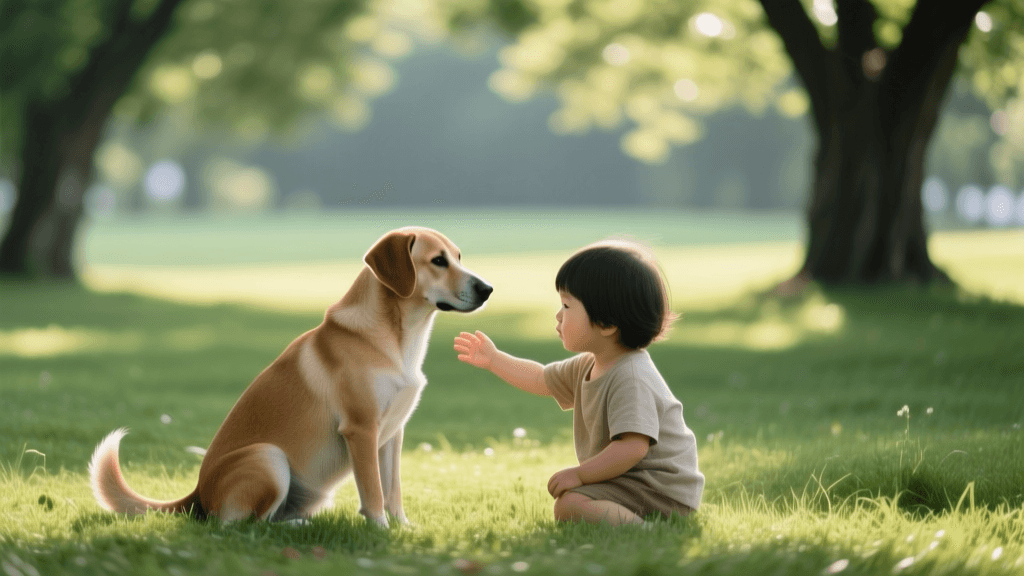
Predators move in straight lines toward their prey. Therefore, a human walking directly head-on toward a dog can trigger an instinctual defensive response. Dogs naturally greet one another by walking in wide arcs. How to use it: Never walk straight up to a dog you are trying to bond with, especially if they are eating, chewing a toy, or resting. Approach in a gentle, sweeping curve, keeping your body language loose and angled slightly away from them.
5. The Ground Sniff
Sniffing the ground is a primary displacement behavior and a powerful calming signal. It allows the dog to disengage from a stressful visual stimulus and engage their olfactory cortex, which is deeply soothing. How to use it: If you are walking your dog and they become fixated or stressed by a passing dog or loud noise, do not pull the leash or force eye contact. Instead, drop a handful of high-value treats on the grass and begin sniffing the ground yourself, making soft, encouraging noises. This invites them to engage in 'scent work,' which rapidly drops their cortisol levels.
Tracking Stress: 2026 Biometric Wearables
Understanding your dog's internal state is easier than ever in 2026 thanks to advanced biometric wearables. Devices like the latest generation of the Invoxia Biometric Pet Tracker utilize non-invasive radar sensors to measure a dog's Heart Rate Variability (HRV) and respiratory rate in real-time. HRV is a critical metric for understanding the balance between the sympathetic and parasympathetic nervous systems. By pairing your use of calming signals with biometric data, you can objectively measure which techniques most effectively soothe your specific dog, allowing for a highly personalized bonding protocol.
Common Human Misinterpretations vs. Canine Reality
One of the greatest barriers to bonding is the human tendency to project primate emotions onto canine behavior. The American Kennel Club's guide to dog body language emphasizes that misreading these signals often leads to broken trust. Below is a comparison chart to help you reframe your understanding.
| Human Action / Interpretation | Dog's Perception / Reality | Calming Signal Alternative |
|---|---|---|
| Walking straight toward the dog to say hello | Confrontational, predatory, and trapping | Approach in a wide, gentle curve with soft eyes |
| Hugging the dog tightly to show love | Restraining, suffocating, and threatening | Sit sideways, allow the dog to lean against you |
| Staring into the dog's eyes for bonding | Challenging, intimidating, and aggressive | Use the 'soft blink' and look slightly away |
| Assuming a 'guilty look' means they know they misbehaved | The dog is displaying appeasement signals to your anger | Yawn, turn sideways, and lower your own energy |
| Forcing the dog to look at a scary object | Forcing confrontation with a perceived threat | Scatter treats on the ground to encourage sniffing |
Your 30-Day Calming Signal Bonding Protocol
To integrate these concepts into your daily life, follow this structured 30-day protocol designed to build unshakeable trust. This is particularly effective for dogs with a history of trauma or resource guarding, as noted in the ASPCA's resources on common dog behavior issues.
Week 1: Observation and Decompression
- Goal: Reduce environmental pressure.
- Action: Stop all direct eye contact. Approach your dog only in curves. Speak in low, soft tones. Allow the dog to initiate all physical contact.
- Metrics: Note how long it takes for your dog to voluntarily enter the same room as you.
Week 2: Introducing the Yawn and Blink
- Goal: Actively communicate peaceful intentions.
- Action: Spend 15 minutes daily sitting on the floor, reading a book or looking at your phone, while intentionally performing soft blinks and audible yawns whenever the dog looks at you.
- Metrics: Track the frequency of your dog's reciprocal yawns or deep sighs (a sign of parasympathetic activation).
Week 3: Scent-Based Bonding
- Goal: Associate your presence with olfactory enrichment.
- Action: Replace all bowl feeding with 'sniffaris.' Scatter their daily kibble in the yard or on a snuffle mat. Sit nearby, turned sideways, and occasionally toss a high-value treat away from you to encourage movement and foraging.
Week 4: The Consent Test
- Goal: Establish boundaries and respect.
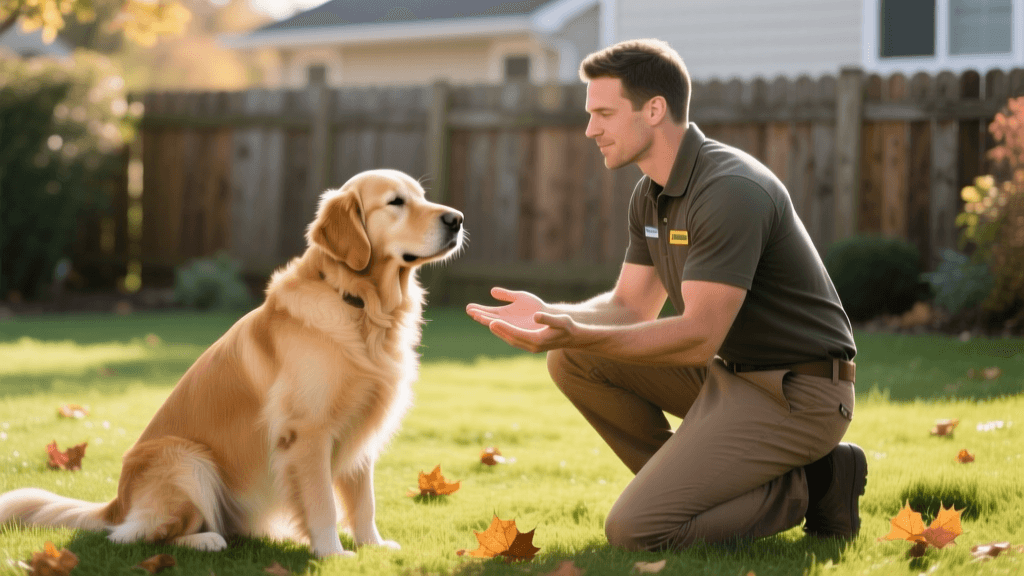
- Action: Implement the 'Petting Consent Test.' Pet the dog gently on the chest or shoulder for exactly three seconds, then stop and pull your hand away. If the dog leans in, nudges you, or paws at you, they are consenting to more. If they turn their head away, freeze, or lick their lips, they are using a calming signal to ask for space. Respect it immediately.
'True bonding is not about forcing a dog to comply with our need for affection; it is about creating an environment where the dog feels safe enough to offer their affection freely.' — Modern Canine Behavioral Consensus, 2026.
Conclusion
Understanding your dog is a lifelong journey of observation, empathy, and adaptation. By abandoning human-centric greetings and embracing the nuanced world of canine calming signals, you transform from a source of unpredictable primate pressure into a safe, predictable, and deeply trusted companion. In 2026, the most advanced tool in your dog care arsenal isn't a high-tech gadget or a strict training regimen—it is your own body language. Start speaking their silent language today, and watch your relationship flourish into an unbreakable bond.
marcus-aldridge
All our authors care for dogs every day — read more of their work on the authors page.