Dog Breed Trainability Comparison: A Selection Guide
Discover how popular dog breeds compare in trainability. Use our selection guide to match your lifestyle with a breed's obedience and learning needs.
Selecting a Dog Breed Based on Trainability: A Comprehensive Guide
Choosing a dog is one of the most exciting decisions a prospective pet owner can make. However, many first-time owners select a breed based solely on appearance, size, or popularity, completely overlooking the cognitive demands and behavioral conditioning required to raise a well-adjusted companion. Trainability is not a one-size-fits-all metric; it varies wildly across breed groups and individual lineages. If you are spending 15 minutes a day on training, bringing home a Border Collie will lead to mutual frustration, whereas a French Bulldog might thrive in that environment.
In this guide, we will explore the intersection of breed selection and obedience training. By understanding the difference between raw intelligence and biddability, analyzing breed-specific learning styles, and preparing a realistic training budget, you can select a dog that perfectly aligns with your lifestyle, patience, and training capabilities.
Intelligence vs. Biddability: Understanding the Difference
When researching trainable breeds, you will frequently encounter the term 'intelligence.' However, in the context of dog training, intelligence does not always equate to ease of training. Canine psychologists and behaviorists generally divide canine cognition into two main categories: working intelligence (biddability) and instinctive/adaptive intelligence (problem-solving).
Biddability refers to a dog's willingness to please and obey human commands. Breeds like the Golden Retriever and Labrador Retriever score exceptionally high in biddability. They are highly motivated by social praise and food, making them forgiving of novice training mistakes. On the other hand, breeds like the Shiba Inu or Afghan Hound possess high adaptive intelligence—they can figure out how to open doors or escape crates—but they score low in biddability. They often ask, 'What's in it for me?' before complying with a command.
According to the American Kennel Club (AKC), first-time owners should prioritize biddability and a desire to please over raw problem-solving intelligence to ensure a harmonious training experience.
Breed Comparison Chart: Trainability & Owner Experience
To help you match your lifestyle with the right breed, we have compiled a comparison chart based on general breed standards, behavioral assessments, and training requirements. Note that individual dogs may vary, and early socialization plays a critical role in shaping these traits.
| Breed | Biddability | Problem-Solving | Daily Mental Need | Ideal Owner Experience |
|---|---|---|---|---|
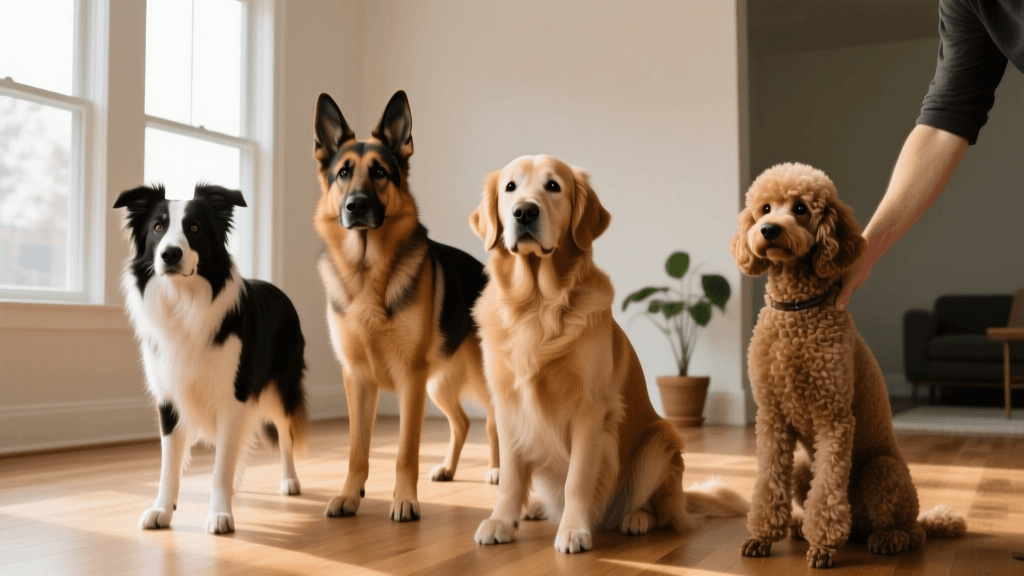
| Golden Retriever | Very High | Moderate | 30-45 mins | First-Time / Novice |
| Border Collie | Very High | Exceptional | 1-2+ hours | Experienced / Active |
| Standard Poodle | High | High | 45-60 mins | All Levels |
| Beagle | Low-Moderate | High (Scent) | 45-60 mins | Patient / Intermediate |
| French Bulldog | Moderate | Low | 15-20 mins | First-Time / Casual |
Deep Dive: Training Needs by Breed Group
Different breed groups were developed for specific jobs, and these historical instincts heavily dictate their modern training requirements. Understanding these instincts allows you to tailor your behavioral conditioning and trick-teaching sessions effectively.
The Herding Group (e.g., Border Collie, Australian Shepherd)
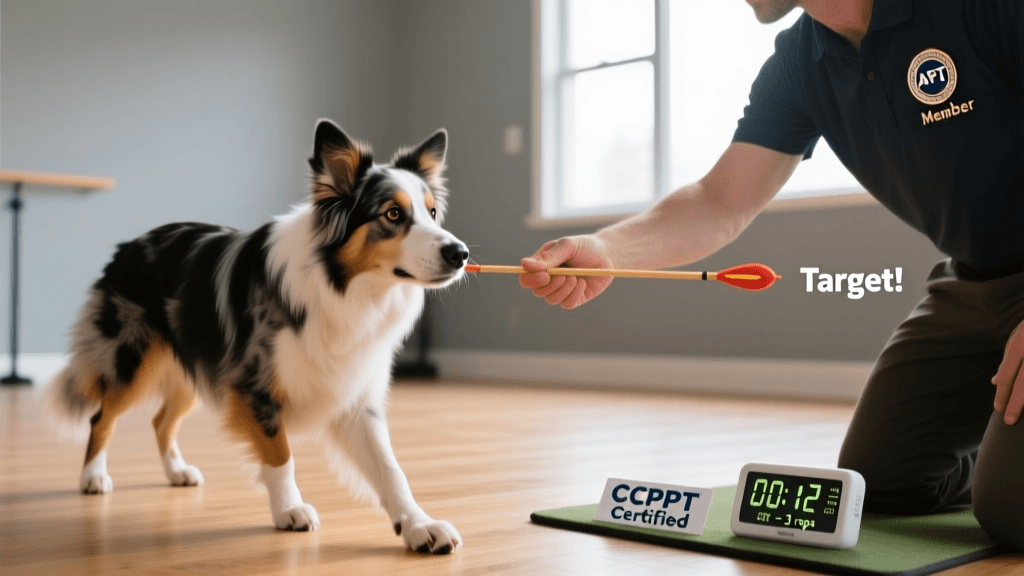
Herding breeds are the workaholics of the canine world. They possess intense focus, high energy, and a genetic predisposition to control movement. If you select a herding breed, basic obedience (sit, stay, down) will take only a few days to teach. The real challenge is providing advanced mental stimulation to prevent destructive behaviors, anxiety, and neurotic habits like shadow-chasing or heel-nipping.
- Training Strategy: Incorporate agility, treibball (herding balls), and advanced trick sequences.
- Required Gear: Flirt poles ($20-$30) for safe chasing, and puzzle feeders to simulate working for meals.
- Time Commitment: Expect to dedicate 1.5 to 2 hours daily to combined physical and mental exercises.
The Sporting Group (e.g., Golden Retriever, German Shorthaired Pointer)
Sporting breeds are highly biddable, energetic, and notoriously food-motivated. They excel in obedience trials, search and rescue, and therapy work. Their primary training hurdle is impulse control, particularly around birds, squirrels, and other small animals.
- Training Strategy: Utilize high-value treats (like Zuke's Mini Naturals, which are under 2 calories each) for rapid-fire positive reinforcement. Focus heavily on the 'leave it' and 'drop it' commands.
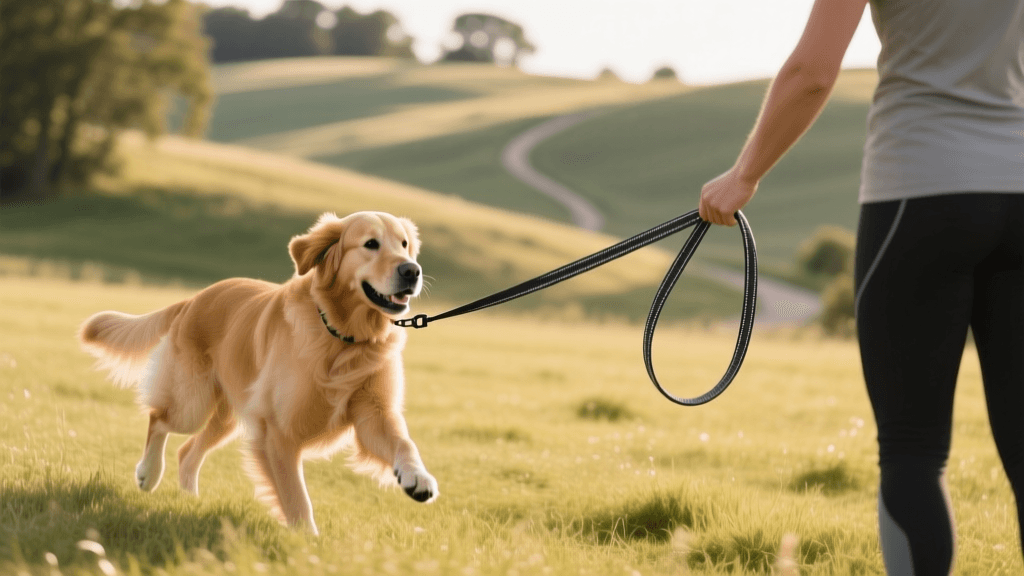
- Required Gear: A 30-foot biothane long line ($25-$40) is essential for proofing recall commands in open areas without risking the dog's safety.
- Time Commitment: 45 minutes of structured training and fetch/retrieval games daily.
The Hound Group (e.g., Beagle, Bloodhound)
Hounds are scent-driven independent thinkers. When a Beagle catches an interesting odor, their brain essentially blocks out human vocal commands. This is not stubbornness; it is a deeply ingrained biological response. Data from the University of Pennsylvania's C-BARQ behavioral assessments consistently show hounds scoring lower on trainability scales compared to herding and sporting breeds, largely due to this environmental distractibility.
- Training Strategy: Scent-work games and 'find it' exercises. Never train recall in an un-fenced area without a long line, as their nose will override their obedience.
- Required Gear: Snuffle mats ($20-$35) and KONG Classic toys ($15-$25) stuffed with frozen peanut butter to satisfy their need to forage and chew.
- Time Commitment: 30-45 minutes of daily scent games and structured leash walking.
Budgeting for Breed-Specific Training
Selecting a breed also means selecting a financial commitment to their behavioral conditioning. While a Basset Hound might require minimal professional intervention beyond basic puppy classes, a Belgian Malinois or reactive rescue dog will demand a significant training budget.
Here is a breakdown of what you should budget based on the breed type you select:
- Group Obedience Classes (All Breeds): $150 to $250 for a 6-week course. Ideal for foundational socialization and basic cues.
- Specialized Sport Training (Herding/Sporting): Agility or dock-diving club memberships and private handling lessons can range from $50 to $100 per session.
- Behavioral Modification (Independent/Guardian Breeds): If you choose a livestock guardian breed (like a Great Pyrenees) or a highly independent spitz breed, you may need a certified behaviorist to address territorial aggression or severe recall issues. Private sessions typically cost $150 to $300 per hour.
- Board-and-Train Programs: For owners who lack the time to train high-drive breeds, professional board-and-train programs cost between $1,500 and $3,500 for a 3-to-4-week immersive stay. However, the ASPCA notes that owners must still undergo 'handler training' to maintain the dog's learned behaviors once they return home.
Actionable Steps Before You Select a Breed
Before signing a contract with a breeder or submitting an adoption application, take these practical steps to ensure you are setting yourself up for training success:
- Audit Your Schedule: Track your free time for one week. If you cannot carve out two 15-minute training sessions per day, avoid high-drive herding and sporting breeds.
- Assess Your Living Environment: If you live in an apartment with shared walls, avoid vocal breeds like Huskies or Beagles unless you are prepared to hire a professional trainer to teach 'quiet' cues immediately.
- Consider an Adult Rescue: If you want a specific breed but are intimidated by the puppy training phase (potty training, bite inhibition, teething), consider adopting a 3-to-5-year-old dog from a breed-specific rescue. Their temperament, energy level, and baseline trainability are already established, removing the guesswork from your selection process.
Final Thoughts on Breed Selection and Training
Ultimately, there is no such thing as an 'untrainable' dog, but there are certainly mismatched dog-and-owner pairings. A Border Collie is a masterpiece of canine intelligence, but in the hands of an owner who works 10-hour days and only wants a couch companion, that intelligence becomes a liability. Conversely, a Greyhound may struggle to learn complex trick sequences, but their low indoor energy and eagerness to lounge make them perfectly 'trained' for a relaxed urban lifestyle.
By evaluating biddability, understanding breed-specific instincts, and honestly assessing your time and financial resources, you can select a dog that not only fits your heart but also fits your daily routine. Invest in the right gear, enroll in positive-reinforcement classes, and remember that training is a lifelong conversation between you and your canine companion.
tom-renshaw
All our authors care for dogs every day — read more of their work on the authors page.