Training Your Dog for a New Baby in 2026: Full Guide
Prepare your dog for a new baby in 2026 with expert boundary training, desensitization tips, and smart gear recommendations for a smooth transition.
Understanding the Canine Perspective on Family Expansion
Welcoming a new baby into your home is one of the most joyous life transitions a family can experience, but for your dog, it represents a massive shift in routine, environment, and social dynamics. As we navigate the evolving landscape of pet parenthood in 2026, modern behavioral science emphasizes proactive desensitization and positive reinforcement over outdated, dominance-based correction methods. Dogs thrive on predictability. When a baby arrives, the sudden introduction of high-pitched cries, unfamiliar scents, and restricted access to favorite rooms can trigger anxiety or regression in obedience. By implementing a structured training plan months before your due date, you can help your dog view the new arrival as a positive addition rather than a disruptive intruder.
According to the American Kennel Club, the key to a harmonious household lies in adjusting your dog's expectations and boundaries well before the baby actually crosses the threshold. This comprehensive guide will walk you through the exact phases of desensitization, boundary training, and routine adjustment required to prepare your dog for a new baby in 2026.
Phase 1: Auditory and Olfactory Desensitization
Long before the nursery is assembled, your dog needs to become accustomed to the sensory inputs associated with an infant. Dogs possess incredibly sensitive hearing and olfactory systems, making sudden exposure to baby sounds and smells a potential stressor.
Sound Desensitization Protocols
Begin playing recordings of baby noises—crying, cooing, and the mechanical whir of baby swings—at a very low volume while engaging your dog in high-value activities. In 2026, many smart home ecosystems feature integrated "pet calming" soundscapes that include baby noise desensitization tracks. Play these sounds during meal times or while offering a long-lasting enrichment toy, such as a frozen snuffle mat stuffed with single-ingredient freeze-dried treats. Gradually increase the volume over several weeks. If your dog shows signs of stress (lip licking, yawning, or pacing), lower the volume immediately. The goal is to build a positive classical association: baby sounds equal high-value rewards.
Scent Introduction
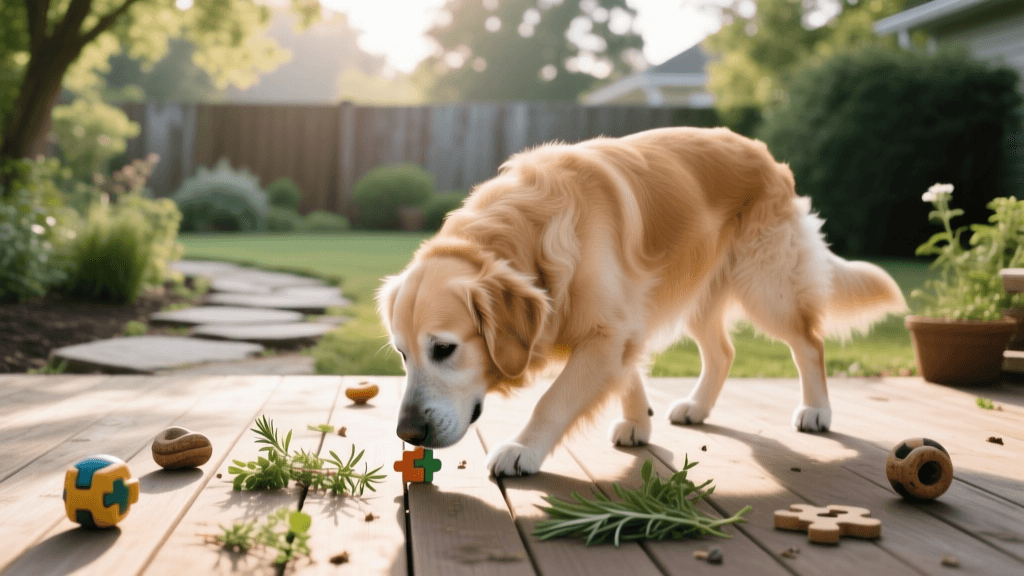
Babies carry distinct scents, from diaper creams to specific baby washes. Start using unscented or lightly scented baby lotions on your own hands weeks before the birth. Introduce the scent of baby powder or specific diaper brands by allowing your dog to sniff the items from a distance, rewarding calm behavior with a marker word like "Yes!" followed by a treat. Never force the scent directly into your dog's face.
Phase 2: Establishing Nursery Boundaries and the "Place" Command
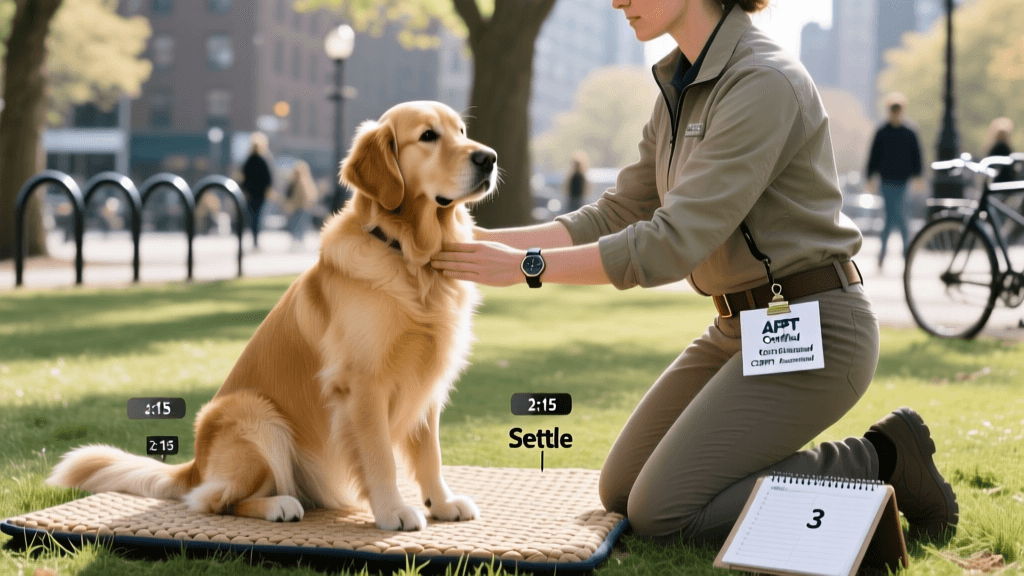
One of the most critical skills your dog must master before the baby arrives is the ability to settle on a designated mat or bed on cue. The "Place" command is not just about keeping the dog out of the way; it provides your dog with a safe, predictable zone where they can retreat when the household becomes chaotic.
Step-by-Step "Place" Training
- Targeting: Use a raised cot or a specific textured mat. Lure your dog onto the mat with a high-value treat, such as Ziwi Peak air-dried venison, and mark the moment all four paws touch the surface.
- Duration: Gradually delay the reward. Start with one second of settling, then build to five, ten, and eventually thirty minutes of relaxed down-stays on the mat.
- Distance and Distraction: Practice sending your dog to their place from across the room while you simulate baby-related activities, such as folding blankets or rocking an empty swaddle.
Nursery Gate Training
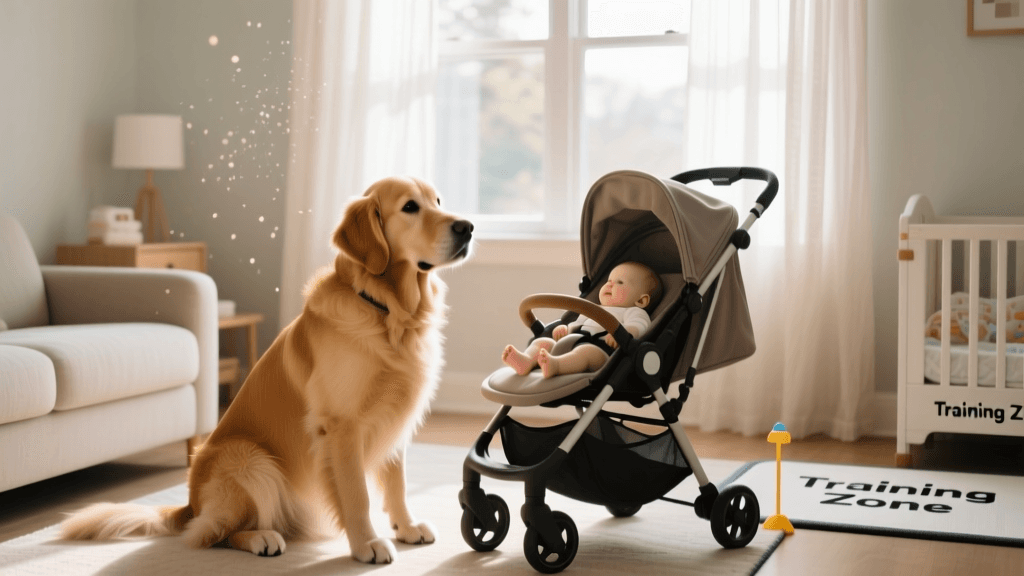
The nursery should become an "invite-only" zone. Install a sturdy, hardware-mounted pet gate well in advance. Teach your dog that the gate boundary is absolute by rewarding them for sitting calmly on the outside while you enter the room. According to guidelines from The Humane Society of the United States, establishing physical boundaries early prevents resource guarding and reduces the likelihood of the dog sneaking into the nursery to investigate unattended baby items.
Phase 3: Stroller Desensitization and Routine Adjustments
Your daily walking routine will change drastically once you are pushing a stroller. Dogs that are used to pulling on the leash or greeting every passerby will find the physical restriction of a stroller frustrating and potentially dangerous.
Begin walking with your empty stroller at least two months before your due date. Practice loose-leash walking with the stroller handle in one hand and the leash in the other. If your dog pulls, stop immediately. Do not resume walking until the leash is slack. Incorporate "sit" and "wait" commands at every crosswalk and doorway to reinforce impulse control. Additionally, adjust your dog's feeding and walking schedules now to match the unpredictable schedule you will likely have postpartum. If you plan to hire a dog walker in 2026, introduce them to your dog weeks in advance so the transition of care is seamless.
The 2026 Pregnancy Training Timeline
To keep your preparation on track, follow this structured timeline aligned with your pregnancy trimesters. Consistency is far more important than the duration of each training session.
| Pregnancy Stage | Training Focus | Actionable Milestones |
|---|---|---|
| First Trimester (Months 1-3) | Obedience Refresh & Routine Shifts | Reinforce "Leave It," "Drop It," and loose-leash walking. Transition dog care to other family members or a professional walker. |
| Second Trimester (Months 4-6) | Desensitization & Boundaries | Introduce baby sounds, scents, and nursery gates. Master the "Place" command with high distractions. |
| Third Trimester (Months 7-9) | Stroller Integration & Impulse Control | Walk daily with the stroller. Practice "sit-to-greet" for visitors. Finalize smart home camera setups for remote monitoring. |
| Postpartum (Weeks 1-4) | Reintegration & Positive Association | Scent swapping before homecoming. Leashed, calm introductions. Maintain dog's exercise needs via enrichment and indoor games. |
Essential 2026 Smart Gear for Dog and Baby Transitions
Technology has vastly improved how we manage multi-species households. Investing in the right smart gear can alleviate stress and ensure safety during the transition.
- Matter-Compatible Pet Cameras: Modern 360-degree pet cameras now integrate seamlessly with universal smart home hubs. Look for models featuring two-way audio and treat-tossing capabilities, allowing you to reward your dog for staying on their "Place" mat while you are in the nursery.
- Smart White Noise Machines: High-fidelity white noise machines designed for 2026 nurseries not only soothe infants but also mask sudden household noises that might trigger your dog's alert barking.
- Automatic Enrichment Feeders: To keep your dog mentally stimulated while your hands are full, utilize app-controlled puzzle feeders that dispense kibble or treats at randomized intervals, reducing boredom-induced destructive behaviors.
The First 48 Hours: Bringing Baby Home
The day you bring your baby home is highly emotional and chaotic. Before the baby enters the house, have your partner or a friend bring home a blanket or onesie that carries the baby's scent. Allow your dog to sniff the item calmly, rewarding relaxed behavior, and then place the item in the dog's sleeping area to normalize the scent.
When you arrive home, the mother should enter the house first without the baby to greet the dog and burn off initial excitement. Once the dog is calm, bring the baby inside. Keep the dog on a loose leash and allow them to sniff the baby's feet from a safe distance while offering continuous praise and high-value treats. Never leave the dog and baby unattended, regardless of how trustworthy your dog has been in the past. By managing the environment, utilizing modern training tools, and maintaining a patient, positive reinforcement approach, you will lay the foundation for a beautiful, lifelong bond between your child and your dog.
robin-maitland
All our authors care for dogs every day — read more of their work on the authors page.