Snuffle Mat Enrichment 2026: Unlock Canine Foraging Instincts
Discover how DIY fleece snuffle mats tap into your dog's natural foraging instincts in 2026. Learn setup tips, cleaning routines, and behavioral benefits.
The Science Behind the Sniff: Why Foraging Matters
When we look at our domestic dogs lounging on the sofa, it is easy to forget that they are descendants of apex predators and opportunistic scavengers. In the wild, canines spend up to 80% of their waking hours searching for, capturing, and consuming food. Fast forward to 2026, and the modern pet dog is often handed a bowl of kibble in less than thirty seconds. This drastic reduction in foraging time leaves a massive psychological void, often resulting in boredom, anxiety, and destructive behaviors. Understanding your dog means recognizing that eating is not just about nutrition; it is a deeply ingrained cognitive exercise.
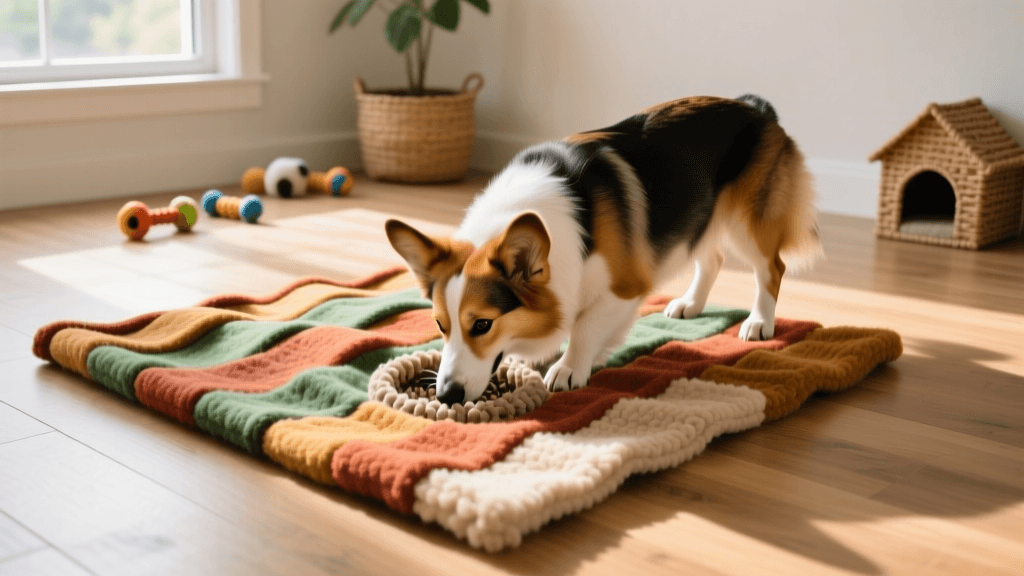
The canine olfactory system is a biological marvel. A dog's olfactory cortex—the part of the brain dedicated to analyzing smells—is roughly 40 times larger than ours, relative to total brain size. When a dog engages in scent work, such as rooting through a snuffle mat to find hidden treats, their heart rate actually decreases. This phenomenon, known as 'sniffari' enrichment, triggers the release of dopamine, the brain's reward and pleasure chemical. According to the RSPCA's guidelines on environmental enrichment, allowing dogs to express natural foraging behaviors significantly reduces anxiety and promotes a state of calm mental fatigue that physical exercise alone cannot achieve.
2026 Enrichment Trends: Moving Beyond Plastic Puzzles
Over the last few years, the pet industry has seen a massive shift away from rigid, hard-plastic puzzle toys. While plastic puzzles have their place for teaching specific problem-solving mechanics, they often frustrate dogs who rely primarily on their noses rather than their paws. In 2026, veterinary behaviorists and certified dog trainers are heavily advocating for tactile, multi-sensory foraging tools like the fleece snuffle mat. These mats mimic the texture of tall grass and underbrush, providing a soft, quiet, and highly engaging medium for scent tracking.
Furthermore, sustainability is a major focus for pet owners in 2026. Upcycling materials to create custom, eco-friendly enrichment tools has become a cornerstone of modern canine care. Building your own snuffle mat not only allows you to tailor the difficulty level to your dog's specific cognitive abilities but also eliminates the need for mass-produced, non-biodegradable plastics. The American Kennel Club (AKC) notes that brain games like snuffle mats can tire a dog out just as effectively as a long physical walk, making them an essential tool for high-energy breeds, senior dogs with limited mobility, and dogs recovering from surgery.
How to Build a Custom Fleece Snuffle Mat in 2026
Creating a high-quality snuffle mat at home is surprisingly simple and cost-effective. By making it yourself, you control the density of the fleece strips, which dictates the difficulty level of the foraging game. Here is a step-by-step guide to crafting a durable, dog-safe snuffle mat.
Materials Needed
- Base Mat: One PVC-free, food-grade rubber sink mat with holes (approximately 12x15 inches). Avoid mats with sharp plastic burrs that could scratch your dog's snout.
- Fleece Fabric: 1.5 yards of anti-pill, medium-weight fleece. Choose 3 to 4 different colors to help visually break up the treats, though remember your dog is primarily using scent.
- Scissors: A sharp pair of fabric shears.
- Treats: High-value, strongly scented rewards like freeze-dried beef liver or small pieces of dehydrated sweet potato.
Assembly Instructions
- Cut the Strips: Cut your fleece into strips that are approximately 1 inch wide and 6 to 8 inches long. You will need roughly 300 to 400 strips for a dense, challenging mat.
- First Row Tie-Off: Take a single fleece strip and thread it through two adjacent holes in the rubber base. Tie it into a simple, secure overhand knot on the top side. Ensure the knot is tight enough that it cannot be easily pulled through the hole.
- Build the Density: Continue threading and knotting strips through the holes. For a beginner-level mat, leave some holes empty. For an advanced 2026 'expert' level mat, tie two strips per hole and ensure every single hole is filled, creating a thick, grass-like canopy.
- Fluff and Inspect: Once all strips are tied, flip the mat over and trim any excessively long tails on the bottom to prevent tripping hazards. Flip it back over and fluff the fleece strips upward.
Enrichment Showdown: Snuffle Mats vs. Traditional Puzzles
To truly understand where the snuffle mat fits into your dog's cognitive diet, it helps to compare it against other popular enrichment tools available on the market today. Below is a comparison chart detailing the practical differences between these tools in 2026.
| Enrichment Tool | Primary Sense Engaged | Mental Fatigue Level | Cleaning & Hygiene | Best Suited For |
|---|---|---|---|---|
| DIY Fleece Snuffle Mat | Olfactory (Scent) | Very High | Machine washable (weekly) | Scavengers, anxious dogs, seniors |
| Hard Plastic Maze Toys | Visual / Tactile (Paws) | Moderate | Dishwasher safe (top rack) | Independent problem solvers, terriers |
| Silicone Lick Mats | Gustatory (Taste/Texture) | Low to Moderate | Dishwasher / Hand wash | Fast eaters, grooming distraction |
| Cardboard Forage Boxes | Olfactory / Destructive | High | Disposable (Recyclable) | Heavy chewers, high-prey-drive breeds |
As the table illustrates, the snuffle mat excels in providing deep olfactory engagement, which is the most taxing and rewarding sensory experience for a canine. While plastic puzzles require physical manipulation that can sometimes lead to frustration if the dog cannot figure out the sliding mechanism, a snuffle mat relies purely on instinct. There is no 'wrong' way to sniff, making it an incredibly confidence-building exercise for shy or reactive dogs.
Leveling Up: Advanced Foraging Scenarios
Once your dog has mastered the basic snuffle mat—meaning they can systematically clear the mat of all visible and hidden treats within 10 to 15 minutes—it is time to introduce advanced cognitive challenges. In 2026, canine enrichment is all about layering complexities to keep the brain guessing.
Scent Trail Integration
Instead of simply dropping treats into the mat, create a scent trail leading to it. Drag a piece of strong-smelling treat across the floor from the kitchen to the living room where the mat is placed. Bury the final, highest-value reward deep in the center of the fleece strips. This forces your dog to engage in 'tracking' behavior before transitioning into 'foraging' behavior, utilizing two distinct neurological pathways.
The Freezing Technique
For dogs who tend to inhale their food or rush through the mat, introduce temperature as a variable. Soak the snuffle mat in low-sodium bone broth (ensure it is free of onions and garlic) and place it in the freezer overnight. In the morning, embed frozen blueberries or small kibble pieces into the icy fleece. The dog must use their tongue and body heat to melt the ice while simultaneously foraging, extending the activity time and providing soothing relief for teething puppies or dogs with gum inflammation.
Multi-Mat Scavenger Hunts
If you have a large home or a secure backyard, purchase or build three smaller snuffle mats. Distribute them across different rooms or zones. Divide your dog's daily caloric kibble allowance among the mats. This encourages spatial memory and room-to-room navigation, mimicking the wide-ranging scavenging patterns of wild canids moving between different foraging patches.
Hygiene and Maintenance: Keeping Mats Safe
Because snuffle mats interact with saliva, nasal secretions, and food particles, strict hygiene protocols are non-negotiable. A dirty mat can harbor bacteria, mold, and yeast, which can lead to upper respiratory infections or skin irritations on your dog's snout.
Weekly Washing Routine: Shake the mat vigorously outdoors to remove loose crumbs and dust. Place the mat inside a mesh laundry bag to prevent the fleece strips from tangling with other garments. Wash on a gentle cycle using a pet-safe, unscented enzymatic detergent. Avoid fabric softeners, as they coat the fleece fibers and mask the scent of future treats, defeating the purpose of the toy.
Drying: Air drying is highly recommended to preserve the integrity of the rubber base and prevent the fleece from melting or pilling in a high-heat tumble dryer. Hang the mat in a well-ventilated area or outside in direct sunlight, which provides natural UV disinfection. Ensure the mat is 100% dry before storing it; trapping moisture in the dense fleece knots is the primary cause of mildew growth.
Understanding Your Dog's Limits
While mental enrichment is profoundly beneficial, it is crucial to observe your dog's body language during snuffle mat sessions. Signs of positive engagement include a relaxed posture, soft eyes, a gently wagging tail, and rhythmic, deep breathing. However, if your dog begins frantically digging at the rubber base, whining, or attempting to flip the mat over entirely, they are experiencing cognitive frustration. When this happens, intervene calmly. Lift the mat, reveal a few treats to give them a 'win,' and end the session on a positive note. Understanding your dog means knowing when to push their cognitive boundaries and when to offer grace and assistance. By integrating the DIY fleece snuffle mat into your 2026 daily routine, you are not just feeding your dog; you are honoring their deepest evolutionary instincts and nurturing a happier, more balanced companion.
marcus-aldridge
All our authors care for dogs every day — read more of their work on the authors page.