DIY Dog Enrichment: Satisfying Natural Foraging Instincts
Discover DIY dog enrichment games to satisfy your pup's natural foraging instincts. Learn homemade puzzle ideas to boost mental health and reduce boredom.
The Evolutionary Psychology of the Canine Forager
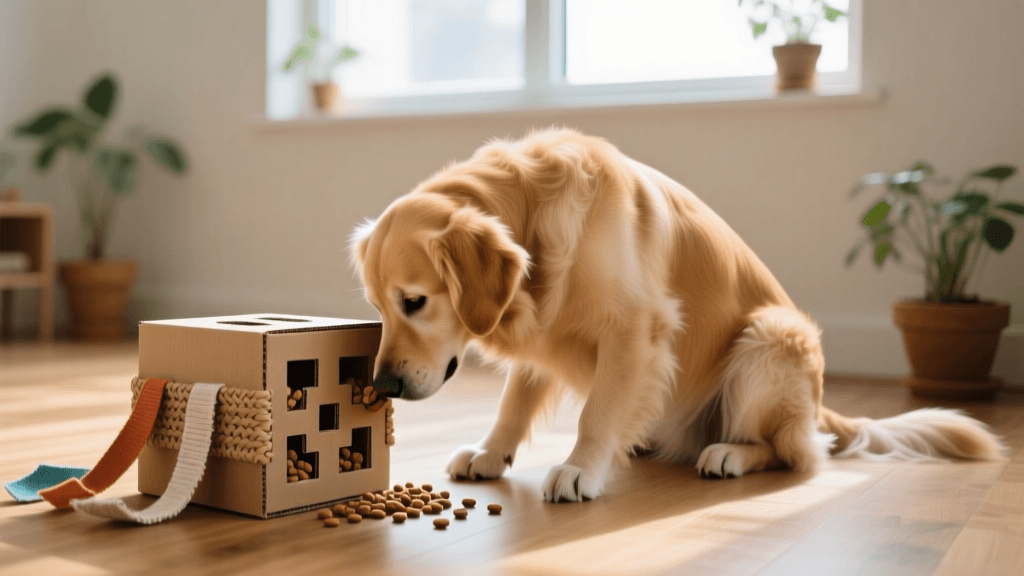
Dogs are hardwired to work for their food. In the wild, canines spend up to 80% of their waking hours hunting, scavenging, and foraging. When we domesticate them and serve kibble in a stainless steel bowl, we strip away this fundamental behavioral drive. Understanding your dog means recognizing that eating is not just about nutrition; it is a complex psychological event. By implementing DIY and homemade enrichment solutions, you can tap into your dog's natural instincts, alleviate boredom, and prevent behavioral issues stemming from under-stimulation.
Why Bowl Feeding Fails Modern Dogs
The canine brain is wired to release dopamine—the 'feel-good' neurotransmitter—when a dog successfully tracks, captures, or extracts a reward. When dogs are deprived of this mental stimulation, they often redirect their energy into undesirable behaviors like excessive barking, pacing, or destructive chewing. The ASPCA notes that a primary cause of destructive behavior in dogs is a lack of mental and physical stimulation. Providing homemade foraging puzzles mimics the natural problem-solving sequences their brains crave.
When a dog finishes a bowl of food in three minutes, they are left with nearly 24 hours of unstructured time. The VCA Hospitals strongly recommend food puzzles to slow down eating, improve digestion, and provide essential mental enrichment that bowl feeding simply cannot offer.
Understanding Breed-Specific Foraging Drives
Before building DIY puzzles, it is crucial to understand your dog's specific breed instincts, as this dictates how they interact with homemade toys:
- Hounds (Beagles, Bloodhounds): Driven by ground-scenting and tracking. They prefer puzzles that require heavy nose work and following a trail.
- Terriers (Jack Russells, Rat Terriers): Driven by digging, shaking, and 'killing' prey. They excel at puzzles that involve unrolling, tearing, or digging into confined spaces.
- Herding and Retrievers (Border Collies, Labs): Driven by movement, fetching, and complex problem-solving. They thrive on multi-step puzzles that require paw-eye coordination and spatial reasoning.
Top 3 DIY Homemade Foraging Puzzles
1. The Muffin Tin Puzzle (Best for Problem Solvers)
Materials: 1 standard 12-cup metal muffin tin ($5-$10), 12 tennis balls or rubber dog balls ($8 for a pack), high-value training treats (e.g., freeze-dried liver).
Cost: Under $20 total (assuming you already own a tin).
Time to Build: 1 minute.
Instructions: Place 1-2 treats in 4 to 6 of the muffin cups. Cover every single cup with a tennis ball. Your dog must use their nose to locate the treats and their paws or snout to dislodge the balls to access the reward. This teaches cause-and-effect and encourages paw-eye coordination.
2. The Fleece Towel Burrito (Best for Terriers and Shredders)
Materials: 1 large, clean microfiber or fleece bath towel ($10-$15), dry kibble.
Cost: $10-$15.
Time to Build: 2 minutes.
Instructions: Lay the towel flat on the floor. Sprinkle a generous handful of your dog's daily kibble allowance evenly across the surface. Roll the towel up tightly into a long cylinder. For advanced dogs, tie the rolled towel into a loose knot. This engages the natural 'shredding' and 'pulling' instincts without destroying your household furniture.
3. The Cardboard Box Digging Pit (Best for Earth Dogs)
Materials: 1 large shallow cardboard box (like a low-profile shipping box), shredded non-glossy paper or crumpled paper balls, hidden toys or treats.
Cost: Free (using recycled household materials).
Time to Build: 5 minutes.
Instructions: Fill the box with shredded paper. Bury high-value treats or favorite chew toys at varying depths. Encourage your dog to 'find it.' This satisfies the deep-seated digging instinct found in breeds like Dachshunds, saving your garden or sofa cushions from their claws.
Comparison Chart: DIY vs. Commercial Puzzles
| Feature | DIY Homemade Puzzles | Commercial Store-Bought Puzzles |
|---|---|---|
| Average Cost | $0 - $20 | $15 - $45+ |
| Customization | High (Easily adjusted for difficulty) | Low (Fixed difficulty levels) |
| Durability | Low to Medium (Often destroyed/consumed) | High (Hard plastics and rubbers) |
| Mental Stimulation | High (Novelty keeps dogs engaged) | Medium (Dogs learn the 'trick' quickly) |
| Eco-Friendliness | High (Uses recycled household items) | Low (Often made of non-recyclable plastics) |
DIY Scent Trails: Engaging the Olfactory Brain
Dogs experience the world primarily through their noses. A dog's olfactory bulb is proportionally 40 times larger than a human's, and they possess up to 300 million scent receptors. Engaging this sense is one of the most effective ways to tire out a high-energy dog. The American Kennel Club advocates for nose work as a foundational training tool that builds confidence in shy dogs and focuses hyperactive ones.
Homemade Scent Trail Recipe
- Boil 2 cups of water with 3 hot dogs or a handful of strong-smelling meat scraps.
- Let the 'scent water' cool completely to room temperature.
- Pour the cooled liquid into a clean spray bottle.
- Use the spray bottle to mist a continuous trail across your backyard or living room floor.
- Place a 'jackpot' reward (a chew bone or a pile of treats) at the end of the trail.
Pro-Tip: Start with short, straight lines on grass or carpet. As your dog understands the game, introduce zig-zags, loops, and obstacles to increase the cognitive load.
Safety Rules for Homemade Dog Toys
While DIY solutions are fantastic for canine psychology, safety must always be the priority. Never leave a dog unattended with a homemade puzzle, especially those involving cardboard, towels, or small balls. Avoid using materials with toxic adhesives, glossy inks, or staples. Always ensure that any balls or objects used to cover treats are significantly larger than your dog's trachea to prevent choking hazards. If your dog begins to ingest the towel or cardboard, calmly interrupt the behavior and redirect them to a more durable commercial rubber puzzle.
Conclusion
Understanding your dog goes far beyond basic obedience training; it requires a deep appreciation for their evolutionary history and psychological needs. By incorporating DIY and homemade enrichment solutions into your daily routine, you are not just feeding your dog—you are honoring their instincts. These simple, cost-effective puzzles transform mundane mealtimes into thrilling cognitive workouts, resulting in a calmer, happier, and more fulfilled canine companion.
beth-carrasco
All our authors care for dogs every day — read more of their work on the authors page.