DIY Enrichment Toys to Channel Your Dog's Foraging Instincts
Learn how to build DIY snuffle mats and dig boxes to satisfy your dog's natural foraging instincts, reduce anxiety, and prevent destructive behavior.
The Psychology of the Canine Foraging Instinct
To truly understand your dog, you must look past their modern role as a beloved family companion and examine their evolutionary history. While wolves are often credited as the primary ancestors of domestic dogs, it is the scavenging behavior of early village dogs that heavily shaped the modern canine psyche. In the wild and in feral populations, dogs spend up to 80% of their waking hours searching, scavenging, and foraging for food. This deeply ingrained survival mechanism means that your dog is biologically hardwired to work for their meals.
In a typical modern household, however, a dog's daily caloric intake is usually served in a stainless steel or ceramic bowl, consumed in under thirty seconds. This stark contrast between biological expectation and domestic reality is a leading cause of canine boredom, anxiety, and subsequent destructive behaviors. When a dog's natural foraging instincts are suppressed, they will often create their own 'jobs,' which might include digging up your garden, shredding the couch cushions, or obsessively barking at the window.
According to the American Kennel Club, providing mental stimulation through enrichment is just as critical, and often more exhausting, than physical exercise. Furthermore, experts at Fear Free Pets emphasize that utilizing food puzzles and foraging games significantly reduces stress, slows down fast eaters, and mimics the natural hunting and scavenging sequences that keep a dog's brain healthy and engaged.
Fortunately, you do not need to spend a fortune on commercial puzzles to satisfy your dog's psychological needs. By leveraging a few inexpensive household items, you can create highly effective, homemade enrichment tools that tap directly into your dog's innate instincts.
DIY Project 1: The Heavy-Duty Fleece Snuffle Mat
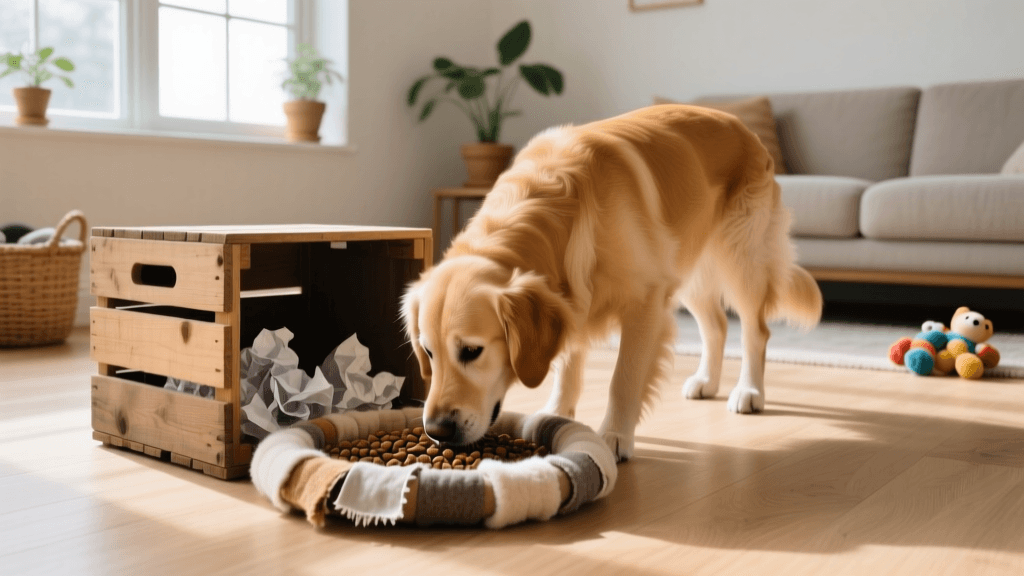
A snuffle mat is a tactile and olfactory puzzle that mimics the experience of foraging for food in tall grass or dense underbrush. It relies heavily on your dog's primary sense—smell. A dog's olfactory bulb is proportionally 40 times larger than a human's, making scent-based enrichment incredibly rewarding and mentally tiring for them.
Materials Needed
- 1 yard of anti-pill fleece fabric (choose two contrasting colors to help you see the knots and hide the treats)
- 1 rubber sink mat or a rubber doormat with drainage holes (approximately 12x18 inches)
- Sharp fabric scissors
- High-value, dry training treats or your dog's daily kibble ration
Step-by-Step Instructions
Step 1: Prepare the Fleece Strips. Cut your fleece fabric into long strips. For a standard-sized mat, cut the strips to be exactly 1.5 inches wide and 7 inches long. You will need approximately 150 to 200 strips depending on the size of your rubber base mat. The anti-pill fleece is crucial because it does not fray or unravel when cut, preventing accidental ingestion of loose threads.
Step 2: The First Pass (Base Layer). Take a single fleece strip and thread it through two adjacent holes in the rubber mat. Pull it halfway through so you have two equal tails. Tie a simple, tight overhand knot. Repeat this process across the entire mat in one direction (e.g., horizontally) until every hole is filled with a knotted strip.
Step 3: The Second Pass (Density Layer). Rotate the mat 90 degrees. Take your second color of fleece strips and repeat the process, threading and knotting them through the same holes but in the perpendicular direction (vertically). This creates a dense, grass-like surface that makes it significantly harder for your dog to simply spot the treats, forcing them to use their nose.
Step 4: Fluff and Hide. Once all strips are knotted, fluff the 'grass' upward. Sprinkle a handful of dry treats deep into the base of the fleece, near the rubber backing, and let your dog sniff them out.
Estimated Cost & Time: Under $15 in materials. Approximately 45 to 60 minutes of preparation time while watching television.
DIY Project 2: The Indoor Sensory Dig Box
While scent-tracking appeals to hounds and retrievers, the instinct to dig, excavate, and cache resources is particularly strong in terriers, dachshunds, and northern breeds. Digging is a multifaceted behavior used for temperature regulation, hunting burrowing prey, and hiding valuable resources. Punishing a dog for digging is fighting millions of years of genetic coding; instead, redirecting this behavior to a designated DIY dig box provides a healthy, acceptable outlet.
Materials Needed
- 1 heavy-duty plastic storage tote (15 to 20 gallons, with a low lip for easy access)
- Safe, indoor-friendly substrate (options detailed below)
- Assorted 'treasures' (bully sticks, Kong toys, favorite plushies)
Choosing the Right Substrate
Using outdoor dirt or sand indoors can introduce parasites, bacteria, and create a massive mess. Instead, opt for these safe, homemade alternatives:
- Shredded Paper: Use non-toxic, ink-free packing paper or old bills (shredded without the plastic window). This is highly tactile and makes a satisfying rustling noise that triggers prey drive.
- Biodegradable Packing Peanuts: Made from cornstarch, these are safe if accidentally ingested in small amounts and dissolve in water, making cleanup easy.
- Ball-Pit Balls: For dogs that tend to eat non-food items (pica), hundreds of small, hard plastic ball-pit balls provide the physical sensation of digging without any ingestion risk.
Assembly and Use
Fill the plastic tote with about 8 to 10 inches of your chosen substrate. Bury your dog's favorite toys or long-lasting chews at varying depths. Encourage your dog to 'find it' and let them excavate their prizes. The Humane Society of the United States highly recommends rotating enrichment items and substrates to prevent habituation, so swap out the hidden treasures and the type of filler every few weeks to keep the novelty high.
Comparing DIY Enrichment Tools
Understanding which DIY project best suits your dog requires analyzing their specific breed traits and behavioral quirks. Use the comparison chart below to determine which homemade solution fits your dog's psychological profile.
| Feature | DIY Snuffle Mat | DIY Sensory Dig Box |
|---|---|---|
| Primary Instinct Targeted | Olfactory tracking and grazing | Excavation, caching, and prey drive |
| Ideal Breed Types | Hounds, Retrievers, Herding breeds | Terriers, Dachshunds, Spitz breeds |
| Physical Exertion Level | Low (mostly stationary sniffing) | Moderate (full body movement) |
| Mental Fatigue Factor | Very High | High |
| Indoor Cleanup Level | Minimal (vacuum stray crumbs) | Moderate (stray paper or peanuts) |
| Material Cost | ~$15.00 | ~$20.00 |
The 3-Step Protocol for Introducing Homemade Puzzles
A common mistake owners make is introducing a complex foraging puzzle and walking away, expecting the dog to figure it out. If a dog cannot access the food, they will not feel enriched; they will feel frustrated, which can lead to resource guarding or destruction of the DIY toy. Follow this behavioral protocol to ensure success:
- Level 1: The Open Book. For the first few sessions, place the treats on the very top of the snuffle mat or just barely buried in the dig box. Stand nearby and offer verbal encouragement. The goal is to build confidence and teach the dog that this new object equals food.
- Level 2: The Challenge. Once your dog is enthusiastically engaging with the toy, begin pushing the treats deeper into the fleece or burying them at the bottom of the dig box. Step back and allow them to problem-solve independently.
- Level 3: The Variable Reward. To maintain long-term interest, do not use the puzzle every single day. Intermix high-value rewards (like freeze-dried liver) with standard kibble, and occasionally hide a favorite toy instead of food. This variable reinforcement schedule keeps the dog's brain highly engaged, mimicking the unpredictable nature of wild foraging.
Behaviorist's Note: 'Enrichment is not about the object itself; it is about the behavior it elicits. If your dog is chewing the rubber base of the snuffle mat rather than sniffing for food, the puzzle is either too difficult, or the dog is under-stimulated and seeking oral fixation relief. Always adjust the difficulty to match your dog's current emotional state.' — Canine Behavioral Psychology Principles.
Safety, Hygiene, and Maintenance
While homemade solutions are fantastic, they require strict hygiene protocols to ensure your dog's health. Because snuffle mats are exposed to dog saliva, nose oils, and food particles, they can harbor bacteria and mold if left damp. Once a week, place your fleece snuffle mat in a mesh laundry bag and wash it on a gentle cycle with a pet-safe, unscented detergent. Allow it to air dry completely before the next use to prevent mildew.
For the dig box, inspect the substrate daily. Remove any drool-soaked paper, hidden organic chews that have been left behind, or debris that may have been tracked in. If using biodegradable packing peanuts, be aware that high humidity can cause them to break down and become sticky, requiring a full replacement of the substrate every few months.
Finally, always supervise your dog with any DIY enrichment toy. No homemade fabric or paper product is entirely indestructible. If you have an aggressive chewer who tends to swallow fabric or plastic, stick to the ball-pit ball dig box method and reserve the snuffle mat only for times when you can actively monitor their foraging session. By understanding your dog's unique psychological needs and providing safe, homemade outlets for their natural instincts, you will cultivate a calmer, happier, and more deeply fulfilled companion.
beth-carrasco
All our authors care for dogs every day — read more of their work on the authors page.