Top Budget-Friendly DIY Dog Enrichment Activities
Discover budget-friendly DIY dog enrichment activities and toys. Keep your pup mentally stimulated without breaking the bank using household items.
The Hidden Costs of Canine Boredom
As dog owners, we often focus heavily on physical exercise, ensuring our furry friends get their daily walks and runs. However, mental stimulation is just as critical to a dog's overall well-being. A bored dog is often a destructive dog, leading to chewed furniture, excessive barking, and anxiety-related behaviors. While the pet industry offers a massive array of puzzle toys and enrichment games, these commercial products can quickly drain your wallet, with high-quality puzzle feeders often costing between $25 and $50 each. Fortunately, providing top-tier mental stimulation does not require a massive budget. By leveraging household items and a bit of creativity, you can build highly effective enrichment tools for pennies on the dollar.
The Science Behind Mental Stimulation
Why is enrichment so vital? According to the American Kennel Club, mental stimulation helps prevent cognitive decline in older dogs and tires out high-energy puppies just as effectively as a long run. Furthermore, the simple act of sniffing has been shown to lower a dog's heart rate and release dopamine, creating a natural calming effect. When dogs are forced to work for their food using puzzle mechanisms, they engage their natural foraging instincts. Experts at Veterinary Partner note that food puzzles can significantly reduce separation anxiety and hyperactivity by redirecting a dog's focus onto a rewarding, species-appropriate task. Below, we explore five budget-friendly DIY projects to keep your dog's brain sharp and your bank account full.
5 Budget-Friendly DIY Enrichment Projects
1. The Upcycled Fleece Snuffle Mat
Sniffing is a primary way dogs process the world. A snuffle mat mimics foraging in tall grass, requiring your dog to use their nose to hunt down hidden kibble. Commercial snuffle mats are notoriously expensive, but you can easily make one at home.
- Materials: A cheap fleece blanket from a thrift store ($3), a rubber sink mat with holes ($2).
- Steps: Cut the fleece into strips measuring exactly 1 inch wide and 6 inches long. Take each strip, push it through a hole in the rubber sink mat, and tie a secure double knot. Repeat until the entire mat is covered in a thick, shaggy fleece forest.
- Cost: $5 total. (Commercial equivalent: $25 - $35)
2. PVC Pipe Puzzle Feeder
Food puzzles are excellent for slowing down fast eaters and providing sustained mental engagement. The RSPCA emphasizes that environmental enrichment, such as foraging toys, is essential for a dog's psychological health.
- Materials: A 12-inch length of 3-inch diameter PVC pipe ($4), two PVC end caps ($2), a power drill.
- Steps: Drill four to five holes into the PVC pipe. The holes should be slightly larger than your dog's kibble (usually about 1 inch in diameter) so the food can fall out when manipulated, but not so large that it pours out all at once. Sand down any rough plastic edges to protect your dog's paws and mouth. Cap both ends tightly, fill with kibble, and let your dog roll it around the floor.
- Cost: $6 total. (Commercial equivalent: $30+)
3. The Muffin Tin Shell Game
This classic game taps into your dog's problem-solving skills and object permanence understanding. It is incredibly cheap and utilizes items you likely already have in your kitchen.
- Materials: A standard 12-cup metal muffin tin ($5 if not already owned), a pack of cheap tennis balls ($3), high-value treats.
- Steps: Place a small, smelly treat into three or four of the muffin cups. Cover all 12 cups with tennis balls. Encourage your dog to sniff out the treats and use their nose or paws to knock the tennis balls off the cups to access the reward. As your dog gets better, increase the difficulty by using fewer treats across the 12 cups.
- Cost: $8 total. (Commercial equivalent: $20+)
4. Frozen Broth and Kibble Pupsicles
Perfect for hot days or high-anxiety moments like thunderstorms or fireworks, licking is a naturally soothing behavior for dogs that releases endorphins.
- Materials: Low-sodium chicken or beef broth ($2), a silicone ice cube tray or specialized silicone dog mold ($4).
- Steps: Ensure your broth contains absolutely no onion or garlic powder, as these are highly toxic to dogs. Place a few pieces of kibble or small carrot chunks into each silicone mold cavity. Fill the rest with the low-sodium broth and freeze for at least four hours. Pop them out and serve in a bowl to catch the melting liquid.
- Cost: $6 total (makes multiple batches). (Commercial equivalent: $15 for a lick-mat set)
5. Cardboard Box Foraging Zone
Destructive chewing is often a symptom of boredom and a lack of appropriate outlets. Cardboard destruction is a safe, free, and highly satisfying tactile experience for many dogs.
- Materials: Free delivery boxes, crumpled up junk mail or newspaper, dry kibble.
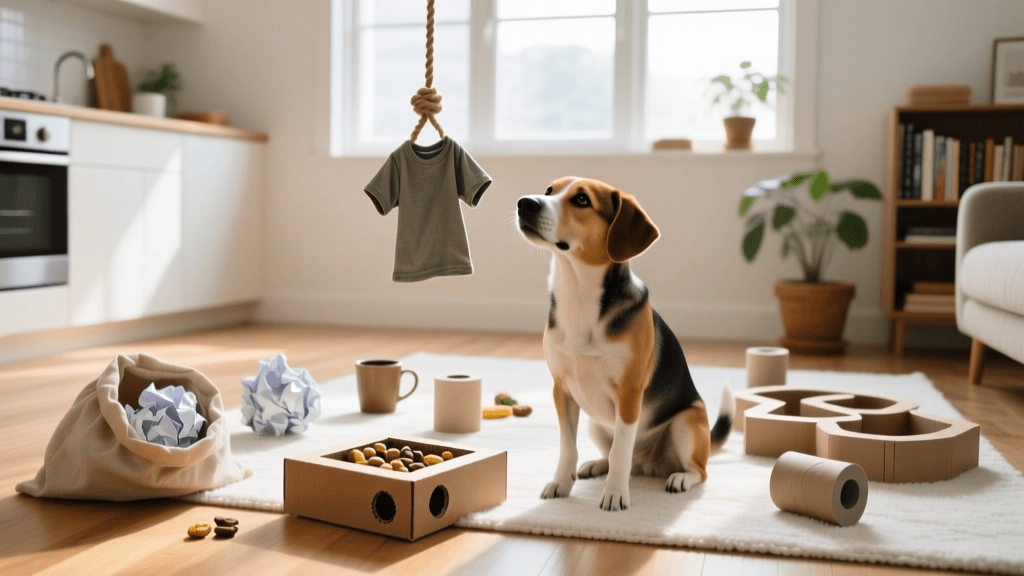
- Steps: Take a medium-sized cardboard box (remove any staples or heavy tape). Crumple up pieces of paper and toss them inside, sprinkling layers of kibble or dry treats throughout the paper. Close the flaps loosely. Your dog will have to rip, tear, and dig through the box and paper to find every last piece of food. This is an excellent rainy-day activity that burns serious mental energy.
- Cost: $0. (Commercial equivalent: $15 for disposable foraging boxes)
Pro Tip: Always measure your dog's daily kibble allowance and subtract the treats used in enrichment toys from their total daily caloric intake to prevent unwanted weight gain. Use their regular meals for these puzzles rather than adding extra calories on top.
Cost Comparison: Commercial vs. DIY Enrichment
To truly understand the financial benefits of DIY dog enrichment, let's look at the numbers. The table below compares the average retail cost of popular commercial enrichment items against the DIY alternatives detailed above.
| Enrichment Type | Commercial Example | Avg Retail Cost | DIY Alternative | Estimated DIY Cost |
|---|---|---|---|---|
| Scent Work / Foraging | Commercial Snuffle Mat | $28.00 | Fleece Sink Mat | $5.00 |
| Rolling Food Puzzle | Brand-Name Puzzle Toy | $32.00 | PVC Pipe Feeder | $6.00 |
| Cognitive Shell Game | Wooden Dog Puzzle Board | $24.00 | Muffin Tin Game | $8.00 |
| Calming Lick / Chew | Silicone Lick Mat & Spreader | $16.00 | Frozen Broth Pupsicles | $6.00 |
| Tactile Destruction | Disposable Forage Boxes | $15.00 | Cardboard Box Zone | $0.00 |
By utilizing these DIY methods, a dog owner can build a complete, multi-sensory enrichment repertoire for roughly $25, saving over $90 compared to buying commercial equivalents.
Rotating Toys to Maintain Novelty
Dogs, much like humans, suffer from habituation. If you leave the PVC puzzle feeder on the floor every single day, your dog will eventually lose interest. To maximize the lifespan and effectiveness of your DIY budget toys, implement a rotation system. Keep two or three different enrichment activities on hand and swap them out every 48 hours. Putting a toy away in a closet for a week makes it feel brand new to your dog when you bring it back out, entirely eliminating the need to constantly purchase new items to keep them engaged.
Crucial Safety Guidelines for DIY Dog Toys
While budget-friendly DIY toys are fantastic, they require a bit more oversight than heavy-duty commercial rubber toys. Always adhere to the following safety rules:
- Supervision is Mandatory: Never leave your dog alone with DIY toys, especially those involving cardboard, fleece, or PVC. You must ensure they are playing with the toy, not eating the materials.
- Check for Choking Hazards: Ensure that any holes drilled into PVC pipes are not large enough for your dog's tongue or teeth to get stuck in. Sand all edges smooth.
- Monitor Material Ingestion: Some dogs will eat cardboard or paper. While small amounts of plain paper usually pass safely, large quantities can cause gastrointestinal blockages. If your dog tries to eat the cardboard box rather than just tearing it to get the food, discontinue the activity.
- Inspect Fleece Mats Regularly: Over time, dogs may pull at the fleece strips on a snuffle mat. Trim loose threads and re-tie any knots that come undone to prevent accidental swallowing of long fabric strings.
Conclusion
Providing a rich, stimulating environment for your dog does not have to be an expensive endeavor. By looking at everyday household items through the lens of canine behavior, you can create engaging, budget-friendly puzzles that cater to your dog's natural instincts to sniff, forage, and problem-solve. Not only will these DIY projects save you a significant amount of money, but the act of building them also deepens the bond between you and your pet. Embrace the power of upcycling, rotate your creations, and watch your dog thrive mentally and emotionally without ever breaking the bank.
tom-renshaw
All our authors care for dogs every day — read more of their work on the authors page.