Leash Reactivity: Diagnosing Fear vs. Frustration in Dogs
Is your dog lunging on walks? Learn how to diagnose leash reactivity as fear or frustration and apply targeted, step-by-step training solutions.
The Leash Reactivity Epidemic: Understanding the Struggle
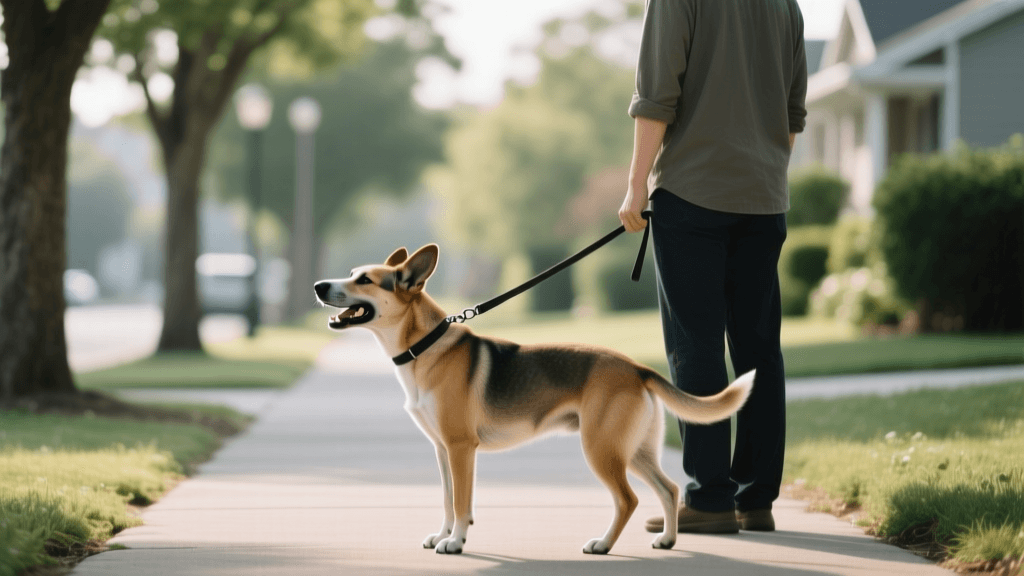
Walking your dog should be a relaxing, bonding experience, but for millions of pet owners, it is a source of immense stress, embarrassment, and physical exhaustion. Leash reactivity—characterized by barking, lunging, growling, or pulling when on a leash—is one of the most common behavioral issues reported by dog owners. According to the American Kennel Club (AKC), reactivity is not a breed-specific flaw but rather a complex emotional response to environmental triggers, most commonly other dogs, strangers, or fast-moving objects like bicycles.
The psychological toll of leash reactivity is significant. Owners often begin to avoid walks altogether, leading to a decline in their dog's physical health and mental stimulation. The dog, in turn, becomes more pent-up, exacerbating the behavioral issue. To solve this problem, we must first act as canine detectives. Treating all reactivity with a blanket 'correction' approach is a recipe for failure. The cornerstone of effective behavioral modification lies in accurately diagnosing the root cause: is your dog reacting out of fear, or are they reacting out of barrier frustration?
Problem Diagnosis: Fear vs. Frustration
The most critical mistake owners and novice trainers make is assuming that a barking, lunging dog is 'aggressive' or 'dominant.' In reality, true aggression is rare; most leash reactivity is driven by big emotions that the dog does not know how to process. Identifying whether your dog is experiencing fear or frustration will completely change your training protocol.
Fear-Based Reactivity (Distance-Increasing Behavior)
A fear-reactive dog is essentially saying, 'I am terrified, and I need this trigger to go away.' The leash acts as a trap, removing the dog's natural flight response. Because they cannot run away, they resort to a 'fight' display to make the scary thing leave. According to Fear Free Pets, fear-based reactivity is often rooted in inadequate socialization during the critical developmental window (3 to 14 weeks of age), past traumatic experiences, or genetic predispositions to anxiety.
Body Language Cues of Fear:
- Pinned back ears and a tightly tucked tail.
- 'Whale eye' (showing the whites of the eyes) and a tense, closed mouth.
- Lowered body posture, cowering, or attempting to hide behind the owner.
- Lunging is often frantic, followed by immediate retreating if the leash allows.
Frustration-Based Reactivity (Barrier Frustration)
Frustration-based reactivity, often called 'barrier frustration,' occurs when a highly social, excited dog is prevented from reaching a trigger they desperately want to interact with. The leash acts as a physical barrier. The dog's arousal levels spike, and the inability to reach the other dog results in a tantrum-like display of barking and pulling. Once the leash is removed, these dogs often greet other dogs with loose, wiggly, and appropriate play behavior.
Body Language Cues of Frustration:
- Loose, rapid, and wide tail wagging (often involving the whole rear end).
- Play bows, whining, and high-pitched barking.
- Forward-leaning posture, straining at the end of the leash with a relaxed, open mouth.
- Grabbing the leash in their mouth or mouthing the owner's hands out of sheer over-arousal.
Comparison Chart: Fear vs. Frustration
| Diagnostic Feature | Fear-Based Reactivity | Frustration-Based Reactivity |
|---|---|---|
| Primary Emotion | Anxiety, terror, defensiveness | Over-arousal, excitement, impatience |
| Tail Carriage | Tucked, stiff, or low and slow | High, loose, rapid, wide sweeping |
| Ear Position | ||
| Off-Leash Behavior | Avoidance, hiding, or defensive snapping | Appropriate, playful social greetings |
| Training Goal | Desensitization and building confidence | Impulse control and emotional regulation |
Essential Gear for Reactive Dog Walks
Before implementing any training protocol, you must ensure your equipment is safe, humane, and designed to give you mechanical advantage without causing pain. Pain-inducing tools like prong collars, choke chains, or e-collars can suppress warning signs and inadvertently worsen fear-based reactivity by associating the trigger with physical pain.
- The Harness: Opt for a front-clip, no-pull harness. The Rabbitgoo No-Pull Dog Harness (Cost: $25-$30) or the Kurgo Tru-Fit Smart Harness (Cost: $40) are excellent choices. A front-clip redirects the dog's momentum back toward you when they lunge, safely disrupting the pulling behavior without damaging their trachea.
- The Leash: Ditch the retractable leash immediately. Retractable leashes (like the Flexi Classic) teach dogs that pulling yields more distance, and they offer zero control in an emergency. Use a standard 6-foot nylon or leather leash. The Mendota Products Slip Lead or a standard 6-foot leather leash (Cost: $20-$35) provides the perfect balance of freedom and control.
- The Treat Pouch: You need rapid access to rewards. The Ruffwear Treat Trader (Cost: $35) or the PetSafe Treat Pouch (Cost: $15) clips securely to your waist, allowing you to deliver treats within the critical 1.5-second marking window.
- High-Value Treats: Dry kibble will not cut it in high-stress environments. Use Zuke's Mini Naturals (Cost: $6/bag), boiled chicken breast, or freeze-dried beef liver (Cost: $15). The treats must be pea-sized to prevent the dog from getting full and to allow for rapid, repetitive consumption.
Step-by-Step Solution: The Engage-Disengage Game
Whether your dog is fearful or frustrated, the gold standard for modifying leash reactivity is a protocol known as the Engage-Disengage game, heavily popularized by certified behavior consultants. This method relies on classical counter-conditioning and operant conditioning to change the dog's emotional response to their trigger. The Preventive Vet emphasizes that managing the dog's environment to keep them 'sub-threshold' (below the point of reactive explosion) is the key to success.
Step 1: Find the Sub-Threshold Distance
Your dog has an invisible 'bubble' around them. If a trigger enters this bubble, they react. Your first job is to find the edge of that bubble. For some dogs, this is 10 feet; for others, it is 50 feet. Start your training at a distance where your dog can see the trigger but remains calm enough to take a treat gently from your hand. If they are staring hard, panting heavily, or refusing the treat, you are too close. Increase the distance immediately.
Step 2: Engage (Mark the Look)
When your dog notices the trigger (the 'Engage' phase), wait exactly 1 to 1.5 seconds. Do not wait for them to bark or lunge. The moment they look at the trigger and remain silent, use a verbal marker like 'Yes!' or click a Karen Pryor Clicker (Cost: $8). This marks the exact behavior you are rewarding: noticing the trigger without reacting.
Step 3: Disengage (Deliver the Reward)
Immediately after marking, present the high-value treat. The dog should turn away from the trigger to eat the treat (the 'Disengage' phase). Feed the treat at your hip or slightly behind you to encourage the dog to turn their body away from the trigger. Repeat this process 10 to 15 times per session. Keep sessions short—no longer than 15 minutes—to prevent cognitive fatigue and cortisol buildup.
Step 4: Shrinking the Bubble
Over weeks and months, as your dog begins to voluntarily look at the trigger and then immediately look back at you (an 'auto-check-in'), you can begin to decrease the distance by 2 to 3 feet per session. If the dog reacts, you have moved too fast. Simply increase the distance and return to Step 1. Patience is mandatory; neurological rewiring takes time.
Management and Environmental Setup
Training only accounts for 10% of your dog's week; management accounts for the other 90%. Every time your dog practices a reactive outburst, the neural pathways associated with that behavior are strengthened. You must prevent rehearsals of the bad behavior while the training protocol takes effect.
- Time of Day: Walk your dog during 'low-traffic' hours. Early mornings (before 7:00 AM) or late evenings (after 9:00 PM) drastically reduce the likelihood of encountering off-leash dogs or joggers.
- Route Selection: Avoid narrow sidewalks where you can be trapped. Opt for wide parks, empty parking lots, or industrial areas on weekends where you have 360-degree visibility and ample space to perform emergency U-turns.
- The Emergency U-Turn: Teach a 'Let's Go!' cue in a low-distraction environment like your living room. Say 'Let's Go!', turn 180 degrees, and run a few steps, rewarding heavily when the dog catches up. Use this in the real world when a trigger suddenly appears around a blind corner.
When to Call a Professional
While many dogs improve with dedicated owner-led protocols, some cases require professional intervention. If your dog has a bite history, if their reactivity is causing you physical injury, or if you are seeing no improvement after 6 to 8 weeks of consistent sub-threshold training, it is time to hire a certified professional. Look for a Certified Professional Dog Trainer (CPDT-KA) or a Veterinary Behaviorist (DACVB) who utilizes force-free, science-based methods. Expect to pay between $100 and $150 per hour for private, in-person behavior modification sessions. Avoid trainers who guarantee a 'quick fix' or who advocate for alpha rolls and dominance theory, as these methods will severely damage your bond and exacerbate fear-based reactivity.
Conclusion
Leash reactivity is a symptom of an underlying emotional state, not a character flaw. By taking the time to accurately diagnose whether your dog is driven by fear or frustration, you can tailor your approach to meet their specific psychological needs. Equipped with the right front-clip harness, high-value rewards, and a structured Engage-Disengage protocol, you can slowly change your dog's emotional response to the world. Progress may be measured in inches rather than miles, but with consistency, patience, and empathy, peaceful walks are entirely within your reach.
jonas-cole
All our authors care for dogs every day — read more of their work on the authors page.