Diagnosing and Solving First-Night Puppy Crate Crying
Is your new puppy crying in the crate? Learn how to diagnose the root cause of first-night whining and apply proven, step-by-step solutions for peaceful sleep.
The First-Night Nightmare: Why Puppies Cry in the Crate
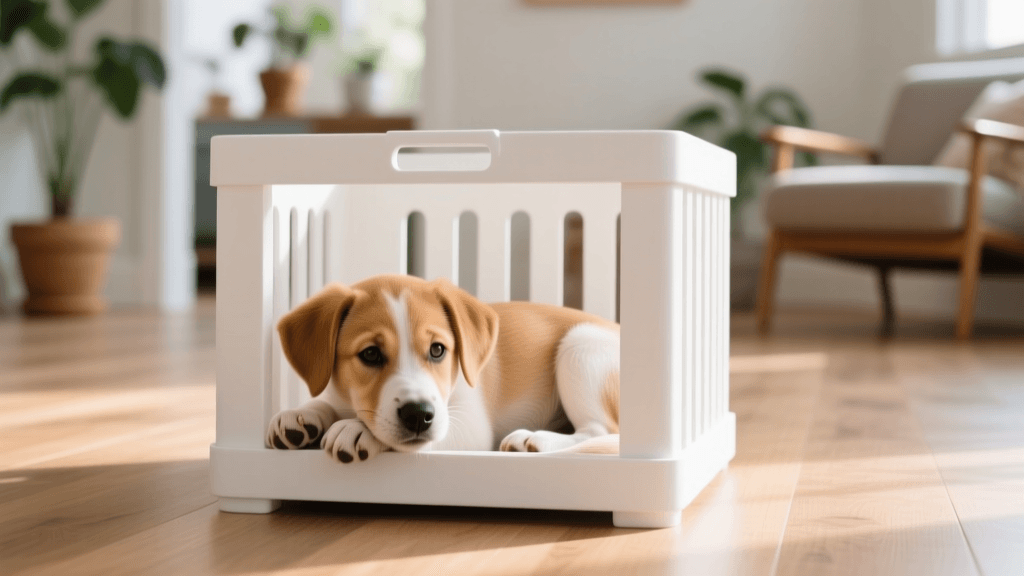
Bringing a new puppy home is one of the most exciting milestones in a dog owner's life. However, that excitement often comes to a screeching halt at 2:00 AM when your new furry companion begins wailing from inside their crate. First-night crate crying is arguably the most universal problem new dog owners face. It leads to sleep deprivation, frustration, and often, the unintentional reinforcement of bad habits.
As a new owner, it is crucial to shift your perspective: your puppy is not crying to manipulate you or be defiant. Crying is a form of communication and a symptom of an unmet need or environmental stressor. By adopting a problem-diagnosis mindset, you can identify the root cause of the distress and apply targeted, effective solutions. According to the American Kennel Club (AKC), the crate should be introduced as a safe sanctuary, and understanding why a puppy rejects that sanctuary on the first night is the key to long-term training success.
Diagnosing the Root Cause of Crate Crying
Before you can solve the problem, you must accurately diagnose it. Puppy crying generally falls into three distinct categories: biological needs, environmental overstimulation, and psychological distress.
1. Biological Needs (Potty or Hunger)
Puppies have tiny bladders and high metabolic rates. The general rule of thumb for bladder control is the puppy's age in months plus one. Therefore, an eight-week-old (two-month-old) puppy can physically hold their bladder for a maximum of three hours during the day, but often less at night when they are restless. If your puppy wakes up crying and it has been more than two hours since their last potty break, biology is the likely culprit.
2. Environmental Overstimulation
Puppies are highly sensitive to their surroundings. A crate placed in a high-traffic hallway, a room with fluctuating temperatures, or an area with sudden noises (like an ice maker or street traffic) can trigger anxiety. Puppies are most comfortable in ambient temperatures between 75°F and 80°F. If the room is too cold or the crate is positioned near a drafty window, physical discomfort will manifest as whining.
3. Separation Anxiety and Isolation Distress
For the first eight weeks of its life, your puppy slept in a warm pile of littermates. Suddenly being placed in a wire or plastic box alone in a dark room triggers a primal survival instinct. Isolation distress is the most common cause of continuous, high-pitched crying on the first night. The puppy is essentially calling out to its pack for reassurance.
The Problem-Solution Matrix: Crate Crying Diagnostics
Use the following diagnostic table to quickly identify the type of crying your puppy is experiencing and apply the correct immediate solution.
| Symptom / Cry Type | Probable Cause | Immediate Solution |
|---|---|---|
| High-pitched, continuous, panicked wailing | Isolation Distress / Fear | Move crate to bedroom, introduce heartbeat toy, drape a breathable cover over the crate. |
| Intermittent whining, scratching at the door, pacing | Biological Need (Potty) | Execute a 'boring' potty break immediately. No play, no talking, straight back to the crate. |
| Whining followed by chewing on crate bars or bedding | Boredom / Under-tired | Puppy needs more physical and mental enrichment before bed. Introduce a frozen KONG toy. |
| Shivering, curled in a tight ball, soft whimpering | Temperature / Draft | Check room thermostat. Add a pet-safe snuggle pad or move the crate away from AC vents. |
Actionable Solutions for a Peaceful Night
Once you have diagnosed the likely triggers, you can implement a structured environment and routine to mitigate them. The ASPCA emphasizes that proper crate sizing and environmental management are foundational to preventing distress.
Step 1: Optimize the Crate Environment (Products & Costs)
Your crate setup should mimic the warmth and security of a den while preventing accidents.
- Proper Sizing: The crate must be large enough for the puppy to stand, turn around, and lie down, but no larger. Excess space allows the puppy to soil one corner and sleep in the other. For a medium-breed puppy, buy a 36x23x25 inch wire crate (approx. $60) and use the included wire divider panel to shrink the space to 18x12 inches.
- Simulated Littermates: Invest in a behavioral aid like the SmartPetLove Snuggle Puppy (approx. $45). This plush toy features a battery-operated heartbeat simulator and a heat pack, which drastically reduces isolation distress by mimicking a sleeping mother or sibling.
- Sensory Deprivation: Cover the crate with a breathable, dark blanket or a specialized crate cover (approx. $25) to block visual stimuli. Pair this with a white noise machine (like the Marpac Dohm, approx. $50) placed near the crate to drown out household sounds.
Step 2: Implement the 'Tire and Settle' Routine
A puppy that hasn't burned off enough energy will not sleep. However, overstimulating a puppy right before bed will result in an overtired, cranky pup that cannot self-soothe. Follow this exact evening timeline:
- 5:30 PM: Serve the final meal of the day. Remove the bowl after 15 minutes.
- 6:30 PM: Engage in active play and training (tug, fetch, basic commands) to drain physical and mental energy.
- 7:30 PM: Pick up the water bowl to minimize midnight bladder pressure.
- 9:00 PM: Transition to 'calm mode.' Dim the lights, offer a frozen KONG Classic (approx. $15) stuffed with plain pumpkin or puppy-safe peanut butter to encourage soothing chewing behavior.
- 10:30 PM: Final potty break outside, followed immediately by crating.
Step 3: Strategic Midnight Potty Breaks
Set an alarm for 2.5 to 3 hours after the puppy falls asleep. Do not wait for the puppy to wake you up crying; if you preempt the biological need, you remove the puppy's ability to associate crying with getting out of the crate. When the alarm goes off, carry or leash the puppy outside in silence. Use a specific potty command, wait for them to eliminate, reward quietly with a small treat, and return them directly to the crate. Keep the lights low and avoid eye contact or talking.
What NOT to Do: Common Mistakes That Worsen Crying
When sleep-deprived, owners often make reactive decisions that sabotage crate training. Avoid these critical errors:
- Never use the crate as punishment. The crate must remain a positive, safe zone. VCA Animal Hospitals warns that associating the crate with negative experiences will create long-term phobias.
- Do not let the puppy out while they are actively crying. If you open the crate door while the puppy is barking, you have just taught them that barking is the key to unlocking the door. Wait for a three-second pause in the crying before opening the latch.
- Avoid emotional farewells or greetings. When putting the puppy to bed, do not coo, hug, or say 'it's okay' in a high-pitched voice. This validates their anxiety. Simply place them in the crate, give a calm 'goodnight,' and walk away.
Expert Insight: 'Puppies thrive on predictability. The more consistent you are with your feeding times, potty breaks, and crate expectations, the faster the puppy's brain will map out the routine and accept the crate as a place of rest rather than a place of confinement.'
Understanding the 'Extinction Burst'
If you are transitioning a puppy who has previously been allowed to sleep in your bed to a crate, or if you are actively ignoring demand-crying, you will likely encounter an 'extinction burst.' This is a well-documented behavioral phenomenon where a behavior temporarily worsens before it stops. The puppy will cry louder, longer, and more desperately because the old tactic (crying to get attention) is no longer working, so they try harder.
This is the critical breaking point for most owners. You must remain entirely stoic during an extinction burst. If you give in after 45 minutes of crying, you have just taught the puppy that the 'price' of getting out of the crate is 45 minutes of continuous barking. Use earplugs, move the crate to a distant room if the noise is unbearable, and trust the process. The burst usually lasts only one to three nights before the puppy realizes the new boundary is firm.
When to Seek Professional Help
While first-night crying is normal, certain signs indicate a deeper issue that requires professional intervention. If your puppy is injuring themselves trying to escape the crate (broken teeth, bloody paws, excessive panting, or diarrhea), they may be suffering from severe clinical separation anxiety or confinement phobia. In these cases, consult a certified veterinary behaviorist or a professional dog trainer who utilizes fear-free, positive reinforcement methods to develop a customized desensitization protocol.
Conclusion
Solving first-night puppy crate crying requires patience, preparation, and a diagnostic approach. By ensuring the crate is the correct size, managing the evening feeding and potty schedule, and providing comforting tools like heartbeat toys and white noise, you can drastically reduce your puppy's stress. Remember that you are teaching your dog a lifelong skill: the ability to self-soothe and feel secure in their own space. Stay consistent, trust the routine, and look forward to the quiet, peaceful nights that are just around the corner.
hannah-wickes
All our authors care for dogs every day — read more of their work on the authors page.