2026 Diabetic Alert Puppy Guide: Early Scent Imprinting
Learn how to start early scent imprinting for diabetic alert service puppies in 2026. Discover safe swabbing techniques, timelines, and gear.
Introduction to Diabetic Alert Dog Training in 2026
Raising a Diabetic Alert Dog (DAD) is one of the most rewarding yet demanding journeys in the service dog community. As we navigate 2026, the demand for highly accurate metabolic alert dogs has surged, driven by advancements in canine olfactory science and a deeper understanding of early neurological development in working breeds. Unlike traditional guide or mobility dogs, a DAD must be trained to detect invisible chemical changes in a human's breath or sweat, specifically the volatile organic compounds (VOCs) associated with hypoglycemia and hyperglycemia.
The foundation of this life-saving skill is not built in formal obedience classes; it begins during the critical socialization and imprinting windows of the puppy's first eight weeks of life. Early Scent Imprinting (ESI) introduces the puppy to the target odor in a positive, low-stress environment, wiring their brain to associate the scent with high-value rewards. According to the Assistance Dogs International (ADI), puppies that undergo structured scent imprinting before leaving the breeder or foster home show a significantly higher success rate in formal service dog placement programs.
The Olfactory Science of Hypoglycemia Detection
Dogs possess up to 300 million olfactory receptors, compared to our mere six million. When a person with insulin-dependent diabetes experiences a rapid drop in blood glucose, their body undergoes metabolic stress. This stress triggers the release of isoprene and other specific VOCs through the breath and skin. In 2026, veterinary behaviorists and scent-work researchers have confirmed that puppies can be conditioned to recognize these microscopic chemical shifts long before they understand formal obedience commands.
By introducing the scent of hypoglycemic swabs during the puppy's neonatal and transitional periods, handlers can create a deep-seated neurological pathway. The puppy learns that the smell of isoprene predicts a reward, transforming a biological anomaly into a clear, actionable cue.
Essential 2026 Scent Training Gear and Kits
To begin early scent imprinting safely, you must use sterile, uncontaminated equipment. The market for service dog training gear has evolved, offering specialized kits designed specifically for metabolic alert dogs. Below is a comparison of the top-rated scent imprinting kits available in 2026.
| Kit Name | Price (2026) | Best For | Key Features |
|---|---|---|---|
| ScentLogix Pro DAD Kit | $89.00 | Professional Trainers | Includes cryo-vials, sterile swabs, and UV-sanitizing case. |
| K9 ScentWorks Starter | $45.00 | Novice Handlers | Basic glass scent tubes, cotton swabs, and treat pouch. |
| BioSwab 2026 Edition | $65.00 | Long-term Storage | Medical-grade swabs with 12-month scent preservation seals. |
When selecting a kit, ensure the scent tubes are made of non-porous materials like glass or medical-grade stainless steel. Plastic can absorb odors over time, leading to cross-contamination and false alerts later in the dog's career.
The 8-Week Early Scent Imprinting Protocol
The following protocol is designed for puppies aged three to eight weeks. Sessions should be kept incredibly short—no more than two to three minutes—to prevent cognitive fatigue and scent blindness.
Phase 1: Passive Scent Association (Weeks 3 to 4)
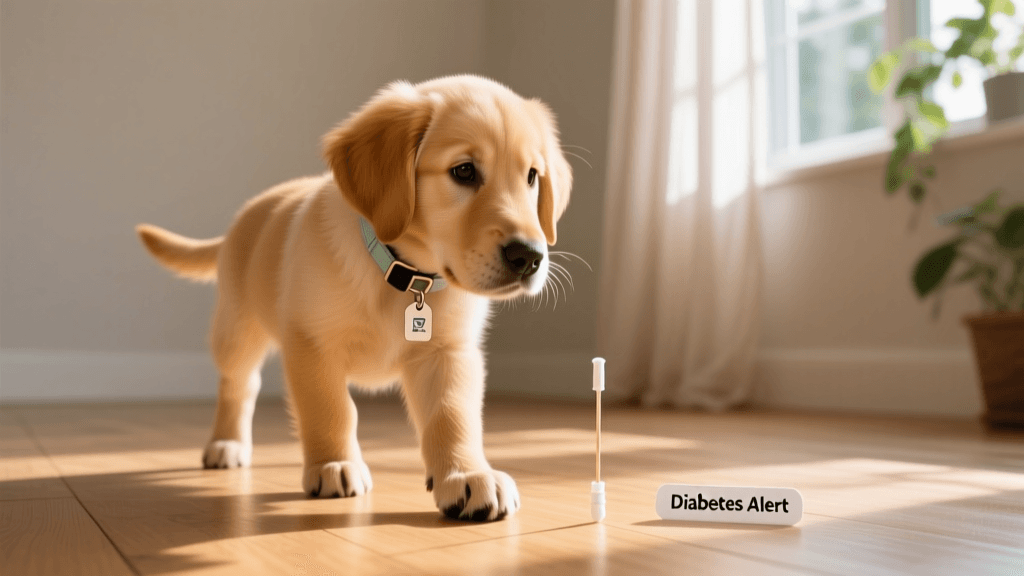
During the transitional period, the puppy's eyes and ears are opening, and their olfactory system is rapidly developing. At this stage, the goal is passive exposure. Place a sterile cotton swab that has been exposed to a hypoglycemic sample (safely sealed inside a wire mesh or perforated scent tube) near the puppy's nesting area. Do not force the puppy to interact with it. Simply allow the scent to become a familiar, background part of their environment. Pair the presence of the scent tube with gentle petting and the mother's presence to create a subconscious association with safety and comfort.
Phase 2: Active Alert Shaping (Weeks 5 to 6)
As the puppy becomes more mobile and food-motivated, you can transition to active imprinting. Hold the sealed scent tube in your hand. The moment the puppy sniffs the tube, mark the behavior with a clicker or a verbal "yes" and immediately deliver a high-value reward, such as a lick of puppy-safe peanut butter or a small piece of boiled chicken. Repeat this process in various locations around the whelping area to build a strong operant conditioning loop: Scent = Reward.
"In 2026, we emphasize the 'hide and seek' methodology for week-six puppies. By placing the scent tube under a light cloth and rewarding the puppy for uncovering it, we tap into their natural foraging instincts, making the scent hunt intrinsically rewarding." - Canine Olfaction Research Journal, 2026
Phase 3: Distraction Proofing (Weeks 7 to 8)
Before the puppy transitions to their permanent handler or foster home, they must learn to discriminate the target scent from environmental odors. Introduce "distractor" scents, such as a tube containing plain cotton or a tube containing a harmless food odor. Only reward the puppy when they indicate the correct hypoglycemic tube. This discrimination phase is critical for preventing false alerts in real-world scenarios.
Nutrition and Joint Care for Future Working Dogs
A Diabetic Alert Dog must be physically capable of performing tasks like retrieving medical kits, opening doors, or providing deep pressure therapy. Therefore, early nutritional management is just as important as scent training. In 2026, the American Association of Feed Control Officials (AAFCO) and veterinary nutritionists strongly recommend feeding large-breed service dog candidates a diet specifically formulated to control growth rates and support joint cartilage development.
- Caloric Restriction: Avoid free-feeding. Overfeeding can lead to rapid bone growth, increasing the risk of hip and elbow dysplasia.
- Omega-3 Fatty Acids: Supplement with EPA and DHA to reduce joint inflammation and support cognitive development during scent training.
- Controlled Exercise: Limit forced exercise (like jogging or repetitive fetching) on hard surfaces until the puppy's growth plates close, typically between 18 and 24 months of age.
For more comprehensive guidelines on raising a working prospect, the American Kennel Club (AKC) provides excellent resources on structuring a puppy's physical and mental development.
Common Pitfalls in Early Scent Imprinting
Even well-meaning handlers can make mistakes that compromise a puppy's scent discrimination abilities. Avoid these common errors:
- Scent Contamination: Always wear nitrile gloves when handling swabs and scent tubes. Human skin oils, lotions, and soaps can easily contaminate the sample, teaching the dog to alert on the handler's scent rather than the metabolic VOCs.
- Over-training: Puppies have limited attention spans. Training sessions that exceed five minutes can lead to "scent fatigue," where the puppy becomes temporarily anosmic (unable to smell) to the target odor due to olfactory receptor saturation.
- Punishing False Alerts: During the imprinting phase, never scold a puppy for offering an alert behavior to the wrong item. Simply withhold the reward and reset the exercise. Punishment creates anxiety, which elevates the puppy's cortisol levels and impairs their olfactory processing.
Legal and Public Access Preparations
While early scent imprinting focuses on the dog's skills, handlers must also prepare for the legal realities of public access. The American Veterinary Medical Association (AVMA) notes that understanding local and federal service animal laws is crucial for any handler. In 2026, public access training for DADs heavily emphasizes "task-trained" behaviors over simple emotional support. Ensuring your puppy's foundational scent work is meticulously documented will be vital when transitioning into formal public access evaluations later in their first year.
Conclusion
Raising a Diabetic Alert puppy requires a delicate balance of scientific precision, patience, and profound empathy. By utilizing the 2026 Early Scent Imprinting protocols, investing in high-quality, uncontaminated gear, and prioritizing the puppy's physical and mental well-being, you are laying the groundwork for a dog that will not only change a life but potentially save one. The first eight weeks are fleeting, but the olfactory pathways you build during this time will last a lifetime.
anouk-beaumont
All our authors care for dogs every day — read more of their work on the authors page.