Psychiatric Service Dog Training 2026: Deep Pressure Therapy Guide
Master Deep Pressure Therapy (DPT) for psychiatric service dogs in 2026. Learn step-by-step task training, ADA public access rules, and cueing techniques.
Introduction to Psychiatric Service Dogs and DPT in 2026
Psychiatric service dogs (PSDs) represent a vital lifeline for individuals navigating severe mental health conditions, including post-traumatic stress disorder (PTSD), severe anxiety, and dissociative disorders. As we move through 2026, the methodologies for training these remarkable animals have become more refined, heavily emphasizing positive reinforcement, bio-feedback integration, and rigorous public access proofing. Among the most critical and highly requested tasks for PSDs is Deep Pressure Therapy (DPT). Unlike simple comfort behaviors or the presence of an emotional support animal, DPT is a trained, deliberate task that mitigates a specific disability, granting the dog full public access rights under federal law.
Training a service dog requires immense dedication, precise timing, and a deep understanding of canine behavior. In this comprehensive 2026 guide, we will break down the exact steps to train Deep Pressure Therapy, the essential gear required, and how to navigate public access laws to ensure your working dog is prepared for any environment.
The Science and Mechanics of Deep Pressure Therapy
Deep Pressure Therapy involves the dog using its body weight to apply firm, tactile pressure across the handler's chest, lap, or legs. This proprioceptive input stimulates the parasympathetic nervous system, effectively lowering heart rate, reducing cortisol levels, and interrupting panic attacks, night terrors, or dissociative episodes. In 2026, veterinary behaviorists and assistance dog organizations continue to validate DPT as a cornerstone task for psychiatric mitigation. The mechanics require the dog to remain completely still and relaxed while applying weight, which contrasts sharply with active alert tasks like fetching medication or guiding a handler to an exit. Because the dog must maintain a stationary position for extended periods, impulse control and duration training are the foundational pillars of DPT conditioning.
Step-by-Step DPT Task Training Protocol
Phase 1: Shaping the Lap Target and Chin Rest
The first step in DPT training is teaching the dog to target your lap or chest on cue. Begin in a low-distraction environment, such as your living room, seated on the floor or a low couch. Using a high-value treat lure, guide your dog's front paws onto your lap. The moment both paws make contact, mark the behavior with a clicker or a verbal 'Yes!' and deliver the reward. Repeat this process until the dog confidently places its paws on your lap without hesitation. Once the paw target is solid, introduce the chin rest. Lure the dog's head down so its chin rests on your knee or chest. Mark and reward. This dual-targeting ensures the dog's weight is evenly distributed and its head is tucked, preventing it from scanning the environment for distractions.
Phase 2: Adding Weight, Paws Up, and Duration
Once the dog understands the physical positioning, you must shape the 'heavy' behavior. Many dogs naturally lean into their handlers, which is excellent for DPT. When the dog is in the lap-target position, wait for it to shift its weight backward or lean against you. Mark and reward that specific weight shift. Gradually increase the criteria: require the dog to hold the position for three seconds, then five, then ten. In 2026, modern training protocols recommend using a variable reinforcement schedule during this phase to build resilience. Reward heavily for longer durations, but occasionally reward for shorter holds to keep the dog engaged and guessing. If the dog breaks position, simply reset without marking or rewarding, and ask for the behavior again.
Phase 3: Fading the Lure and Adding the Verbal Cue
Lures must be faded quickly to ensure the dog is responding to a cue, not just following food. Begin hiding the treat in your opposite hand or a treat pouch. Use a distinct hand signal, such as patting your chest or lap, paired with a clear verbal cue like 'Pressure' or 'Heavy'. According to the Assistance Dogs International (ADI) standards, service dogs must respond reliably to both verbal and silent hand signals, as handlers may be unable to speak during a severe psychiatric episode. Practice the silent hand signal extensively in various positions: seated in a chair, lying in bed, or reclining on the floor.
Essential Gear for DPT and Public Access Training
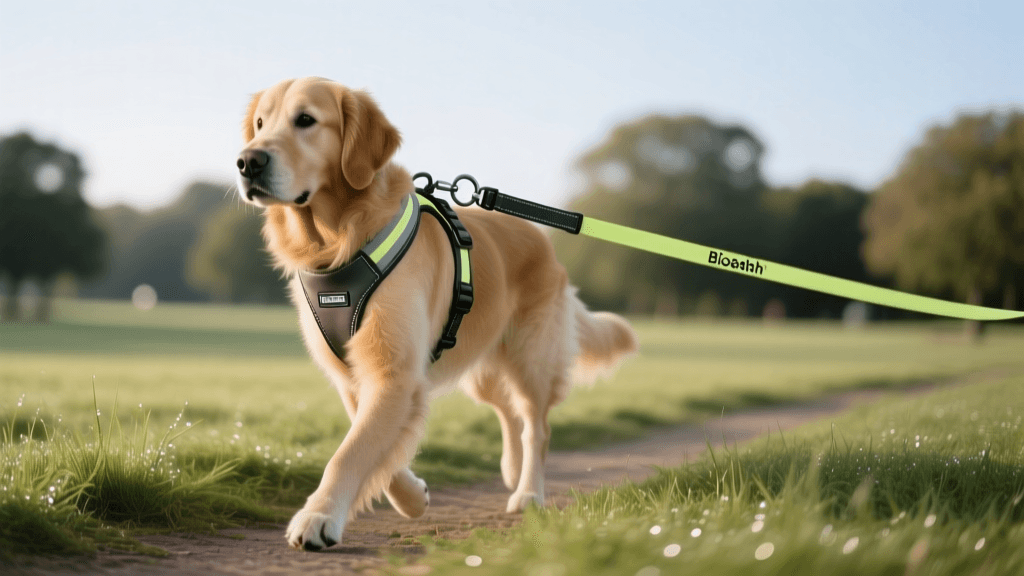
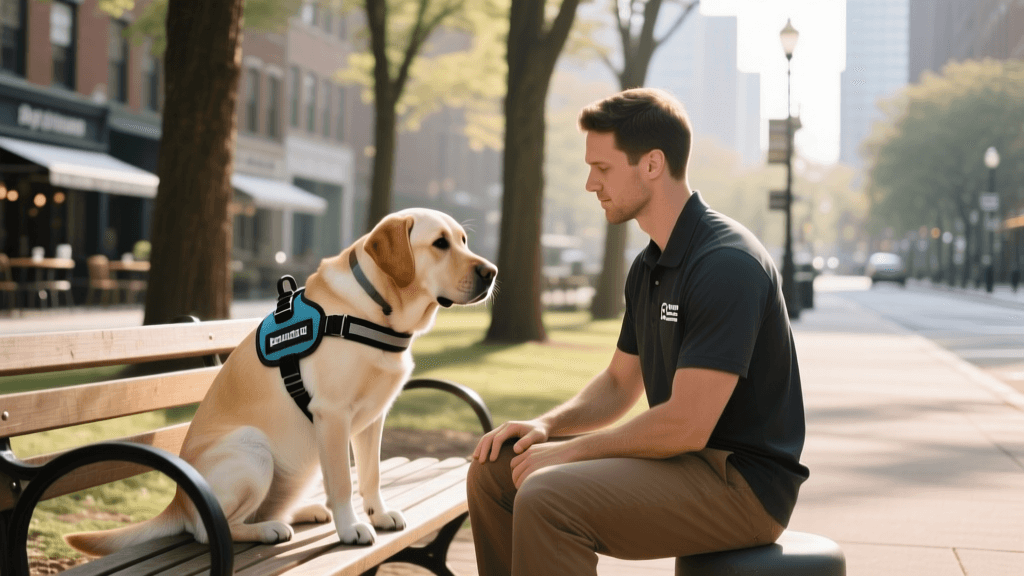
Equipping your PSD with the correct gear is vital for public access and task execution. The right harness provides the handler with stability and signals to the public that the dog is working. Below is a comparison of essential gear for DPT training in 2026.
| Gear Item | Purpose in DPT Training | 2026 Estimated Cost | Top Recommendation |
|---|---|---|---|
| Bio-Feedback Service Vest | Signals working mode; provides handle for handler stability during grounding | $145 - $185 | Working Dog 2026 Pro-Harness |
| Orthopedic Lap Mat | Provides tactile boundary for the dog; protects handler's legs from claws | $35 - $50 | K9 Tactile Target Pad |
| Clicker with Target Stick | Precise marking of weight-shifting behaviors during initial shaping phases | $15 - $25 | Rapid-Click Telescopic Wand |
| High-Value Treat Pouch | Allows hands-free reward delivery while maintaining DPT physical contact | $25 - $40 | Magnetic-Closure K9 Pouch |
Navigating 2026 ADA Guidelines and Public Access
Understanding your rights is just as important as training the dog. Under the U.S. Department of Justice ADA Service Animal Guidelines, psychiatric service dogs are granted the same public access rights as mobility or guide dogs. Businesses and public facilities must allow your PSD to accompany you anywhere the public is permitted. Staff members are legally restricted to asking only two questions: (1) Is the dog a service animal required because of a disability? and (2) What work or task has the dog been trained to perform? They cannot demand documentation, ask about the nature of your psychiatric disability, or require the dog to demonstrate the task on the spot.
However, the ADA also mandates that the dog must be under the handler's control at all times and must not pose a direct threat to the health or safety of others. This means your DPT-trained PSD must remain entirely focused on you in crowded restaurants, airports, and retail stores. If the dog barks, lunges, or breaks its DPT task to interact with strangers, a business has the right to ask you to remove the animal. This underscores the necessity of rigorous public access proofing.
Proofing the Task in High-Distraction Environments
A dog that performs flawless Deep Pressure Therapy in your living room may completely shut down or become distracted in a busy airport terminal. Proofing is the process of generalizing the behavior across different environments, surfaces, and distraction levels. Begin by practicing DPT in your backyard, then on your front porch, and eventually in a quiet park. Gradually introduce auditory and visual distractions. Have a friend drop a set of keys, open an umbrella, or walk past with another dog on a leash. Your PSD must learn to maintain its heavy pressure and chin rest despite these environmental triggers.
In 2026, many professional service dog trainers utilize the 'Distraction Matrix'—a structured chart that slowly increases the intensity of distractions while simultaneously decreasing the distance between the dog and the trigger. If your dog breaks the DPT hold, you have moved too far down the matrix too quickly. Return to a lower distraction level, reinforce heavily for success, and build back up. Remember that public access training is a marathon, not a sprint. It typically takes 18 to 24 months to fully proof a psychiatric service dog for complex public environments.
Troubleshooting Common DPT Challenges
Even with meticulous training, handlers may encounter hurdles. One common issue is the dog falling asleep during extended DPT sessions. While relaxation is the goal, the dog must remain responsive to a release cue. If the dog dozes off, gently stroke its ear or use a soft verbal cue to bring it back to a state of alert relaxation. Another challenge is the dog sliding off the handler's lap due to slick clothing materials. Using the aforementioned orthopedic lap mat provides the necessary friction for the dog's paws to grip, ensuring a stable and effective pressure application. Finally, some dogs may attempt to 'nuzzle' or lick the handler instead of applying static weight. This is a comfort behavior, not a trained task. Withhold the click and reward until the dog settles into a still, heavy lean.
Conclusion
Training a psychiatric service dog to perform Deep Pressure Therapy is a profound journey that enhances the handler's independence and emotional regulation. By adhering to structured shaping protocols, utilizing the proper 2026 tactical gear, and rigorously proofing the behavior against real-world distractions, you can forge an unbreakable working partnership. Always stay informed on current ADA regulations and lean on the resources provided by accredited assistance dog organizations to ensure your team thrives in any public setting.
anouk-beaumont
All our authors care for dogs every day — read more of their work on the authors page.