Decoding Puppy Calming Signals For 2026 Socialization
Learn to decode puppy calming signals and stress signs in 2026. Protect your pup's mental health during early socialization with expert body language tips.
The Hidden Language of Puppies
Welcoming a new puppy into your home is one of life's greatest joys, but it also comes with the profound responsibility of understanding their complex emotional world. As we navigate puppy rearing in 2026, the consensus among veterinary behaviorists has shifted heavily toward prioritizing mental health and emotional regulation alongside physical health. Puppies do not come with a spoken vocabulary, but they are constantly communicating. From the moment they open their eyes, they utilize a sophisticated repertoire of body language to express their feelings, intentions, and stress levels. Unfortunately, many new owners misinterpret these subtle cues, leading to forced interactions that can trigger fear-based behavioral issues later in life. Understanding canine communication is not just about preventing bites; it is about building a foundation of trust and ensuring your puppy's early socialization is genuinely positive.
What Are Calming Signals?
The concept of 'calming signals' was pioneered by Norwegian canine behavior expert Turid Rugaas, and her foundational work remains a cornerstone of modern dog training. Calming signals are subtle, involuntary physical gestures that dogs use to self-soothe, de-escalate tension, and communicate peaceful intentions to other dogs and humans. In 2026, ASPCA's guide to canine body language continues to emphasize that recognizing these signals early in a puppy's development is critical for preventing chronic anxiety. When a puppy displays a calming signal, they are essentially saying, 'I am feeling overwhelmed, please give me space,' or 'I mean no harm, please do not be aggressive with me.' Ignoring these signals and forcing a puppy to endure a stressful situation can lead to 'learned helplessness' or reactive aggression.
Top 7 Puppy Calming Signals and Stress Indicators
To become a fluent speaker of 'dog,' you must learn to identify the most common calming signals. Here are the seven most critical indicators you will see during your puppy's first year:
1. Yawning Out of Context
While puppies naturally yawn when waking up or preparing for sleep, yawning during a stressful event—such as being held tightly by a stranger, visiting the vet, or during a loud thunderstorm—is a primary calming signal. It is a physiological response to a spike in cortisol, attempting to regulate the nervous system.
2. Lip Licking or Nose Flicking
If your puppy rapidly flicks their tongue over their nose or licks their lips when not eating or anticipating a treat, they are signaling appeasement and mild stress. This is often the very first sign of discomfort in a new social setting.
3. 'Whale Eye' (Showing the Whites of the Eyes)
When a puppy turns their head slightly away from a stressor but keeps their eyes fixed on it, exposing the crescent-shaped whites of their eyes, this is known as 'whale eye.' According to the American Kennel Club (AKC) body language resources, this is a significant indicator of anxiety and a precursor to defensive behavior if the stressor is not removed.
4. Turning Away or Head Turning
If you approach your puppy and they turn their head to the side or present their side or back to you, they are not being stubborn. They are actively using a calming signal to diffuse what they perceive as a confrontational or overly intense interaction.
5. Sudden Ground Sniffing
Sniffing is a natural exploratory behavior, but sudden, intense sniffing of the ground when approached by another dog or a loud noise is a displacement behavior. The puppy is attempting to avoid direct eye contact and signal that they are not a threat.
6. Freezing or 'Shutting Down'
A puppy that goes completely rigid or becomes unresponsive to treats and cues is not being 'good' or 'calm.' Freezing is a severe stress response indicating that the puppy's nervous system is overwhelmed and they are preparing for a fight-or-flight reaction.
7. Excessive Scratching or Shake-Offs
A sudden, vigorous full-body shake (as if wet) after a stressful encounter, or frantic scratching out of context, is a way for puppies to literally 'shake off' the adrenaline and tension built up during a stressful event.
2026 Socialization Table: Signal, Context, and Human Response
Proper socialization requires active management. Use this reference chart to guide your responses during your puppy's critical developmental windows.
| Calming Signal | Common Trigger Context | Recommended Human Response (2026 Best Practices) |
|---|---|---|
| Lip Licking | Being petted by a well-meaning stranger on the head. | Politely ask the stranger to stop. Lure the puppy away with a high-value treat and allow them to initiate contact if they choose. |
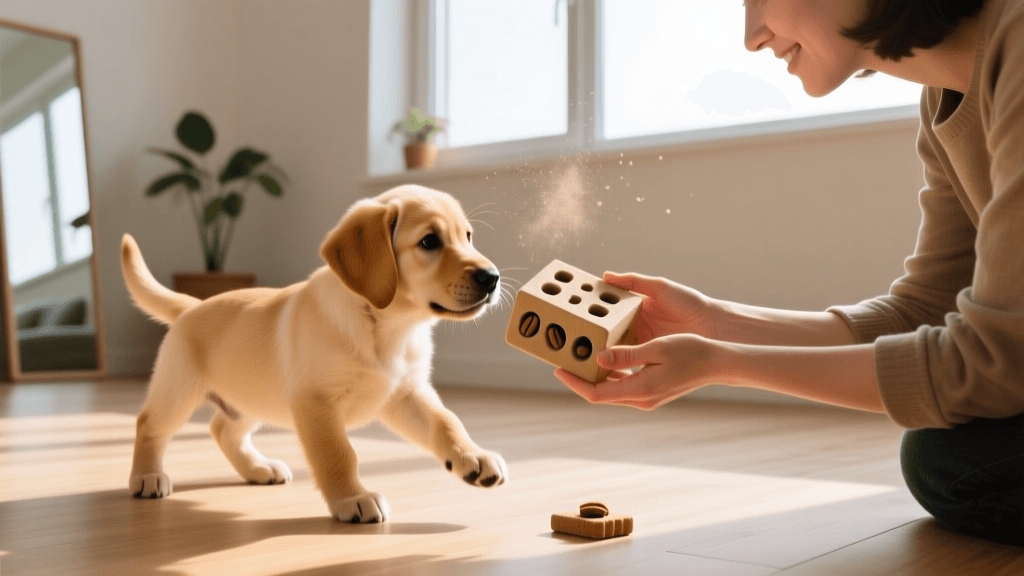
| Yawning | Sitting in a busy outdoor cafe or puppy class. | Increase the distance from the stressor. Provide a chew toy or snuffle mat to encourage natural foraging behaviors that lower heart rate. |
| Whale Eye | Hugging, leaning over, or direct prolonged eye contact. | Immediately step back, turn your body sideways, and avoid direct eye contact to reduce social pressure. |
| Ground Sniffing | Another overly enthusiastic dog approaches too quickly. | Advocate for your puppy by stepping between them and the approaching dog. Use a cheerful 'Let's go!' cue to create space. |
| Shake-Off | After a veterinary exam or a loud noise. | Allow the shake-off to complete. Offer gentle praise and a low-stress activity like scatter feeding to reset their emotional state. |
Navigating the Critical Socialization Window
The primary socialization window for puppies occurs between 8 and 16 weeks of age. During this time, their brains are highly plastic, and experiences shape their lifelong perception of the world. The American Veterinary Society of Animal Behavior (AVSAB) strongly advocates that socialization should begin before a puppy is fully vaccinated, provided it is done in controlled, safe environments. However, 'socialization' in 2026 does not mean forcing your puppy to meet every dog and human they see. True socialization is about exposure and positive emotional associations. If your puppy is exhibiting multiple calming signals during an outing, the environment is too stimulating. Pushing through the stress will not build resilience; it will build trauma. Instead, practice 'decompression walks' in quiet, natural settings where your puppy can process new sights and sounds at their own pace.
Modern Advocacy Tools for 2026
As a responsible puppy owner, you must become your dog's advocate. In recent years, several tools have become mainstream to help communicate your puppy's boundaries to the public:
- The Yellow Leash Protocol: Tying a yellow ribbon or using a yellow leash is a globally recognized signal that a dog needs space. While more common for adult reactive dogs, using it for a timid puppy prevents strangers from rushing in to pet them.
- Consent Testing (The 3-Second Rule): When someone wants to pet your puppy, ask them to pet the puppy's chest or shoulder for exactly three seconds, then stop and remove their hand. Observe your puppy's body language. If the puppy leans in, nudges the hand, or offers a soft, relaxed posture, they are consenting to more interaction. If they freeze, look away, or lip lick, the interaction must end immediately.
- Advocacy Patches: Harnesses and leashes featuring 'Do Not Pet,' 'Nervous,' or 'In Training' velcro patches are widely available in 2026 and serve as excellent visual barriers in crowded public spaces.
Differentiating Stress from Medical Issues
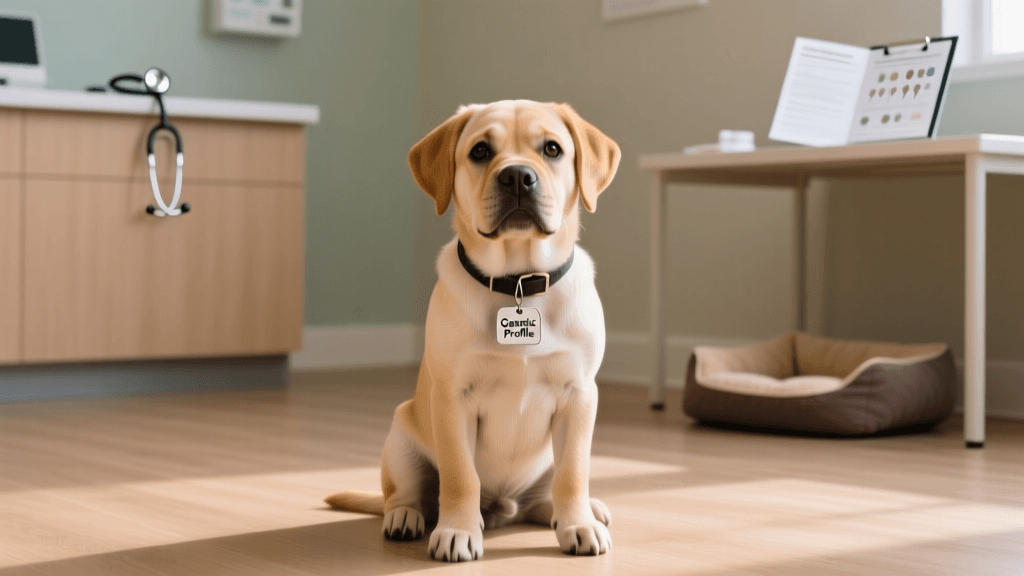
While calming signals are primarily behavioral, it is vital to rule out underlying medical conditions. Excessive lip licking can sometimes indicate gastrointestinal nausea or dental pain. Sudden, obsessive ground sniffing or freezing could be linked to neurological issues or localized pain. If your puppy exhibits these signals frequently in low-stress, familiar environments, schedule a comprehensive wellness exam with a Fear Free Certified veterinarian to rule out physical discomfort before assuming it is purely behavioral anxiety.
When to Seek Professional Behavioral Help
If your puppy frequently displays severe stress signals like freezing, whale eye, or attempts to flee during routine handling, it is time to enlist professional help. In 2026, the gold standard for behavioral support is a professional who holds dual certifications, such as a Certified Professional Dog Trainer (CPDT-KA) who is also Fear Free Certified. These professionals utilize modern, science-based desensitization and counter-conditioning protocols to change your puppy's underlying emotional response to stressors, ensuring they grow into confident, well-adjusted adult dogs. Remember, listening to your puppy's whispers today prevents them from having to scream tomorrow.
aaron-whyte
All our authors care for dogs every day — read more of their work on the authors page.