Decoding Puppy Calming Signals During Socialization in 2026
Learn to read your puppy's calming signals during 2026 socialization walks. Discover stress indicators, body language cues, and actionable training tips.
Bringing home a new puppy in 2026 is an exciting milestone, but navigating the busy streets, dog parks, and veterinary clinics can be overwhelming for a young dog. While modern puppy socialization emphasizes exposure to new sights, sounds, and surfaces, the most critical element of early development is often overlooked: canine communication. Puppies are constantly talking to us and to their environment through a complex system of body language. Understanding these subtle cues is the difference between raising a confident, well-adjusted adult dog and one that develops lifelong anxiety.
The Hidden Language of Puppies
When we think of puppy communication, we usually picture obvious behaviors: wagging tails, playful barks, or destructive chewing. However, the foundation of canine social interaction relies on a much quieter vocabulary. In 2026, leading veterinary behaviorists and positive reinforcement trainers heavily emphasize the importance of reading micro-expressions and postural shifts. A puppy that is silently enduring a stressful interaction is not necessarily a 'good' or 'calm' puppy; they may be actively trying to de-escalate a situation they find terrifying. By learning to decode these signals, owners can intervene before stress turns into fear-based reactivity.
What Are Canine Calming Signals?
The concept of 'calming signals' was pioneered by Norwegian dog trainer and behaviorist Turid Rugaas. These are innate, universal body language cues that dogs use to communicate peaceful intentions, diffuse tension, and self-soothe in stressful environments. Unlike trained commands, calming signals are reflexive. A puppy will offer them to other dogs to say, 'I mean no harm,' and they will also offer them to humans when they feel pressured, confused, or overwhelmed. According to the behavioral guidelines promoted by Fear Free Pets, recognizing these early signs of stress is the first step in preventing fear, anxiety, and stress (FAS) in veterinary and social settings.
7 Critical Calming Signals to Spot on Socialization Walks
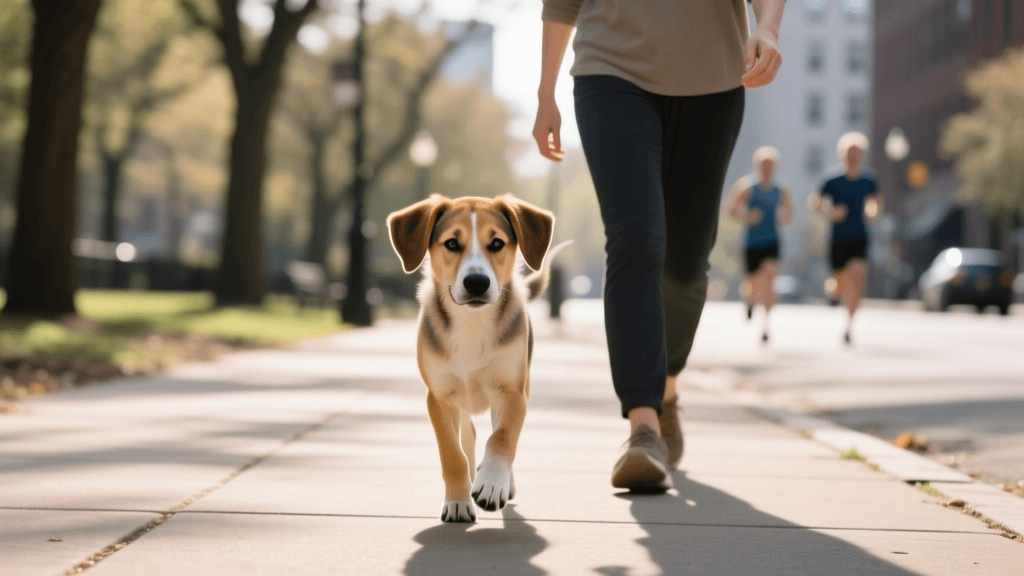
During your daily socialization walks, keep a close eye on your puppy. If you notice any of the following seven signals, your puppy is likely feeling overstimulated and needs a break.
1. Yawning Out of Context
If your puppy is well-rested but suddenly starts yawning when approached by a stranger, a larger dog, or while sitting in a busy veterinary waiting room, this is not a sign of sleepiness. Contextual yawning is a primary calming signal used to relieve internal tension and signal to the approaching threat that they are not aggressive.
2. Rapid Lip Licking
A quick flick of the tongue over the nose or lips, especially when there is no food present, is a classic indicator of canine anxiety. Puppies often do this when being hugged, leaned over, or handled by strangers who are moving too quickly for their comfort level.
3. Turning the Head or Body Away
When a well-meaning stranger reaches out to pet your puppy on the head, the puppy may turn their head to the side or present their side or back to the person. This is not an invitation to be petted on the rear; it is a polite canine request for space and a way to avoid direct, confrontational eye contact.
4. Intense Ground Sniffing
While sniffing is a natural exploratory behavior, sudden, intense sniffing of a bare patch of concrete when another dog or loud noise is nearby is an avoidance tactic. The puppy is pretending to be busy to avoid engaging with a stressor they find intimidating.
5. Curving the Approach
Dogs naturally prefer to approach each other in a wide arc rather than walking head-on. If your puppy resists walking in a straight line toward another dog or a scary object (like a trash can or a statue), do not force them. Let them curve; this is their way of showing polite, non-threatening intentions.
6. Slow Movements and Freezing
A puppy that suddenly moves in slow motion or freezes entirely is experiencing high stress. Fast movements can trigger prey drive or aggression in other animals, so the puppy slows down to signal peacefulness. Forcing a frozen puppy forward by pulling the leash will only increase their panic.
7. The 'Shake Off'
After a stressful encounter, a vet exam, or a vigorous play session, a puppy will often shake their entire body vigorously, as if they are wet. This 'shake off' is a physiological mechanism to discharge adrenaline and reset their nervous system. It is a healthy coping mechanism that should be allowed to finish uninterrupted.
Signal Translation Chart: Stress vs. Relaxation
To help you navigate your socialization outings in 2026, refer to this quick translation chart. The ASPCA Dog Care resources consistently remind owners that context is everything—a wagging tail does not always mean a happy dog.
| Signal Category | Body Language Cue | What Your Puppy is Saying | Recommended Owner Action |
|---|---|---|---|
| Calming / Stress | Yawning, Lip Licking | 'I am feeling pressured and trying to cope.' | Increase distance from the stressor; offer high-value treats. |
| Calming / Stress | Turning Head Away | 'Please give me space; I am not a threat.' | Advocate for your puppy; ask strangers not to pet them. |
| Stress / Fear | Freezing, Tucked Tail | 'I am terrified and preparing to defend myself.' | Immediately leave the situation; do not force interaction. |
| Relaxed / Happy | Loose, Wiggly Body | 'I am comfortable and open to interaction.' | Allow polite greetings; reward with praise and treats. |
| Relaxed / Happy | Soft Eyes, Open Mouth | 'I am relaxed and processing my environment.' | Continue the walk; practice basic cues for engagement. |
| Arousal / Overstimulation | Hard Stare, Stiff Tail | 'I am highly focused and might react explosively.' | Redirect attention with a scatter feed; move away quickly. |
How to Respond: The 2026 Advocacy Protocol
Recognizing the signal is only half the battle; responding appropriately is where true socialization happens. In 2026, the most successful puppy owners act as fierce advocates for their dogs. When your puppy displays calming signals, you must become their voice.
- Create Distance: If your puppy yawns or licks their lips when a stranger approaches, take three steps back. Distance lowers the puppy's emotional arousal and allows them to think clearly again.
- Use Scatter Feeding: Toss a handful of small, high-value training treats into the grass or on the pavement. Sniffing and foraging naturally lower a dog's heart rate and engage their parasympathetic nervous system, helping them recover from stress.
- Master the 'No Pet' Script: Do not be afraid to be polite but firm with strangers. A simple, 'We are in training right now, please do not pet him,' or 'He is feeling a bit overwhelmed today, we are just going to observe,' is highly effective. The Humane Society frequently highlights that protecting a puppy from unwanted handling is crucial for preventing fear-based biting later in life.
- End on a Positive Note: If a socialization session is going poorly and your puppy is showing multiple stress signals, end the outing. Ask for a simple 'sit' or 'touch' (hand target), reward heavily, and go home. It is better to have a five-minute successful outing than a thirty-minute traumatic one.
Equipment That Supports Natural Communication
The gear you use in 2026 can either facilitate or hinder your puppy's ability to communicate. Traditional flat collars and head halters can restrict neck movement, which is a vital component of canine body language. If a puppy cannot turn their head away or curve their neck, they may feel trapped, leading to a fight-or-flight response.
Instead, opt for a well-fitted, Y-front harness that leaves the shoulder joints completely unrestricted. Models like the Ruffwear Front Range Harness or the Perfect Fit Harness are excellent choices recommended by modern canine physiotherapists. These harnesses allow the puppy to move naturally, offer calming signals freely, and give you secure handling without putting pressure on their delicate trachea. Pair this with a long line (10 to 15 feet) in open spaces to give your puppy the autonomy to choose their distance from stressors, which builds immense confidence over time.
Building Confidence Through Decompression
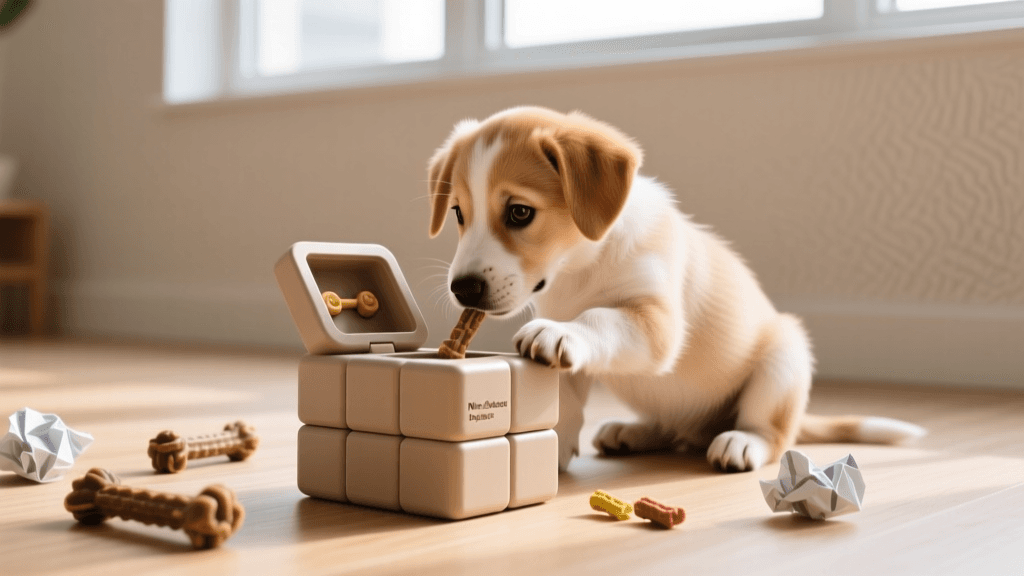
Socialization is not just about going out; it is equally about how your puppy recovers at home. After a busy day of navigating the world, provide decompression activities. Snuffle mats, lick mats frozen with puppy-safe yogurt, and chew toys encourage natural foraging and gnawing behaviors. These activities release endorphins and dopamine, helping your puppy process the day's events and solidifying the neural pathways associated with positive experiences.
Conclusion
Decoding your puppy's calming signals transforms the socialization process from a stressful checklist into a profound bonding experience. By observing the subtle flick of a tongue, the turn of a head, or the sudden interest in a blade of grass, you can protect your puppy from overwhelm and build a foundation of trust. As you navigate the exciting journey of puppyhood in 2026, remember that the best socialization is not about how many people your puppy meets, but how safe and understood they feel in your presence.
anouk-beaumont
All our authors care for dogs every day — read more of their work on the authors page.