Nina Ottosson Dog Brick Puzzle: Best Puppy Enrichment 2026
Discover how the Nina Ottosson Dog Brick puzzle boosts puppy mental enrichment in 2026. Learn setup tips, safety rules, and DIY brain games for pups.
The Science of Puppy Mental Enrichment in 2026
Raising a puppy in 2026 goes far beyond basic potty training and leash walking. Modern veterinary behaviorists emphasize that cognitive development during the first year of a dog's life is just as critical as physical growth. Puppies are highly intelligent, rapidly absorbing their environment, and prone to destructive behaviors when their brains are under-stimulated. According to the American Kennel Club, just 15 to 20 minutes of focused mental enrichment can tire a puppy out as much as an hour of vigorous physical exercise. This makes brain games an absolute necessity for busy pet parents looking to prevent furniture chewing, excessive barking, and separation anxiety.
Mental enrichment taps into a puppy's natural foraging and problem-solving instincts. In the wild, canines spend up to 80% of their waking hours hunting and scavenging. By feeding your puppy out of a standard bowl, you are robbing them of this vital cognitive workout. This is where interactive puzzle toys come into play, transforming mealtime into an engaging, brain-boosting activity.
Why the Nina Ottosson Dog Brick is a 2026 Essential
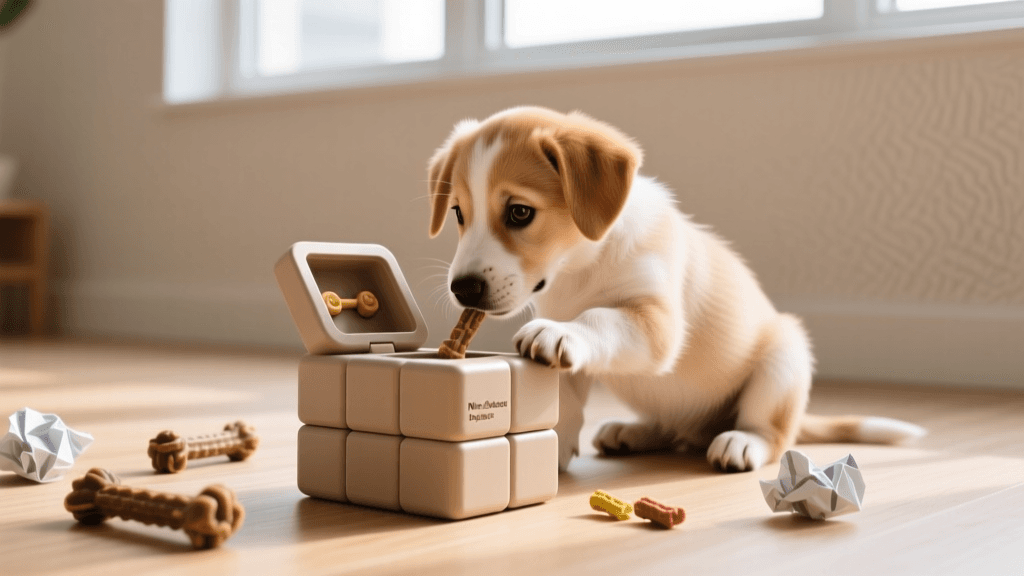
Among the myriad of puzzle toys on the market, the Nina Ottosson Dog Brick Interactive Treat Puzzle remains a gold standard for puppy enrichment. Designed by the pioneer of canine puzzle games, the Dog Brick is specifically engineered to challenge a dog's cognitive skills through multiple sequential steps. As of 2026, Nina Ottosson has continued to refine their manufacturing, ensuring all plastics are BPA-free, phthalate-free, and PVC-free, which is a massive relief for pet parents concerned about the safety of teething puppies.
The Dog Brick features three distinct types of obstacles:
- Flip Lids: Hinged covers that the puppy must learn to lift with their nose or paw.
- Sliding Blocks: Compartments that require lateral pushing to reveal hidden treats.
- Removable Bone Covers: White bone-shaped pieces that sit inside recesses, requiring the puppy to pick them up or nudge them out of the way.
What makes the Dog Brick uniquely suited for puppies is its adjustable difficulty. You can easily modify the puzzle's complexity by removing the white bone covers or leaving the flip lids open, allowing you to scale the challenge as your puppy's problem-solving skills mature throughout their first year.
Step-by-Step Guide: Introducing the Puzzle to Your Puppy
Handing a complex puzzle to an 8-week-old puppy is a recipe for frustration. Puppies need to be taught how to interact with the toy to build confidence. Here is a progressive, four-phase training guide to mastering the Dog Brick.
Phase 1: The Open Buffet (8 to 10 Weeks)
Remove all the white bone covers and tie the flip lids open or remove them entirely if your specific model allows. Place high-value, smelly treats (like freeze-dried liver or small pieces of boiled chicken) directly into the open compartments. Let your puppy eat from it freely. This builds a positive association with the puzzle board.
Phase 2: The Sliding Challenge (10 to 14 Weeks)
Reintroduce the sliding blocks, but only cover half of the treat compartments. Leave the other half completely open. Guide your puppy's nose to the exposed treats, and then gently demonstrate how to nudge the sliding block with your finger. Praise heavily when they mimic the action.
Phase 3: The Flip and Lift (4 to 6 Months)
Introduce the flip lids. Place treats under the lids and leave the sliding blocks out of the way. The hinged motion requires a different type of motor skill. You may need to smear a tiny bit of dog-safe peanut butter on the edge of the lid to encourage them to lick and lift it with their nose.
Phase 4: Full Complexity (6+ Months)
Add the white bone covers into the recesses. Now, your puppy must navigate sliding blocks, lifting lids, and removing bone covers to access their full meal. At this stage, you can use the Dog Brick as their primary method of daily feeding to slow down fast eaters and prevent bloat.
Top Puppy Puzzle Toys Comparison Chart (2026 Edition)
While the Dog Brick is exceptional, it is helpful to understand how it stacks up against other popular enrichment tools for puppies. Below is a comparison of the top puzzle feeders recommended by trainers in 2026.
| Toy Name | Enrichment Type | Difficulty Level | Best Puppy Age | 2026 Avg Price | Dishwasher Safe? |
|---|---|---|---|---|---|
| Nina Ottosson Dog Brick | Cognitive Puzzle Board | Level 2 (Adjustable) | 3 - 12 Months | $16.99 | No (Hand Wash) |
| Kong Classic Puppy | Chew & Stuffable Feeder | Level 1 | 8 - 16 Weeks | $12.99 | Yes (Top Rack) |
| Outward Hound Snuffle Mat | Scent Work & Foraging | Level 1 | 8+ Weeks | $24.99 | Yes (Machine) |
| West Paw Toppl | Interlocking Chew Feeder | Level 1 - 2 | 3 - 8 Months | $18.95 | Yes |
As the ASPCA notes, rotating different types of enrichment toys prevents canine boredom. Using a snuffle mat for scent work in the morning and the Dog Brick for cognitive problem-solving in the evening provides a well-rounded mental workout.
Budget-Friendly DIY Puppy Brain Games
You do not always need to purchase commercial toys to provide excellent mental enrichment. In 2026, with the rising costs of premium pet supplies, DIY brain games are more popular than ever. Here are three highly effective, zero-cost puzzle games you can create using household items.
1. The Muffin Tin Shell Game
Take a standard metal muffin tin and place a few pieces of kibble into the cups. Cover each cup with a tennis ball or a crumpled-up piece of parchment paper. Your puppy must figure out how to knock the balls or paper aside to reach the food. This mimics the sliding mechanics of the Dog Brick but uses items you already have in your kitchen.
2. The Towel Roll-Up Burrito
Lay an old, clean bath towel flat on the floor. Sprinkle kibble and small training treats evenly across the surface. Tightly roll the towel up into a long burrito shape. Place the rolled towel on the floor and let your puppy unroll it using their nose and paws to find the hidden treasures. For an advanced challenge, tie the rolled towel into a loose knot.
3. The Cardboard Box Shredding Station
Puppies, especially during the teething phase between 3 and 5 months of age, have an overwhelming urge to destroy things with their mouths. Save your clean, tape-free cardboard delivery boxes. Place some high-value treats inside, fold the flaps shut, and let your puppy tear the box to shreds to get the rewards. This satisfies their natural shredding instincts while saving your shoes and baseboards. Note: Always supervise this game to ensure your puppy does not ingest large pieces of cardboard.
Safety, Hygiene, and Teething Considerations
When introducing any puzzle toy to a puppy, safety must be your primary concern. Puppies explore the world with their mouths, and their sharp deciduous teeth (baby teeth) can easily chip or break off pieces of hard plastic if they become frustrated.
Pro Tip for Teething Puppies: If your puppy is in the peak teething phase (around 4 months of age), mix their kibble with a little water or low-sodium, onion-free chicken bone broth. Pour the mixture into the Dog Brick compartments and place the entire puzzle in the freezer for two hours. The frozen puzzle will soothe their inflamed gums while they work for their food!
Hygiene is equally important. Because the Nina Ottosson Dog Brick is not dishwasher safe, it must be hand-washed. In 2026, pet-safe enzymatic cleaners are widely available and highly recommended for breaking down the biofilm and dog saliva that accumulates in the sliding tracks and hinges. Wash the puzzle with warm water and a mild, pet-safe dish soap after every use to prevent bacterial growth and canine acne.
Finally, never leave a puppy unattended with a puzzle toy. While the Dog Brick is durable, a determined chewer might attempt to swallow the removable white bone covers, which pose a significant choking and intestinal blockage hazard. Always treat puzzle time as an interactive bonding session between you and your puppy.
Conclusion: Building a Smarter, Happier Dog
Investing time in mental enrichment during your puppy's first year lays the foundation for a calm, confident, and well-adjusted adult dog. The Nina Ottosson Dog Brick, combined with DIY scent games and proper safety protocols, offers a comprehensive approach to canine cognitive development. By making your puppy work for their meals and rewarding their problem-solving efforts, you are not just feeding them; you are actively shaping their brain for a lifetime of success.
tom-renshaw
All our authors care for dogs every day — read more of their work on the authors page.