Decoding Dog Body Language Around Kids: A Parent's Guide
Learn to read your dog's stress signals around children. Discover actionable tips, safe zones, and body language cues to keep kids and dogs safe.

The Myth of the 'Nanny Dog' and Canine Tolerance
Many parents grow up hearing about the mythical 'Nanny Dog'—a breed supposedly hardwired to tolerate the ear-pulling, tail-grabbing, and erratic movements of toddlers. While certain breeds like Golden Retrievers or Labrador Retrievers are known for their gentle dispositions, it is a dangerous fallacy to believe any dog is naturally equipped to handle the unpredictable nature of young children. Dogs do not possess human reasoning; they operate on instinct, body language, and environmental triggers. When a toddler suddenly screams, falls on the dog, or invades their resting space, the dog's nervous system reacts exactly as any other animal's would: with a startle reflex or a stress response.
Relying on a dog's 'tolerance' is a recipe for disaster. Tolerance is not the same as enjoyment. A dog might 'tolerate' a child hugging its neck for months, slowly accumulating stress, until one day the threshold is crossed. According to the American Veterinary Medical Association (AVMA), the majority of dog bites to children occur with the family's own dog, often in the home, and usually when the dog is resting or eating. Understanding this psychological reality is the first step in protecting both your child and your pet.
Decoding the Canine Stress Ladder
Because dogs cannot verbally tell us they are uncomfortable, they rely on a complex system of body language to communicate their boundaries. Unfortunately, humans are notoriously bad at reading these subtle cues until it is too late. Canine behaviorists refer to this as the 'Stress Ladder.' Dogs start with subtle, low-level calming signals and escalate to more obvious warnings if they are ignored. Recognizing these early signals is critical for parents.
Level 1: Subtle Calming Signals (Appeasement)
- Lip Licking and Yawning: If your dog yawns or licks their lips when a child approaches, they are not tired or hungry. This is a self-soothing behavior indicating mild anxiety.
- Turning the Head Away: A dog that averts its gaze or turns its head away from a child is actively trying to de-escalate the situation. They are politely asking for space.
- Shaking Off: Similar to when a dog is wet, a 'shake off' when dry is a way for the dog to reset their nervous system after a stressful interaction.
Level 2: Distance-Increasing Signals
- Whale Eye: This occurs when the dog turns its head away but keeps its eyes fixed on the child, revealing the crescent-shaped whites of their eyes. This is a significant red flag indicating high stress and a potential impending bite.
- Stiffening and Freezing: If a dog goes completely rigid while a child is petting them, do not mistake this for 'being good.' Freezing is the final warning before a bite.
- Growling: A growl is a gift. It is your dog's last-ditch effort to communicate discomfort without using their teeth. Never punish a dog for growling at a child. If you punish the growl, the dog learns to skip the warning and go straight to the bite next time.
Remember: Punishing a growl removes the dog's warning system. Always reward the dog for communicating their boundaries by calmly removing the child from the situation and giving the dog space.
For a comprehensive visual guide on these behaviors, parents should review the ASPCA's guide on canine body language to familiarize themselves with these critical warning signs.
The 3-Second Consent Test
One of the most effective ways to teach children how to interact safely with the family dog is the 3-Second Consent Test. This method empowers the dog to choose whether or not they want to be petted, while teaching the child empathy and respect for boundaries.
How it works:
- Have your child stand near the dog and gently pet them on the chest or shoulder (never the top of the head) for exactly three seconds.
- Have the child stop petting and pull their hand away.
- Observe the dog's reaction. If the dog leans in, nudges the child's hand, or wags their body softly, they are giving consent for three more seconds of petting.
- If the dog stays still, turns away, licks their lips, or walks off, the interaction is over. The child must respect the dog's decision and leave them alone.
This simple exercise prevents the dog from feeling trapped and drastically reduces the likelihood of a stress-induced bite. The American Kennel Club (AKC) strongly advocates for teaching children to respect a dog's space and to never force an interaction.
Designing the 'Dog Sanctuary': Measurements, Products, and Costs
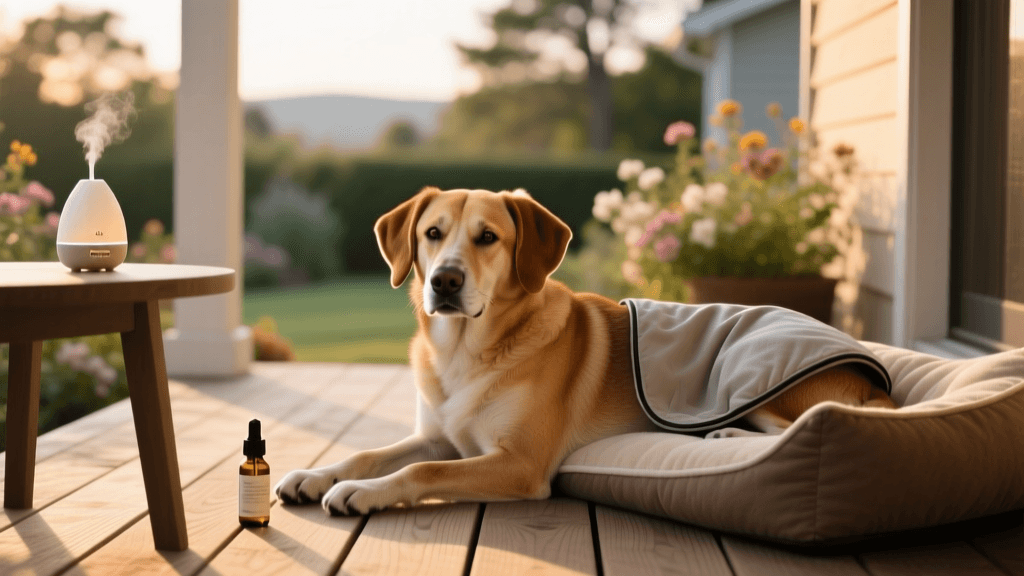
Every family dog needs a designated sanctuary—a space where they can retreat when the household gets too loud or chaotic. This area must be strictly off-limits to children. Setting up a proper sanctuary requires a small financial investment but pays massive dividends in preventing behavioral issues.
1. The Physical Barrier
You need a reliable baby gate to block off the sanctuary room. The Regalo Easy Step Walk Thru Gate (Approximate cost: $40) is a top choice. It fits doorways and hallways between 29 and 39 inches wide and stands 30 inches tall, which is sufficient to deter most medium-to-large breeds from jumping over. Ensure the gate has a walk-through door for adults so you do not have to step over it, which can become a tripping hazard when carrying a child.
2. The Resting Zone
Dogs prefer elevated, den-like spaces where they can observe the room without being stepped on. The Coolaroo Elevated Pet Bed (Approximate cost: $35) is an excellent option. Its breathable mesh fabric keeps the dog cool, and the elevated steel frame prevents drafts. Place this bed in a quiet corner of the sanctuary room, away from direct sunlight and high-traffic areas.
3. Sensory Management
Toddlers are loud. Sudden shrieks can trigger a dog's prey drive or startle reflex. Invest in a white noise machine like the Hatch Rest (Approximate cost: $50). Set it to a continuous 'brown noise' or 'rain' setting at around 60 decibels to mask the high-pitched frequencies of children playing in adjacent rooms.
4. Decompression Enrichment
When the dog retreats to their sanctuary, provide a long-lasting chew to help lower their cortisol levels. A classic KONG rubber toy (Approximate cost: $15) stuffed with plain pumpkin puree and kibble, then frozen for three hours, can provide up to 45 minutes of soothing, rhythmic licking and chewing. Total estimated setup cost for a premium sanctuary: $140.
Age-by-Age Interaction Guide
Children develop motor skills and empathy at different rates. Your supervision and interaction rules must evolve as your child grows. Below is a structured guide to managing dog and child interactions based on developmental stages.
| Child Age | Developmental Stage | Dog Interaction Rule | Supervision Level |
|---|---|---|---|
| 0-12 Months | Crawling, grabbing, unsteady movements | No unsupervised floor time together. Dog in sanctuary or on a leash held by an adult. | 100% Active |
| 1-3 Years | Walking, falling, loud vocalizations | Teach 'gentle hands'. No approaching the dog while eating, sleeping, or in the sanctuary. | 100% Active |
| 3-5 Years | Running, throwing, developing empathy | Play structured games like 'Find It'. No hugging the dog's neck or putting faces near the dog's face. | 80% Active |
| 5-10 Years | Coordinated, empathetic, rule-following | Teach the 3-Second Consent Test. Child can assist with measured feeding and basic training cues. | 50% Active |
Safe, Structured Games for Kids and Dogs
Unstructured play, like wrestling or chasing, is highly discouraged as it can easily trigger a dog's prey drive or lead to accidental knocks and bites. Instead, teach your children structured games that promote impulse control and positive associations.
Game 1: 'Find It' (Sniffing Enrichment)
Sniffing lowers a dog's heart rate and provides excellent mental stimulation. Have your child hide small, smelly treats (like freeze-dried liver) around the living room while the dog waits in another room. Release the dog with the cue 'Find it!' and let the child watch the dog use its nose. This teaches the child that they can interact with the dog without needing to physically touch them.
Game 2: 'Statue' (Impulse Control)
This game is fantastic for toddlers and high-energy dogs. The child holds a treat in a closed fist. The dog will likely sniff, paw, and lick the hand. The child must remain completely still like a 'statue.' The moment the dog pulls its head back or sits, the child opens their hand and drops the treat on the floor. This teaches the dog that backing away yields rewards, and it teaches the child how to remain calm and still around the dog.
Final Thoughts on Canine Psychology
Understanding your dog's behavior around your children is not about restricting your dog; it is about setting both your child and your pet up for a lifetime of mutual respect and safety. By learning to read the subtle stress signals, enforcing the 3-Second Consent Test, and providing a well-equipped sanctuary, you remove the pressure from your dog to 'tolerate' uncomfortable situations. Remember, a safe dog is a dog whose boundaries are respected. With patience, supervision, and the right environmental management, your family can foster a beautiful, lifelong bond between your children and your canine companion.
robin-maitland
All our authors care for dogs every day — read more of their work on the authors page.