Understanding Canine Anxiety: Best Calming Products Guide
Discover the psychology behind dog anxiety and compare the best calming products, from pheromones to compression wraps, to soothe your stressed pup.
The Psychology of Canine Anxiety: Recognizing the Signs
Understanding your dog's emotional state is the cornerstone of a strong human-canine bond. Unlike humans, dogs cannot verbalize their fears, frustrations, or stressors. Instead, they rely on a complex lexicon of body language, vocalizations, and physiological responses to communicate their internal state. Canine anxiety is not merely 'bad behavior'; it is a profound psychological and neurological response to perceived threats, environmental changes, or isolation. According to the ASPCA, separation anxiety and noise phobias are among the most prevalent behavioral issues reported by veterinarians, affecting millions of dogs worldwide.
To effectively address anxiety, we must first decode the subtle stress signals dogs exhibit before they escalate into destructive behaviors or panic attacks. Early indicators of canine stress include 'whale eye' (showing the whites of the eyes), excessive lip licking, repetitive yawning when not tired, and pinned-back ears. As the sympathetic nervous system engages the 'fight or flight' response, cortisol and adrenaline flood the dog's bloodstream. This leads to more overt signs such as panting without physical exertion, pacing, trembling, drooling, and attempts to escape or hide. Recognizing these displacement behaviors is the critical first step in selecting the right intervention and calming products to help your dog regain emotional homeostasis.
How Calming Products Influence Canine Neurology
Calming products do not 'cure' anxiety, but they serve as vital tools to lower a dog's arousal threshold, making them more receptive to behavioral modification and training. When a dog is in a state of high sympathetic arousal, the learning centers of the brain (the prefrontal cortex equivalent) essentially shut down. The dog is in survival mode. Products like compression wraps, synthetic pheromones, and targeted nutraceuticals work by stimulating the parasympathetic nervous system—the body's 'rest and digest' network. By artificially lowering the heart rate and reducing cortisol levels, these products create a neurological window where counter-conditioning and desensitization training can actually take root.
Buyer's Guide: Top Calming Products Reviewed
When navigating the pet care market, it is easy to become overwhelmed by anecdotal claims. Below, we review four scientifically grounded, highly rated calming products, analyzing their mechanisms, costs, and ideal use cases based on canine behavioral psychology.
1. Adaptil Calm Home Diffuser (Synthetic Pheromones)
Best For: Generalized anxiety, moving to a new home, and multi-dog household tension.
Cost: $25 - $35 for a starter kit (diffuser + 30-day refill).
Coverage: Up to 700 square feet.
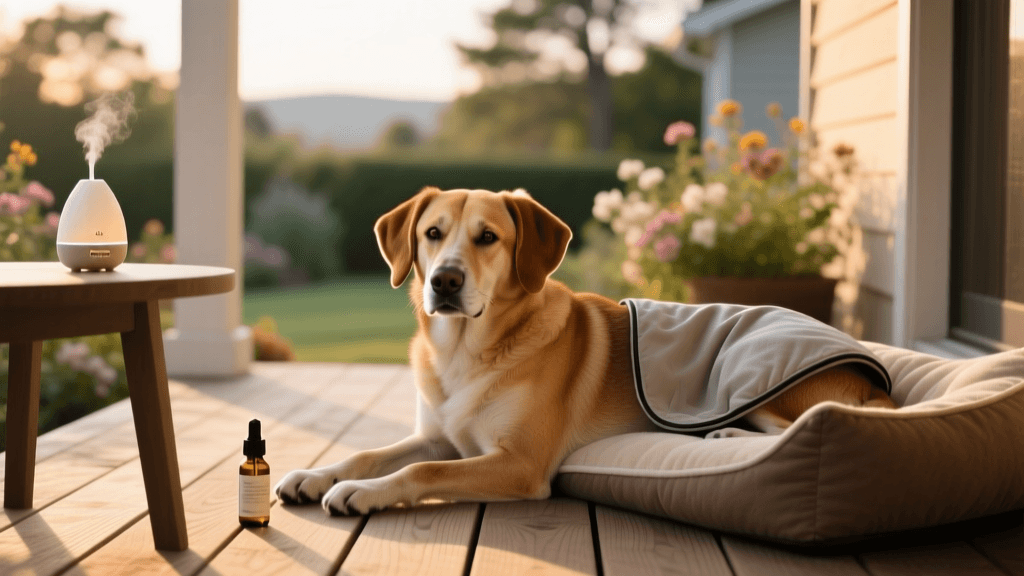
The Adaptil diffuser releases a synthetic analogue of the Dog Appeasing Pheromone (DAP). In nature, this pheromone is secreted by lactating mother dogs to reassure their puppies and create a sense of safety. Because the vomeronasal organ in adult dogs remains receptive to these chemical signals throughout their lives, the synthetic version acts as a powerful environmental anchor. Behavioral studies have shown that DAP can significantly reduce stress-related behaviors in veterinary clinics and shelters. For home use, plug the diffuser into the room where your dog spends the most time. Avoid plugging it in behind furniture or near open windows, as airflow disruption reduces efficacy. Note that it takes 24 to 48 hours for the pheromones to reach therapeutic saturation in a room.
2. ThunderShirt Anxiety Jacket (Deep Pressure Therapy)
Best For: Noise phobias (thunderstorms, fireworks), travel anxiety, and acute stress triggers.
Cost: $45 - $50.
Sizing: Available in XXS to XXL (Requires measuring chest girth).
The ThunderShirt utilizes Deep Pressure Therapy (DPT), a concept widely used in human psychology for autism and sensory processing disorders. The gentle, constant pressure applied to the dog's torso stimulates the release of endorphins and oxytocin, which naturally counteract adrenaline. From a behavioral standpoint, the ThunderShirt is exceptionally effective for acute, predictable triggers like Fourth of July fireworks. However, it is not recommended for 24/7 wear. Dogs can become habituated to the pressure, rendering it ineffective. Put the ThunderShirt on 15 minutes before the anticipated trigger, and remove it once the dog has returned to a calm baseline state to maintain its psychological impact.
3. Zesty Paws Advanced Calming Chews (Nutraceuticals)
Best For: Mild situational anxiety, car rides, and vet visits.
Cost: $28 - $32 for a 90-count bag.
Key Ingredients: L-Theanine, Chamomile, Valerian Root, Hemp Seed Powder.
Nutraceuticals bridge the gap between diet and pharmacology. Zesty Paws Calming Chews rely heavily on L-Theanine, an amino acid found in green tea that has been proven to increase alpha brain waves, promoting a state of 'wakeful relaxation' without causing drowsiness. Valerian root acts as a mild central nervous system depressant, similar to how it functions in humans. For situational anxiety, timing is everything. The American Kennel Club (AKC) notes that oral supplements must be administered 30 to 45 minutes prior to the stressor to allow for proper gastrointestinal absorption and blood-brain barrier crossing. Always calculate the dosage based on your dog's exact weight to avoid under-dosing, which yields no behavioral change, or over-dosing, which may cause mild gastrointestinal upset.
4. Furbo 360 Dog Camera (Behavioral Monitoring & Intervention)
Best For: Understanding separation anxiety triggers, remote counter-conditioning.
Cost: $190 - $210.
Features: 360-degree panning, two-way audio, treat tossing, bark alerts.
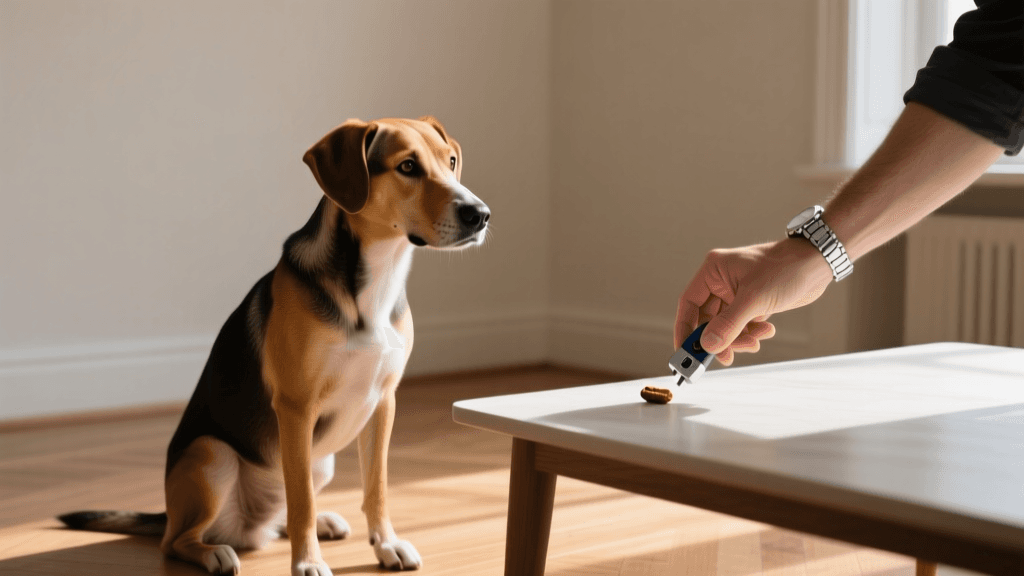
While not a 'calming product' in the traditional sense, the Furbo camera is an indispensable diagnostic tool for understanding separation anxiety. Many owners assume their dog panics the moment they leave the house. However, video analysis often reveals that dogs with separation anxiety are triggered by specific 'pre-departure cues' (like picking up keys) or environmental sounds (like a neighbor's door closing). By reviewing Furbo footage, you can pinpoint the exact millisecond your dog's stress signals begin. Furthermore, the treat-tossing feature allows owners to engage in remote counter-conditioning, rewarding the dog for remaining calm in their designated 'safe zone' while alone.
Comparison Chart: Matching the Product to the Trigger
| Product | Primary Mechanism | Ideal Behavioral Trigger | Price Range | Time to Effect |
|---|---|---|---|---|
| Adaptil Diffuser | Olfactory (Pheromones) | Chronic stress, new environments | $25 - $35 | 24 - 48 hours |
| ThunderShirt | Tactile (Deep Pressure) | Acute noise phobias, travel | $45 - $50 | 10 - 15 minutes |
| Zesty Paws Chews | Chemical (Nutraceutical) | Situational stress, vet visits | $28 - $32 | 30 - 45 minutes |
| Furbo Camera | Diagnostic / Remote Reward | Separation anxiety, isolation | $190 - $210 | Real-time |
Integrating Products with Behavioral Modification
Purchasing a calming product is only half the equation. The Humane Society of the United States emphasizes that products must be paired with systematic desensitization and counter-conditioning protocols to achieve long-term behavioral change. For example, if your dog suffers from noise phobia, you should not simply put on the ThunderShirt and wait for the storm. Instead, use the ThunderShirt during low-level, controlled exposure to recorded storm sounds played at a volume so low that the dog notices but does not react. Pair this with high-value treats (like boiled chicken or frozen peanut butter Kongs).
Similarly, if using Adaptil for a new rescue dog, establish a 'safe haven' crate or mat in the diffuser's radius. Feed all meals and offer all long-lasting chews in this specific zone. Over time, the dog's brain will associate the pheromone-scented area with positive biological outcomes (eating, chewing), rewiring their emotional response to the new environment. Remember that calming aids are meant to lower the threshold of reactivity so that the dog's brain is capable of learning new, positive associations.
When to Seek Professional Help
Over-the-counter calming products are highly effective for mild to moderate anxiety. However, if your dog exhibits severe panic responses—such as breaking teeth on crate bars, jumping through glass windows, or exhibiting self-mutilation—immediate intervention by a board-certified veterinary behaviorist is required. In these severe cases, prescription psychopharmacological medications (such as Fluoxetine or Trazodone) are often necessary to stabilize the dog's neurochemistry before any behavioral training or over-the-counter products can be safely and effectively implemented. Understanding your dog means recognizing the limits of retail products and knowing when to advocate for advanced medical support.
tom-renshaw
All our authors care for dogs every day — read more of their work on the authors page.