Decoding Canine Calming Signals For Reactivity 2026
Learn to decode canine calming signals to improve leash reactivity training in 2026. Discover threshold management, body language cues, and steps.
The Evolution of Canine Communication Science in 2026
When it comes to leash reactivity, the most profound breakthroughs in modern dog training do not involve new gadgets or harsher corrections. Instead, the focus in 2026 has shifted entirely toward a deeper understanding of canine communication. Dogs are constantly speaking to us through a complex vocabulary of body language, yet most owners miss the subtle whispers before the shouting begins. By learning to decode canine calming signals, you can fundamentally transform your reactivity training protocol, preventing meltdowns before they occur and building a foundation of profound trust with your dog.
Calming signals, a term popularized by Norwegian canine behaviorist Turid Rugaas, are subtle physical cues dogs use to self-soothe, de-escalate tension, and communicate non-threatening intentions. In the context of leash reactivity, these signals are the early warning system of your dog's nervous system. According to the ASPCA's guide on common dog behavior issues, recognizing early stress indicators is the cornerstone of modern, force-free behavioral modification. Ignoring these signals and pushing a dog past their threshold doesn't build resilience; it builds chronic anxiety and explosive reactions.
The Science of Threshold Management and the Nervous System
In 2026, veterinary behaviorists emphasize the importance of the autonomic nervous system in reactivity training. When a dog notices a trigger (like another dog or a loud truck), their sympathetic nervous system engages. If the trigger is too close, cortisol and adrenaline flood the brain, shutting down the prefrontal cortex—the area responsible for learning and decision-making. The American Veterinary Society of Animal Behavior (AVSAB) consistently advocates for keeping dogs under their reactivity threshold to ensure cognitive processing remains active. Calming signals are your visual metric for measuring this internal physiological state.
If you see calming signals, your dog is actively trying to manage their rising stress levels. If you support them by increasing distance or lowering your training criteria, you reinforce their coping mechanisms. If you ignore them, the dog is forced to escalate to barking, lunging, or biting to create the distance they need.
5 Critical Calming Signals You Must Not Ignore
To succeed in reactivity training this year, you must become fluent in the following five signals. These are the most common indicators that your dog is approaching their stress threshold.
1. Repetitive Lip Licking or Tongue Flicking
While a single lick might mean your dog is anticipating a treat, rapid, repetitive tongue flicks—especially when the lips are closed and the environment is not food-centric—are a primary indicator of social stress. In a training scenario, if you ask your dog to sit and they repeatedly flick their tongue while avoiding eye contact, they are feeling pressured. Action: Release the command, take three steps back, and toss a treat on the ground to encourage sniffing, which naturally lowers the heart rate.
2. The 'Stress Yawn'
Dogs do not just yawn when they are tired. A sudden, exaggerated yawn in the presence of a trigger (like an approaching stranger) is a classic displacement behavior and a calming signal. It is the canine equivalent of a human taking a deep, shaky breath to calm their nerves. Action: Do not force engagement. Use the American Kennel Club's recommended disengagement techniques to reward the dog for simply looking away from the trigger, then increase your distance by at least 10 feet.
3. Turning the Head or Body Away
A direct, frontal approach is considered confrontational in dog language. If your dog actively turns their head away from you, the trigger, or the camera, they are signaling that the interaction is too intense. They are literally trying to 'look away' from the stressor. Action: Respect the turn. Do not physically manipulate their head back toward the trigger. Instead, pivot your own body to the side, presenting a less confrontational shoulder to the environment, and wait for your dog to voluntarily re-engage.
4. Intense, Out-of-Context Ground Sniffing
Sniffing is inherently calming for dogs, as it engages the parasympathetic nervous system. However, if a dog suddenly becomes obsessed with a barren patch of concrete while a trigger approaches, this is a deliberate avoidance and calming behavior. They are using their nose to avoid making eye contact with the stressor. Action: Allow the sniffing. Do not pull the leash taut to force their head up. Toss high-value treats into the grass or dirt to encourage natural foraging, which will actively lower their cortisol levels.
5. Sudden, Vigorous Scratching or Shake-Offs
If your dog suddenly stops to scratch their neck or performs a full-body 'shake-off' (as if they are wet, but they are completely dry), they are attempting to literally 'shake off' the accumulated tension of the encounter. Action: This is a clear sign that the training session has reached its limit for the day. End the session on a positive note with a simple, easy trick they know well, and head home to decompress.
Threshold Management: The 2026 Distance Protocol
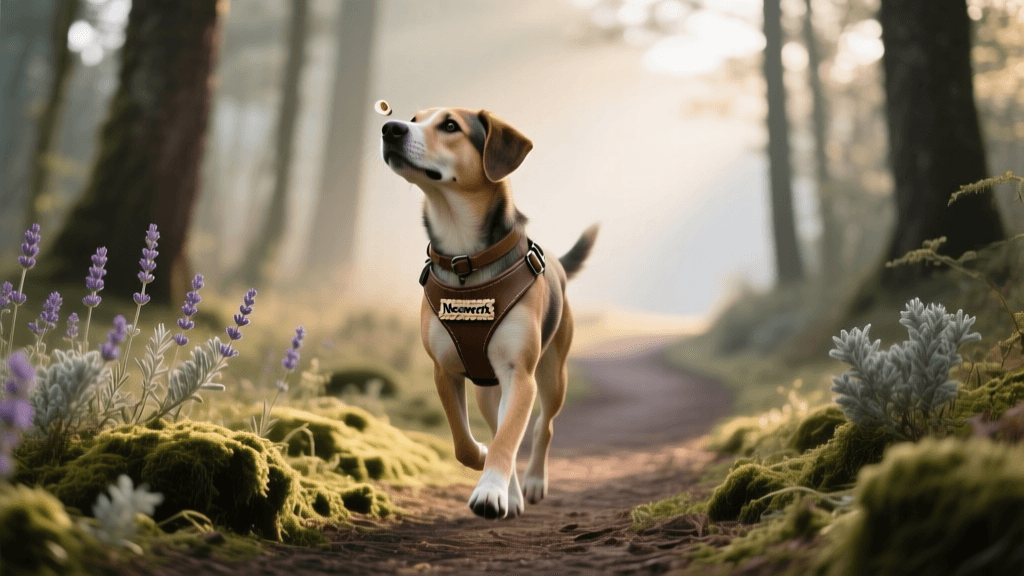
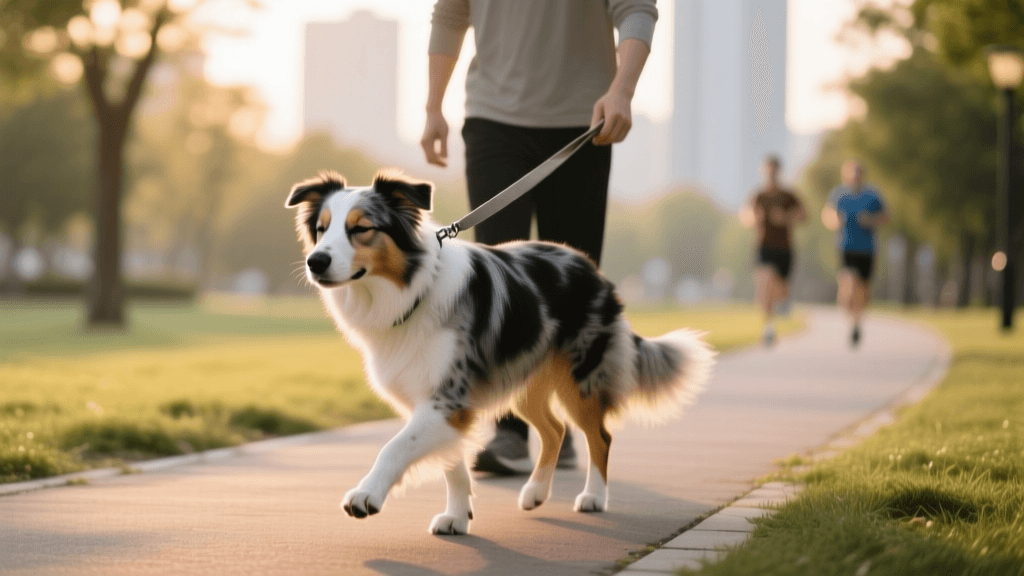
Managing your dog's threshold requires the right equipment and a strategic approach to distance. In 2026, the gold standard for reactivity gear remains the front-clip harness, specifically the 2026 model of the Ruffwear Front Range Harness (retailing for approximately $45), paired with a 15-foot biothane long line. This setup provides safety without the restrictive tension of a short leash, which can actually induce frustration and exacerbate reactivity.
For high-value reinforcement, trainers recommend using single-ingredient, high-odor treats. As of early 2026, a 14-ounce bag of Stella & Chewy's Freeze-Dried Beef Liver costs around $19.99 and provides the intense olfactory stimulation needed to break a dog's hyper-fixation on a trigger. Keep your treat pouch positioned on the side opposite the trigger to encourage your dog to turn their head and body away from the stressor to receive their reward.
Signal Interpretation and Training Response Matrix
The following table outlines how to correctly interpret these signals and adjust your training protocol in real-time.
| Calming Signal Observed | Common Human Misinterpretation | 2026 Reactivity Training Response |
|---|---|---|
| Rapid Lip Licking | Dog is hungry or ignoring the command. | Release pressure, step back, toss treats to encourage foraging. |
| Stress Yawning | Dog is bored, tired, or uninterested. | Increase distance from trigger by 10-15 feet; lower criteria for rewards. |
| Head/Body Turn Away | Dog is being stubborn or defiant. | Respect the boundary; pivot your own body sideways; do not force eye contact. |
| Sudden Ground Sniffing | Dog is distracted or disobedient. | Allow the sniffing; use it as a coping mechanism; scatter treats to engage the nose. |
| Full-Body Shake-Off | Dog is just stretching or scratching. | Recognize session fatigue; end training immediately with a high-value jackpot reward. |
Step-by-Step: The Signal-Aware Engage-Disengage Game
Building on the traditional Engage-Disengage game, the 2026 protocol integrates calming signal awareness to ensure the dog never crosses the threshold into reactivity. Here is how to execute it:
- Step 1: Establish Baseline Distance. Find a location where your dog can see a trigger (e.g., another dog) at a distance of 40 to 60 feet. At this distance, your dog should notice the trigger but remain relaxed, with loose body posture and normal breathing.
- Step 2: Mark the Engagement. The moment your dog looks at the trigger, use a quiet, calm marker word like 'Yes' or click a soft box clicker. The timing must be within 0.5 seconds of the look.
- Step 3: Reward Disengagement. Deliver the high-value treat (like the freeze-dried liver) away from the trigger line. This physically turns the dog's body away, reinforcing the disengagement.
- Step 4: Monitor for Calming Signals. If, upon turning back to look at the trigger, your dog exhibits a tongue flick or a stress yawn, do not wait for the look. Immediately mark and reward the calming signal itself, then take three steps backward to increase distance. You are rewarding the dog for communicating their stress and helping them manage it.
- Step 5: Session Limits. Keep sessions strictly to 10-15 minutes. Reactivity training is cognitively exhausting. If you see a shake-off or excessive scratching, the session is over.
Pro Tip for 2026: Record your training sessions using a smartphone mounted on a tripod. Reviewing the footage in slow motion later will reveal micro-signals—like brief ear flicks or subtle weight shifts—that you missed in real-time, allowing you to adjust your starting distances for the next session.
Conclusion: Listening to Build Trust
True obedience and behavioral modification are not about dominating your dog or forcing them to endure their fears until they give up. It is about establishing a two-way communication channel. By learning to read and respect canine calming signals, you transition from being a dictator to being an advocate. When your dog realizes that you understand their subtle whispers, they no longer feel the need to scream. In 2026, the most successful reactivity training programs are built on this foundation of empathy, observation, and proactive threshold management. Grab your long line, stock up on high-value treats, and start listening to what your dog has been trying to tell you all along.
robin-maitland
All our authors care for dogs every day — read more of their work on the authors page.