Canine Calming Signals: Decoding Dog Body Language 2026
Learn to decode canine calming signals like stress yawning and lip licking in 2026. Improve dog communication and reduce multi-dog household tension.
Introduction to Canine Calming Signals
Dogs do not speak English, but they are constantly talking to us and to each other. In the modern era of dog ownership, understanding canine communication has shifted from a niche interest to an essential skill for any responsible pet parent. While vocalizations like barking and growling are obvious, the most critical aspects of dog body language are often silent, subtle, and easily missed by the untrained eye. These subtle cues are known as 'calming signals'—a term originally popularized by Norwegian dog trainer Turid Rugaas, but now widely recognized in 2026 veterinary behaviorism as appeasement behaviors or cut-off signals.
Calming signals are the canine equivalent of a human holding up their hands in a peaceful gesture or taking a deep breath to diffuse a tense situation. Dogs use these signals to self-soothe, to calm down other dogs, and to communicate to humans that they are feeling overwhelmed, stressed, or uncertain. Recognizing these signals early can prevent behavioral escalation, reduce anxiety, and build a profound bond of trust between you and your dog.
The Science Behind Appeasement Behaviors
Modern ethology and veterinary behavioral science have extensively mapped the autonomic nervous system's role in canine communication. When a dog encounters a stressor, their sympathetic nervous system activates. However, unlike aggressive posturing (which is designed to increase distance through intimidation), calming signals are designed to de-escalate. According to the American Kennel Club (AKC), understanding these subtle shifts in body language is the first line of defense against fear-based reactivity.
In 2026, behavioral researchers emphasize that calming signals are not merely 'submissive' gestures; they are active communication tools used by confident and insecure dogs alike. A confident dog might use a head turn to tell an overly exuberant puppy to back off, while an insecure dog might use the same signal to tell a looming human that they need more physical space. Context, environment, and the dog's baseline personality all dictate the exact meaning of the signal.
The Top 6 Calming Signals Every Owner Must Recognize
To effectively communicate with your dog, you must learn to read their micro-expressions. Here are the six most common calming signals you will observe in daily life:
1. Stress Yawning
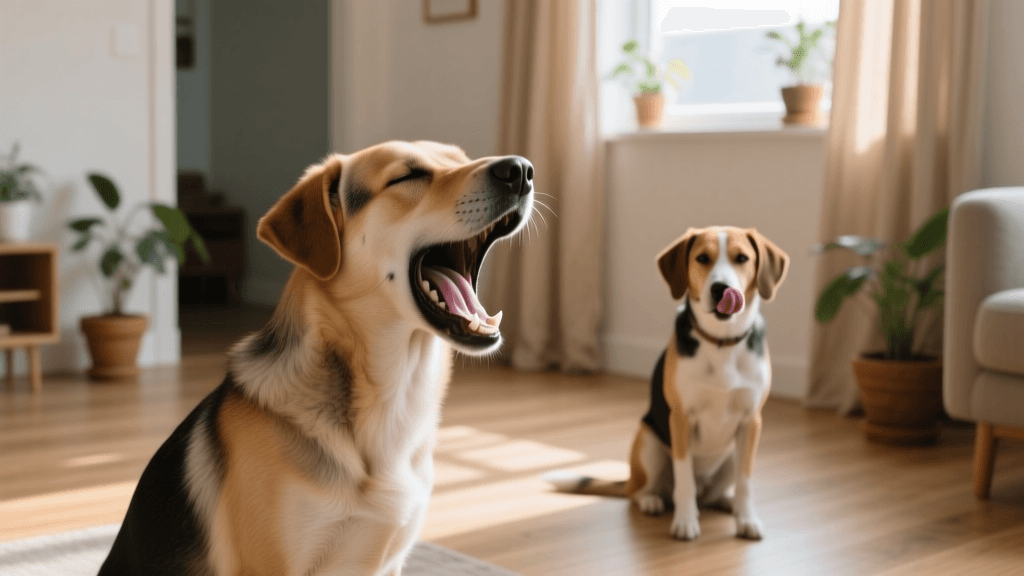
While dogs yawn when they are tired, they also yawn when they are feeling internal conflict or stress. If your dog yawns repeatedly at the veterinarian's office, during a training session, or when being hugged by a toddler, they are not sleepy. They are attempting to lower their own heart rate and signal to the room that they are uncomfortable. This is a massive cut-off signal that owners frequently misinterpret as boredom.
2. Lip Licking and Nose Flicking
A quick, darting tongue that flicks over the nose or lips is a classic appeasement gesture. It is often so fast that it goes unnoticed unless you are specifically looking for it. Dogs perform this action when they are unsure of what is expected of them, when they are being scolded, or when a stranger approaches them too quickly. It is a polite request for the stressor to pause or back away.
3. Turning the Head or Looking Away
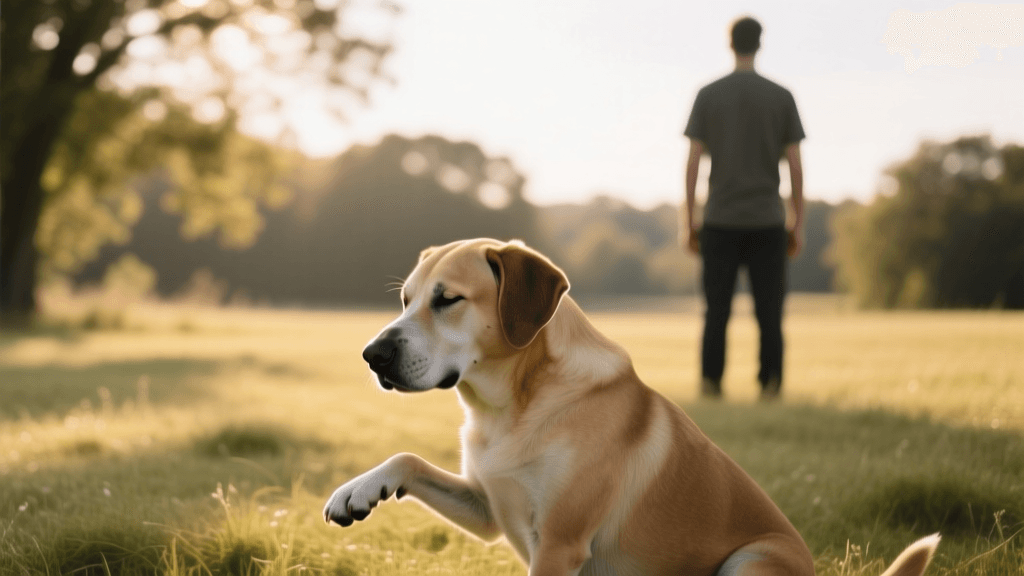
In the animal kingdom, direct, sustained eye contact is often perceived as a threat or a challenge. When a dog turns their head away from you, another dog, or a camera, they are actively trying to de-escalate potential conflict. If you lean over your dog to pet them and they turn their head to the side, they are politely asking you to respect their spatial boundaries.
4. Displacement Sniffing
Sniffing the ground is a natural foraging behavior, but sudden, intense sniffing in an otherwise barren environment is a displacement behavior. If two dogs are approaching each other on a leash and one suddenly becomes fascinated by a single blade of grass, they are using the sniffing to avoid direct confrontation and to signal peaceful intentions. Humans often mistakenly pull the leash and force the dog to 'focus,' inadvertently stripping them of their coping mechanism.
5. The Play Bow as a Diffuser
While the play bow (front end down, rear end up) is universally known as an invitation to play, it is also frequently used as a calming signal to diffuse tension. If roughhousing becomes too intense, or if a dog feels another dog is playing too aggressively, they may throw out a quick play bow to say, 'Let's reset, I come in peace, let's keep this friendly.' It is a vital tool in the canine social toolkit for maintaining harmony.
6. The Shake-Off
Dogs shake off water to dry their coats, but they also 'shake off' adrenaline. You will often see a dog shake their entire body vigorously from nose to tail after a stressful encounter, a tight hug, or a visit to the groomer. This physical action helps reset their nervous system and release built-up muscular tension. It is usually a sign that the stressful event has ended and the dog is actively transitioning back to a baseline state of relaxation.
Calming Signals in Multi-Dog Households: A 2026 Perspective
As urban living spaces shrink and multi-dog households become increasingly common in 2026, the ability to read inter-dog calming signals is critical for preventing household friction. Many dog fights in multi-dog homes do not happen 'out of nowhere'; they are the result of humans missing weeks or months of ignored calming signals. For example, if Dog A is resting on the sofa and Dog B approaches, Dog A might lick their lips or turn their head away. If Dog B ignores these polite requests for space and continues to crowd, Dog A may eventually resort to a growl or a snap to enforce the boundary.
According to resources provided by the ASPCA, managing spatial pressure and resource guarding is paramount in multi-dog homes. By recognizing when one dog is using calming signals to ask for distance, owners can intervene by calling the approaching dog away, thereby rewarding the peaceful communication and preventing the need for aggressive escalation.
How Modern Technology in 2026 Misses the Nuance
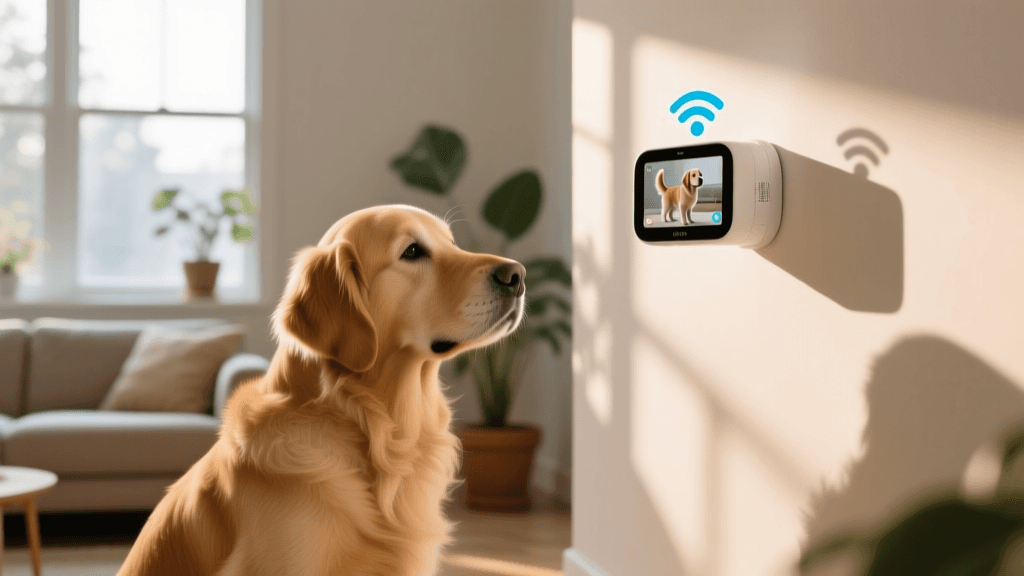
In 2026, the market is flooded with AI-driven pet cameras and smart collars that claim to monitor canine stress through heart rate variability, temperature tracking, and vocalization analysis. While these tools provide excellent baseline health metrics and alert owners to separation anxiety, they frequently miss the micro-expressions of canine calming signals. A dog might exhibit a perfectly normal heart rate while performing subtle lip licks to de-escalate a tense room. Technology cannot replace the educated, observant human eye. Relying solely on an app to tell you if your dog is stressed means you are missing the rich, silent conversations happening right in your living room.
Comparison Chart: Stress Signals vs. Normal Behaviors
Context is everything when decoding dog body language. The table below helps differentiate between normal physiological actions and stress-induced calming signals.
| Signal | Normal Context | Stress Context | Recommended Human Response |
|---|---|---|---|
| Yawning | Waking up, preparing for sleep | Vet visits, scolding, tight hugs | Speak softly, offer space, stop the stressor |
| Lip Licking | Anticipating food, after eating | Approaching strangers, camera flashes | Ask strangers to pause, step back |
| Head Turn | Looking at a noise or scent | Direct eye contact, leaning over | Avert your own gaze, turn your body sideways |
| Sniffing | Exploring a new trail or park | Leash tension, approaching dogs | Allow the sniff, loosen the leash |
| Shake-Off | Drying off after a bath or rain | After a vet exam, after a dog encounter | Allow time to recover, do not interrupt |
Actionable Steps: How to Respond to Your Dog's Calming Signals
Recognizing the signal is only half the battle; knowing how to respond is what makes you a trusted advocate for your dog. When your dog displays a calming signal, they are asking for a change in the environment or the interaction. Here is how you can actively support them:
- Mirror the Behavior: Dogs understand their own language. If your dog is stressed and turns their head away, you can mirror this by turning your head, averting your eyes, and turning your body slightly sideways. This is universally understood in canine culture as a peaceful, non-threatening posture.
- Give Spatial Relief: If your dog yawns or licks their lips while being petted, immediately stop petting and remove your hands. Give them the agency to choose whether they want to re-engage or walk away.
- Advocate in Public: If a stranger approaches your dog and your dog begins to sniff the ground or turn away, politely tell the stranger, 'My dog is feeling a bit shy today, please give us some space.' Do not force your dog to accept unwanted attention just to be polite to humans.
- Use Decompression Walks: If you notice a high frequency of stress signals during a walk, transition to a 'sniffari.' Use a long line (15 to 30 feet) in a quiet area and let the dog dictate the pace and direction, allowing them to process environmental stressors naturally.
Conclusion
Mastering the art of reading canine calming signals transforms the way you interact with your dog. It shifts the dynamic from one of dominance and compliance to one of mutual respect and clear communication. By paying attention to the subtle yawns, lip licks, and head turns, you can prevent behavioral issues before they start and ensure your dog feels safe, heard, and understood in a complex human world. As we continue to learn more about canine cognition in 2026, the most advanced tool you have at your disposal remains your own mindful observation.
aaron-whyte
All our authors care for dogs every day — read more of their work on the authors page.