Decoding Azawakh Body Language and Sighthound Instincts in 2026
Discover the unique psychology, body language, and sighthound instincts of the exotic Azawakh breed with our comprehensive 2026 behavioral guide.
The Enigma of the Sahel: Understanding the Azawakh in 2026
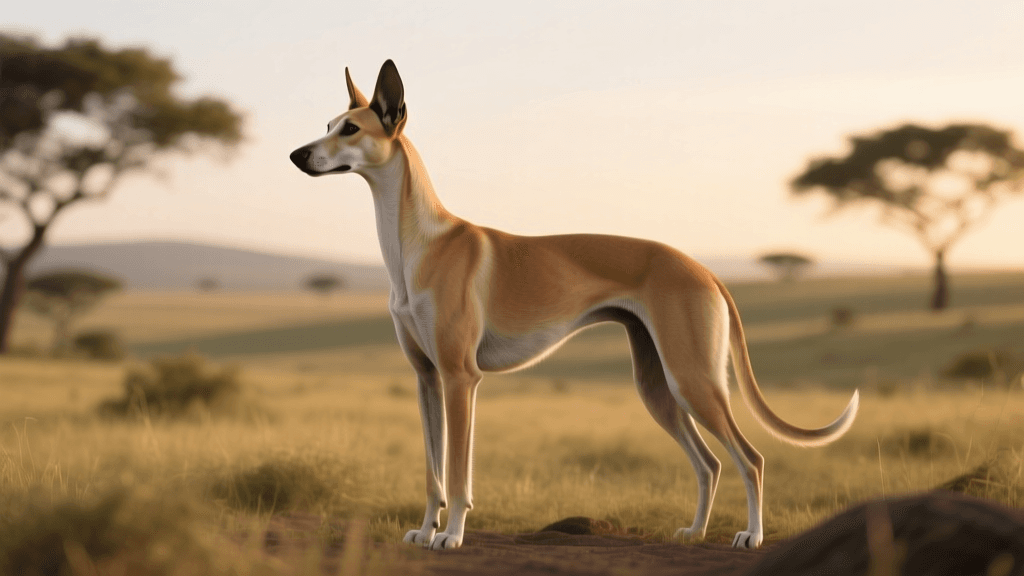
As exotic and international dog breeds continue to capture the hearts of dedicated canine enthusiasts in 2026, few breeds remain as profoundly misunderstood as the Azawakh. Originating from the harsh, unforgiving Sahel region of West Africa—specifically Mali, Niger, and Burkina Faso—this elegant sighthound was bred by the nomadic Tuareg people not merely as a hunting companion, but as a fierce livestock guardian and a cherished member of the family tent. To the untrained eye, the Azawakh’s striking, greyhound-like silhouette suggests a simple, speed-driven athlete. However, beneath their lean, muscular exterior lies a complex, primitive psychology that requires a nuanced understanding of canine body language and ancient breed instincts.
Unlike the universally gregarious Golden Retriever or the biddable Border Collie, the Azawakh operates on a completely different behavioral frequency. They are intensely loyal to their immediate pack, often exhibiting 'velcro dog' tendencies with their owners, yet they can be famously aloof, suspicious, and entirely uninterested in strangers. Understanding this dichotomy is the first step in fostering a harmonious relationship with this extraordinary breed. In this comprehensive guide, we will decode the unique body language, environmental instincts, and psychological triggers of the Azawakh, providing modern, force-free training strategies tailored for primitive sighthounds in 2026.
The Psychology of the Azawakh: Aloofness vs. Aggression
One of the most common misconceptions among novice owners and even some outdated trainers is confusing the Azawakh’s natural aloofness with unwarranted aggression. According to the American Kennel Club's Azawakh breed profile, the breed standard explicitly calls for a dog that is 'aloof and reserved with strangers.' This is a deeply ingrained survival mechanism. In the Sahel, a dog that warmly greeted every approaching stranger would be a liability to the nomadic camp's security.
When an Azawakh encounters a stranger, you will observe a distinct freezing behavior. They will stand tall, shifting their weight forward, with their ears swiveled like radar dishes toward the stimulus. They are not preparing to attack; they are assessing the threat level. If the stranger respects the dog's boundaries and ignores them, the Azawakh will typically disengage and return to their owner. However, if a stranger forces interaction—such as looming over the dog or attempting to pet their head—the Azawakh may exhibit defensive posturing, including lip curling, a low rumbling growl, or a tactical retreat. Recognizing this boundary-setting behavior is crucial for preventing fear-based reactive incidents.
Decoding Azawakh Body Language: Beyond the Wagging Tail
Sighthounds do not communicate in the same overt, exuberant manner as sporting or herding breeds. Their body language is subtle, refined, and heavily reliant on micro-expressions, ear positioning, and tail carriage.
Ear and Eye Communication
The Azawakh possesses large, mobile, drop ears that are set high on the skull. In a relaxed state, the ears will hang close to the cheeks. When the dog is alert or tracking a distant sound, the ears will lift at the base and swivel independently. When an Azawakh enters 'prey drive' or feels intensely threatened, the ears will pin back tightly against the skull to protect them during a high-speed chase or a potential altercation.
Their eyes are equally expressive. Azawahks have large, dark, almond-shaped eyes that convey a deep, soulful intelligence. A soft, relaxed gaze with slow blinking indicates contentment and trust within the pack. Conversely, a hard, unblinking stare directed at a small, fast-moving animal (or a running child) is the universal sighthound signal that the visual cortex has locked onto a target and the prey drive sequence is initiating.
Tail Carriage and the 'Sighthound Roach'
The Azawakh’s tail is long, thin, and tapers to a fine point. In a neutral state, it hangs down with a slight upward curve at the tip. When the dog is confident, alert, or moving at a trot, the tail rises to a sickle shape over the back. Unlike a spitz breed, the tail should never curl tightly over the spine. A tucked tail in an Azawakh is a clear indicator of submission, fear, or, very commonly, physical discomfort due to cold temperatures.
Speaking of comfort, Azawakh owners in 2026 are well-acquainted with the 'sighthound roach.' Because they possess virtually no body fat and a single, short coat, Azawahks seek out warmth and soft surfaces. When they feel entirely safe in their environment, they will sleep on their backs with all four long legs splayed out in the air—a vulnerable position that signifies absolute trust in their human pack and their territory.
Managing the Prey Drive and Environmental Instincts
The Azawakh is a visual hunter. Their brains are hardwired to detect motion at incredible distances. The Fédération Cynologique Internationale (FCI) breed standard notes their historical use in coursing gazelle and hare across rocky, arid terrain. This means that in a modern suburban or urban environment, a fluttering plastic bag, a sprinting squirrel, or a distant cyclist can trigger an explosive, instinctual chase response.
Managing this prey drive requires a multi-faceted approach. First, physical containment is non-negotiable. Azawahks can easily clear six-foot fences from a standstill if sufficiently motivated. Second, recall training must be approached with realistic expectations. While modern positive reinforcement techniques have vastly improved sighthound recall rates, the ASPCA's guide on common dog behavior issues reminds owners that prey drive is a deeply ingrained survival instinct, not a sign of disobedience. An Azawakh in full pursuit is experiencing a dopamine rush that effectively deafens them to verbal commands. Therefore, off-leash exercise should only be permitted in fully enclosed, secure sighthound paddocks.
Comparative Behavioral Profile: Azawakh vs. Other Sighthounds
To truly understand the Azawakh, it is helpful to compare their behavioral traits to other, more common sighthound breeds. The table below highlights the distinct psychological differences that prospective owners must consider in 2026.
| Behavioral Trait | Azawakh | Greyhound | Saluki | Whippet |
|---|---|---|---|---|
| Stranger Affinity | Very Low (Aloof/Guarding) | High (Friendly/Indifferent) | Low (Reserved) | High (Friendly/Shy) |
| Pack Bonding | Intense (Velcro Dog) | Moderate (Independent) | Moderate (Independent) | High (Affectionate) |
| Guarding Instinct | High (Territorial/Livestock) | None | Low | None |
| Vocalization | High (Howls, Yodels, Barks) | Low (Rarely barks) | Low (Occasional howl) | Moderate |
| Prey Drive Trigger | Extreme (Visual/Motion) | High (Visual/Motion) | Extreme (Visual/Motion) | High (Visual/Motion) |
As the data illustrates, the Azawakh stands out for its intense pack bonding combined with a high guarding instinct and vocal nature. Unlike the famously quiet and couch-potato Greyhound, the Azawakh is an active, vocal participant in the household's daily dynamics, often 'talking' to their owners with a unique repertoire of grumbles, yodels, and resonant howls.
Modern Socialization and Training Strategies for 2026
The days of using dominance-based, alpha-roll training methods on primitive breeds are long behind us. In 2026, veterinary behaviorists universally condemn these outdated techniques, noting that they severely damage the trust-based bond that the Azawakh requires to thrive. Instead, modern socialization focuses on 'consent-based' interactions and classical conditioning.
For an Azawakh puppy, socialization does not mean forcing them to be petted by fifty strangers. It means exposing them to fifty strangers from a safe distance, pairing the sight of novel humans with high-value treats (such as freeze-dried liver or raw tripe), and allowing the puppy to observe without pressure. This builds a positive emotional response to novelty without triggering their defensive guarding instincts.
Furthermore, mental enrichment is just as critical as physical exercise. Because their visual cortex is so highly developed, activities like 'flirt pole' training (using a lure on a string to simulate prey in a controlled manner) and scent-work games help satisfy their hunting drives in a safe, structured environment. By respecting their ancient origins and communicating through clear, positive body language, owners can unlock the profound, fiercely loyal companionship that only an Azawakh can provide.
jonas-cole
All our authors care for dogs every day — read more of their work on the authors page.