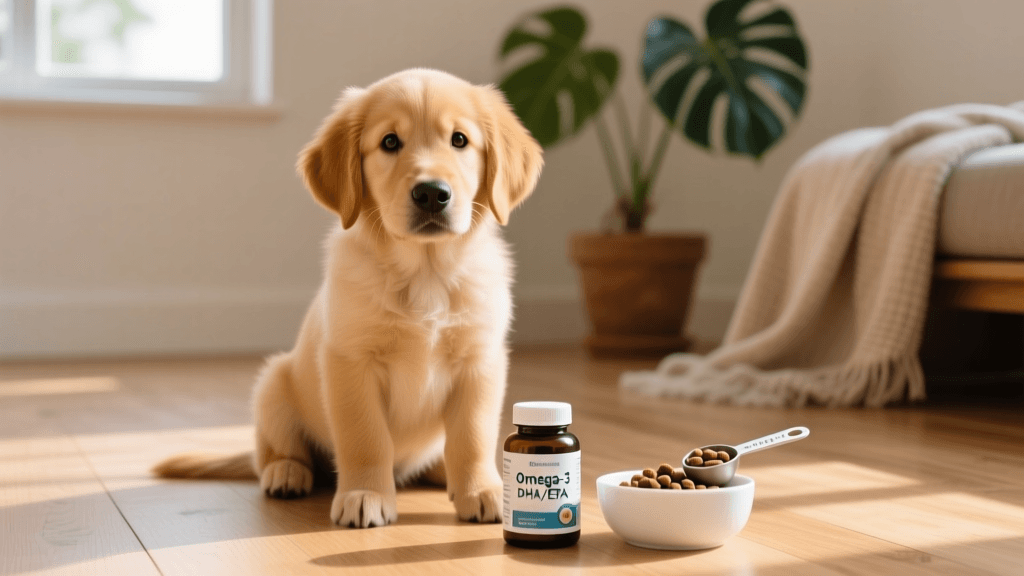
Top Puppy Joint Supplements for Large Breeds in 2026
Discover the best joint supplements for large breed puppies in 2026. Compare Dasuquin and Zesty Paws to protect your growing pup's hips and joints.
The Critical Window for Large Breed Puppy Joint Health
Welcoming a large or giant breed puppy into your home is an exhilarating experience, but it comes with unique physiological responsibilities. Breeds such as Great Danes, German Shepherds, Golden Retrievers, and Mastiffs undergo rapid skeletal development during their first year of life. As of 2026, veterinary orthopedic specialists emphasize that the foundational work for lifelong joint health must begin during this critical growth window. While adult dogs often receive joint supplements reactively after signs of arthritis appear, modern veterinary consensus strongly supports a proactive, preventative approach for large breed puppies.
The Orthopedic Foundation for Animals (OFA) notes that genetic predispositions to hip and elbow dysplasia are significantly influenced by environmental and nutritional factors during the first twelve months of life. By integrating high-quality joint supplements early, alongside proper dietary management, you can mitigate the inflammatory responses that lead to premature cartilage degradation. This comprehensive guide explores the best joint supplements for large breed puppies in 2026, breaking down the science, the top products, and actionable care strategies.
Why Preventative Joint Supplements Matter in the First Year
Puppies are not simply small dogs; their skeletal systems are actively ossifying. Growth plates (physes) located at the ends of long bones remain open and highly vulnerable to stress, micro-fractures, and inflammatory damage until they close, which can take up to 18 to 24 months in giant breeds. When a puppy experiences excessive joint stress or lacks the necessary biochemical building blocks for cartilage repair, the body initiates an inflammatory cascade. Over time, this compromises the synovial fluid and articular cartilage, laying the groundwork for early-onset osteoarthritis.
Preventative joint supplements provide a surplus of chondroprotective agents—compounds that protect and nourish cartilage. Starting a supplement regimen at 8 to 12 weeks of age for high-risk breeds ensures that the body has immediate access to the raw materials required to repair daily micro-traumas caused by normal puppy play and growth spurts.
Key Ingredients to Look for in 2026
Not all joint chews are created equal. The market is flooded with generic multivitamins that lack therapeutic dosages of active ingredients. When selecting a joint supplement for your growing puppy in 2026, look for these clinically backed compounds:
- Glucosamine Hydrochloride (HCl): A fundamental building block for glycosaminoglycans (GAGs), which form the structural matrix of cartilage. HCl is preferred over sulfate forms for its superior bioavailability.
- Chondroitin Sulfate: Works synergistically with glucosamine to inhibit the enzymes that break down cartilage while drawing water into the joint matrix, providing essential shock absorption.
- Methylsulfonylmethane (MSM): A natural sulfur compound that reduces inflammation and oxidative stress in the joint capsule, providing early pain relief and improved mobility.
- Avocado/Soybean Unsaponifiables (ASU): A powerful, plant-derived compound that prevents the degradation of existing cartilage and stimulates the synthesis of new collagen.
- Green-Lipped Mussel (GLM): A whole-food source of Omega-3 fatty acids (EPA and DHA), glycosaminoglycans, and amino acids that provide comprehensive, natural joint lubrication and inflammation control.
2026 Product Comparison: Dasuquin vs. Zesty Paws vs. GlycoFlex
To help you navigate the market, we have evaluated three of the most highly recommended joint supplements for large breed puppies based on ingredient profiles, bioavailability, palatability, and 2026 pricing.
| Feature | Nutramax Dasuquin Advanced | Zesty Paws Hip & Glucosamine | VetriScience GlycoFlex 3 |
|---|---|---|---|
| Key Active Ingredients | Glucosamine, Chondroitin, MSM, ASU, EGCG | Glucosamine, Chondroitin, MSM, Green Lipped Mussel | Glucosamine, MSM, Green Lipped Mussel, DMG |
| Form | Chewable Tablets | Soft Chews | Bite-Sized Chews |
| 2026 Avg. Price (60 ct) | $68.99 | $25.99 | $44.50 |
| Best For | High-risk giant breeds (Great Danes, Mastiffs) | Everyday prevention for active large breeds | Puppies showing early mobility stiffness |
| Palatability | High (Liver flavored) | Very High (Duck/Chicken flavored) | High (Chicken liver flavored) |
1. Nutramax Dasuquin Advanced (Best for Giant Breeds)
Dasuquin Advanced remains the gold standard in veterinary orthopedics. The inclusion of ASU and EGCG (from green tea extract) makes it uniquely suited for giant breeds that experience extreme mechanical stress on their joints. While it is the most expensive option on the market, its clinical efficacy is unmatched. For a Great Dane puppy, the investment in Dasuquin Advanced during the first year is widely considered a non-negotiable by veterinary orthopedic surgeons.
2. Zesty Paws Hip & Glucosamine Chews (Best Budget & Palatability)
Zesty Paws has dominated the consumer market by offering a highly palatable, soft-chew format that puppies eagerly consume as a treat. The inclusion of OptiMSM and Green-Lipped Mussel provides excellent baseline support for large breeds like Labrador Retrievers and Golden Retrievers. It is an ideal choice for owners seeking a cost-effective, high-quality daily preventative that doubles as a training reward.
3. VetriScience GlycoFlex 3 (Best for Early Intervention)
GlycoFlex 3 is formulated with a proprietary blend of New Zealand Green-Lipped Mussel and Dimethylglycine (DMG), which supports cellular health and immune function. If your puppy has already experienced a minor orthopedic injury or is showing slight hesitation after vigorous play, GlycoFlex 3 offers a robust, fast-acting anti-inflammatory profile.
How to Dose and Administer Joint Supplements
Proper dosing is critical. Most premium supplements utilize a two-phase dosing strategy: an initial loading dose followed by a maintenance dose. The American Veterinary Medical Association (AVMA) recommends consulting your primary care veterinarian before initiating any new supplement regimen, as dosages must be strictly calibrated to your puppy's current weight, not their anticipated adult weight.
- Loading Phase (Weeks 1 to 4): Administer double the standard maintenance dose to rapidly saturate the joint tissues with glucosamine and chondroitin.
- Maintenance Phase (Week 5 onward): Reduce to the standard daily dose based on your puppy's current weight bracket.
- Administration Tip: Always give joint supplements with a meal. The fats in your puppy's food significantly increase the absorption rates of fat-soluble compounds like Omega-3s and ASU.
Signs of Early Joint Stress in Puppies
Puppies are notoriously stoic and will often mask pain to keep up with their littermates or owners. However, early intervention requires early detection. Watch for these subtle indicators of joint stress during the first year:
- 'Bunny Hopping': Using both hind legs simultaneously when running or climbing stairs, rather than moving them in an alternating gait.
- Reluctance to Jump: Hesitating before jumping into the car or onto low furniture, or refusing to do so entirely.
- Sitting Asymmetrically: Consistently sitting with one hind leg splayed out to the side ('puppy sit') rather than tucked neatly underneath the body.
- Lagging Behind: Stopping frequently or lying down during walks that they previously handled with ease.
If you observe any of these signs, schedule an orthopedic evaluation with your veterinarian immediately. Supplements are preventative and supportive, but they cannot replace medical intervention for developmental conditions like osteochondritis dissecans (OCD) or severe dysplasia.
Beyond Supplements: Environmental and Dietary Joint Care
Supplements are only one pillar of a comprehensive joint health strategy. The environment and diet you provide during the puppy's first year will dictate how those supplements are utilized by the body.
Managing Calcium and Phosphorus Ratios
Overnutrition is a leading cause of developmental orthopedic disease (DOD) in large breed puppies. Feeding a standard 'all-life-stages' food to a giant breed puppy can result in excessive calcium intake, which disrupts normal bone remodeling. In 2026, the World Small Animal Veterinary Association (WSAVA) strictly recommends feeding large breed puppies diets specifically formulated to maintain a calcium-to-phosphorus ratio between 1.1:1 and 1.4:1, with controlled caloric density to prevent rapid, excessive weight gain. Keeping your puppy lean is the single most effective way to reduce mechanical load on developing joints.
Exercise Restrictions and Home Modifications
The general rule of thumb for puppy exercise is five minutes of structured, leashed walking per month of age, twice a day. For an eight-week-old puppy, this means only 10 minutes of formal walking per session. Unstructured, high-impact play (like chasing a ball on hard surfaces) should be heavily monitored.
Furthermore, your home environment must be puppy-proofed for joint safety. Slippery hardwood or tile floors are notorious for causing splaying injuries and micro-traumas to the hip joints. Invest in interlocking foam mats or secure, non-slip area rugs in the rooms where your puppy spends the most time. Additionally, provide pet ramps for accessing vehicles or furniture to eliminate the concussive force of jumping down from heights.
Final Thoughts on Early Joint Intervention
Protecting your large breed puppy's joints requires a multifaceted approach that combines premium nutrition, environmental management, and targeted supplementation. By introducing a high-quality product like Nutramax Dasuquin Advanced or Zesty Paws Hip & Glucosamine early in their developmental timeline, you are actively investing in their long-term mobility and quality of life. As veterinary science continues to advance in 2026, the focus remains clear: when it comes to orthopedic health, prevention is infinitely more effective, and less costly, than a cure. Consult your veterinarian today to establish a tailored joint care protocol that will keep your growing companion active, comfortable, and happy for years to come.
aaron-whyte
All our authors care for dogs every day — read more of their work on the authors page.