Puppy and Toddler Safety: The Essential Family Guide
Learn how to foster safe, loving bonds between your new puppy and toddlers. Discover boundary training, safe zones, and supervision tips for families.
The Reality of Puppies and Toddlers Under One Roof
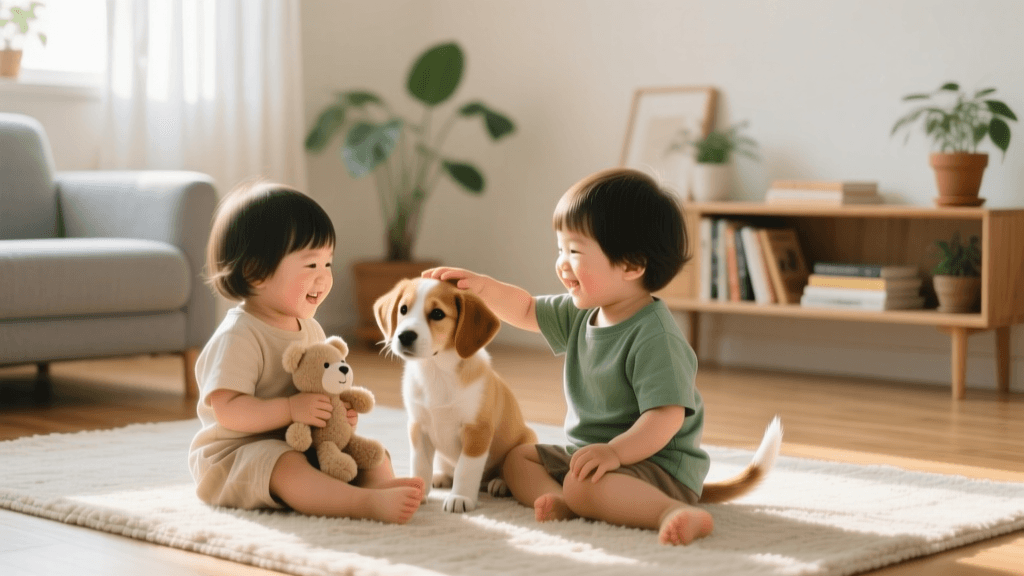
Bringing a new puppy into a home with toddlers is a beautiful milestone, often accompanied by visions of best friends growing up together. However, the reality of merging a teething, high-energy canine with a unpredictable, unsteady toddler requires immense patience, strategic planning, and active supervision. Puppies explore the world using their sharp teeth, while toddlers explore using their hands, often resulting in accidental nips, knocked-over blocks, and mutual frustration. According to the American Veterinary Medical Association (AVMA), the majority of dog bites to children occur in the home, often involving familiar dogs and preventable misunderstandings. By establishing clear boundaries, managing the environment, and teaching both species how to interact safely, you can foster a harmonious and loving household.
Understanding the Developmental Clash
Both puppies and toddlers are in critical developmental stages where impulse control is virtually non-existent. A puppy between eight and sixteen weeks is navigating teething, socialization windows, and house training. Simultaneously, a toddler is developing gross motor skills, learning to vocalize, and testing physical boundaries. When a toddler runs, squeals, or waves their arms, it can trigger a puppy's prey drive or overstimulate them, leading to jumping and mouthing. Conversely, a toddler may view a puppy's wagging tail or floppy ears as a toy to pull. Recognizing that neither party is acting out of malice, but rather developmental instinct, is the first step toward effective management.
Investing in Physical Boundaries and Safe Zones
You cannot rely solely on verbal commands to keep a toddler and a puppy apart. Physical barriers are a non-negotiable investment for family safety and your own sanity. Creating 'safe zones' ensures that both the child and the dog have spaces where they can retreat without being bothered.
Baby Gates and Playpens
Invest in high-quality baby gates to section off your home. For the top of stairs or high-traffic areas, you must use hardware-mounted gates (screwed into the wall studs) to prevent a large puppy from pushing them over. Pressure-mounted gates are suitable for flat doorways but should never be used near stairs. Look for gates that are at least 30 to 36 inches tall, as medium and large breed puppies can easily clear shorter barriers by four months of age. Expect to spend between $50 and $90 per premium gate. Brands like Regalo and Summer Infant offer reliable, durable options with walk-through doors for adults.
The Crate as a Sanctuary
A crate is not a punishment; it is a bedroom. A wire crate (such as the MidWest Homes for Pets iCrate, costing around $70 to $120) allows the puppy to see out while remaining secure. Teach your toddler early on that the crate is the puppy's private room. A strict household rule must be enforced: 'We never touch the puppy or put our fingers in the crate when they are sleeping or eating.'
The 'Pet, Pet, Pause' Consent Test
Teaching a toddler how to pet a dog is crucial. The ASPCA highly recommends supervised, structured interactions to build positive associations. Introduce the 'Pet, Pet, Pause' method to your children. Have your child gently stroke the puppy's back or chest two or three times, then pause and pull their hand away. Watch the puppy's reaction. If the puppy leans in, nudges the child's hand, or wags their tail softly, they are consenting to more pets. If the puppy turns away, licks their lips, yawns, or moves to the other side of the room, they are asking for space. Teaching toddlers to respect this canine body language prevents bites born from overstimulation.
Toy Management and Teething
Puppies and toddlers often have toys that look and feel remarkably similar. A toddler's plush teddy bear feels exactly like a puppy's plush squeaky toy. To prevent resource guarding and accidental ingestion of small plastic parts, you must separate their toys.
- Scent Training: Rub a tiny drop of pure vanilla extract or a safe, dog-friendly scent on the puppy's toys. Teach the toddler that 'vanilla toys are for the dog, and unscented toys are for you.'
- Durable Chew Options: During the teething phase (3 to 6 months), provide the puppy with indestructible options like the classic red KONG toy ($15) or Nylabone Power Chew rings ($8 to $12). Keep these in the puppy's safe zone to avoid toddler choking hazards.
- Clean-Up Routines: Use a designated toy bin for the toddler that has a secure lid. Puppies are notorious scavengers, and swallowing a small plastic building block can result in an emergency veterinary surgery costing upwards of $3,000.
Age-Appropriate Responsibilities and Interactions
Involving your child in puppy care builds empathy and responsibility, but tasks must be matched to their developmental capabilities. Below is a structured guide to age-appropriate interactions and chores.
| Child's Age | Safe Interactions | Supervised Chores | Activities to Avoid |
|---|---|---|---|
| 1 - 3 Years | Gentle stroking with 'Pet, Pet, Pause'; throwing a toy in a fenced yard. | Helping an adult hold the treat bag; watching the puppy eat from a distance. | Holding the leash; picking up the puppy; approaching the crate. |
| 4 - 6 Years | Basic training games like 'find it'; gentle brushing with a soft bristle brush. | Measuring kibble into a bowl; filling the water bowl; basic fetch. | Walking the puppy alone; disciplining the puppy; taking toys from the puppy's mouth. |
| 7 - 9 Years | Teaching basic commands (sit, stay); playing hide-and-seek in the house. | Supervised short leash walks in low-traffic areas; washing food bowls. | Unsupervised outdoor play; breaking up puppy fights; administering medication. |
Recognizing Canine Stress Signals
Toddlers cannot read subtle signs of distress, so parents must act as the puppy's advocate. Dogs rarely bite 'out of the blue'; they offer a ladder of warning signals first. If you notice any of the following, immediately separate the puppy and the toddler, and give the dog a quiet break in their crate:
- Whale Eye: The puppy turns its head away but keeps its eyes fixed on the toddler, showing the whites of its eyes.
- Lip Licking and Yawning: When not tired or eating, repetitive yawning and licking of the nose are classic signs of canine anxiety.
- Stiffening: The puppy's body goes rigid, and the tail may stop wagging or become stiff and high.
- Hiding or Retreating: If the puppy ducks under a table or moves behind a chair, do not let the toddler crawl after them.
'A dog's growl is a gift. It is their way of communicating discomfort before they feel forced to use their teeth. Never punish a growl; instead, remove the stressor and reassess the environment.' - Veterinary Behaviorists
A Sample Daily Schedule for Harmony
Routine reduces anxiety for both puppies and toddlers. Here is a sample afternoon schedule designed to balance naps, play, and safe separation:
- 1:00 PM: Toddler nap time. Puppy goes into the crate with a frozen KONG stuffed with peanut butter for a 2-hour enforced nap.
- 3:00 PM: Both wake up. Puppy goes outside for a potty break and solo play session while toddler has a snack.
- 3:30 PM: Supervised joint play in the living room. Toddler practices tossing a soft toy for the puppy to fetch. Duration limited to 15 minutes to prevent overstimulation.
- 3:45 PM: 'Pet, Pet, Pause' practice on the rug, followed by a high-value treat for the puppy for calm behavior.
- 4:00 PM: Separation. Toddler moves to the playroom with a baby gate closed. Puppy goes to the backyard or a playpen for independent chewing time.
Conclusion
Raising a puppy alongside a toddler is a marathon, not a sprint. It requires constant vigilance, financial investment in safety gear, and a commitment to advocating for both vulnerable members of your family. By utilizing physical barriers, teaching consent-based petting, and respecting your puppy's need for sleep and space, you lay the groundwork for a lifelong, beautiful friendship. Remember that every positive, supervised interaction builds trust, ensuring that as your toddler and puppy grow, their bond will be rooted in mutual respect and love.
marcus-aldridge
All our authors care for dogs every day — read more of their work on the authors page.


