Dasuquin Advanced vs GlycoFlex III for Senior Dogs 2026
Compare Dasuquin Advanced and GlycoFlex III for large senior dogs in 2026. Discover ingredient differences, pricing, and vet recommendations for joint health.
The Evolution of Canine Joint Care in 2026
As we navigate through 2026, the landscape of veterinary medicine and canine nutrition continues to evolve, particularly in the realm of orthopedic health. For owners of large and giant breed dogs—such as Labrador Retrievers, Golden Retrievers, and German Shepherds—managing joint health is not just a priority; it is a critical component of their pet's overall quality of life. Osteoarthritis (OA) and degenerative joint disease remain some of the most prevalent chronic conditions affecting aging canines. While prescription NSAIDs (non-steroidal anti-inflammatory drugs) are often necessary for acute pain management, veterinary professionals increasingly emphasize the role of high-quality, clinically backed joint supplements as a foundational pillar of long-term mobility care.
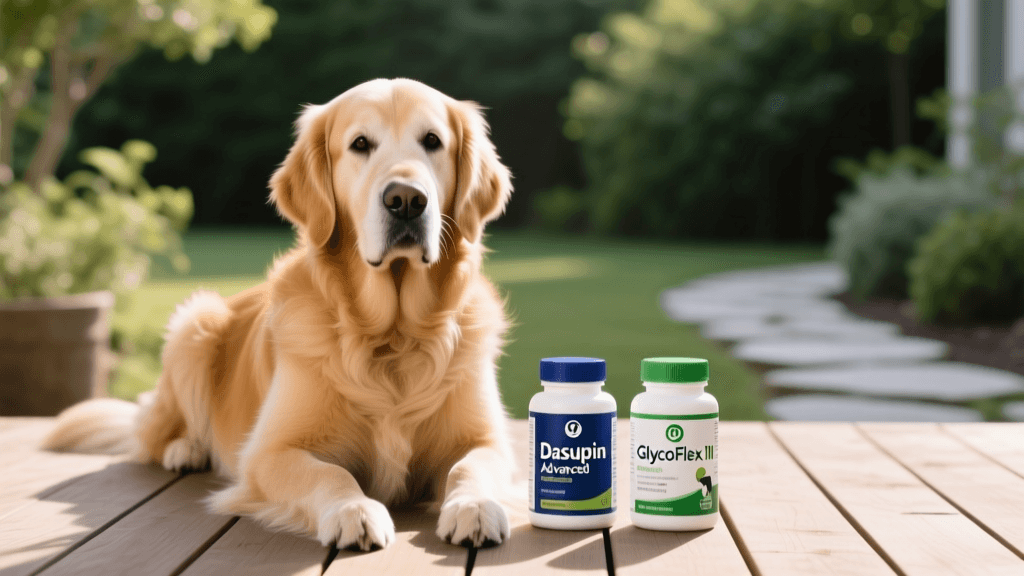
When discussing premium, veterinary-recommended joint supplements, two names consistently dominate the conversation: Nutramax's Dasuquin Advanced and VetriScience's GlycoFlex III. Both products are formulated specifically to support cartilage matrix, inhibit destructive enzymes, and reduce joint inflammation. However, they achieve these goals through distinctly different biochemical pathways and ingredient profiles. In this comprehensive 2026 review, we will break down the science, pricing, and clinical applications of both supplements to help you determine which is the superior choice for your senior large-breed dog.
Understanding the Heavyweights: Ingredient Showdown
The efficacy of any joint supplement relies entirely on the bioavailability and synergistic action of its active ingredients. In 2026, the industry has moved far beyond basic glucosamine powders, focusing instead on multi-modal approaches that target both cartilage preservation and inflammatory pathways.
Nutramax Dasuquin Advanced with ESM
Dasuquin Advanced has long been considered the gold standard in veterinary orthopedic nutrition. The 'Advanced' formulation distinguishes itself from the original Dasuquin by incorporating a broader spectrum of joint-supporting compounds. The star of this formulation is ASU (Avocado/Soybean Unsaponifiables), which has been shown in veterinary studies to reduce the expression of pro-inflammatory cytokines and protect cartilage from degradation. Furthermore, the 2026 formulation continues to utilize Eggshell Membrane (ESM), a natural source of collagen, elastin, and glycosaminoglycans that supports joint capsule integrity.
- Key Active Ingredients: Glucosamine HCl, Chondroitin Sulfate, MSM (Methylsulfonylmethane), ASU, Boswellia serrata extract, Turmeric, and NMXCC95 Eggshell Membrane.
- Primary Mechanism: Cartilage matrix protection, inhibition of cartilage-degrading enzymes, and multi-pathway inflammation reduction.
- Best Suited For: Dogs with advanced osteoarthritis, post-operative orthopedic recovery (e.g., post-TPLO surgery), and breeds with severe genetic predispositions to hip dysplasia.
- 2026 Average Cost: Approximately $82.00 for an 84-count bottle of Large Dog Soft Chews (roughly $0.97 per chew).
VetriScience GlycoFlex III
GlycoFlex III takes a notably different, marine-centric approach to joint health. The foundation of this supplement is Perna canaliculus, commonly known as the New Zealand Green Lipped Mussel. This whole-food ingredient is naturally packed with a unique profile of omega-3 fatty acids (including ETA, which is rare in other marine sources), amino acids, and naturally occurring glycosaminoglycans. GlycoFlex III is the highest-strength formula in the VetriScience line, designed for maximum support during periods of severe stress on the joints.
- Key Active Ingredients: Perna canaliculus (Green Lipped Mussel), Glucosamine HCl, MSM, DMG (Dimethylglycine), Manganese, and Vitamin C.
- Primary Mechanism: Systemic inflammation modulation via marine-derived ETA, natural lubrication, and antioxidant support.
- Best Suited For: Active senior dogs experiencing moderate stiffness, working or sporting dogs requiring joint recovery after intense exercise, and dogs with sensitivities to botanical extracts like Boswellia.
- 2026 Average Cost: Approximately $68.00 for a 90-count bottle of Large Dog Chewables (roughly $0.75 per chew).
2026 Head-to-Head Comparison Chart
To visualize the differences between these two industry leaders, refer to the comparison table below. This chart highlights the practical considerations for pet owners managing a large-breed dog's daily supplement regimen.
| Feature | Dasuquin Advanced (Large) | GlycoFlex III (Large) |
|---|---|---|
| Primary Differentiator | ASU & Eggshell Membrane (Cartilage focus) | Green Lipped Mussel (Whole-food anti-inflammatory) |
| Form | Flavored Soft Chew | Flavored Chewable Tablet |
| Palatability | High (Liver/Chicken flavor) | Moderate to High (Chicken liver, but mussel scent is strong) |
| Monthly Cost (60lb Dog) | ~$41.00 (Maintenance Dose) | ~$34.00 (Maintenance Dose) |
| Allergen Note | Contains Soy (via ASU) | Contains Shellfish (Mussel) |
Clinical Efficacy and Veterinary Perspectives
Understanding how veterinary professionals view these supplements is crucial for making an informed decision. According to the American College of Veterinary Surgeons (ACVS), osteoarthritis is a progressive, degenerative disease that requires a multi-modal management strategy. The ACVS emphasizes that while supplements cannot reverse existing cartilage loss, they are vital in slowing disease progression and improving the viscoelastic properties of synovial fluid. Dasuquin's inclusion of ASU aligns closely with this surgical perspective, as ASU has been clinically documented to preserve joint space width over time.
On the other hand, the American Kennel Club (AKC) notes that joint supplements are most effective when utilized proactively or at the very first signs of stiffness, rather than waiting until a dog is severely debilitated. The AKC highlights the importance of bioavailability and the synergistic effects of ingredients like MSM and Vitamin C (found in GlycoFlex III), which aid in natural collagen synthesis. For owners of sporting breeds who want to maintain their dog's athletic edge without relying heavily on pharmaceuticals, the natural, nutrient-dense profile of the Green Lipped Mussel in GlycoFlex III is often the preferred route.
Dosing Strategies: The Loading Phase Explained
One of the most common mistakes pet owners make when introducing a joint supplement in 2026 is skipping the 'loading dose.' Both Dasuquin Advanced and GlycoFlex III require an initial loading phase to saturate the dog's system with active compounds and build up therapeutic levels in the synovial fluid.
For a 70-pound Labrador Retriever, the loading phase typically involves administering double the standard maintenance dose for the first four to six weeks. For Dasuquin Advanced, this means giving two large soft chews daily. For GlycoFlex III, it requires two to three chewables daily. It is only after this initial 6-week period that you should step down to the maintenance dose. Owners who start immediately on the maintenance dose often report that the supplement 'isn't working,' simply because the active ingredients have not yet reached therapeutic concentrations in the joint tissues.
The Role of Omega-3 Fatty Acids in 2026 Protocols
While both Dasuquin Advanced and GlycoFlex III are exceptional standalone products, modern veterinary nutritionists in 2026 strongly recommend pairing them with a high-quality, triglyceride-form Omega-3 fish oil. Neither supplement contains a high enough concentration of EPA (eicosapentaenoic acid) and DHA (docosahexaenoic acid) to independently manage systemic inflammation.
EPA and DHA are proven to compete with arachidonic acid in the body's inflammatory pathways, effectively reducing the production of inflammatory prostaglandins. When you combine the cartilage-protecting properties of Dasuquin's ASU with the systemic anti-inflammatory power of a concentrated Nordic fish oil, you create a comprehensive, non-pharmaceutical pain management protocol. Always calculate the combined caloric intake of the soft chews and the fish oil to ensure your senior dog does not experience unwanted weight gain, as excess body fat places additional mechanical stress on compromised joints.
Final Verdict: Which Should You Choose?
The decision between Dasuquin Advanced and GlycoFlex III ultimately depends on your dog's specific medical history, lifestyle, and budget. If your large-breed dog is suffering from advanced, radiographically confirmed osteoarthritis, or is recovering from a major orthopedic surgery, Dasuquin Advanced is the superior choice. Its targeted inclusion of ASU and Eggshell Membrane provides the most aggressive, scientifically backed defense against further cartilage degradation available on the market today.
Conversely, if your dog is an active senior experiencing early-stage stiffness, or if you prefer a whole-food, marine-based approach to inflammation management, GlycoFlex III is an outstanding and slightly more cost-effective option. The New Zealand Green Lipped Mussel provides a broad spectrum of natural nutrients that support not just the joints, but overall systemic vitality. Whichever you choose, consistency is key. Administering the supplement daily, alongside a weight-management plan and controlled, low-impact exercise, will ensure your large-breed dog remains comfortable and mobile throughout their golden years.
aaron-whyte
All our authors care for dogs every day — read more of their work on the authors page.