Dachshund IVDD Prevention: Protecting Your Dog's Spine
Learn how to prevent IVDD in Dachshunds with actionable tips on weight management, ramp training, and harness selection to protect their fragile spines.
Understanding IVDD in Dachshunds
The Dachshund is a breed beloved for its distinctive silhouette, characterized by a long, muscular body and short, sturdy legs. However, this unique chondrodystrophic conformation comes with a significant veterinary caveat: an exceptionally high susceptibility to Intervertebral Disc Disease (IVDD). According to veterinary neurologists, approximately 25% of all Dachshunds will experience a severe IVDD episode at some point in their lives, making it the most prevalent and devastating health crisis within the breed.
To understand why this happens, we must look at the anatomy of the canine spine. The vertebrae are separated by intervertebral discs, which act as shock absorbers. These discs consist of a tough outer ring (annulus fibrosus) and a gel-like center (nucleus pulposus). In chondrodystrophic breeds like the Dachshund, the nucleus pulposus undergoes premature degeneration, often calcifying and becoming brittle as early as one year of age. When the dog jumps, twists, or experiences minor trauma, the hardened disc material can extrude through the outer ring and compress the spinal cord, leading to severe pain, nerve damage, or total paralysis. As noted by experts at the Texas A&M College of Veterinary Medicine, early onset disc degeneration is a genetic hallmark of the breed, meaning that while we cannot change their genetics, we can rigorously manage their environment and lifestyle to mitigate the risk of rupture.
Recognizing the Early Signs of Spinal Distress
Because Dachshunds are notoriously stoic, they may attempt to hide their pain until a disc has fully ruptured. Recognizing the subtle, early warning signs of spinal distress can mean the difference between conservative medical management and emergency neurosurgery. Watch closely for the following symptoms:
- Reluctance to Move: Hesitation before jumping onto furniture, climbing stairs, or even standing up from a resting position.
- Postural Changes: A pronounced arched back (kyphosis) or a tucked abdomen, indicating abdominal and spinal muscle splinting to protect the spine.
- Behavioral Shifts: Unexplained shivering, panting while resting, hiding, or sudden aggression when touched near the neck or back.
- Neurological Deficits: 'Knuckling' (walking on the tops of the paws), dragging the hind toes, or a noticeable wobble in the hindquarters (ataxia).
- Cervical Pain: Holding the head unusually low, refusing to look up, or crying out when the neck is manipulated.
If you observe any of these signs, restrict your dog's movement immediately and contact your veterinarian. Do not wait to see if the symptoms resolve on their own.
Actionable Prevention Strategies
While genetic predisposition plays the primary role in IVDD, environmental and lifestyle factors dictate the physical stress placed on those vulnerable discs. Implementing the following protocols is non-negotiable for responsible Dachshund ownership.
1. Strict Weight Management
Excess body weight exponentially increases the mechanical load on a Dachshund's spine. The American Veterinary Medical Association warns that canine obesity exacerbates joint and spinal diseases, reducing both lifespan and quality of life. A Dachshund should maintain a Body Condition Score (BCS) of 4 or 5 on a 9-point scale. You should be able to easily feel their ribs without pressing hard, and they should have a visible 'tuck' at the waist.
Actionable Advice: Stop using standard measuring cups for kibble, as they can vary in volume by up to 20%. Instead, invest in a $15 digital kitchen scale and weigh your dog's daily food allotment in grams based on your vet's caloric recommendation. For an average 20-pound standard Dachshund, this is typically between 500 to 650 calories per day, depending on activity level. Substitute high-calorie training treats with low-calorie alternatives like freeze-dried green beans or small pieces of carrot.
2. Environmental Modifications: Ramps and Stairs
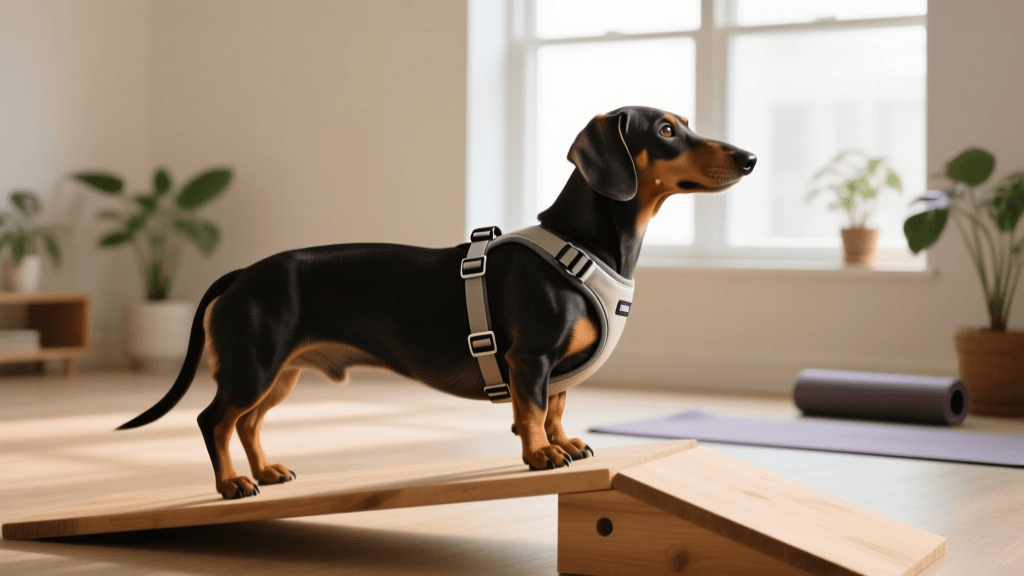
Jumping on and off furniture generates compressive forces on the spine that can be up to five times the dog's body weight. To eliminate this risk, you must provide approved inclines for all elevated surfaces your dog accesses.
Actionable Advice: Purchase high-density foam or wooden pet ramps with a minimum width of 16 inches to prevent lateral slipping. The ideal incline for a Dachshund is between 18 and 20 degrees; anything steeper will cause them to strain their back or refuse to use it. Ensure the ramp surface is covered in high-traction material, such as ribbed carpet or rubberized grip tape. Expect to spend between $45 and $120 per ramp. Place them strategically against the bed, sofa, and even the back of your SUV or hatchback.
3. Proper Handling and Harness Selection
How you pick up and walk your Dachshund directly impacts their spinal alignment. Picking a Dachshund up by their front legs or 'armpits' leaves the heavy hindquarters unsupported, creating severe leverage and torque on the thoracolumbar junction—the most common site for IVDD ruptures.
Actionable Advice: Always use the 'scoop' method. Place one hand firmly under the chest (between the front legs) and the other hand supporting the hindquarters and pelvis. Lift smoothly and keep the spine horizontal. Furthermore, ban the use of neck collars for walking. A sudden pull on a neck collar can cause cervical disc herniation. Transition entirely to a dual-clip or front-clip harness that distributes force across the sternum and ribcage. Excellent options include the Ruffwear Front Range or the Kurgo Tru-Fit Smart Harness (approximately $35 to $45), which offer excellent chest support without restricting shoulder movement.
Data Table: Dachshund Spinal Health & Prevention Guide
The following table outlines the core preventative measures, estimated costs, and their direct impact on reducing spinal stress for your Dachshund.
| Preventative Measure | Estimated Cost | Spinal Stress Reduction | Daily Time Investment |
|---|---|---|---|
| Digital Food Scale & Caloric Tracking | $15 - $25 | High (Prevents obesity-related load) | 2 minutes per meal |
| High-Traction Pet Ramps (18-degree incline) | $45 - $120 each | Critical (Eliminates jump compression) | Zero (Passive training required initially) |
| Front-Clip Ergonomic Harness | $35 - $50 | High (Protects cervical spine) | Zero (Replaces standard collar) |
| Controlled 'Sniffari' Leash Walks | $0 (Time only) | Moderate (Builds core support muscles) | 30 - 45 minutes |
| Orthopedic Memory Foam Bed | $60 - $150 | Moderate (Maintains spinal alignment at rest) | Zero |
Exercise Modifications: Building Core Armor
A Dachshund with a strong core and robust hindquarter musculature has a natural 'corset' that supports the spine. However, the type of exercise matters immensely. High-impact activities such as playing fetch on hard surfaces, jumping for frisbees, or navigating agility weave poles should be strictly avoided. Instead, focus on low-impact, high-resistance activities. Swimming or using an underwater treadmill are phenomenal ways to build muscle without loading the joints. For everyday exercise, engage in 'sniffaris'—long, slow, sniff-heavy walks on uneven but stable terrain like grass or dirt trails. This engages the dog's stabilizing muscles and provides immense mental enrichment without the jarring impact of running on concrete.
What to Do If You Suspect an IVDD Episode
Despite your best preventative efforts, the genetic reality of the breed means an IVDD episode can still occur. If your Dachshund exhibits sudden paralysis, loss of deep pain sensation, or severe acute pain, treat it as a medical emergency. According to the American Kennel Club, time is tissue; dogs that lose deep pain sensation have a significantly better prognosis if decompressive surgery is performed within 24 hours.
Immediate steps include:
- Strict Confinement: Place the dog in a small, padded crate immediately to prevent further movement and spinal cord damage.
- Do Not Administer Human Painkillers: Ibuprofen and acetaminophen are highly toxic to dogs. Wait for veterinary prescribed NSAIDs or nerve pain medications like Gabapentin.
- Prepare Financially: Advanced imaging (MRI/CT) and hemilaminectomy surgery typically cost between $3,000 and $8,000. If surgery is not an option, strict 6-to-8-week crate rest combined with physical therapy and acupuncture can yield positive results for dogs that still retain deep pain sensation.
'The cornerstone of managing IVDD in chondrodystrophic breeds is not just surgical intervention, but a lifelong commitment to environmental management. An ounce of prevention—literally, in the case of weight management and jump prevention—is worth pounds of cure.' — Board-Certified Veterinary Neurologist
Owning a Dachshund is a joyful experience, but it requires a proactive approach to their unique orthopedic needs. By strictly managing their weight, modifying your home environment with proper ramps, and utilizing supportive walking gear, you can drastically reduce the mechanical forces on their spine, ensuring your long-bodied companion lives a vibrant, active, and pain-free life.
anouk-beaumont
All our authors care for dogs every day — read more of their work on the authors page.