Dachshund IVDD: Prevention, Symptoms, and Care Guide
Learn how to protect your Dachshund from IVDD. Discover prevention tips, early symptoms, treatment costs, and the best ramps for long-backed dogs.
The Unique Spinal Anatomy of the Dachshund
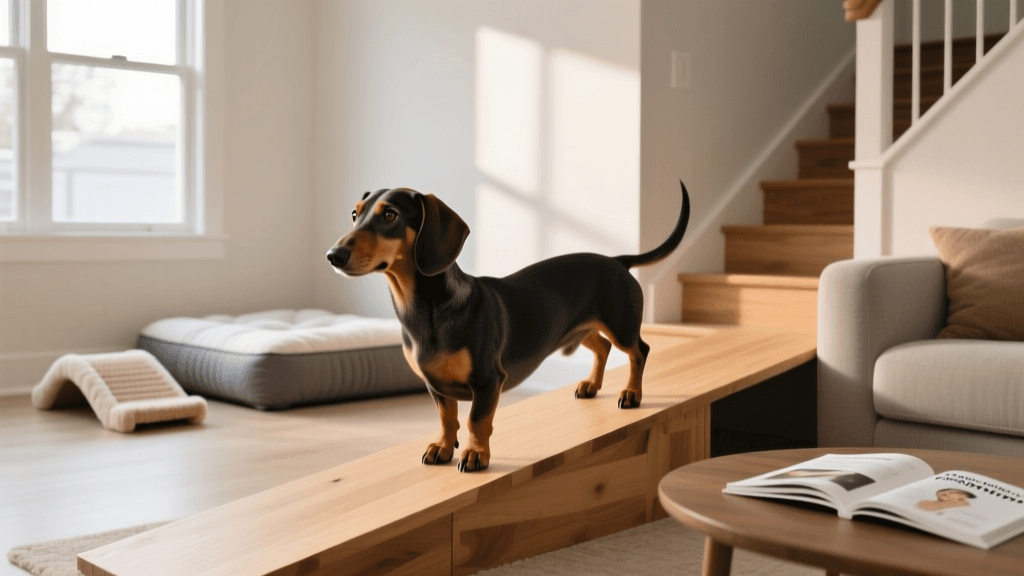
The Dachshund is a breed defined by its striking silhouette: a long, muscular body supported by short, sturdy legs. While this unique build was originally bred for badger hunting, allowing them to burrow into tight dens, it comes with a significant genetic predisposition to spinal issues. The most prominent of these is Intervertebral Disc Disease (IVDD). According to the American Kennel Club (AKC), approximately 25% of Dachshunds will experience some form of IVDD during their lifetime, making it a critical concern for any owner of this beloved breed.
IVDD occurs when the shock-absorbing discs between the vertebrae bulge or rupture (herniate) into the spinal canal, compressing the spinal cord. Dachshunds are particularly susceptible to Hansen Type I IVDD, a condition linked to chondrodystrophy (abnormal cartilage development). In chondrodystrophic breeds, the discs calcify and harden prematurely, often as early as one year of age, making them brittle and prone to sudden extrusion under physical stress.
Recognizing the 5 Stages of IVDD
Early detection is paramount for a positive prognosis. Veterinary neurologists classify IVDD into five distinct stages based on neurological deficits. Understanding these stages can help you act before irreversible damage occurs.
- Stage 1: Mild to moderate neck or back pain. The dog may exhibit a hunched posture, shiver, or be reluctant to move, but neurological function and gait remain completely normal.
- Stage 2: Moderate to severe pain with mild neurological deficits. You might notice a loss of conscious proprioception (knuckling over on the paws) or an uncoordinated, 'drunken' gait (ataxia).
- Stage 3: Partial paralysis (paresis). The dog is unable to stand or walk on the affected limbs but still retains deep pain sensation and voluntary movement.
- Stage 4: Complete paralysis (plegia) of the hind limbs, but the dog still retains deep pain sensation when the toes are firmly squeezed. This is a surgical emergency.
- Stage 5: Complete paralysis with the loss of deep pain sensation. This is the most critical stage. As noted by the Texas A&M College of Veterinary Medicine, surgery must typically be performed within 24 to 48 hours of losing deep pain sensation to offer any chance of recovery.
Essential Prevention Strategies and Gear
While you cannot change your Dachshund's genetics, you can drastically reduce the environmental and physical stressors that trigger disc herniation. Prevention revolves around minimizing spinal compression and torsion.
Proper Lifting Techniques
Never pick up a Dachshund by their front legs or like a human baby. Always support the spine. Place one hand under the dog's chest (between the front legs) and the other hand securely under the hindquarters. Lift smoothly, keeping the spine horizontal and fully supported at all times. Teach all family members and children this rule strictly.
Home Modifications
Slippery floors are a Dachshund's worst enemy. When a dog slips, the sudden splay of the legs puts immense twisting force on the thoracolumbar spine. Cover hardwood, tile, and laminate floors with interlocking foam mats, yoga mats, or non-slip runner rugs. Additionally, block off all staircases with baby gates to prevent the repetitive impact of climbing and descending.
Investing in Preventative Gear
Jumping on and off furniture is a leading cause of acute disc extrusion. Invest in high-quality ramps and orthopedic harnesses. Avoid traditional neck collars for walking, as sudden pulling can cause cervical disc herniation. Instead, use a well-fitted, Y-shaped front-clip harness that distributes pressure across the chest.
| Gear Type | Recommended Specs / Brands | Est. Cost | Primary Benefit |
|---|---|---|---|
| Furniture Ramps | Gen7Pets or PetSafe (1:3 slope ratio, minimum 12-inch width) | $80 - $140 | Eliminates impact from jumping off beds/couches |
| Orthopedic Harness | Ruffwear Front Range or Kurgo Tru-Fit (Y-shape chest) | $35 - $80 | Prevents cervical spine strain from pulling |
| Non-Slip Flooring | Interlocking EVA foam tiles or rubber-backed runners | $50 - $120 | Prevents sudden leg splaying and spinal torsion |
| Joint Supplements | Dasuquin or Cosequin (Glucosamine, Chondroitin, ASU) | $30 - $60 | Supports surrounding joint and cartilage health |
Diet, Weight Management, and Supplements
Excess weight is a massive multiplier for IVDD risk. Every extra pound on a Dachshund's frame exerts disproportionate leverage on their elongated spine. Your dog should be maintained at a Body Condition Score (BCS) of 4 out of 9. You should be able to easily feel their ribs without pressing hard, and they should have a visible abdominal tuck when viewed from the side.
Consult your veterinarian to calculate your dog's exact resting energy requirement (RER) and feed a measured diet using a digital kitchen scale rather than a measuring cup. Additionally, incorporating a high-quality joint supplement containing Omega-3 fatty acids (EPA/DHA) and Avocado/Soybean Unsaponifiables (ASU) can help reduce systemic inflammation and support disc health.
Financial Planning: Prevention vs. Treatment Costs
Many owners are blindsided by the financial burden of an IVDD emergency. Proactive prevention is not just better for your dog's health; it is vastly more economical. Below is a comparative breakdown of the costs associated with lifelong prevention versus a single acute IVDD emergency.
| Category | Item / Procedure | Estimated Cost |
|---|---|---|
| Prevention | Annual Joint Supplements & Weight Management | $150 - $250 / year |
| One-time Home Modifications & Ramps | $150 - $300 | |
| High-Quality Harnesses & Slings | $60 - $120 | |
| Treatment | Emergency Neurological Exam & X-Rays | $300 - $600 |
| Advanced Imaging (MRI or CT Scan) | $1,500 - $2,500 | |
| Hemilaminectomy Surgery & Hospitalization | $4,000 - $8,500 | |
| Post-Op Rehabilitation (Hydrotherapy/Acupuncture) | $800 - $2,500 |
Emergency Response and Conservative Management
If your Dachshund suddenly cries out in pain, arches their back, or drags their hind legs, you must treat it as a medical emergency. Do not wait to see if they 'walk it off.' Immediately restrict all movement. Place them in a small, padded crate or carrier and transport them to an emergency veterinary hospital. The UC Davis Veterinary Medical Teaching Hospital emphasizes that immediate strict cage rest and anti-inflammatory medications are critical in the first 24 hours to minimize spinal cord swelling.
For Stage 1 and Stage 2 IVDD, veterinarians often recommend 'conservative management.' This involves 4 to 6 weeks of absolute, strict crate rest. This means no walks, no playing, and no jumping. The dog must be carried outside on a supportive sling (like the Walkabout Lift-Assist Harness) solely for bathroom breaks. Muscle atrophy is a risk during this time, so your vet may prescribe targeted physical therapy exercises, laser therapy, or underwater treadmill sessions once the acute inflammation has subsided.
Veterinary Insight: 'The hardest part of conservative management for most owners is enforcing strict crate rest. Dachshunds are stubborn and may feel better after a week of steroids, leading owners to let them out too early. This premature activity is the leading cause of re-herniation and subsequent surgical necessity.' — Canine Neurology Specialist Guidelines
Conclusion: A Proactive Approach to Longevity
Owning a Dachshund requires a unique commitment to environmental management and proactive health monitoring. By understanding the mechanics of IVDD, investing in preventative gear like ramps and harnesses, maintaining a lean body weight, and knowing how to recognize the earliest signs of spinal distress, you can significantly tilt the odds in your dog's favor. While the genetic predisposition for chondrodystrophy cannot be erased, the lifestyle factors that trigger catastrophic disc extrusions are entirely within your control. Protect your long-backed companion, and they will reward you with a lifetime of vibrant, pain-free loyalty.
marcus-aldridge
All our authors care for dogs every day — read more of their work on the authors page.